 01635 581 811
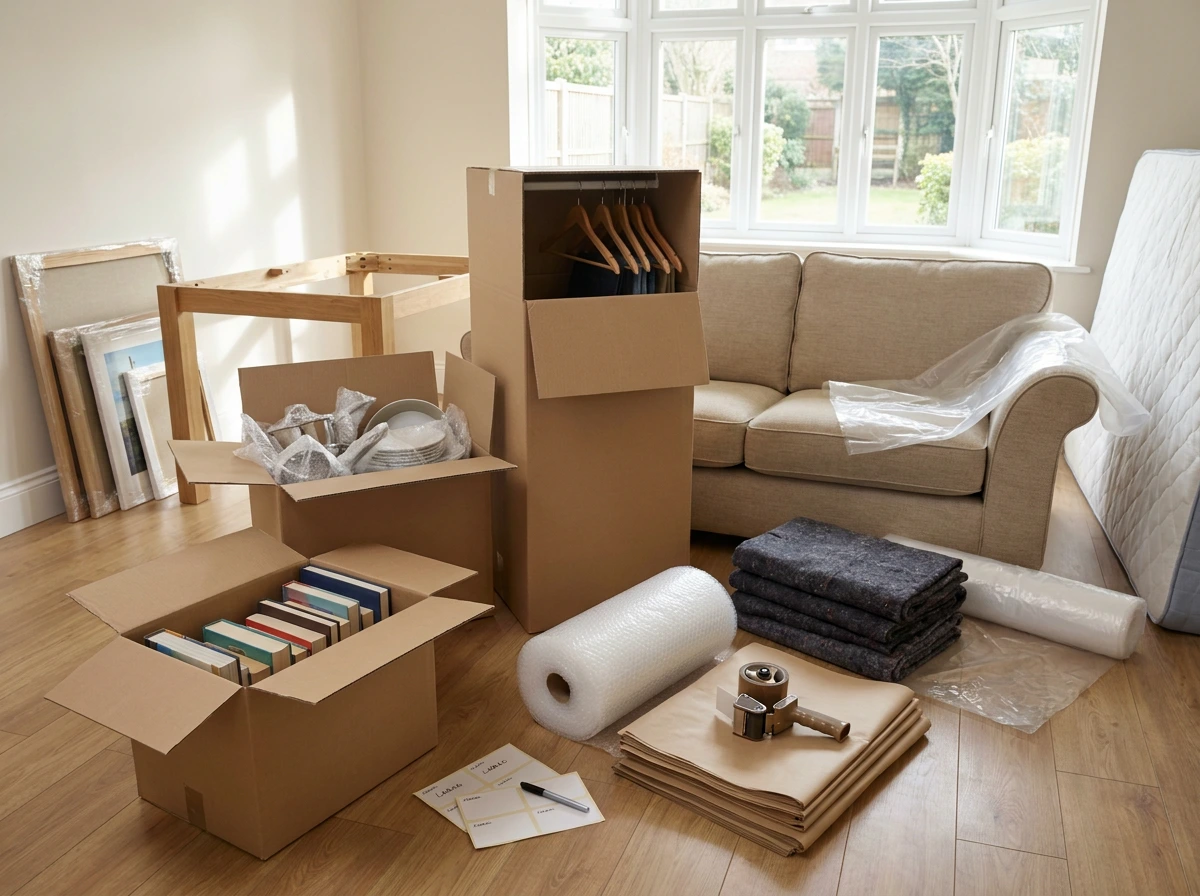
If you need moving boxes Newbury residents can collect locally, start with a full packing list rather than a box count. A move usually needs cartons in several sizes, tape, wrapping, labels, covers and a padlock if storage is part of the plan.
Newbury Self Store sells packaging materials for house and office moves, including boxes, bubble wrap and packing tape, and customers do not need to rent storage to buy them. Product sizes, stock and prices can change, so confirm the current range before purchase.
Box Choices By Size
Box size should follow weight. Large boxes are for light bulky items, not books or tools. Small and medium boxes are easier to lift when contents are dense.
The published packaging range includes:
- XL box, 20 x 20 x 30 inches.
- Large box, 18 x 18 x 20 inches.
- Medium box, 18 x 18 x 12 inches.
- Small box, 18 x 12 x 12 inches.
- Wardrobe carton with rail.
Use small boxes for books, files, tins, tools and crockery. Use medium boxes for kitchen items, ornaments, shoes and mixed household goods. Use large and XL boxes for bedding, cushions, lampshades and other light bulky items. A wardrobe carton is useful when hanging clothes need to move without being folded into ordinary boxes.
For local collection and current stock, buy boxes and packing materials in Newbury before the week of the move if you want time to pack properly.
Tape, Labels And Small Tools
Tape is cheap compared with the cost of a split box. Seal the centre seam, then tape across both flap ends. Add a second strip to heavier boxes. Do not rely on old parcel tape that has been sitting in a drawer for years.
The range includes eco paper packing tape, fragile packing tape and a tape gun dispenser. It also lists a moving label kit with 120 labels in 12 designs. Confirm current sizes and prices before collection.
Labels should help retrieval, not just loading. “Kitchen” is useful for the van, but “Kitchen: pans and mugs” is more useful when boxes are stacked. If the contents are private, number the box and keep the detailed list on your phone.
Bubble Wrap, Paper And Blankets
Packing materials for storage need to protect items during carrying, stacking and waiting. Fragile items need cushioning. Surfaces need separation. Furniture needs protection from knocks and rubbing.
The range includes bubble wrap in several roll sizes, wrapping paper and transit blankets. Choose the amount by the number and fragility of items, then confirm current sizes and prices before collection.
Use wrapping paper between plates, around glassware and for surface protection where cushioning is less important. Use bubble wrap for fragile pieces that need shock absorption. Use transit blankets for furniture while loading and unloading, especially polished surfaces and corners.
If belongings are going into storage after packing, this guide on preparing belongings before moving into storage can help turn the materials list into a room-by-room preparation routine.
Covers For Mattresses, Chairs And Sofas
Furniture covers are useful when the move involves stairs, vans, temporary storage or several helpers. They reduce dust and rubbing during handling. They should not be treated as a cure for damp or poor preparation; furniture still needs to be clean and dry before it is covered.
The range includes mattress, armchair and sofa covers. These are practical items to buy before loading day rather than after furniture has already been dragged through a hallway. Confirm current pack sizes and prices before purchase.
For sofas and chairs, protect corners and arms, then keep sharp objects away from the fabric in the van. For mattresses, keep the cover intact and avoid placing heavy boxes against the edge where they can distort the shape.
Padlocks And Storage Readiness
If the move leads into storage, a padlock may be part of the buying list. Newbury Self Store states that customers need to provide a padlock to the unit so only they can access it, and that a variety of padlocks are sold in the branch.
The packaging range includes laminated, brass and combination padlocks. Choose the type before move day and confirm the current specification and price so the storage visit is not delayed by a missing lock.
Keep one open essentials box for tape, labels, marker pen, scissors, spare bags for screws, basic tools and the padlock. That box should travel last and be unloaded first.
Quantity Decisions By Room
A sensible buying plan starts with the densest rooms. Kitchens, home offices and garages usually need smaller boxes because contents are heavy. Bedrooms and airing cupboards need larger boxes or wardrobe cartons because contents are lighter but bulky. Living rooms often need covers, blankets and bubble wrap because furniture and fragile items mix together.
Use this sequence:
- Count heavy categories first: books, files, tools, pans and crockery.
- Count light bulky categories: bedding, cushions, clothes and lampshades.
- Add fragile protection for glass, pictures, ornaments and electronics.
- Add covers for mattresses, sofas and chairs.
- Add tape, labels and a padlock if storage is involved.
Buy a little more tape and labels than the first estimate. These are the supplies that run out when boxes are being sealed quickly.
If the move also involves choosing storage space, compare the likely unit size before buying the final round of boxes, because a tightly packed one-bed flat has different needs from a bulky furniture load.
Collection Planning In Newbury
Newbury Self Store holds lots of packaging stock in store, customers can pay on collection, and they can call if they want an order prepared before arrival. The address is Unit 2 Hambridge Lane, Newbury, RG14 5TU.
That local collection detail is useful for moving boxes Newbury searches because it means the packing plan can be checked against a real product range. Prices are inclusive of VAT and stock is stated as always available, but individual needs and quantities should still be confirmed before relying on a specific purchase.
Good packing materials for storage make the load easier to carry, stack and find later. Choose box sizes by weight, protect fragile items properly, cover furniture before it is marked, and keep labels visible. For help checking current packaging stock before a move, contact the team.