
 01635 581 811
Running a successful Etsy shop from your spare bedroom works brilliantly until the day you realise you cannot actually see the spare bed anymore. Boxes of fabric stack against walls, jars of buttons colonise every surface, and that collection of vintage lace you could not resist at the car boot sale has somehow spread across three rooms. What started as a creative hobby has become a thriving business, and your home is paying the price.
The transition from casual maker to serious seller brings challenges most craft business owners do not anticipate. You are not just storing a few supplies anymore. You are managing inventory, raw materials, packaging supplies, finished stock, and the tools needed to create everything. The Etsy seller storage unit is the solution that transforms this chaos into a professional, manageable operation.
The Hidden Costs of Home-Based Craft Storage
Most Etsy sellers underestimate how quickly materials accumulate. A successful jewellery maker I worked with started with a single drawer of beads and findings. Within eighteen months, she had taken over her entire garage, her husband’s workshop, and half the loft. The real problem was not just the volume of stuff but the constant mental load of knowing where everything was scattered across the house.
Home storage creates practical problems that directly impact your bottom line. Insurance policies often do not cover business stock stored in residential properties, leaving you vulnerable if disaster strikes. Fire safety becomes a genuine concern when you are storing large quantities of fabric, paper, or other flammable materials in your home. Temperature and humidity fluctuations in garages, sheds, and lofts damage materials you have invested in. Fabric develops mildew, paper warps, adhesives dry out, and metal components rust.
The productivity cost hits harder than most sellers realise. Searching for specific materials wastes hours each week. You buy duplicates because you cannot find what you already own. This disorganisation does not just frustrate you, it delays orders and damages your reputation with customers who expect timely delivery. Craft materials self storage addresses every one of these problems by removing your inventory from your living environment entirely.
Why Self Storage Transforms Craft Businesses
Climate-controlled storage units protect materials in ways home storage simply cannot. Consistent temperature and humidity levels preserve fabric quality, prevent paper degradation, and keep adhesives workable. Think of it like the difference between storing wine in a proper cellar versus leaving it in your garden shed. The environment determines whether your investment appreciates or deteriorates.
Separating your business from your living space creates psychological benefits that affect everything from creativity to family relationships. When you close the storage unit door at the end of a work session, you are truly finished for the day. Your home becomes a home again, not a constant reminder of orders you need to pack or materials you should be using.
The scalability factor matters enormously as your business grows. You can start with a small unit and upgrade as your inventory expands, paying only for the space you actually need. Professional craft sellers who make the switch to dedicated storage report a significant mindset shift. Your Etsy shop stops feeling like a hobby that has gotten out of hand and starts operating like the legitimate business it actually is.
Setting Up Your Craft Storage Unit Effectively
Choosing the right unit size requires honest assessment of your current inventory plus growth room. A 50 square foot unit suits jewellery makers or small-scale crafters with limited inventory. Fabric-based businesses like quilters or dressmakers typically need 75 to 100 square feet to store materials properly. If you are running a multi-product shop or doing wholesale, consider 125 square feet or larger.
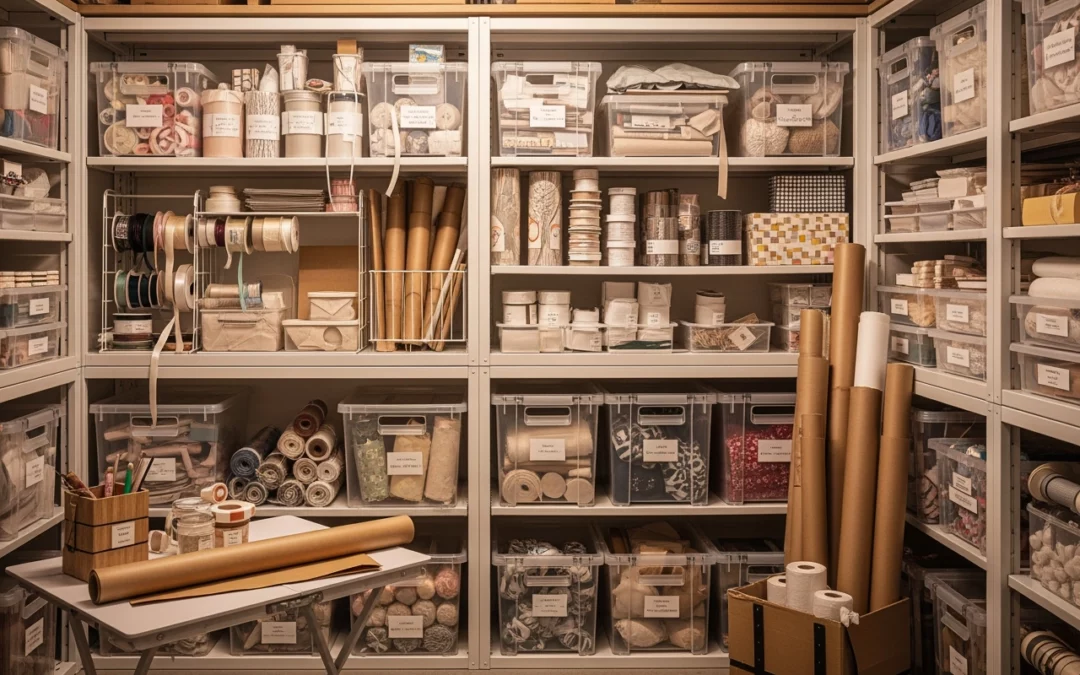
Vertical space becomes your greatest asset in a storage unit. Industrial shelving units maximise floor-to-ceiling storage whilst keeping everything visible and accessible. Create distinct zones within your unit based on your workflow: one area for raw materials organised by type, another for works in progress, a third for finished stock ready to ship, and a fourth for packaging supplies and shipping materials.
Clear plastic storage boxes with labels transform chaos into order. You can see contents at a glance without opening every container. For all your shop packing materials, sourcing quality boxes, tissue paper, and protective wrapping from a specialist supplier ensures your finished products reach customers in the condition your Etsy reviews depend on.
Inventory management becomes non-negotiable once you are using off-site storage. A simple spreadsheet listing what you have and where it is located prevents wasted trips. Update it every time you add or remove materials. This discipline saves enormous time and prevents the expensive mistake of buying materials you already own.
How Professional Storage Supports Craft Businesses
Newbury Self Store understands that craft sellers need more than just empty space. Security features including CCTV monitoring, individual unit alarms, and controlled access protect valuable inventory. When you have invested thousands in materials and finished stock, knowing it is properly secured provides genuine peace of mind.
Flexible access arrangements matter enormously for craft businesses that do not operate on standard schedules. You might need to pack orders at 7am before your day job or restock materials at 9pm after the children are in bed. Extended access hours accommodate the reality of how many Etsy sellers actually work. The Etsy seller storage unit works best when the facility’s access policies work around your schedule, not the other way around.
Many craft sellers use their storage unit as a hybrid workspace, bringing portable tables and good lighting to create an area for tasks that need space. Cutting fabric, assembling large orders, or photographing products all work well in a storage environment. You are essentially creating a private studio without the cost of commercial premises.
Material-Specific Organisation Strategies
Fabric storage requires attention to prevent creasing, fading, and pest damage. Roll rather than fold large pieces to avoid permanent crease lines. Store fabric on shelves rather than in sealed boxes to allow the air circulation that prevents mildew. Keep an inventory by colour, type, and yardage so you can plan projects without visiting the unit first.
Small components like beads, buttons, findings, and embellishments need systematic organisation or they become unusable chaos. Hardware storage systems with small drawers work brilliantly for jewellery makers. Tackle boxes, craft organisers, and compartmentalised cases keep tiny items sorted and visible. Label every compartment, because what seems obvious today becomes mysterious six months later.
Tools and equipment deserve dedicated storage that protects them whilst keeping them accessible. Hang cutting tools on pegboards where you can see them. Store sewing machines in their cases to prevent dust accumulation. Packaging and shipping supplies take up surprising amounts of space, so flat-pack boxes before storing them and keep postal tubes, bubble wrap, and branded packaging together in one dedicated zone.
Maintaining Your System Long-Term
Monthly audits keep your storage system functional rather than letting it degrade into another mess. Schedule a specific date each month to review what you have, reorganise anything that has drifted out of place, and update your inventory list. This regular maintenance takes an hour but prevents the overwhelming reorganisation projects that result from neglect.
Seasonal rotation strategies suit craft businesses with fluctuating product lines. Christmas decoration makers need easy access to relevant materials from September through December but can store them further back during summer. A flexible workspace storage business unit provides the room to organise seasonal rotation without the constraints of a home workspace where everything competes for the same square footage.
Plan for growth by leaving expansion room in your organisational system. Do not pack shelves so tightly that adding new materials becomes impossible. Track which materials you actually use versus what sits untouched. After a year, you will have clear data about what deserves valuable storage space and what you are keeping for emotional rather than practical reasons.
Building a Sustainable Craft Business Model
The difference between a hobby that costs money and a business that generates profit often comes down to organisation and efficiency. When you can find materials quickly, pack orders efficiently, and maintain professional inventory control, you are operating like a real business. For craft materials self storage to deliver real value, the system you build inside the unit must be as deliberate as the products you make.
Practical large storage options work well for makers dealing with bulky materials, large rolls of fabric, or heavy equipment that cannot be stacked on standard shelving. Ground-level access removes the handling challenges that arise when you are moving awkward, oversized items in and out of your unit regularly.
Many successful Etsy sellers describe their Etsy seller storage unit as the turning point when their shop transformed from side hustle to serious income source. The investment in proper storage forced them to think strategically about inventory, organisation, and business growth. What felt like an expense became the foundation for scaling up.
Making the Transition Work
Moving materials from home to storage requires planning but delivers immediate benefits. Start by sorting everything into keep, sell, and discard categories. You will likely discover you are storing materials you will never use. Packing systematically by category rather than randomly boxing things up, labelling everything clearly before it leaves your house, and creating your inventory list as you pack forces you to confront exactly what you own.
Set up your storage unit before moving everything in. Install shelving first, plan your zones, and create a logical layout. Moving into an organised space prevents the dumping-ground syndrome that defeats the entire purpose. The first month requires adjustment as you learn what you need frequent access to versus what can stay further back. Keep notes about what works and what does not, then reorganise accordingly.
Your craft business deserves the same professional infrastructure that any other small business requires. Proper craft materials self storage is not a luxury but a fundamental business tool that protects your investment, increases efficiency, and creates the physical and mental space needed for sustainable growth. The organised craft seller is the profitable craft seller.
Call 01635 581 811 or contact us to find the right storage solution for your Etsy business and reclaim your living space.