
 01635 581 811

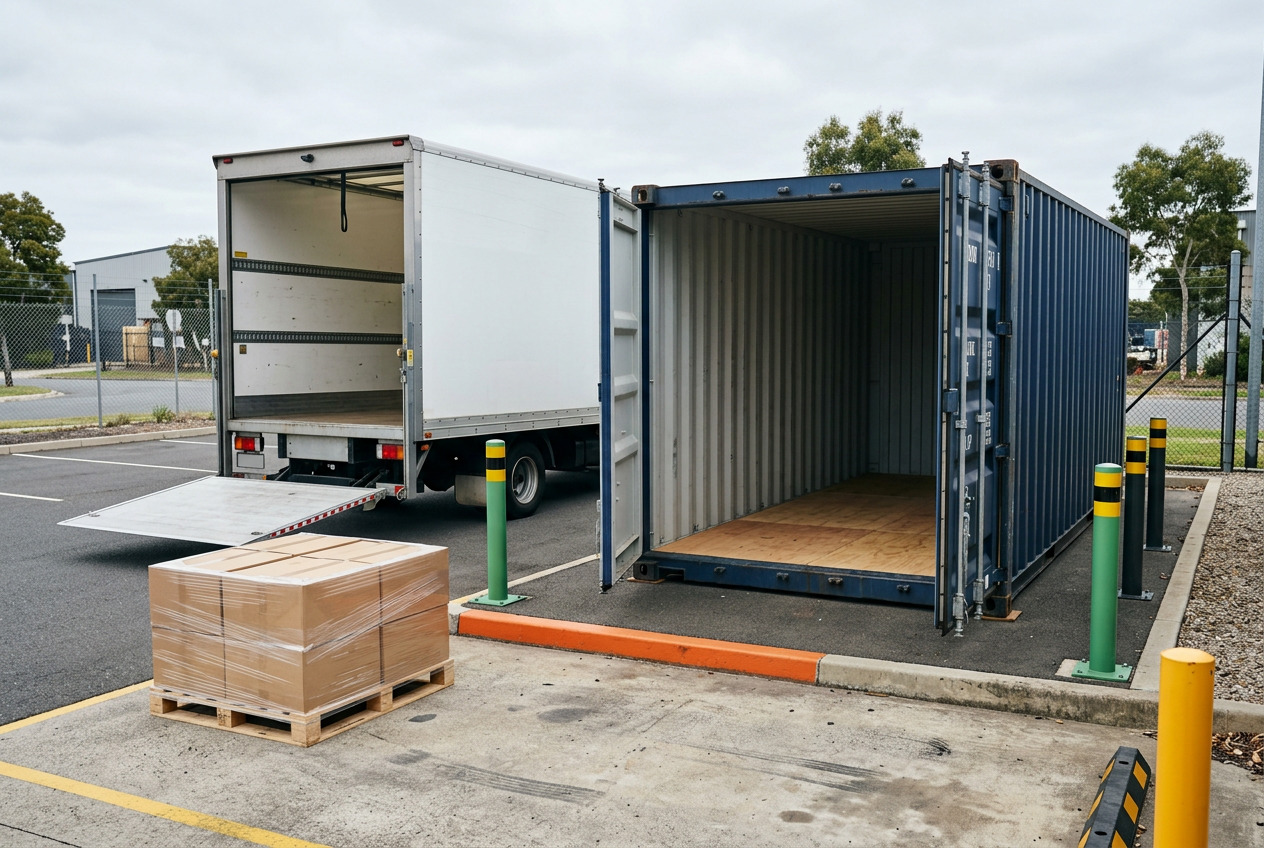
Before your supplier dispatches goods to a storage container, confirm how the load will move from the vehicle into the space. A delivery address alone does not tell the haulier whether unloading is possible, what equipment is needed or who will complete the transfer.
The arrangements must account for the actual consignment, not simply the fact that you rent a container. Boxed stock arriving in a van presents different handling requirements from a heavy pallet delivered by lorry.
Planning the movement before dispatch gives the supplier, carrier and storage provider time to agree on a suitable approach. It also reduces the risk of delays, unsuitable equipment or goods being left somewhere other than their intended storage position.
Confirm The Load Before Booking Transport
Start by checking the supplier’s paperwork. Establish the number of pallets and cartons, their packed dimensions, individual weights, packaging types and any special handling requirements. If these details are unavailable, ask when the supplier can confirm them before choosing an unloading method.
Use packed dimensions rather than product measurements alone. A machine may fit inside the container, but its protective crate could require considerably more space. Wrapping, pallet overhang and additional packaging can also affect how much room an item needs.
Record the dimensions and weight of the largest individual item, not just the total consignment. If the delivery contains pallets, cartons and loose items, list each group separately. This makes it easier to identify different handling requirements before transport is arranged.
Also confirm whether pallets and protective packaging will remain with the goods. Planning around product dimensions alone can leave insufficient space for the load as delivered.
Keep the proposed unloading method suitable for the packaging. If goods need to be removed from pallets before entering the container, establish who will do this and how the individual items will be handled. Removing wrapping or separating products does not replace the need for suitable lifting and moving equipment.
Check The Vehicle And Unloading Method Together
Ask the supplier which vehicle it intends to use and how the goods will be unloaded. A pallet delivery does not automatically include a suitable unloading service. Confirm whether the vehicle has a tail lift, whether the driver will operate it and what equipment or assistance is expected at the destination.
We have moving equipment including pallet trucks, flat-bed trolleys and wheeled step-ladders. However, equipment available on site does not necessarily cover the transfer from a vehicle bed to ground level.
For example, a pallet truck can move a pallet across a suitable surface, but it cannot independently lower one from a lorry bed. Confirm how the load will be brought down before deciding how to move it towards the container.
Give the carrier the packed dimensions and individual weights so it can assess whether its vehicle and unloading equipment are suitable. Do not stop at asking whether a tail lift is fitted. Establish whether the proposed arrangement can handle the specific consignment safely.
For heavy or awkward deliveries, send us the vehicle and load details before dispatch. Discuss where the vehicle will stop, the route to the container and any space needed for unloading equipment.
Ground-level storage avoids carrying goods through a building, but it does not guarantee that every vehicle or handling method will be suitable.
The HSE loading and unloading guidance recommends that companies involved in a delivery agree on unloading arrangements in advance. Hauliers and recipients should exchange information about loads so suitable procedures can be established.
Check The Whole Route Into The Container
Our container storage in Newbury uses standard twenty-foot containers with 160 square feet of internal space. The containers are at ground level, which can simplify access for suitable deliveries.
However, available floor area alone does not establish whether a packed item will fit through the entrance. It also does not confirm whether there is enough room to manoeuvre the goods into their intended position.
For bulky items, compare the packed dimensions with the container entrance and planned movement route. Include the space required by the handling equipment, not just the dimensions of the goods.
If you are unsure whether an item will fit, we encourage you to visit and inspect the containers before arranging delivery.
Plan the entire route from the vehicle’s unloading position to the final storage location. Account for the doorway, threshold, available turning space and any changes in surface. Ask the person responsible for moving the goods to confirm that their equipment can negotiate the route.
Prepare the receiving space before the delivery arrives. If older items need moving, complete this beforehand. Reorganising a full container while a driver waits can create unnecessary handling and delays.
The unloading area also needs consideration. HSE guidance recommends keeping these areas clear of unrelated traffic and pedestrians, with firm, level ground to support vehicle stability.
Agree where unloading will take place and how people not involved in the operation will stay clear. Do not assume that a shared access route can be used for temporary storage without discussing it with us.
Weather can also affect the transfer into an outdoor container. Ask the supplier whether the packaging can protect the goods during unloading. If items cannot tolerate exposure, agree on suitable arrangements before dispatch.
Assign Responsibility For Every Movement
Put the unloading agreement into the transport booking. Identify who supplies the equipment, who operates it and who moves the goods from the unloading position into the container.
If the driver’s responsibility ends after lowering a pallet to the ground, someone must still complete the remaining movement. Make this distinction clear rather than relying on general statements such as assistance being available.
The carrier needs to understand its responsibilities, while anyone helping with the transfer needs suitable instructions. HSE specifically highlights the need to provide visiting drivers with the instructions, equipment and co-operation required for safe unloading.
We can receive container deliveries during opening hours, free of charge, if you cannot be present or are unsure of the exact delivery time. Our external containers also offer customer access 24 hours a day, seven days a week.
These are separate arrangements. Round-the-clock access to your container does not mean staffed delivery acceptance is available at all hours.
Confirm the receiving window and consignee details with us before dispatch. If we are receiving goods while you are absent, establish where they will be left and who will move them into their final position.
Our delivery acceptance service should not be treated as an inspection or stock-management service. Arrange your own business checks separately, including attendance if the supplier requires immediate inspection.
Before dispatch, confirm that someone is responsible for every stage of the transfer. If the carrier only lowers the pallet to ground level and nobody is assigned to move it onwards, the unloading plan remains incomplete.
Reassess Changes To The Load Or Vehicle
A change to the vehicle or consignment can make the original unloading arrangements unsuitable. An additional pallet may exceed the space cleared inside the container. A heavier replacement item may also require different equipment.
Ask the supplier to notify you of changes before dispatch. This gives you time to review the arrangements with the carrier and us instead of improvising when the delivery arrives.
Check revised arrival times as well. A delay could affect the availability of the people or equipment needed to complete the transfer.
You should also account for loads that have shifted during transit. HSE advises checking the load before unloading and confirming that goods are unlikely to move or fall when restraints are removed.
This is a safety check, not simply an inspection of product condition. A delivery can match the purchase order and still require a different unloading approach because its packaging or position has changed.
HSE also recommends checking that pallets are in good condition and loads are properly secured. Ask the supplier to prepare the goods for the agreed unloading method, not merely for transport.
If damaged packaging, a broken pallet or an unstable load makes the original method unsuitable, pause the operation. Resolve the issue with the carrier before unloading continues.
Agree When Unloading Is Complete
The unloading plan should establish how the driver will know when it is safe to move the vehicle. This is particularly important when the driver, storage staff and other people are responsible for different parts of the operation.
HSE highlights the risk of drivers moving away before unloading is complete or the area is safe. Agree on a clear signal or procedure with the carrier before delivery.
Its guidance gives examples of safeguards against premature vehicle departure, including vehicle restraints and arrangements where the person in charge retains keys or paperwork until movement is safe. The appropriate measure will depend on the vehicle and unloading operation.
Vehicle stability also needs to be addressed. HSE advises applying brakes, using available stabilisers and distributing loads as evenly as possible during unloading.
These arrangements should be confirmed with the people controlling the vehicle and handling operation. They should not be left until the delivery arrives.
Confirm The Handling Plan Before Dispatch
A container delivery is ready to book when the vehicle can unload the specified consignment, the route into the container is suitable and every movement has an assigned person and appropriate equipment.
Keep these arrangements together in the transport booking. If an essential handling requirement remains unresolved, address it before the goods leave the supplier.
For your forthcoming container delivery, contact us or call 01635 581811 with the proposed date, carrier, vehicle type, packed dimensions, weights and unloading requirements.
We can discuss the receiving arrangements against our opening hours and your container access. Combine this with confirmation from the carrier to establish how the goods will reach their final storage position, not simply where the vehicle should arrive.


