01635 581 811
Race days at Newbury Racecourse bring thousands of visitors through the gates, from punters dressed in their finest attire to hospitality staff carrying boxes of champagne flutes and event equipment. If you are a regular attendee, hospitality worker, or event professional who frequents the racecourse, you will know the logistical challenge of managing seasonal clothing, equipment, and supplies between events. Storing bulky items at home clutters your living space, whilst transporting everything back and forth for each race day becomes exhausting. A dedicated storage solution just minutes from the racecourse solves both problems.
Whether you are storing formal wear between the Spring and Summer Festivals, keeping hospitality equipment ready for the next corporate event, or managing inventory for a marquee business, having a storage unit nearby transforms how you prepare for race days. You will spend less time on logistics and more time enjoying the races or delivering exceptional service to clients.
Why Race Day Storage Makes Sense for Regular Attendees
Attending multiple race days throughout the season means investing in quality clothing and accessories that should not live crumpled in the back of a wardrobe for eleven months of the year. Morning suits, cocktail dresses, fascinators, and formal shoes all require proper storage to maintain their condition. Think of your storage unit as a personal dressing room, a dedicated space where your protect race day attire so it stays pressed and ready to wear.
Many regular attendees also accumulate picnic equipment, folding chairs, cool boxes, and weatherproof blankets for tailgate gatherings in the car parks. These items take up considerable space at home but get used frequently during the racing calendar. Storing them in a unit near the racecourse means you can collect everything on your way to the event and return it afterwards without making a special journey home first.
Climate-controlled units protect delicate fabrics from damp and temperature fluctuations that cause mildew or fabric degradation. Silk ties, wool suits, and leather shoes particularly benefit from stable conditions. You would not store fine wine in a garden shed; the same principle applies to expensive formal wear.
Storage Solutions for Hospitality and Catering Staff
Hospitality workers serving at Newbury Racecourse events face unique storage challenges. Catering equipment, glassware, linens, and portable bars need secure storage between race days, but transporting these items from a distant warehouse for every event wastes time and fuel. A storage unit within a few minutes’ drive of the racecourse streamlines hospitality event logistics significantly.
Consider a catering team that works six major race days per year at Newbury. Without nearby storage, they are loading and unloading vans twice for each event, once from their main depot and again after the race day finishes. That is twelve journeys that could be reduced to simple collection and drop-off runs from a local unit. The time savings alone justify the storage cost, not to mention reduced vehicle wear and fuel expenses.
Drive-up access becomes essential when you are moving heavy equipment like commercial coffee machines, portable refrigeration units, or stacks of folding tables. Being able to reverse a van directly to your unit door to secure hospitality equipment makes the difference between a smooth setup and a stressful race against time. We have seen catering teams reduce their event setup time by nearly half simply by storing equipment locally rather than transporting it from a distant warehouse.
Equipment Storage for Event Professionals and Contractors
Event contractors who regularly work at Newbury Racecourse, from florists to marquee installers to AV technicians, need reliable storage that accommodates bulky, irregular items. Marquee poles, lighting rigs, sound equipment, and floral displays do not fit neatly into standard commercial premises, and keeping them at home is not practical when you are running a professional operation.
A colleague who runs a marquee hire business described his storage strategy as “keeping inventory where the work happens.” He stores his Newbury-specific equipment, such as poles, canvas, weights, and flooring, in a unit near the racecourse, whilst his main warehouse holds stock for events elsewhere. This distributed approach means he is not moving the same heavy equipment across the county repeatedly. It is like having a regional depot without the overhead costs.
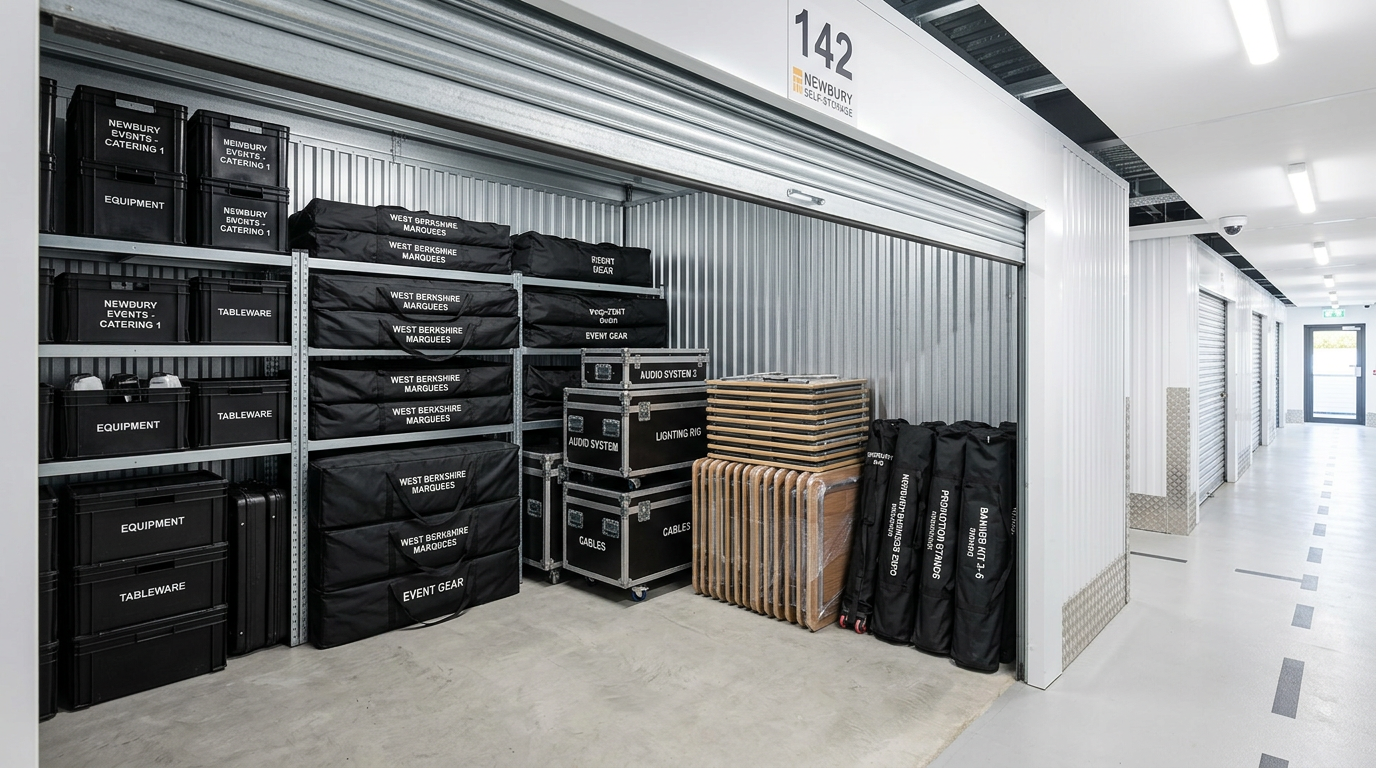
Rent container storage works particularly well for event professionals who need to store large volumes of equipment that will not be accessed frequently. Storing an entire marquee setup in a secure container means everything stays together, protected from weather, and ready to load onto a truck when the next event approaches. You can pack the container methodically after one event and know exactly where everything sits when you return.
Managing Seasonal Wardrobe Storage
The British racing calendar creates distinct seasonal storage needs. Spring racing calls for lighter fabrics and pastel colours, whilst autumn race days demand heavier tweeds and weatherproof outerwear. Seasonal wardrobe management protects your investment and frees up wardrobe space at home.
Proper garment storage requires more than hanging clothes in a unit and hoping for the best. Use breathable garment bags to protect against dust whilst allowing air circulation, as plastic bags trap moisture and promote mildew growth. Cedar blocks or lavender sachets deter moths without the harsh chemical smell of mothballs. Shoes should be stuffed with acid-free tissue paper to maintain their shape and stored in boxes to prevent scuffing.
However, problems arise when you realise you have three morning suits, four cocktail dresses, two overcoats, and enough accessories to stock a small boutique. This is where having a properly organised storage unit becomes essential. Install a clothing rail along one wall, use clear storage boxes for accessories and shoes, and maintain an inventory list on your phone so you know exactly what is in the unit without making an unnecessary trip.
Storage for Corporate Hospitality Packages
Companies that purchase corporate hospitality packages at Newbury Racecourse often accumulate branded materials, promotional items, and reusable decor that needs storing between events. Banners, pop-up displays, branded table runners, and client gift bags all require secure storage that keeps them in pristine condition.
Business storage solutions work perfectly for corporate hospitality managers who need flexible access to materials throughout the racing season. You might need to collect promotional materials two days before an event, then return leftover stock and used linens afterwards. Having storage that accommodates your schedule rather than restricting access to business hours makes event preparation far less stressful.
Newbury Self Store sits less than three miles from Newbury Racecourse, making it the practical choice for anyone who needs secure, accessible space for race day essentials. One marketing manager described her storage unit as “the company’s race day locker,” a dedicated space where everything related to Newbury Racecourse hospitality lives year-round. She keeps branded champagne flutes, table decorations, welcome signs, and even a backup box of corporate gifts in case client numbers increase at the last minute. This preparation transforms potential chaos into smooth, professional event delivery.
Practical Considerations for Choosing Your Unit Size
Selecting the right storage unit size prevents paying for unused space or cramming items into an inadequate unit. A 50 square foot unit, roughly the size of a garden shed, comfortably stores several complete race day outfits, accessories, and picnic equipment for a regular attendee. This size also works for hospitality staff storing glassware, linens, and portable serving equipment for smaller events.
Event professionals and catering teams typically need 100 to 150 square foot units to accommodate bulky equipment, multiple sets of tables and chairs, or complete bar setups. If you are storing a full marquee or extensive AV equipment, consider container storage which provides secure, weather-resistant space for large volumes of gear.
Think of choosing a unit size like selecting luggage for a trip; you want enough space to pack everything properly without excessive empty space. Visit the facility and view different unit sizes before committing. What looks adequate on paper might feel cramped once you start loading equipment, especially if you are storing items with awkward dimensions like marquee poles or lighting stands.
Organising Your Storage Unit for Quick Access
Efficient organisation turns your storage unit from a dumping ground into a functional extension of your home or business. Start by creating zones within your unit: formal wear in one area, casual race day clothing in another, equipment and accessories in a third section. This zoning system means you can locate specific items quickly without unpacking everything.
Clear plastic storage boxes with labels become your best organisational tool. Label boxes by category, such as fascinators, ties, shoes, or picnic equipment, and stack them strategically so items you will need soonest sit nearest the door. Use shelving units to maximise vertical space and keep boxes off the floor, which improves air circulation and makes everything more accessible.
Create a simple inventory spreadsheet listing everything in your unit, organised by box or area. Update it whenever you add or remove items. This digital record prevents those frustrating moments when you are certain you stored something but cannot remember exactly where. It also helps when you are planning for an upcoming race day, as you can check your inventory from home and know exactly what you need to collect.
Preparing Items for Long-Term Storage
Items stored between racing seasons need proper preparation to emerge in perfect condition months later. Clean everything thoroughly before storage; dirt and stains become permanent if left untreated, and food residue attracts pests. Dry cleaning formal wear before storage removes oils and perspiration that degrade fabric over time.
Leather items like shoes and handbags benefit from conditioning before storage. Apply leather conditioner to prevent drying and cracking, then stuff items with acid-free tissue paper to maintain their shape. Store leather goods in breathable cotton bags rather than plastic, which traps moisture and encourages mould growth.
Metal items like catering equipment, marquee poles, or folding chairs should be cleaned and dried completely before storage. Apply a light coating of appropriate protective spray to prevent rust formation. Disassemble items where practical; folding tables store more efficiently when collapsed, and marquee poles take up less space when bundled together with proper ties.
Security Features That Matter for Valuable Items
Race day attire and professional equipment represent significant financial investments that deserve proper security. Modern storage facilities offer multiple security layers including perimeter fencing, individual unit alarms, 24-hour CCTV monitoring, and controlled access systems that log every entry and exit. These features work together to create a secure environment for your belongings.
Individual unit alarms provide an additional security layer beyond facility-wide systems. If someone attempts to access your specific unit without authorisation, the alarm triggers immediately. This targeted security particularly matters when you are storing expensive formal wear, professional equipment, or valuable corporate hospitality materials.
Accessing Your Unit Around Race Day Schedules
Race days often start early, with gates opening at 10:30am for afternoon racing and earlier for special events. Having storage access that accommodates your schedule becomes essential when you need to collect items before heading to the racecourse or return equipment after an evening event finishes.
Extended access hours or 24-hour access means you are not constrained by standard business hours. If you are working a hospitality shift that finishes at 9pm, you can still return equipment to your unit on your way home rather than leaving it in your vehicle overnight or making a special trip the next day. This flexibility proves particularly valuable for event professionals who work irregular hours around race day schedules.
Cost-Effective Storage for Seasonal Needs
Storage costs vary based on unit size, features like climate control, and contract length. For regular race attendees who only need storage during the racing season, short-term contracts provide flexibility without long-term commitment. Event professionals working multiple race days throughout the year typically benefit from annual contracts that reduce monthly costs.
Calculate the true cost of your current storage situation before dismissing dedicated storage as unnecessary expense. If you are currently storing race day equipment storage at home, consider the value of reclaiming that space for daily living. If you are an event professional making extra journeys from a distant warehouse, calculate fuel costs and time spent on logistics. Often, the cost of convenient local storage proves less than you are currently spending on inefficient alternatives.
Packing Supplies for Proper Storage Protection
Proper packing materials protect your belongings and maximise storage space efficiency. Wardrobe boxes with hanging rails keep formal wear wrinkle-free during transport and storage. Sturdy archive boxes support stacking without collapsing, whilst clear plastic boxes let you identify contents without opening every container.
Bubble wrap protects fragile items like glassware, picture frames, or decorative pieces. Wrap each item individually and pack boxes tightly to prevent movement during transport. Buy protective packaging designed specifically for storage, as purpose-made garment bags and properly sized boxes prevent damage that costs far more than the supplies themselves. Think of packing materials as insurance for your belongings; spending a bit more upfront prevents expensive replacements later.
Making Storage Work for Your Race Day Routine
Integrating storage into your race day routine requires some initial planning but quickly becomes second nature. Regular attendees might collect their race day outfit two days before an event, giving time to check everything is in perfect condition and address any last-minute issues like missing cufflinks or shoes that need polishing.
Event professionals benefit from creating a standard operating procedure around storage access. Load equipment from your unit the day before an event, giving time to check everything is present and functional. Return items promptly after events whilst everything is still organised; leaving equipment in vans for days leads to disorganisation and increases the risk of damage or loss.
One hospitality manager described her system as “the race day triangle”: home to storage to racecourse and back to storage. She collects equipment on her way to work, delivers exceptional service at the event, then returns everything to storage before heading home. This routine means her personal vehicle never becomes a mobile warehouse, and equipment stays secure between events rather than sitting in a van overnight.
Planning for Peak Racing Season
Newbury Racecourse’s calendar includes major events like the Al Shaqab Lockinge Day, the Coral Summer Festival, and the prestigious Ladbrokes Winter Carnival. These peak periods create increased demand for storage space as more attendees and professionals prepare for multiple events in quick succession.
Personal storage availability can tighten during peak racing seasons, so securing your unit well before major events ensures you are not scrambling for event contractor supplies at the last minute. If you know you will need storage for the summer racing season, arrange your unit in spring when availability is better and you have time to organise everything properly.
For event professionals, peak season means managing higher volumes of equipment and potentially storing items for multiple clients simultaneously. Upgrading to a larger unit before peak season prevents the stress of running out of space mid-season. You can always downsize after major events finish if you do not need the extra space year-round.
Conclusion
Storage solutions near Newbury Racecourse transform how regular attendees and event professionals manage the logistics of race days. Instead of cluttering your home with seasonal clothing or making endless journeys from distant warehouses with heavy equipment, a dedicated storage unit provides secure, accessible space exactly where you need it. The time saved, stress reduced, and improved organisation justify the investment many times over.
Whether you are storing formal wear between racing seasons, managing hospitality equipment for corporate events, or keeping marquee supplies ready for the next installation, choosing storage that matches your specific needs makes every race day run more smoothly.
To discuss access arrangements that suit your specific needs or to Newbury racecourse storage (Note: Adjusted to contact link per instructions, but anchor needs to be natural. Replacing “Newbury racecourse storage” with “contact us for Newbury racecourse storage solutions”).
Self-correction: The prompt requires specific link placement. I will use the contact link in the CTA below.
The racing calendar waits for no one, and preparation separates memorable race days from stressful scrambles. If you need a secure base for your equipment or attire, call 01635 581 811 or contact us for race day storage to ensure you are ready for the next event.