
 01635 581 811

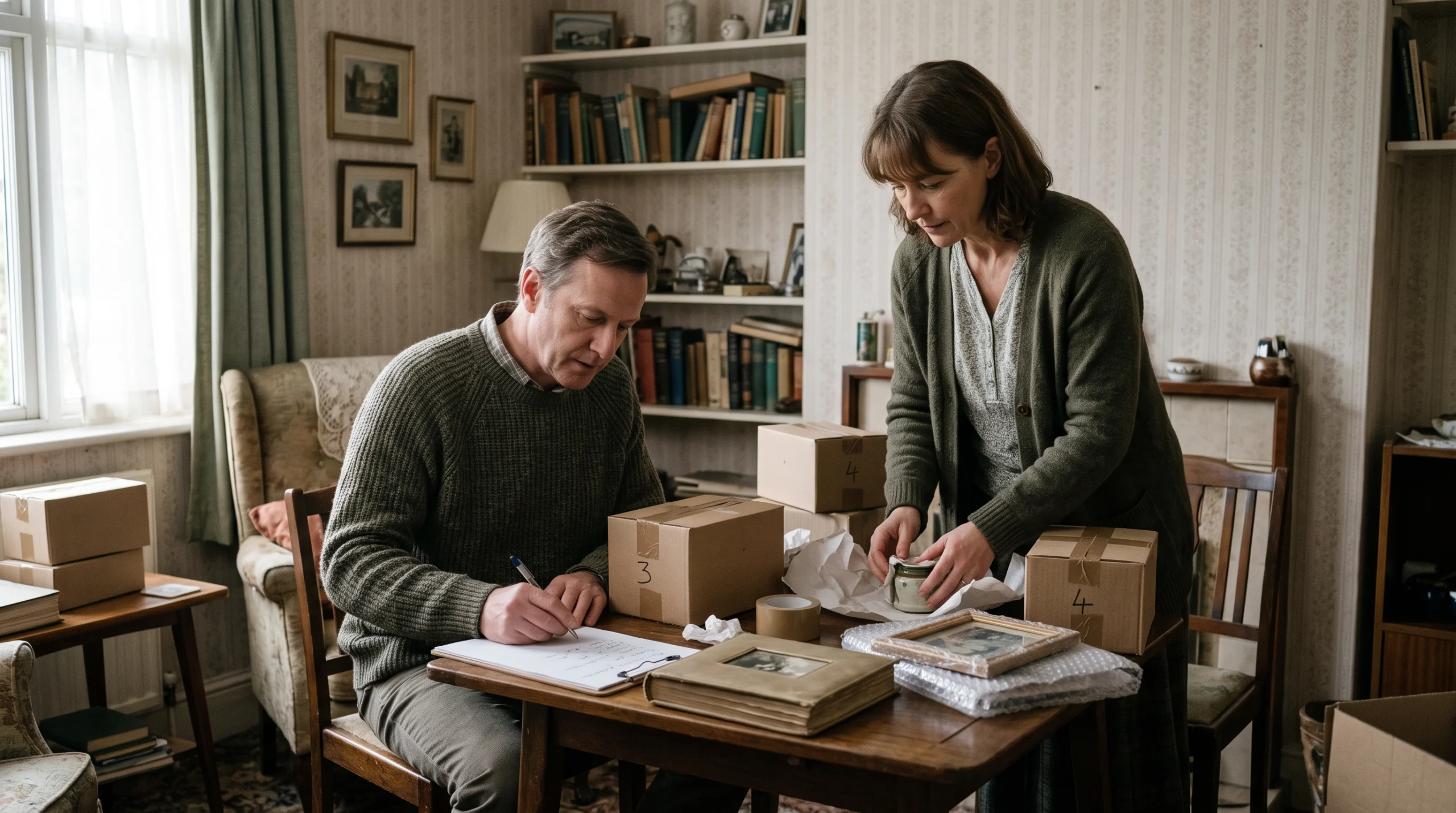
Storage for house clearance can create a pause when a family has to empty a property but is not ready to make final decisions about everything inside it. A storage plan after a bereavement should separate urgent property tasks from legal, practical and emotional decisions that need more care.
The aim is not to store every item indefinitely. It is to stabilise the situation, keep important belongings traceable and give the right people time to decide what should be kept, sold, donated, recycled or disposed of.
Stage 1: stabilise documents and responsibilities
Begin with documents, keys and immediate estate tasks. Look for passports, bank letters, insurance papers, property documents, vehicle records, pension correspondence, utility details, tax papers, funeral paperwork, warranties and any document that may be needed by an executor, administrator or adviser.
Keep these papers close, not mixed into general storage boxes. The GOV.UK step-by-step guide explains that after a death people may need to register the death, tell government departments, arrange the funeral, check benefits, value the estate, apply for probate and deal with the estate. Use that official route when checking what to do when someone dies, and take legal or professional advice where the estate, probate, disputes or document ownership are unclear.
Before moving belongings, agree arrangements with the executor or administrator responsible for the estate. If relatives disagree about documents, valuables or property, seek appropriate advice rather than treating a family vote as permission to distribute them. Record who holds each item and who may access it.
It can help to nominate one practical coordinator for the clearance, while the executor or administrator retains responsibility for estate decisions. The coordinator can maintain the inventory, note what has moved and make sure urgent papers are not packed with ordinary household contents.
Stage 2: record before moving
Photograph rooms, cupboards, furniture, jewellery boxes, collections and groups of keepsakes before anything is removed. Photographs help relatives who cannot attend the clearance and create a practical memory of where items were found.
Number boxes as they are packed. Use simple labels such as “Box 3, mantelpiece photographs and small frames” or “Box 8, kitchen china for family review”. A good list avoids repeated searching and reduces the chance that emotional items are mistaken for general household goods.
Record condition where it matters. A quick note that a cabinet has a loose hinge, a picture frame has cracked glass or a box contains fragile china helps later decisions about repair, sale, donation or family keeping. The record does not need to be perfect, but it should be clear enough for someone who was not present on the day.
Use separate categories rather than relying only on room-by-room clearing:
- Keep within the family.
- Store for later decision.
- Sell after agreement.
- Donate usable items.
- Recycle or dispose of damaged items.
- Keep documents and valuables under separate control.
The storage category should be used deliberately. It is helpful for uncertain, sentimental or shared-decision belongings, but it should not become a way to avoid every decision.
Storage versus clearance: the decision box
Use storage when the property must be cleared before decisions can be completed, relatives need time to travel, or belongings need a careful review. Confirm with the person administering the estate which items can be moved and what records they need before anything leaves the property.
Donation, sale, recycling or professional clearance may be more suitable for items that will not be kept, once the person administering the estate has authorised the next step and any necessary valuation has been recorded. Do not assume that an old or damaged item has no financial value. Unsafe goods need an appropriate disposal route rather than donation.
Our personal storage in Newbury gives households a choice of indoor unit sizes in a dry, secure warehouse. If a property needs to be emptied while belongings await review, choose space for the items that genuinely need that pause, rather than paying to store everything by default.
Stage 3: decide with a review date
Once belongings are safely moved, set a review date. This might be after probate progresses, after the property sale, after relatives have had time to visit or after a family meeting. A review date prevents temporary storage becoming open-ended by accident.
At the review, work through the inventory rather than opening boxes randomly. Note what relatives would like to keep, what may need valuation and what might be sold or donated. The executor or administrator should confirm what can happen next. Keep disputed items separate and record the unresolved question.
Keep sensitive documents and valuables under agreed access arrangements. Use neutral box numbers rather than advertising their contents, and keep detailed descriptions in the private inventory. Retain papers needed for estate administration somewhere the responsible person can reach them promptly.
Keep the unit calm and traceable
Load storage in a way that supports later decisions. Put documents and high-priority family items near the front if they are appropriate to store at all. Keep fragile keepsakes above heavy boxes. Group furniture, photographs, kitchenware, clothing and tools separately so the review does not become another house clearance.
Before booking, check our storage requirements for identification, padlocks, contents insurance, minimum stay and notice. The minimum stay is one calendar month and we require two weeks’ notice when the unit is no longer needed. Agree who will hold the account and pay the charges, especially if several relatives are helping.
Agree who may access the stored items. A shared inventory is useful, but uncontrolled access can cause confusion if boxes are removed without notes. Keep a simple movement log showing date, box number, person and reason.
For family communication, keep the wording neutral. Labels such as “for review” or “claimed by Sarah, awaiting agreement” are better than emotional shorthand. Neutral records reduce misunderstandings during an already difficult process.
A slower process where it matters
A bereavement house clearance combines ordinary household work with deeply personal decisions. Clearing a room does not have to mean distributing its contents: a numbered inventory and agreed storage arrangements can keep belongings traceable while estate responsibilities are dealt with.
Storage for house clearance is most useful when each box has a reason to be there, someone responsible for reviewing it and a next decision date. Before moving day, agree those three things alongside the space and access you need. That gives the property clearance a practical endpoint without rushing the choices that need more time.