
 01635 581 811

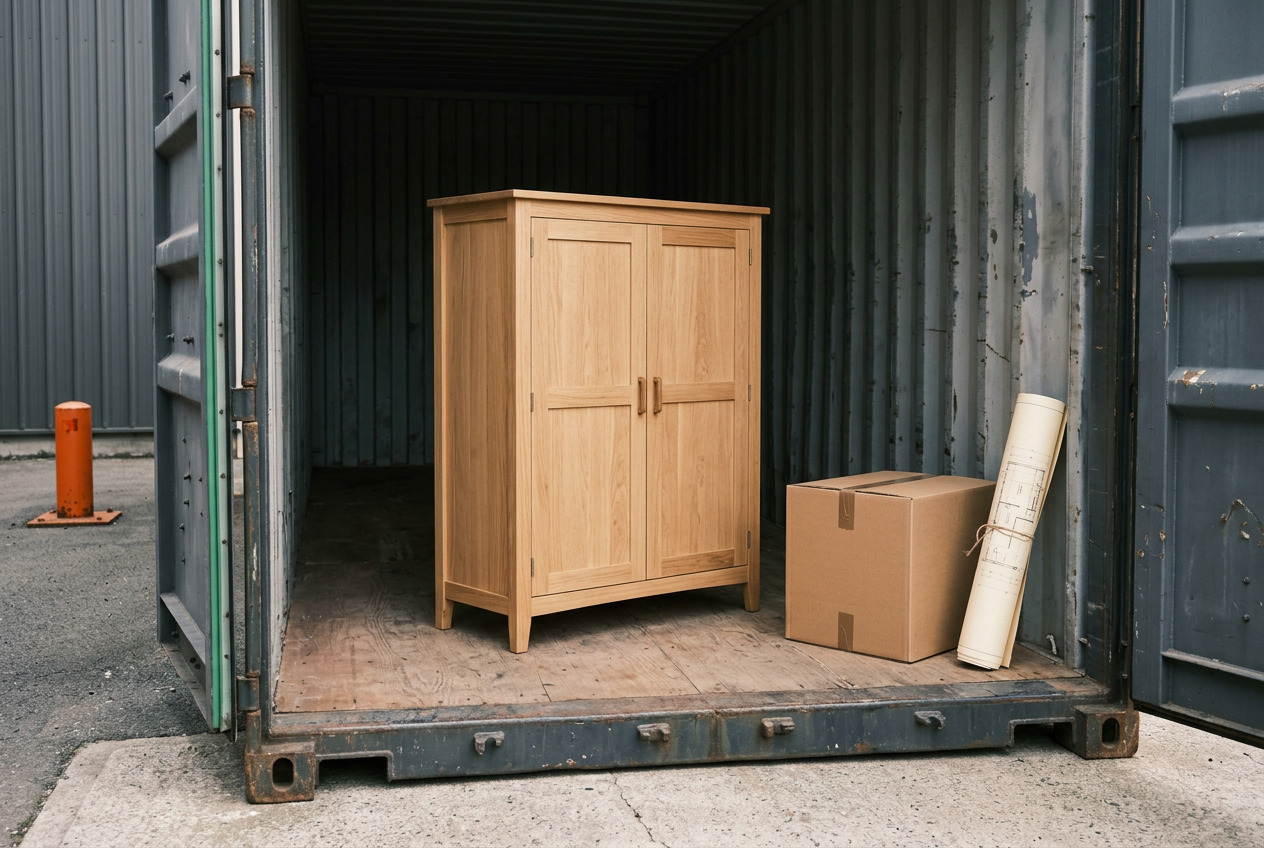
A bulky item can be the right purchase at the wrong time. A discounted appliance, a particular piece of furniture or fittings for a planned renovation may become available before their destination is ready. Container storage can bridge that gap, but it cannot make an unsuitable purchase fit the finished project.
Buying bulky items early makes sense when you know exactly what you need, have a credible plan for using it and understand what taking ownership now involves. The harder decision is recognising when available storage is making an uncertain purchase feel more settled than it really is. Start with the item and the commitment, not the space available to hold it.
Separate a Buying Opportunity From a Ready-to-Buy Decision
There should be a reason to buy now beyond having somewhere to put the purchase. Perhaps you have found a particular secondhand piece that meets an agreed specification, or a supplier has confirmed availability of the exact product your project requires. Those are reasons to investigate an early purchase, not automatic reasons to proceed.
Ask what you would lose by waiting. If the answer is only an advertised discount, compare the offer with the commitment it creates: paying before use, arranging a temporary home and accepting the possibility that your plans change. An item you would not otherwise choose does not become a better match because it is cheaper today.
Availability deserves the same scrutiny. Ask the seller whether the exact model is available now, whether later ordering is possible and whether they offer deferred delivery on agreed terms. Do not assume supplier-held stock is an option, but establish the alternatives before treating immediate purchase and off-site storage as the only route.
A useful test is to describe the reason for buying without mentioning the offer. If you can explain why this particular item belongs in the finished room or project, you have something to assess. If the explanation depends entirely on the sale ending, the urgency may belong to the seller rather than your plans.
Confirm the Destination Before Committing to the Item
The purchase needs to suit its eventual use, not merely fit inside a storage container. Confirm the final dimensions, intended position and any requirements that affect compatibility. For fitted items, ask the person responsible for the design or installation to check the exact specification before you order.
A broad description such as “a standard oven” or “a bathroom cabinet” leaves important questions unanswered. Obtain the model reference and relevant technical information rather than relying on a photograph or product category. Where connections, clearances or installation arrangements matter, have those requirements checked against the proposed destination.
Distinguish a settled design from a working idea. If the room layout, opening size or surrounding fittings could still change, buying now may commit the project to accommodating the purchase. That reverses the sensible order: the item begins to dictate the design instead of meeting it.
For a freestanding piece, the uncertainty may be simpler but still important. A wardrobe chosen before the final room layout is agreed could occupy space needed for another purpose. Storage postpones discovering that conflict; it does not resolve it.
Keep the agreed specification with the order confirmation. This gives you a clear reference for what you intended to buy and prevents a later substitution being accepted merely because it looks similar. If the supplier proposes an alternative model, check it against the same requirements before agreeing.
Buying bulky items early need not mean committing to every purchase for the room at once. Assess each item separately: a freestanding cabinet might have an agreed position while fitted furniture still depends on measurements that cannot yet be confirmed. Ask the supplier whether separating the order would affect any quoted package price or other terms before choosing that approach. This lets you distinguish a purchase that is ready from one that is merely being included because you are already placing an order.
Understand What Buying Now Starts
Paying now and using later separates the purchase from the point when you can judge how well it works. Before committing, ask the seller about payment, cancellation, returns, inspection requirements and any guarantee. Obtain the applicable terms in writing and ask when any stated periods begin.
Do not assume that leaving an item unopened or unused pauses those periods. Equally, do not assume that a seller’s voluntary returns policy answers every question about faulty goods. Changing your mind because a design has changed is a different situation from receiving an item that does not match its description.
For consumer purchases in England, Citizens Advice explains in its guidance on how to return faulty goods that a problem with an item may entitle you to a refund, repair or replacement. Its guidance identifies goods that are broken or damaged, unusable, or not as advertised, and treats change-of-mind returns separately. That distinction matters when deciding whether an early purchase leaves you enough flexibility.
Do not apply that consumer guidance to business procurement. A business buying equipment or materials should review its own purchase contract and obtain appropriate advice where terms are unclear. In either case, storage is not a substitute for understanding the agreement with the seller.
The practical question is what you can establish before the item goes into storage. Checking that the model and visible condition match the order is not the same as confirming performance after installation. Ask the supplier what checks are appropriate on receipt and how a problem discovered only at first use should be raised.
If meaningful testing cannot happen until the project is complete, make that delay explicit before ordering. Ask whether the supplier can offer an arrangement that addresses it, rather than relying on a verbal reassurance that everything will be fine. If the answer remains unclear, postponing the purchase may be preferable to accepting an unresolved problem for later.
Establish Whether the Product Can Wait
An item that is suitable for the finished room is not necessarily suitable for every temporary storage environment. Obtain the manufacturer’s or supplier’s storage instructions for the exact product. Ask about any required temperature, humidity, orientation or preparation conditions rather than inferring them from the outer packaging.
This is a feasibility check, not a reason to improvise protective measures. If the instructions specify conditions, establish whether the proposed space can meet them before paying for the goods. Do not treat an outdoor shipping container as climate-controlled accommodation or assume that indoor space automatically meets a specialist requirement.
The expected holding period also belongs in that conversation. Tell the supplier how long the item may remain unused, including a credible delay to the project. Where the answer depends on a particular model or material, obtain that answer for the product you are actually considering.
If suitable conditions cannot be confirmed, the storage-backed purchase is not ready. You may need a different storage arrangement, a later delivery date or a different purchasing decision. Buying first and researching the conditions afterwards removes options when you most need them.
Consider a Changed Project, Not Just a Later Date
A delay and a design change have different consequences. If the project slips but the specification remains settled, the main issue may be holding a suitable item for longer. If the specification changes, you could own something that no longer has a useful destination.
Consider what could still change before installation or use. A revised room layout, a different finish or a change in the intended purpose of the space may affect the purchase itself. Identify which unresolved decisions could make this particular item redundant, rather than treating every uncertainty as a scheduling problem.
When considering container storage before a project, connect the expected collection date to the work that must actually be finished. For an appliance, that might mean asking the installer when the destination and necessary connections will be ready, rather than using the date building work begins. Buying bulky items early is a clearer commitment when you know which milestone ends the waiting period and who can confirm it. If that milestone has no credible date, treat the storage duration as unresolved when deciding whether to order.
Then consider the money committed before the item earns its place. Would paying now leave enough available for the work needed to make the destination ready? A purchase that delays the rest of the project through lack of funds can extend its own waiting period.
Use a confirmed storage estimate and include the other costs specific to buying early, such as a separate onward journey. The point is not to prove that storage is always cheaper or dearer than waiting. It is to decide whether the advantage of this purchase survives the additional commitment.
Set a point at which you will review the plan if work has not progressed. That review should ask whether the item still has a confirmed use, not simply whether there is room to keep it. Avoid assuming that resale will recover the purchase price or provide an easy exit.
Buying Now, Waiting and Resolving One Missing Answer
Consider a hypothetical purchase of a freestanding cabinet for an agreed room layout. Its dimensions and condition have been checked, the intended use is settled, the seller’s terms are understood and suitable holding conditions are available. If there is a genuine reason to secure that particular piece, temporary storage may support an otherwise justified purchase.
Now consider discounted fittings for a room whose layout is still being revised. The attractive price does not settle whether the fittings will suit the final design. Waiting protects the ability to choose correctly, even if it means losing that offer.
A third case is an exact appliance model already approved for the project, but with no clear answer about checks before installation. That is not necessarily a reason to abandon the item. It is a reason to resolve the supplier’s advice and terms before ordering, especially when first use is some way off.
These cases lead to different actions because the missing information differs. A confirmed purchase needs a suitable holding arrangement; an unfinished design needs a decision about the destination; an unclear supplier commitment needs an answer from the seller. Booking storage should not be used to bypass either of the latter questions.
Use Container Storage After the Purchase Passes the Test
Our outdoor storage uses standard twenty-foot shipping containers, each offering 160 square feet of space. They are at ground level and accessible 24 hours per day, seven days per week. For suitable bulky purchases with a justified waiting period, that makes container storage an option worth discussing.
Those features answer the space and access questions, not the product questions. Bring the item description, dimensions and any supplier storage requirements when discussing the arrangement with us. We encourage customers to look at the containers before deciding, so the choice can be based on the proposed space rather than an assumption about it.
We require two weeks’ notice on outdoor containers. Ask us to confirm the minimum stay, current charges and applicable rental terms for your expected dates, including what an extended stay would involve. Flexible notice does not mean the purchase itself is easy to reverse.
Conclusion
Buy early when the specification and destination are confirmed, there is a sound reason to commit now, the supplier’s terms are understood and suitable storage is available. Wait when the project is still deciding what it needs. Where one important answer is missing, resolve it before placing the order rather than letting an expiring offer make the decision.
If the purchase passes those tests and you are considering container storage before a project, contact us with the item description, storage requirements and expected holding dates. We can discuss the container arrangement while you settle product compatibility, inspection and purchase terms with the supplier.