 01635 581 811

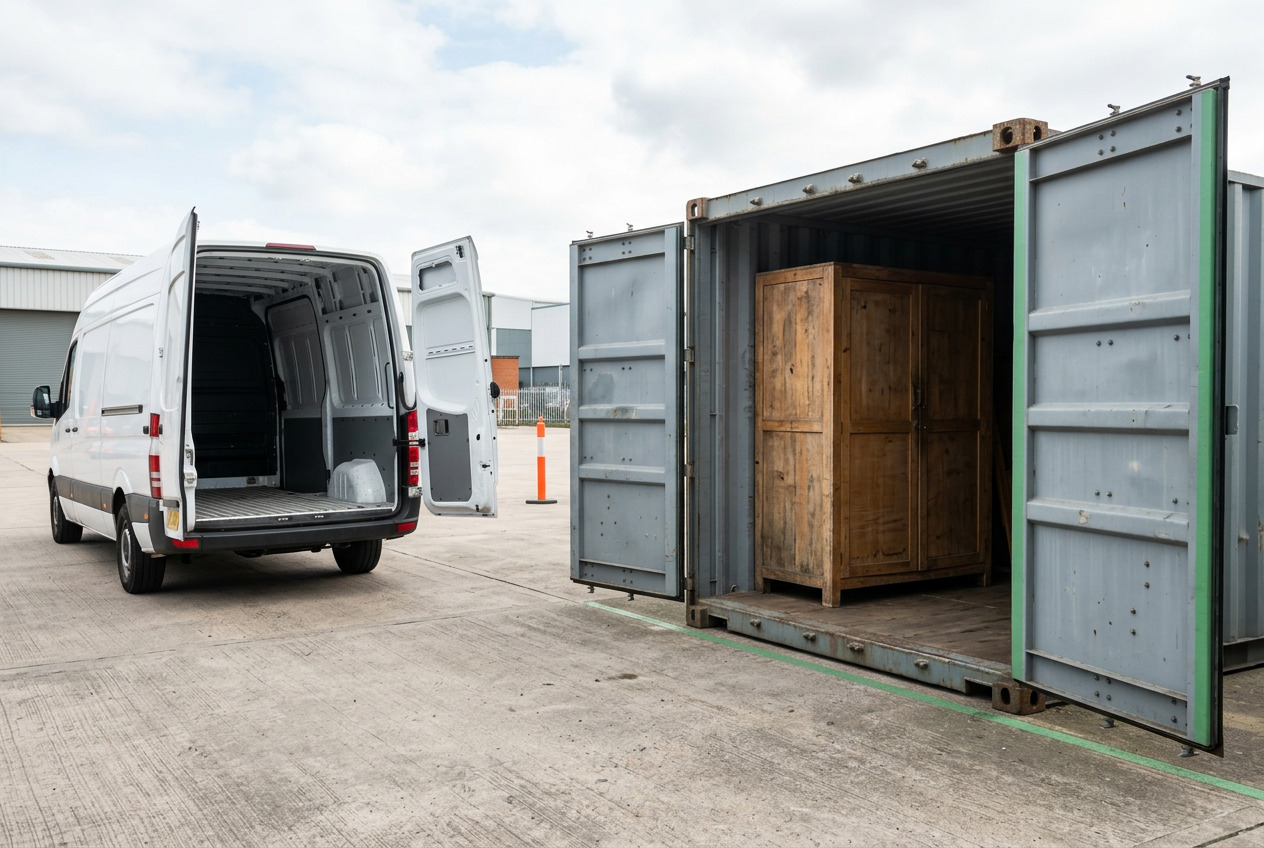
Ground level container storage can remove indoor corridors and awkward turns from a heavy item’s journey. That is useful for furniture, equipment and bulky materials whose shape makes repeated repositioning difficult. The advantage is a simpler route, not the disappearance of the work needed to get a load out of a vehicle and into its resting place.
Choosing a heavy item storage unit therefore means considering the whole transfer, including the eventual return journey. A short distance can still involve a raised vehicle bed, an uneven approach or a container sill. We recommend settling those transitions for the particular item before committing to a vehicle or storage booking.
What Ground-Level Access Does Not Answer
Ground level does not necessarily mean flush loading. The threshold, or sill, is the transition between the outside surface and the container floor, and it may stand above the approach. Neither a nearby parking position nor an open pair of doors resolves that height difference, the vehicle-bed height or the stability of the load during transfer.
Consider a hypothetical heavy cabinet arriving in a high-bed van beside a container with a raised sill. Removing indoor corridors helps, but a flatbed trolley alone does not solve either height change. The decision is whether this cabinet can complete this transfer, not whether the distance looks manageable. Keep the cabinet as the reference when comparing vehicles, equipment and the proposed storage position.
Establish What Is Known About The Cabinet
Record the item’s packed dimensions, known weight, condition and required orientation. Include projecting handles, protective wrapping and any base that travels with it, because these affect clearance. Where weight is unknown, obtain reliable information before choosing a method rather than trying a lift to find out; an empty-looking cabinet or machine casing can conceal substantial weight.
Separate facts from assumptions in the information you give a mover. A manufacturer’s specification for the exact model is different from an estimate based on a similar cabinet. If the cabinet has been altered, contains fixed equipment or has damaged feet, say so. Ask the competent handling party what further information they need rather than guessing that a heavier vehicle or more helpers will resolve the uncertainty.
Pianos, safes, stone worktops and unstable machinery need appropriate professional planning, not an assumption that extra helpers will suffice. Their weight distribution, vulnerable parts or support requirements can govern the entire movement. Give the specialist the load details and route information before transport is arranged, including the intended resting position and how the item will eventually leave.
Resolve The Vehicle-To-Ground Transfer First
The vehicle-bed height needs its own solution within the agreed handling method. Equipment that moves a load across the ground does not necessarily lower it from a van or lorry. Where a transport provider is involved, establish what its unloading service actually covers so that reaching ground level does not leave the remaining transfer without suitable people or equipment.
For the cabinet, ask the transport provider to confirm the actual vehicle and the proposed means of lowering it. Ask the mover to confirm that this method suits the cabinet’s weight, dimensions and permitted orientation. These are related but different answers: the provider knows what is being supplied, while the handling party must judge whether it can do the task. Do not treat a vehicle booking confirmation as that judgement.
If the answer is that the driver will bring the cabinet to the rear doors and leave it there, the inward transfer is unresolved. Find a suitable complete arrangement before dispatch. A short distance from the van to the container cannot compensate for a missing lowering method, and a promise to find some help on arrival is not a substitute.
Check The Ground Route And Sill As Separate Interfaces
Vehicle position matters because it determines both the unloading space and the direction of approach. Establish where the intended vehicle can stand while its doors and unloading equipment are in use, without obstructing shared access. A parking space close to the container is not automatically a usable unloading position, especially if equipment needs room behind or beside the vehicle.
The approach must suit the proposed movement, including any slope, uneven surface or change in direction. Inspect it without moving the heavy load, noting where wheels, feet or equipment would travel. Poor surfaces, limited space and slippery conditions belong in the handling assessment even when the distance is short; proximity does not compensate for an unsuitable route.
Measure the actual clear opening and compare it with the load in its permitted moving orientation. Allow for wrapping, equipment and the approach angle rather than relying on the container’s advertised floor area. The sill also needs an assessed crossing method compatible with the load and equipment; improvised ramps or sliding a heavy item across it are not substitutes.
Suppose the cabinet’s vehicle-to-ground transfer is confirmed, but nobody has checked whether the proposed moving equipment can negotiate the sill. That is still a no-go route for the proposed move. Ask the competent mover to resolve that interface, which may mean changing equipment, transport or the storage choice. Do not book on the strength of the part that works while leaving the difficult transition for arrival day.
Confirm A Complete Method, Not An Equipment List
The handling method should follow the load and route, rather than the number of helpers available. HSE manual handling guidance explains that workplace employers must avoid hazardous manual handling where reasonably practicable, assess unavoidable hazardous handling and reduce injury risk as low as reasonably practicable. Manual handling includes pushing and pulling as well as lifting, and the law sets no specific weight limits.
We have pallet trucks and flatbed trolleys to help with moving goods. Check availability and suitability for your load and route before including them in the plan, especially for an out-of-hours collection. Agree who will unload the vehicle and complete the transfer; do not assume that equipment on site comes with an operator.
The cabinet also needs a stable resting position from which the agreed removal method remains possible. If reaching that position requires disturbing another heavy load, include that dependency in the assessment. This is a final feasibility check, not a reason to rearrange other goods yourself. A transfer is incomplete if the cabinet can pass the doors but cannot be left appropriately supported.
Keep The Handover Specific To This Item
Give the collector the cabinet’s identification, permitted orientation and any condition issue that affects handling, alongside the agreed vehicle and equipment details. Keep that information with the booking rather than relying on whoever remembers the first move. It should be clear which facts have been confirmed and which changes would invalidate the plan.
Protective covering must not hide a loose part or damaged support from the person assessing the move. Transit blankets, wrapping and labels can help protect and identify furniture during the move. Our packing supplies include those materials, but protective packaging is not a lifting aid or a way to stabilise an unsuitable load.
Reassess When The Collection Vehicle Changes
A different collection vehicle can change the transfer even if the stored item has not moved. Revisit the method when vehicle height, equipment, personnel or route conditions differ from arrival. A vehicle with a different cargo opening or unloading arrangement may require a different approach position and transfer equipment, so the collection plan must connect the item’s resting place to its supported position inside that vehicle.
Return to the cabinet example. It arrived using a confirmed lowering arrangement, but the owner now intends to collect it in a borrowed van. That van may have a different cargo height or opening, and the original equipment may not be available. Send the new vehicle details to the handling party before collection is fixed. The previous successful move proves what happened then; it does not resolve the changed outward transfer.
Partial collection needs a plan for what stays as well as what leaves. Before removing the cabinet, identify whether reaching it would disturb another heavy object or take away space needed for that object’s later collection. If neighbouring items must be repositioned, include that work in the assessed move rather than leaving it to whoever remains behind.
Choose A Booking That Matches The Resolved Transfer
Our outdoor container storage uses standard twenty-foot containers offering 160 sq ft inside, with access 24 hours a day, seven days a week. These access hours apply to the outdoor containers, not our indoor units. For a late collection, check equipment availability and arrange the people needed for the move before setting off.
Proceed only when the competent handling party has a workable method for the vehicle transition, approach, sill and resting position. If one remains unresolved, change the arrangement or defer the booking rather than improvising. For a proposed container rental, contact us with the packed dimensions, vehicle details and intended collection pattern so we can discuss the available space and access arrangements. Keep the handling method with the competent people carrying out the move.