 01635 581 811
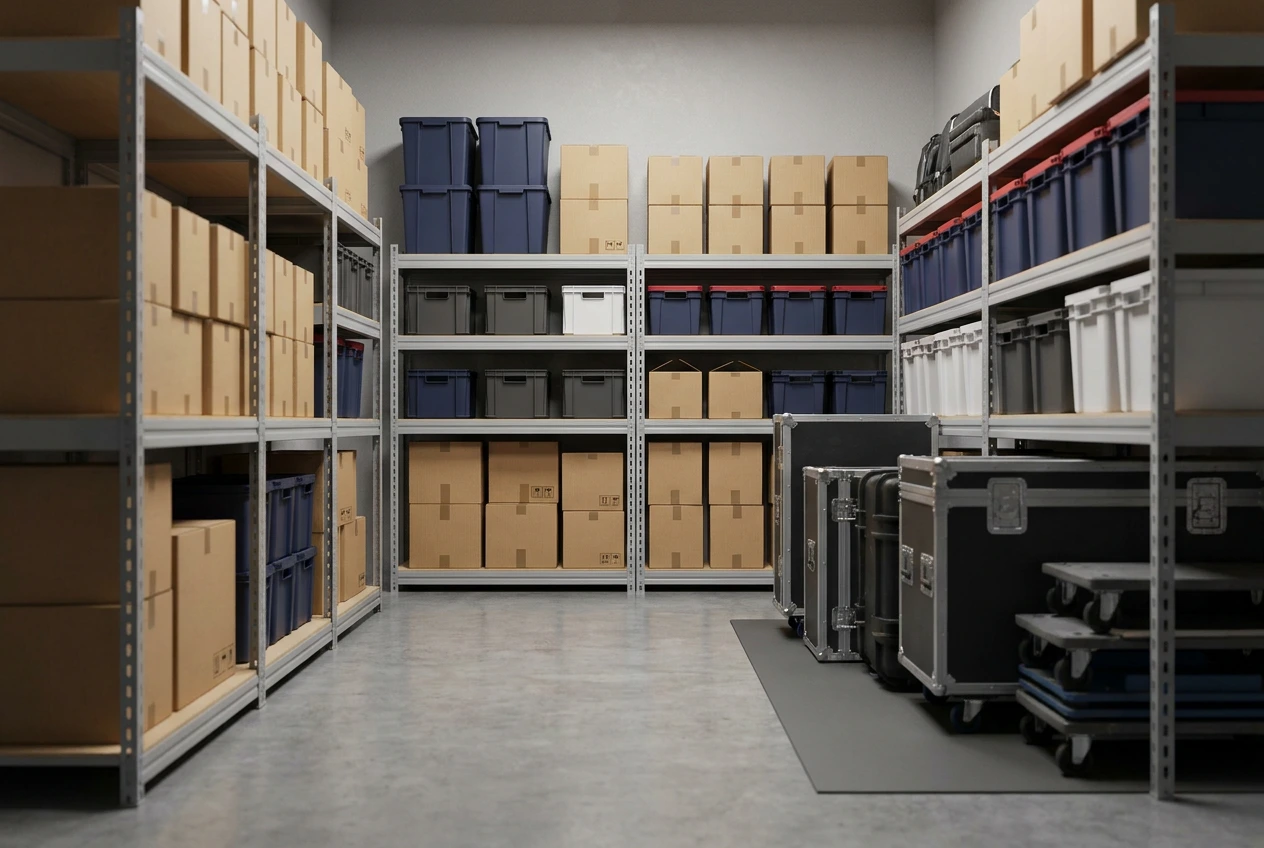
Business storage with racking can turn a plain unit into a working stock space. Shelves do not create more square footage, but they make the space easier to read, safer to handle and quicker to use. For small businesses, that can be the difference between a useful storage unit and a crowded holding area that nobody wants to visit.
The strongest reason to consider racking is access. Stock, archives, marketing materials and equipment often need to be found again, not simply stored. When items sit in labelled rows at a sensible height, staff can collect what they need without unpacking the whole unit.
Shelves Help When Stock Has To Keep Moving
Storage unit shelving for stock is most useful when items move in and out regularly. If boxes are stacked six high on the floor, the item needed is often at the bottom. That creates wasted time, damaged packaging and a frustrating visit.
Shelving gives each stock group a place. Fast-moving items can sit at waist height, older stock can sit higher or further back, and heavy items can stay low. The unit starts to work more like a disciplined stockroom than a temporary overflow space.
For retailers, trades, ecommerce sellers and local offices, that order matters. A small team may not have time to hunt through stock before a delivery run or customer collection. Good storage layout keeps the next task simple.
Racking Is About Visibility, Not Just Capacity
It is easy to think racking is only about fitting more into the unit. Capacity matters, but visibility often matters more. A business that can see what it owns is less likely to reorder stock it already has or forget about material that is going out of date.
Use shelves to create clear categories. Separate current stock from archived materials, event kit from printed brochures, and equipment from consumables. Keep labels facing out and repeat them on the shelf edge if several people use the same unit.
The comparison is straightforward: floor stacking is like keeping every file in one drawer, while racking is like giving each folder a named place. Both can hold paperwork. Only one helps when time is tight.
Check Weight, Shape And Handling Before Choosing A Layout
Not everything belongs on a shelf. Heavy stock should be kept low to reduce lifting risk. Long, awkward or fragile items may need a floor zone rather than a rack. Small components may need lidded boxes so they do not spill or migrate between shelves. Before setting up business storage with racking, group items by how they are handled:
- Heavy items that need low-level storage
- Fast-moving boxes that should sit between knee and shoulder height
- Fragile goods that need stable, protected positions
- Archive boxes that can be grouped by year or department
- Irregular items that need a defined floor bay
This planning avoids a common mistake: filling the shelves first and thinking about retrieval later. Storage should be arranged around the next visit, not just the first day.
Stock Rotation Needs A Clear Front And Back
Shelves make stock rotation easier if the system is obvious. Keep incoming goods in one intake area, move checked items to their correct shelf, and mark older stock so it is used first where that matters. Do not allow every shelf to become a mixed overflow area.
For stock with dates, seasons or campaign periods, use labels that are visible from the aisle. A box marked “winter sale leaflets 2026” is more useful than one marked “leaflets”. If the business stores multiple clients’ items or project materials, include the client or project name too.
Storage unit shelving for stock should also leave room for counting. If the only way to count stock is to remove everything, the layout will not last. Leave small gaps, keep stacks stable and make the unit easy to audit.
Business Storage Can Support A Working Stockroom Routine
Newbury Self Store’s business storage for stock and equipment covers practical commercial uses such as excess stock, archives, equipment, furniture, brochures and stationery. The business page says free racking may be available subject to availability, while the FAQ says racking is available for a small monthly fee.
Confirm the current charge and availability before assuming racking will be in place. If it is available, it can help a business avoid buying and transporting its own shelving. If it is not, the unit can still be organised with stackable boxes, floor zones and clear labels.
The facility is described as modern, purpose-built, dry and secure, with CCTV, a monitored alarm and reinforced steel entrance shutters. Those features support a practical business storage plan, but day-to-day order still depends on how the business packs, records and rotates its own items.
Packaging Decides Whether Shelves Stay Tidy
Poor packaging can defeat good racking. Boxes that are different sizes, half full or weak at the corners do not sit neatly on shelves. Loose items also make counting harder and increase the chance that stock is damaged during retrieval.
Use sturdy cartons, visible labels and protective wrapping for items that may shift. If staff collect from storage regularly, pack in quantities that match how the business uses the stock. Ten smaller labelled boxes may be easier than two heavy mixed cartons.
For businesses preparing goods before they go into storage, choose boxes and wrapping supplies that suit the weight and shape of the items. The packaging range includes boxes, bubble wrap, tape, covers, wrapping paper, labels, transit blankets and padlocks.
When Shelving Is Not The Best Answer
Racking is useful, but it is not universal. Bulky items, heavy equipment, display stands and furniture may need ground level floor space. For those situations, plan outdoor container storage for larger business items if direct access and volume matter more than shelves.
The official container details describe standard 20-foot containers providing 160 sq ft, with ground level access and availability 24 hours a day, seven days a week. That can suit businesses moving larger items by vehicle or needing access outside normal indoor opening patterns. It is a different type of storage decision, not a bigger version of a shelved stockroom.
Choose based on the work. If staff need to pick, count and rotate boxes, racking may make the unit easier. If the business needs to load large items directly, floor access may be the priority.
A Simple Map Prevents Storage Drift
Even a well arranged unit can drift after a busy month. Staff put returns in the nearest gap, old stock lingers at the front and new boxes get placed wherever there is space. A simple map helps stop that decline.
Tape a layout plan inside the unit or keep a digital copy in the stock register. Mark zones such as “current stock”, “seasonal stock”, “archives”, “equipment” and “outgoing”. Number shelves if several people collect items.
Then schedule short resets. A monthly 20 minute tidy can protect hours later. The best storage systems are not perfect; they are easy to restore.
The Payoff Is Faster, Calmer Retrieval
Business storage with racking is most valuable when it supports a repeatable routine. Deliveries can be put away consistently, stock can be found quickly, and the main premises can stay clearer. That makes storage a practical part of operations rather than a place where surplus items disappear.
Newbury Self Store serves Newbury, Thatcham, Hungerford and the wider West Berkshire area, so the decision can be grounded in local access as well as layout. For a small business, proximity matters because a storage unit only works if staff can use it without losing half a day.
Shelving will not fix poor stock discipline on its own. It will, however, make good habits easier to keep. To discuss business storage with racking, unit layout and practical handling needs, call 01635 581 811 or speak to the team.