
 01635 581 811
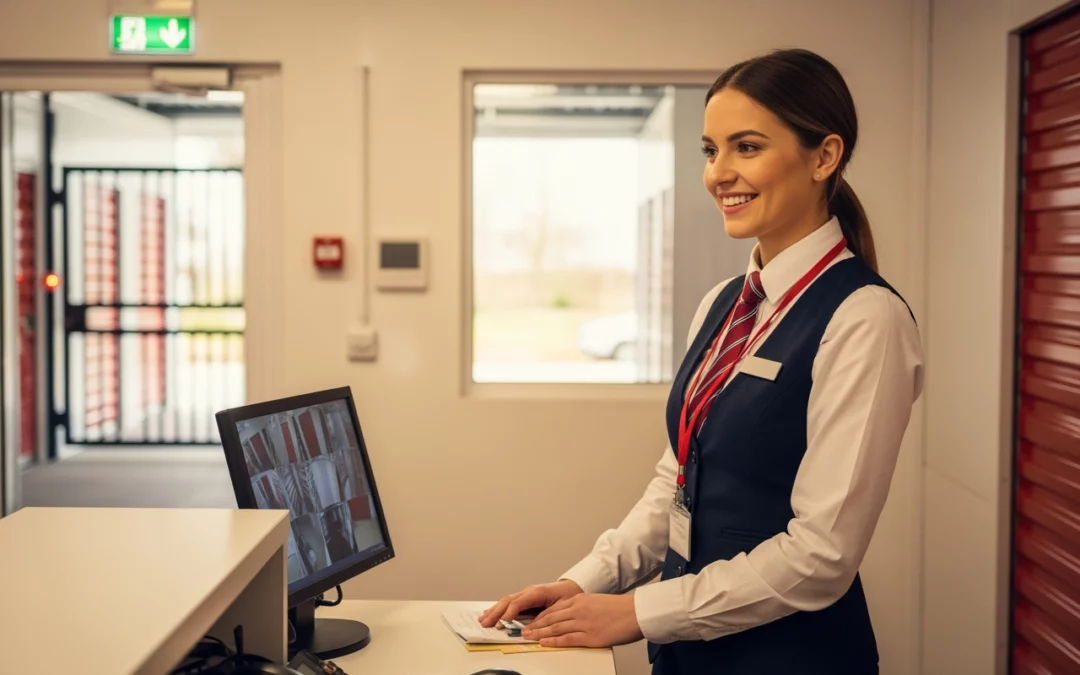
Storage security failures rarely announce themselves with drama. They unfold quietly: a compromised lock, an unauthorised visitor, a small leak that becomes a flood. The difference between discovering these issues in minutes versus days often comes down to one factor: whether anyone is actually present to notice.
Unmanned storage facilities promise convenience and competitive pricing, but they transfer security responsibility almost entirely to technology and the customer. When something goes wrong at 2am on a Sunday, there is no one to call, no one to respond, and no one to prevent a minor issue from becoming a major loss. The staffed self storage benefits that genuinely matter are not about customer service conveniences; they are about the irreplaceable security value of human presence and judgement.
The Fundamental Security Gap in Unmanned Facilities
Unmanned storage sites rely primarily on electronic security systems: CCTV cameras, electronic locks, and alarm systems monitored from remote locations. These technologies provide valuable security layers, but they share a critical limitation. They can only record and alert; they cannot intervene.
A security camera captures footage of someone tampering with a lock. An alarm system detects unauthorised entry. Both send alerts to a monitoring centre, where an operator reviews the footage and decides whether to contact police. This process takes time, often 15 to 30 minutes from initial detection to police dispatch. By then, a determined intruder has usually accomplished their goal.
Remote monitoring creates another vulnerability: context. An operator watching multiple facilities on screens cannot distinguish between a customer who forgot their access code and someone attempting unauthorised entry. They cannot recognise that a particular vehicle has been circling the property for 20 minutes, or that someone is photographing security camera positions. These distinctions require the kind of situational awareness that only manned storage facility security can provide.
The Deterrent Effect of Human Presence
Security research consistently demonstrates that visible human presence deters opportunistic crime more effectively than cameras alone. Studies show that 60% of burglars would abandon a target if they knew someone was present, compared to just 40% who would be deterred by cameras. The psychology is straightforward: technology can be disabled, avoided, or simply ignored if the reward justifies the risk. A person, however, represents unpredictable intervention.
At staffed facilities, this deterrent operates continuously during business hours. Potential intruders must consider that staff conduct regular patrols, know the customers, and notice unusual behaviour. This uncertainty significantly increases the perceived risk of any criminal activity on-site. Staffed self storage benefits in this regard are not merely theoretical; they translate directly into a lower likelihood that your unit will ever be targeted.
How Staffed Facilities Prevent Security Issues Before They Occur
The most effective security prevents incidents rather than merely responding to them. This is where the practical staffed self storage benefits become most apparent, through proactive monitoring that identifies and addresses potential issues before they escalate.
Consider a customer who accidentally leaves their unit door ajar. At an unmanned facility, this might go unnoticed for days until the customer returns or another user reports it. During that time, the contents are vulnerable to theft, and the open door might allow pests or weather damage. Staff conducting routine patrols spot this immediately and secure the unit within minutes.
I recall a situation last spring where a staff member noticed water seeping under a unit door during morning rounds. Investigation revealed a burst pipe in the adjacent unit. Because we caught it within hours of the leak starting, damage was minimal and contained to two units. The same leak at an unmanned facility over a weekend could have affected an entire corridor before Monday morning discovery.
Active Monitoring vs Passive Recording
The difference between active monitoring and passive recording resembles the difference between a lifeguard and a swimming pool camera. Both observe the water, but only one can pull someone to safety.
Staff actively watch for anomalies: the same unfamiliar vehicle appearing multiple times, someone lingering near units they have not rented, or customers struggling with access because their code suddenly does not work. These observations happen in real time, allowing immediate investigation and intervention. Passive systems record everything but understand nothing. The value of that footage depends entirely on someone reviewing it, often only after a customer reports a problem.
The distinction matters enormously for businesses storing valuable inventory. Business space available in a staffed facility means your commercial assets benefit from the same proactive oversight that protects every other unit in the building, not just automated alerts that trigger after the fact.
The Additional Security Layers Staff Provide
Beyond direct security monitoring, on-site staff create multiple overlapping security layers that unmanned facilities cannot replicate. Regular inspections throughout the day check that all access points remain secure, lighting functions properly, and no unauthorised individuals are present. These inspections also identify maintenance issues before they become security vulnerabilities.
Environmental monitoring forms another crucial element. Staff notice unusual odours that might indicate chemical storage violations, temperature changes that could affect climate-controlled units, or moisture that suggests roof or plumbing issues. Early detection prevents damage and maintains the storage environment that protects your belongings.
Building relationships with customers creates an informal but effective security network. Staff learn to recognise regular customers, their typical access patterns, and their stored items. This familiarity makes it immediately obvious when something seems wrong: an unfamiliar person claiming to access a long-term customer’s unit, or someone removing items that do not match what was stored. For customers with stress-free storage solutions needs during house moves or life transitions, this familiarity provides an additional layer of reassurance that technology alone cannot offer.
Newbury Self Store’s Relationship-Based Security Approach
Newbury Self Store demonstrates this relationship-based security approach through daily interaction with customers. Staff do not just process access requests; they maintain awareness of each customer’s storage patterns and can quickly identify when something does not align with normal activity.
These relationships also provide customers with direct communication channels for security concerns. Rather than calling a remote monitoring centre that may or may not prioritise their concern, customers can speak directly with staff who know their situation and can investigate immediately. This direct accountability is one of the most undervalued staffed self storage benefits.
For customers needing commercial container access for large items or pallet deliveries, on-site staff can also coordinate receipt of deliveries, verify authorised personnel, and ensure nothing is left unattended during loading or unloading. This operational support removes a significant practical vulnerability.
Business Continuity and Emergency Response
Security extends beyond preventing theft to managing any crisis that threatens stored belongings. Staffed facilities excel in emergency response because someone is present to take immediate action.
Fire represents one of the most serious storage facility threats. At a staffed facility, employees can activate emergency protocols the moment smoke is detected: calling fire services, evacuating the building, and using fire suppression equipment to contain small fires before they spread. Weather emergencies require similar rapid response. When severe storms approach, staff can secure outdoor areas, verify that drainage systems are clear, and contact customers facing particular weather exposure.
Think of staffed storage like having a building superintendent versus a building with only an emergency hotline. Both can eventually address problems, but the superintendent prevents many issues and resolves others before they require emergency intervention. Even when staff are not present 24 hours a day, staffed facilities maintain superior after-hours security through established protocols and on-call systems where senior staff can be on-site within minutes if needed.
The Insurance and Liability Advantages
The security differences between staffed and unmanned facilities extend to insurance considerations. Insurance companies recognise that staffed facilities present lower risk profiles. The combination of human oversight, regular inspections, and immediate incident response reduces the likelihood of major losses. For businesses storing valuable inventory or documents in business archives secured conditions, many commercial insurance policies specifically require the security standards that staffed facilities more readily provide.
When incidents do occur, staff can provide detailed incident reports, witness statements, and preserved evidence that support insurance claims. Unmanned facilities typically provide only electronic records and camera footage, which may or may not capture relevant details. Without staff present during an incident, there is no professional witness to what actually occurred, potentially complicating claims processes considerably.
Proper packing kits available materials support the broader security picture too. When staff can advise customers on best practices for wrapping and labelling items, the combination of physical protection and facility security creates a genuinely comprehensive approach to protecting stored belongings.
When Staffed Storage Makes Commercial Sense
Businesses storing valuable inventory, professional equipment, or important documents should prioritise staffed facilities. The replacement cost of these items far exceeds any savings from choosing unmanned storage. Long-term customers benefit significantly too. Over months or years, staff notice gradual changes that might indicate problems: a unit door that does not close as securely as it once did, environmental changes in a particular area, or access pattern changes that might suggest unauthorised key duplication.
Long-term customers also appreciate the flexibility that manned storage facility security provides. Need access outside normal hours for an urgent business requirement? Staff can often accommodate special arrangements. Expecting a delivery to your unit? Staff can coordinate receipt and notify you of arrival. These practical benefits compound over time into a meaningfully better storage experience.
The staffed self storage benefits extend beyond security alone to encompass customer service, facility maintenance, and emergency response. When you are storing items that matter, whether personal belongings during life transitions or business assets critical to operations, the comprehensive security of staffed facilities offers irreplaceable peace of mind that unmanned alternatives simply cannot match.
Call 01635 581 811 or contact us to discuss your storage requirements and experience the security advantages of professional storage management.