
 01635 581 811
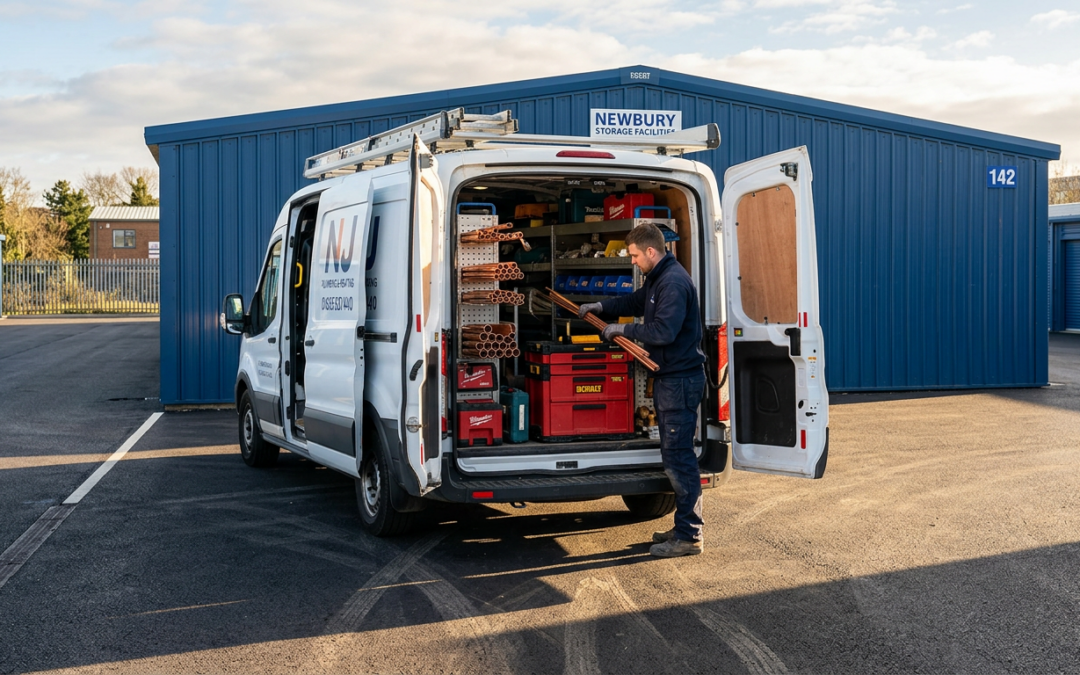
Running a trade business means working to your customers’ schedules rather than a standard clock. You might need to pick up materials at 6am for an early start on a commercial site, or drop off expensive equipment at 10pm after finishing a complex residential job. Round-the-clock access to your tools and stock is not a luxury in this industry; it is essential for keeping your business moving.
At Newbury Self Store, we have designed our container storage specifically for tradespeople who cannot afford to wait until Monday morning or miss a job because their van is packed with the wrong kit. Over the years, we have worked with electricians, plumbers, landscapers, and builders who have all faced the same challenge. They need to store bulky equipment securely without sacrificing the flexibility their work demands.
Why Tradespeople Need More Than a Garage
Most trade professionals start by cramming everything into a garage, spare room, or the back of a van. It works for a while. Then you land a bigger contract, invest in better equipment, or realise you are spending two hours every morning hunting for the right drill bit buried under a pile of cable reels.
When storage becomes a bottleneck, you inevitably turn down jobs because you cannot fit the materials in your vehicle. You waste fuel driving home between jobs to swap equipment, or you leave expensive tools in your van overnight and pray nothing gets stolen. None of these scenarios help you grow your business or sleep soundly.
Dedicated dedicated trade workspace solves three problems at once. First, it protects your investment; tools and equipment represent thousands of pounds that need proper security. Second, it gives you room to separate active job materials from backup stock so you are not constantly reorganising. Third, it provides a professional base that is not your driveway, which matters when you are building a business reputation.
How 24-Hour Access Changes Your Working Day
Think about the last time you had to rush a job because you needed to collect materials before a supplier closed at 5pm. Or perhaps a customer called at 7am asking if you could start earlier than planned, but your equipment was locked in a facility that did not open until 8am.
Twenty-four-hour access means you control your schedule, not the other way around. You can load your van the night before an early start, drop off dirty equipment after a late finish without worrying about tracking mud through your house, and respond to emergency callouts without delay.
We have seen electricians collect test equipment at 6am before heading to a commercial site that opens early. Landscapers drop off muddy machinery at 9pm after finishing a garden project in the rain. Plumbers grab emergency supplies on a Sunday when a customer’s boiler fails. These are not unusual scenarios; they are the reality of running a trade business in Newbury and the surrounding areas.
The Financial Benefit of Efficient Logistics
The financial benefit is straightforward; every hour you save on logistics is an hour you can spend on paid work. If unrestricted access saves you just three hours per week, that is 150 hours annually. That equates to nearly four working weeks you can bill to customers instead of wasting on storage admin.
Beyond billable hours, there is the saving on vehicle wear and tear. Carrying every tool you own in your van reduces fuel efficiency and accelerates suspension wear. By storing what you do not need for the day, your vehicle runs lighter and cheaper.
What Makes Container Storage Ideal for Trade Equipment
Not all storage solutions work for trade professionals. You cannot easily manoeuvre a pallet of bricks up a stairwell, and you should not have to. Container storage offers something different; ground-level equipment access designed for heavy, bulky items.
Drive right up to your container, open the doors, and load directly from your van or truck. No lifts, no corridors, no restrictions on wheeling in a cement mixer or stacking timber. It is as practical as having your own lockup, but with better security and no long-term property commitment.
Here is a real-world example. A Newbury-based carpenter we work with stores sheet materials, power tools, and finished joinery pieces awaiting installation. He can reverse his van to the container, load exactly what he needs for each job, and keep everything else secure and organised. Before switching to container storage, he was renting a workshop he barely used, paying for space he did not need, and still running home to collect forgotten items.
Security Features That Protect Your Livelihood
Tool theft costs UK tradespeople millions every year. A single van break-in can wipe out thousands of pounds worth of equipment and shut down your business for days while you replace essential items and deal with insurance claims.
Professional storage facilities offer multiple layers of security that your garage or van simply cannot match. Perimeter fencing, CCTV monitoring, secure access controls, and individual container locks create a system where thieves face too many obstacles to bother trying.
Think of it like this: a thief sees a van parked on a residential street. One smashed window and they are in within seconds. Compare that to a storage facility where they would need to scale a fence, avoid cameras, bypass access controls, and then break a container lock, all while being recorded. The risk-reward calculation does not add up for them, which is exactly what you want.
Organising Your Container for Maximum Efficiency
Throwing everything into a container and hoping you will remember where things are is a recipe for frustration. Proper organisation transforms your storage from a dumping ground into a functional extension of your business.
Start with zones. Dedicate one area to frequently used tools and equipment you access several times per week. Keep a separate section for job-specific materials. If you are working on three different projects, group each job’s supplies together so you can grab everything in one go. Reserve the back of the container for seasonal equipment or backup stock you only need occasionally.
Shelving makes a dramatic difference. Rather than stacking boxes and hoping the thing you need is not at the bottom, install simple metal shelving units that let you see everything at a glance. Label boxes clearly; “Electrical Testing Equipment” is more helpful than “Tools Box 3” when you are in a hurry.
I often tell new trade customers that organising a container is exactly like organising a well-packed toolbox. You do not throw your screwdrivers in with your hammers randomly. You keep the frequent-use items in the top tray where they are easy to reach. Apply that same logic to your unit layout, and you will save hours of searching time.
Choosing the Right Container Size for Your Trade
Underestimate your storage needs and you will be back within six months looking for a larger unit. Overestimate and you are paying for empty space. Getting the size right requires an honest assessment of what you are storing and how your business might grow.
A standard 20-foot container suits many sole traders and small teams. You can fit multiple workbenches, shelving units, pallets of materials, and a substantial tool collection whilst still having room to walk around and access everything comfortably. If you are primarily storing tools and smaller equipment without bulk materials, you might manage with less space.
A 40-foot container works for established businesses with multiple vans, larger equipment like scaffolding or excavation tools, or substantial stock holdings. If you are a builder storing materials for several concurrent projects, or a landscaper with ride-on mowers and large machinery, you will appreciate the extra room.
Seasonal Storage Solutions for Trade Businesses
Some trade work follows seasonal patterns. Landscapers stay busy from March to October but slow down over winter. Roofers see demand spike after storms. Decorators get booked solid before Christmas as homeowners prepare for visitors.
Flexible storage helps you manage these fluctuations without maintaining year-round premises you do not always need. During busy periods, use your container as a forward operating base. Stock up on materials, keep multiple job kits prepared, and minimise downtime between projects. During quieter months, consolidate your equipment, perform maintenance, and scale back if needed.
This flexibility matters financially. Unlike renting a workshop with a three-year lease, storage contracts typically offer more adaptable terms. You are not locked into paying for space you are not using, which improves cash flow during slower trading periods.
Partnering with Newbury Self Store for Trade Success
Choosing the right partner is about more than just finding an empty metal box. It is about finding a facility that understands how your business operates. When you choose Newbury Self Store, you are working with a team that appreciates the urgency of trade logistics. We know that if your gate code doesn’t work at 5am, you lose money.
Our location and access protocols are designed to integrate seamlessly into your workday. By providing robust security and reliable 24-hour access, we act as the silent partner in your business, ensuring your infrastructure works as hard as you do.
Combining Storage with Your Business Strategy
Smart tradespeople view storage as infrastructure, not just a place to dump stuff. It is part of how you deliver reliable service, manage cash flow, and present a professional image. Storage enables you to buy materials in bulk when prices are favourable, rather than paying premium rates for small quantities at trade counters.
If you spot a deal on cable, fixings, or timber, you can stock up knowing you have somewhere secure to keep it. Over a year, the savings from bulk purchasing can offset your storage costs entirely. It also supports better customer service. When a client needs urgent work, you can respond immediately because you are not waiting for supplier deliveries or scrambling to find equipment.
Consider this scenario involving two plumbers quoting for the same job. Both offer similar prices and quality. One says he can start next Thursday. The other says he can start tomorrow because he already has the materials and equipment ready to go. Who gets the job? The one who is organised and prepared.
Managing Multiple Jobs from One Storage Base
Juggling several projects simultaneously is standard for successful tradespeople, but it creates logistical headaches. You need different materials for different jobs, you cannot carry everything in your van, and mixing up which kit goes where wastes time and looks unprofessional.
Using your container as a project management hub solves this problem. Create separate areas for each active job; one bay for the kitchen renovation in Thatcham, another for the bathroom refit in Hungerford, a third for the commercial project in Newbury town centre. Load your van each morning with exactly what that day’s job requires, knowing everything else is organised and ready for tomorrow.
Sometimes, trade professionals also need domestic overflow solutions. If your home garage is currently filled with business stock, moving that inventory to a dedicated unit frees up your personal space and restores a healthy work-life balance.
Why Location Matters for Trade Storage
Choosing storage that is 30 miles away might save you a few pounds monthly, but consider the hidden costs. Every visit burns fuel, wastes time, and adds wear to your vehicle. For tradespeople who access storage regularly, potentially daily, location becomes a significant factor in operational efficiency.
Storage that is close to your primary work area or conveniently positioned near major routes means less time driving and more time earning. If most of your jobs are in Newbury, Thatcham, and surrounding areas, storage that is five minutes from the A34 or A4 makes practical sense.
Proximity also matters for those unexpected situations. When you are on a job and realise you need a different tool or you have run short of materials, being able to quickly detour to your container and get back to the customer within 30 minutes maintains momentum and professionalism.
Getting Started with Trade Storage
If you are currently managing with inadequate storage and wondering whether dedicated space is worth the investment, consider what it costs you not to have it. Calculate the hours you waste each week on disorganised storage, the jobs you cannot take because you lack space for materials, and the stress of leaving expensive equipment in vulnerable locations.
The right storage solution pays for itself through time savings, bulk purchasing opportunities, improved security, and the professional capacity to grow your business. It is not an expense; it is infrastructure that enables everything else you do.
We have designed our business storage options specifically for trade professionals who need reliable access, robust security, and practical facilities that handle the realities of construction, electrical, plumbing, and landscaping work. Whether you are a sole trader looking to separate work from home life, or an established business needing space for multiple teams, container storage offers the flexibility your operation requires.
You might also find that utilising protective packing supplies helps organise your unit. Sturdy boxes for loose fittings and protective wraps for delicate fixtures ensure that your stock remains in saleable condition until it is installed.
Conclusion
Trade work demands flexibility, reliability, and efficiency. Your storage solution should support those requirements, not create additional obstacles. Round-the-clock access, ground-level loading, robust security, and practical organisation transform storage from a necessary evil into a genuine business asset. The tradespeople who thrive are the ones who run their businesses professionally, respond quickly to opportunities, and maintain the infrastructure that makes reliable service possible.
If you are ready to secure your tools and streamline your operations, call 01635 581 811 or speak to us today about setting up your dedicated trade unit.