
 01635 581 811
Why British Homes Struggle with Wardrobe Space
You open the wardrobe. Something falls out. You shove it back in, force the door shut, and carry on with your day. Sound familiar? For most people living in compact Newbury homes, the wardrobe has become less of a storage system and more of a daily battle.
Victorian terraces, modern flats, and converted properties weren’t built with today’s wardrobe demands in mind. Add four seasons of clothing into the mix, and seasonal wardrobe storage Newbury residents deal with quickly goes from minor hassle to real problem.
The Four-Season Clothing Problem
The average British adult owns around 118 items of clothing but regularly wears just 30% of them. That means the rest sits unused, taking up space that could be put to better use. Bulky winter coats hog hanging space all summer, whilst swimwear and linen shirts fill drawers throughout January.
The Real Cost of Overstuffed Wardrobes
Impact on Daily Routine and Mental Clarity
A cluttered wardrobe doesn’t just waste space; it drains your energy too. Research from Princeton University’s Neuroscience Institute shows that visual disorder competes for your brain’s attention, reducing focus and raising stress. When your wardrobe is bursting at the seams, something as simple as getting dressed becomes a daily frustration.
I worked with a family in Donnington who calculated they spent around 15 minutes every day hunting through overstuffed wardrobes. Over a year, that adds up to nearly 91 hours lost. The stress of disorganisation goes beyond wasted time; it quietly affects how you feel about your home.
Time Lost and Financial Damage from Poor Storage
Poor storage also hits your wallet. Clothes packed in too tightly are more likely to suffer from moth damage, mildew, and creasing, turning good garments into charity shop donations well before their time. When you can’t see what you own, you end up buying duplicates of things you already have.
Understanding Seasonal Wardrobe Rotation
How Newbury’s Climate Drives the Need for Rotation
Seasonal wardrobe storage Newbury homeowners rely on works much like rotating tyres on a vehicle. Just as you wouldn’t drive on winter tyres throughout July, there’s no reason to keep heavy wool jumpers within arm’s reach during summer. The idea is straightforward: store what you don’t need now so you have room for what you do.
Newbury genuinely experiences four distinct seasons. Winters can drop well below freezing, calling for thick coats, thermals, and heavy boots. Summers push into the mid-twenties, requiring a completely different wardrobe. That contrast makes wardrobe rotation particularly worthwhile in this area.
Adapting to Unpredictable Transitional Seasons
Spring and autumn in Berkshire can be tricky. Temperatures shift quickly and without much warning, so a rigid calendar-based swap won’t always work. The smarter approach to wardrobe rotation is to respond to actual weather patterns and what your daily routine genuinely demands.
The Four-Season Sorting Method
Categorising Winter, Transitional, and Summer Clothing
Begin by sorting your wardrobe into four clear groups. Winter items, such as heavy coats, wool jumpers, thermals, and boots, tend to take up the most room due to their size and weight. These are the obvious candidates to move into storage during warmer months.
Spring and autumn pieces sit in the middle: lightweight jackets, cardigans, long-sleeved shirts, and trousers that work across a range of temperatures. These often stay accessible year-round as your everyday foundation. Summer clothes, including t-shirts, shorts, dresses, sandals, and swimwear, can be compact individually but quickly add up in volume.
Special Occasion Wear and Building a Storage Inventory
Formal suits, evening wear, and rarely used accessories form a fourth category. These items are best kept in clothing storage and retrieved only when needed, freeing up everyday space considerably.
As you sort, build a simple inventory. A basic spreadsheet noting each item, its category, and its location saves a lot of frustration later. It’s especially useful when you’re swapping seasons and need to locate something specific quickly.
Proper Storage Preparation
Cleaning Requirements Before Storing Garments
Always clean clothes before putting them into storage. Body oils, perfume, and food residue, even when invisible, attract moths and speed up fabric breakdown during long-term clothing storage. Washing or dry cleaning before boxing up is a non-negotiable step.
Fabric-Specific Protection and Vacuum Bag Guidelines
Different fabrics need different care. Natural fibres like wool, cashmere, and silk need breathable storage to prevent mildew, along with some form of moth deterrent. Cedar balls and lavender sachets work well and smell far better than traditional mothballs.
Never store leather or suede in plastic bags. Trapped moisture encourages mould. Use fabric garment bags instead, which allow airflow whilst keeping dust off. Structured pieces like coats and blazers also benefit from proper hangers to hold their shape.
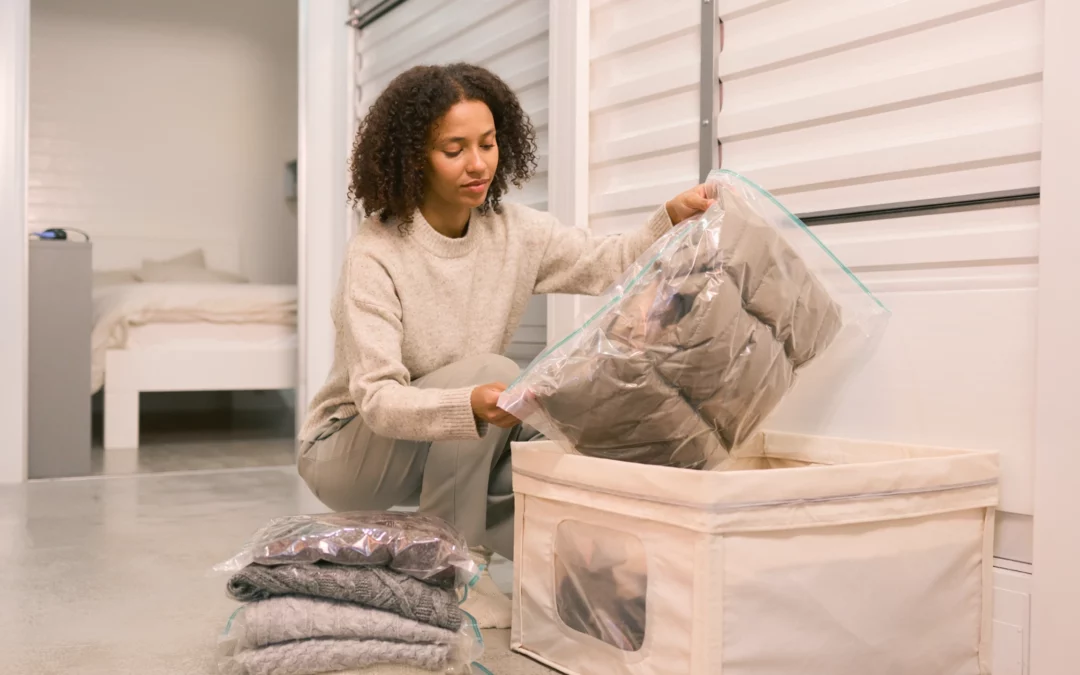
Vacuum-sealed bags are useful, but only for the right items. They’re great for bulky things like duvets and fleeces, but can permanently crease or crush more delicate garments. Keep them away from structured or fine fabric pieces.
Container Selection and Organisation
Choosing Boxes and Building a Labelling System
Clear plastic boxes are your best option for home storage. They protect against moisture, let you see the contents at a glance, and stack neatly. Stick to uniform sizes so everything lines up efficiently and makes the most of your vertical space.
Good labelling makes a big difference months down the line. “Winter Jumpers” is a start, but a more detailed label or a numbered system linked to your inventory spreadsheet will serve you better. Add the storage date too; it helps flag items that haven’t been touched across multiple seasons.
Recognising the Limits of Home-Based Storage
Under-bed containers, door organisers, and vacuum bags can free up a surprising amount of room. But every home has a ceiling. When you’ve exhausted your options and the volume of seasonal clothing still overwhelms your space, renting a personal storage unit in Newbury is a practical next step that keeps your belongings secure and accessible without taking over your home.
When Off-Site Storage Makes Sense
Calculating Your Wardrobe’s Actual Footprint
Be honest about how much space your seasonal clothing actually takes up. If you’re storing it somewhere it doesn’t belong, or you have to move other things just to access it, off-site storage is worth considering.
A family of four can easily accumulate 15 to 20 large boxes of seasonal clothing, which is roughly 3 to 4 cubic metres of space. In compact homes, that’s significant. Freeing it up for a home office, hobby area, or simply a less cluttered bedroom can genuinely change how the space feels.
Cost-Benefit Analysis of External Storage in Newbury
Newbury Self Store offers secure, dry indoor storage units in a modern, purpose-built facility, giving your seasonal garments a safe home away from the damp lofts and uninsulated garages that cause real damage over time. Your winter coat goes in during spring and comes back out in autumn in the same condition.
The financial case stacks up too. Monthly unit costs need to be weighed against reclaimed living space, reduced stress, and clothing that lasts longer because it’s stored properly. For many households, the sums work out clearly in favour of off-site storage.
Creating a Sustainable Rotation Schedule
Setting Quarterly Review Dates Aligned to Seasons
A quarterly wardrobe rotation schedule keeps things manageable. Late March is a natural point to move winter clothing out and bring spring and summer items forward. Late September works in reverse. These built-in checkpoints also give you a chance to review what you’re actually wearing.
Use each rotation as a maintenance window too. Check for missing buttons, small repairs, or signs of damage. Catching these issues early means you’re never caught short when you actually need the garment.
Using Rotation as a Decluttering Opportunity
Rotation naturally surfaces things you no longer wear. If a winter coat comes back out in September having never been touched the previous year, that’s a clear signal. Items that sit through multiple seasons without use are strong candidates for donation or sale.
The same discipline applies whether you’re managing a wardrobe or running a business. Companies that use flexible business storage in Newbury to manage excess stock understand the value of regular audits and clear organisation. Apply the same thinking at home and the system pays off just as well.
Maximising Home Storage Before Going Off-Site
Vertical Space, Furniture Storage, and Door Organisers
Before moving anything off-site, squeeze every bit of value from your home storage first. Most wardrobes have unused vertical space above the hanging rail where an extra shelf or second rod could double your capacity. The backs of doors are often overlooked too; a simple organiser there can free up significant shelf space.
Multi-purpose furniture is worth investing in for compact homes. Ottoman beds with hydraulic lifts offer generous hidden storage for bedding and off-season clothing. A hallway bench or bedroom ottoman adds seating whilst keeping bulky items out of sight.
Sourcing Quality Packaging Materials for Garment Protection
The right materials make a real difference to how well your clothes hold up in clothing storage. Newbury Self Store stocks boxes, bubble wrap, and wardrobe cartons with hanging rails that you can pick up in-store, so you’re not left improvising with unsuitable packaging when it comes time to rotate your wardrobe.
Even a well-organised home has limits, though. When you’ve worked through every option and the problem persists, off-site storage stops being optional and becomes the practical answer.
The Psychology of Space
How Clutter Affects Stress and Cognitive Performance
Having room to breathe in your home has a measurable effect on how you feel. Environmental psychology research consistently links cluttered spaces to higher cortisol levels, poorer sleep, and lower overall life satisfaction. Organised spaces, on the other hand, encourage calm and sharper focus.
Think of your home like a computer. When the hard drive hits 90% capacity, performance suffers noticeably. Physical space works the same way. A home with some breathing room handles the natural disorder of daily life far better than one that’s already full.
The Breathing-Room Effect of Seasonal Rotation
Seasonal wardrobe storage Newbury homeowners invest in creates that essential buffer. Moving 50% or more of your clothing into off-season storage gives you both physical and mental room to stay organised. Getting dressed becomes faster and less stressful when you’re choosing from 30 relevant items rather than sifting through 120.
Long-Term Wardrobe Strategy
Building a System That Improves with Each Rotation
The first rotation takes the most time. You’re building categories, creating an inventory, and sourcing the right materials. But each subsequent swap gets quicker as the system beds in and becomes second nature.
Photograph your organised wardrobes and storage areas to create a visual reference. It helps you maintain the standard and is particularly useful when more than one person in the household is involved in managing the wardrobe.
Drive-Up Container Access for Easier Seasonal Swaps
Handling your clothing twice a year during rotations also sharpens your awareness of what you actually wear. Over time, this tends to lead to more intentional buying and less impulse purchasing, which keeps the volume manageable going forward.
For households with a high volume of robustly boxed seasonal items to shift, outdoor container storage in Newbury offers ground-level drive-up access around the clock, making the physical process of seasonal swaps considerably easier than navigating boxes through narrow hallways.
Making the Transition
Starting with a Trial Season Before Committing
If off-site storage feels like the right move, start with a single season before signing up to anything longer. Store your off-season wardrobe for three to six months and see how the system works for your household’s rhythm and habits.
Use that time to fine-tune your approach. You may find some items need more frequent access than you expected, or that you could actually move more off-site than you initially planned. Either way, it’s useful data.
Refining Your Approach Based on Experience
No wardrobe rotation system works perfectly on the first attempt. You’ll occasionally retrieve something from storage because the weather turned unexpectedly or you misjudged how often you’d wear it. That’s completely normal. Treat it as feedback that sharpens the system for next time.
Conclusion
Compact homes need smart solutions, and seasonal wardrobe storage Newbury residents can rely on delivers real, measurable gains in both space and peace of mind. Moving off-season clothing out of circulation frees up your home whilst protecting garments from the damage that comes with overcrowding.
Whether you invest in better home storage materials or move to an external facility, the returns are clear: clothing that lasts longer, less daily stress, and a home that simply functions better.
If you’d like to talk through your options, call 01635 581 811 or speak to our team and we’ll help you find the right unit size and setup for your needs.