
 01635 581 811
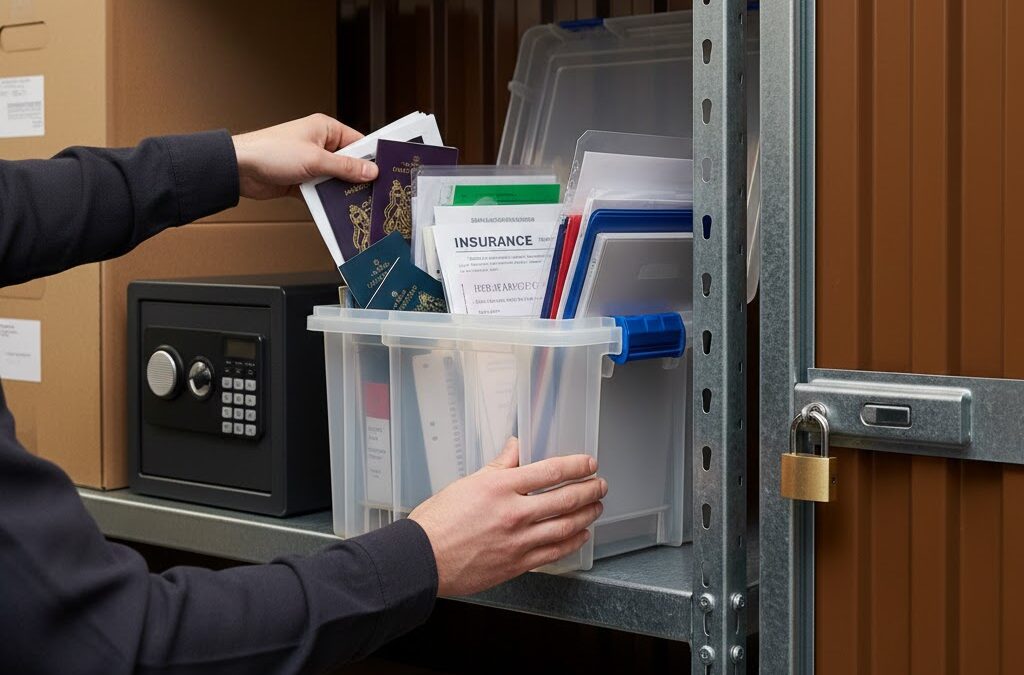
Emergencies arrive without warning. Burst pipes flood homes overnight. House fires destroy everything. Severe storms damage properties within hours. During these chaotic situations, the last thing you need is frantically searching for crucial paperwork whilst dealing with insurance assessors, emergency accommodation, and property repairs. Emergency document storage isn’t paranoid over-preparation – it’s sensible planning that transforms potential disaster into manageable crisis.
Knowing how to store important documents properly means you can focus entirely on managing emergencies rather than scrambling to prove identity, demonstrate ownership, or access vital financial information. When your house is uninhabitable and you need to claim insurance, having immediate access to policies makes the difference between rapid response and frustrating delays that extend displacement for weeks.
This preparation applies equally to households and businesses. Lost documents create problems that multiply quickly – delayed insurance claims, frozen bank access, complications proving legal standing, and endless administrative headaches when you’re least capable of dealing with bureaucracy.
Why Off-Site Protection Matters
Keeping all important documents at home creates dangerous single points of failure. If your property floods, burns, or gets burgled, you lose everything simultaneously – both your possessions and the documentation needed to replace them. That’s not risk management – that’s gambling with your financial security.
Off-site storage provides geographic separation that protects against localised disasters. Your house might flood, but documents stored elsewhere remain safe. Your office might burn, but archived records survive intact. This separation ensures you always maintain access to critical information regardless of what happens to your primary location.
Think of it like backing up computer files. You wouldn’t keep all important data on a single device, would you? Physical documents deserve equivalent protection through geographic redundancy.
Identifying Genuine Threats
Paper documents face multiple destruction risks that people often underestimate until experiencing losses firsthand.
Fire destroys paper instantly. House fires reach temperatures that incinerate documents within minutes. Fireproof home safes provide limited protection – they’re rated for specific durations that serious fires often exceed. Professional facilities implement fire suppression systems that home safes cannot match.
Water damage ruins documents permanently. Flooding, burst pipes, roof leaks, or even humidity exposure cause paper to warp, ink to run, and mould to develop. Once water-damaged, many documents become illegible and legally questionable even if physically intact.
Theft targets identity documents specifically. Passports, driving licences, birth certificates, and financial statements enable identity fraud worth thousands. Burglars know where homeowners typically store these documents and target them deliberately.
Environmental degradation happens gradually. Damp conditions encourage mould. Temperature fluctuations cause paper deterioration. Pests consume paper for nesting material. Documents stored in garages, sheds, or lofts degrade surprisingly quickly even without dramatic incidents.
The cumulative risk from these threats makes professional storage considerably safer than home storage for irreplaceable documents.
The True Cost of Lost Documentation
Lost vital records create cascading problems that extend far beyond simple inconvenience. The financial and emotional costs multiply rapidly when you can’t prove basic facts about your identity, property, or finances.
Property transactions halt completely. Without deeds, you cannot sell. Without mortgage documentation, refinancing becomes impossible. Without rental agreements, proving tenancy for references fails. These delays cost real money through lost opportunities and extended obligations.
Insurance claims face rejection or massive delays. Insurers require policy numbers, coverage details, and proof of ownership. Without documentation, claims processing extends from weeks to months whilst you struggle to verify coverage. Some claims get denied entirely when adequate proof cannot be provided.
Legal processes become complicated and expensive. Missing wills create inheritance disputes. Lost powers of attorney prevent managing affairs for incapacitated relatives. Missing divorce papers complicate remarriage. Recreating these documents costs hundreds in legal fees and takes months.
Business operations can fail entirely. Companies without contracts, compliance documentation, or financial records face regulatory penalties, lose clients, and potentially face closure. The businesses that survive such losses spend months reconstructing documentation whilst operations suffer.
The modest cost of proper emergency document storage prevents these catastrophic scenarios completely.
Essential Documents Requiring Protection
Not all paperwork deserves off-site storage, but certain documents absolutely demand this protection. Focus resources on truly vital records rather than storing every utility bill and receipt.
Identity and Legal Standing
Personal identification proves who you are and enables accessing virtually every service during emergencies. Store copies (not originals you need daily) of passports, driving licences, birth certificates, and National Insurance documentation. Without these, you cannot prove identity to access temporary accommodation, emergency services, or financial assistance.
Legal documents establish rights and responsibilities that remain crucial during crises. Wills, powers of attorney, marriage certificates, divorce decrees, adoption papers, and citizenship documentation require secure storage. These documents take months to replace if lost and may be needed urgently during emergencies.
Property documentation proves ownership and establishes housing rights. Original property deeds, mortgage documentation, and rental agreements belong in secure storage. Without these, proving property ownership or tenancy rights becomes extremely complicated.
Financial Records and Insurance
Insurance policies become useless if you cannot provide policy numbers and coverage details. Store complete copies of homeowner’s, renter’s, vehicle, life, and health insurance documentation. Include contact information for insurers and policy numbers prominently visible.
Banking information enables accessing funds during emergencies. Account numbers, institution contact details, and investment account documentation ensure you can manage finances even when primary records are inaccessible. Don’t store actual cards or PINs – just account identification information.
Tax records serve multiple purposes beyond HMRC compliance. The last three years of tax returns provide financial verification needed for insurance claims, loan applications, and emergency assistance programmes. Store complete returns including all supporting documentation.
Medical and Welfare Information
Medical records become critical when regular healthcare providers are unavailable. Copies of major medical histories, current prescriptions, allergy information, and chronic condition documentation ensure appropriate emergency treatment. This information quite literally saves lives during crises when you cannot access regular medical records.
Emergency contacts need backing up beyond mobile phones that might get lost or damaged. Printed lists of doctors, specialists, immediate family, and out-of-area contacts ensure you can reach crucial people regardless of technology failures.
Pet documentation often gets overlooked until needed urgently. Vaccination records, microchip information, and veterinary contact details enable evacuating pets and accessing emergency veterinary care during disasters.
Organising for Rapid Access
Having documents stored securely proves useless if you cannot locate specific items quickly during emergencies. Systematic organisation determines whether emergency document storage actually helps or just relocates chaos.
Practical Filing Systems
Sort documents into logical categories – identity, legal, financial, medical, property. Use clearly labelled folders, binders, or expanding files within each category. Acid-free protective sleeves prevent paper deterioration whilst enabling easy viewing without handling documents directly.
Create master inventories listing every document stored with specific location details. “Birth certificates – Blue folder, Section A” proves far more useful than vague knowledge that certificates are “somewhere in storage.” This inventory should exist in multiple formats – printed copy in storage, digital backup at home, cloud backup accessible anywhere.
Consider colour-coding categories for visual recognition. Blue folders for identity documents, red for financial, green for medical – whatever system makes sense to you. Visual cues speed location during stressful situations when careful reading becomes difficult.
Take Jennifer’s experience. When flooding forced evacuation, she needed her insurance policies urgently. Because she’d organised documents systematically with clear labelling and maintained an inventory list, she retrieved the exact folder needed within five minutes despite the stress. Her neighbour, whose documents were stored chaotically in unmarked boxes, spent two frustrating hours searching before finally locating relevant paperwork. Organisation made the difference between managing the crisis calmly and adding unnecessary stress.
Selecting Appropriate Storage Solutions
Where you store important documents determines how well they’re protected and how easily you can access them during emergencies.
Professional Storage Advantages
Home fireproof safes provide basic protection for documents needed frequently, but they cannot accommodate extensive archives and offer limited protection against serious fires, floods, or theft. For comprehensive protection of substantial document collections, professional storage facilities prove superior.
Business storage solutions offer the security infrastructure that home storage cannot match – 24/7 CCTV monitoring, secure access controls, fire suppression systems, and professional management that maintains consistent protection standards.
Climate Control Requirements
Paper deteriorates rapidly in uncontrolled environments. Temperature fluctuations cause warping. Humidity encourages mould growth. Freezing damages certain inks and causes condensation that smears writing. Standard unheated storage units subject documents to these destructive conditions constantly.
Climate-controlled storage maintains stable temperature and humidity levels that preserve paper indefinitely. This protection proves essential for older documents, photographs, and anything requiring long-term preservation. The modest additional cost prevents deterioration that renders documents useless despite surviving physical storage.
For substantial archives requiring dedicated space, container storage options accommodate large volumes whilst requiring careful climate consideration to ensure appropriate environmental protection.
Preparing Documents for Storage
Simply boxing documents and hoping for the best guarantees problems. Proper preparation determines whether stored documents remain usable or deteriorate despite secure facilities.
Protection Measures
Use archival-quality materials. Standard cardboard boxes absorb moisture and weaken rapidly. Proper archival boxes maintain structural integrity for years. Don’t overload boxes – paper is surprisingly heavy and excess weight crushes documents underneath.
Waterproof individual items. Place documents in sealed plastic sleeves before boxing. This creates moisture barriers that protect against humidity and accidental water exposure. Critical documents deserve individual protection rather than relying solely on box waterproofing.
Label comprehensively. Mark boxes clearly on multiple sides with general contents. Include dates stored and review dates to ensure regular maintenance. Specific labelling speeds retrieval dramatically compared to vague descriptions.
You can source professional-grade archival supplies – waterproof document sleeves, acid-free folders, sturdy boxes, and protective materials – from the packaging shop to ensure proper document protection.
Digital Backup Strategy
Physical storage requires supplementing with digital backups for truly comprehensive protection. Scan critical documents – passports, wills, insurance policies, property deeds – and store encrypted copies in secure cloud services. Use strong unique passwords and enable two-factor authentication for access protection.
This redundancy means you maintain access even if physical documents become temporarily inaccessible. You can provide scanned copies to insurers, solicitors, or officials whilst retrieving originals from storage. The combination of physical originals in secure storage plus encrypted digital backups provides maximum protection.
Maintaining Your Document Archive
Emergency document storage isn’t “set and forget” – it requires regular maintenance to ensure continued effectiveness. Documents expire, circumstances change, and archives need updating to remain useful.
Regular Review Schedule
Review stored documents annually minimum. Check whether information remains current and accurate. Replace expired documents with updated versions. Remove outdated paperwork that no longer requires retention. Add new critical documents as they arise.
Life changes trigger additional reviews. Moving house, changing banks, renewing passports, updating insurance, major purchases – these events require updating stored documentation to maintain current accurate records.
Test your retrieval system occasionally. Can you locate specific documents quickly? Does your inventory match actual contents? Are labels still legible and accurate? These practice runs identify problems before actual emergencies occur.
Establishing Comprehensive Protection
Proper document protection requires multiple layers working together. Physical secure storage protects against localised disasters. Geographic separation ensures accessibility regardless of primary location problems. Digital backups provide immediate access whilst retrieving physical documents. Systematic organisation enables rapid location of specific items.
This comprehensive approach transforms document storage from simple filing into genuine emergency preparedness that protects your financial security, legal standing, and ability to recover quickly from disasters.
Personal storage solutions provide the secure, climate-controlled space that domestic document protection requires. Newbury Self Store offers flexible contracts without lengthy commitments, accommodating both short-term needs and long-term archival requirements.
Ready to establish proper protection for irreplaceable documents? Contact the team for straightforward advice about climate-controlled units, security features, and flexible storage solutions that protect your vital records properly.