 01635 581 811

Every time you lock your van and walk away for the night, a small part of you probably wonders if your livelihood will still be there in the morning. For a mobile mechanic, your vehicle is your lifeblood, yet it is also a rolling target for thieves and a breeding ground for operational chaos. When thousands of pounds in diagnostic gear, specialised tools, and bulk parts are crammed into a single metal box, you are not just fighting for space, you are fighting for your business survival.
The mechanics I have worked with over the years consistently report the same frustration. They spend nearly an hour each day just locating tools, reorganising their van, or driving home to collect a part they could not fit in that morning. That is five hours per week or over 250 hours annually. Essentially, that is six full working weeks lost to poor storage planning. The financial impact extends beyond wasted time to include theft claims, weather-damaged electronics, and the professional embarrassment of arriving at a job without the right equipment.
The Real Cost of Poor Tool Management
Time theft happens silently when your storage system fails you. A mobile mechanic I knew, let us call him David, calculated he was losing £8,000 annually in billable hours simply because he could not find tools quickly or had stored them at home rather than in his van. He would arrive at a job and realise he needed a specific diagnostic adapter. He then faced a choice, drive 40 minutes home to collect it or reschedule the customer. Improving your mechanic tool storage security is the fastest way to reclaim those lost hours and boost your daily profit.
Security concerns compound these efficiency problems. Mobile mechanics carry between £15,000 and £40,000 worth of equipment, yet many store it all in a van parked on the street overnight. Insurance companies know the statistics: tool theft from commercial vehicles costs UK tradespeople over £30 million annually. Your premium reflects that risk, and a single claim can price you out of affordable cover entirely.
Weather damage presents another hidden cost. Diagnostic computers, oscilloscopes, and electronic testing equipment do not tolerate the temperature extremes inside a metal van. Summer heat can degrade battery-powered tools, while winter condensation corrodes precision instruments. I have seen mechanics replace expensive diagnostic tablets twice in three years simply because they had nowhere else to store them.
Your professional image suffers when disorganisation shows. Arriving at a customer’s property with a chaotic van broadcasts unreliability. Spending ten minutes searching through jumbled toolboxes suggests a lack of professional control. Customers equate organised equipment with competent service, and they are not entirely wrong. If you are struggling to keep your kit in order, the solution is often found outside the vehicle.
What Mobile Mechanics Actually Need to Store
A mobile mechanic’s inventory is complex because it is not just about spanners and sockets anymore. You need to manage different categories of assets that all have unique storage requirements to maintain high mechanic tool storage security standards. Diagnostic equipment and electronics form your highest value storage category. Modern vehicle diagnostics require laptops, brand specific tools, oscilloscopes, and multimeters. These items need stable conditions and protection from vibration during transit.
Seasonal tools also represent a major storage challenge for local tradespeople. Items like air conditioning service equipment may sit idle for half the year. There is no reason to carry this extra weight during the winter months when every litre of fuel counts. Similarly, specialised heavy equipment like gearbox jacks, engine hoists, and bulky timing belt kits serve essential purposes occasionally but waste van space constantly.
Bulk parts and consumables must be managed with a strategic eye for efficiency. Buying oil, filters, and brake pads in bulk saves significant money over the long term. However, storing twenty litres of oil and dozens of filter boxes in your van is completely impractical and messy. Finally, business records such as customer service histories, warranty paperwork, and accounts records accumulate quickly. Keeping them in your van risks loss or theft of sensitive customer information.
Why Your Van is Not Always the Answer
Space limitations in work vehicles force impossible choices. You can carry comprehensive equipment or you can maintain an organised workspace, but rarely both in a standard van. Upgrading to a larger vehicle solves one problem while creating others. You face higher purchase costs, increased fuel consumption, and additional parking challenges in busy areas. Furthermore, the security vulnerabilities remain the same on a bigger scale.
Insurance complications multiply when your van becomes your sole storage solution. Insurers distinguish between tools carried for immediate use and those stored in vehicles overnight. Your policy might cover £5,000 of equipment in transit but only £1,000 stored overnight unless you have paid for enhanced cover. If you park on the street rather than in a locked garage, those limits often halve again.
Theft risk peaks when work vehicles sit unattended. Thieves recognise mobile mechanic vans and know exactly what they contain. Tool theft gangs work systematically through local areas, targeting commercial vehicles with practised efficiency. Even the best van security merely slows them down; it does not eliminate the risk.
Temperature-sensitive items suffer in vehicle storage. Your van becomes an oven in summer and a freezer in winter. Batteries discharge faster, lubricants separate, and electronic equipment fails prematurely. The same conditions that make vehicles challenging environments for the components you repair make them poor storage for the tools you use.
Creating a Dedicated Base Between Jobs
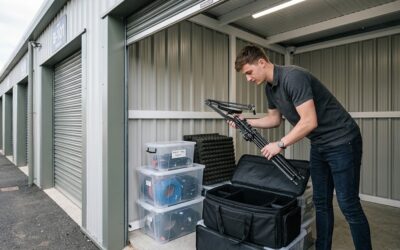
Think of dedicated storage space as a base camp for your mobile operation. Mountaineers do not carry everything to the summit; they establish camps where they can resupply, reorganise, and prepare for the next stage. Your mobile mechanic storage Newbury unit functions similarly. It provides a central point where you can restock your van with exactly what each day’s jobs require. Consequently, you can store backup equipment securely and maintain inventory without cluttering your home or overloading your vehicle.
Newbury Self Store provides mobile mechanics with this operational base through flexible storage solutions designed around trade requirements. The facility recognises that your storage needs differ fundamentally from household users. Your unit functions as business infrastructure rather than just a place to keep things. By choosing the right Newbury Self Store unit, you are investing in the long-term health and efficiency of your trade.
Inventory management improves dramatically when you separate daily-use items from backup stock. Your van carries the tools and parts you will likely need today, while your storage unit holds everything else in an organised system. This separation lets you buy economically in bulk, maintain backup equipment for critical tools, and rotate stock systematically.
Professional workspace for preparation matters more than many mechanics initially realise. Having somewhere you can lay out tools and organise parts for upcoming jobs creates mental separation between work and personal life. You are not packing your van in your driveway at dawn or unpacking it in your garage late at night.
Security Features for High-Value Trade Equipment
When storing expensive trade assets, security must be your primary concern. A professional facility like ours offers layers of protection that a domestic garage simply cannot match. We prioritise your peace of mind so you can focus on your customers and their vehicles. Individual unit alarms provide the first layer of protection for trade storage because a dedicated unit with its own alarm system means any unauthorised access triggers an immediate alert. This individual security matters because your equipment value and theft risk differ from typical storage users.
CCTV coverage throughout the facility adds accountability and deterrence. Comprehensive camera systems monitor access points, corridors, and individual unit doors. This surveillance doesn’t just deter opportunistic theft; it provides evidence if the worst happens and supports insurance claims with documented proof of security measures. High level mechanic tool storage security is built into the architecture of our facility to ensure your livelihood remains intact.
Business storage facilities designed for trade users provide the documented security standards that keep your premiums manageable. To keep your administrative paperwork as safe as your high-value parts, you can optimise your workshop inventory space within your unit. This ensures customer records remain protected and GDPR compliant. This level of professional oversight is something that mobile operators simply cannot achieve through vehicle based storage alone.
Organising Your Storage Unit for Quick Access
Zone-based layout systems transform chaotic storage into efficient inventory management. Divide your unit into functional zones to save time. Keep daily tools that need frequent access near the door. Place seasonal equipment towards the back and maintain a dedicated section for parts inventory and business records.
Shelving and racking strategies maximise vertical space while maintaining accessibility. Heavy items like jacks and hoists belong on lower shelves or the floor. Medium-weight items suit mid-height shelving for easier lifting. Light items like spare parts, consumables, and documentation work well on upper shelves. Transparent storage boxes let you identify contents without opening every container.
Labelling and inventory tracking prevent the “I know it is here somewhere” syndrome. Label everything clearly and maintain a simple inventory list on your phone. This allows you to check what is in storage while you are at a job site. Consequently, you avoid making unnecessary trips back to the facility.
Quick-grab staging areas near your unit door streamline daily preparation. Keep tomorrow’s jobs in mind when you pack up today. Stage the tools and parts you will need for scheduled jobs in an accessible zone. This means your morning routine involves loading pre-organised equipment rather than hunting through your entire inventory. If you need to select professional grade storage supplies, using high quality crates and bubble wrap is a smart move for your staging area.
The Business Case for Off-site Storage
Cost comparison with larger vans reveals storage units often represent better value. A long-wheelbase high-roof van costs significantly more than a medium wheelbase alternative. That price difference could cover several years of storage rental. Additionally, you will see fuel savings from running a smaller, lighter vehicle.
Tax deductibility considerations favour storage costs. Business storage typically qualifies as a fully deductible operating expense. This cost reduces your taxable profit pound for pound. In contrast, with a larger van, only depreciation and running costs offset your income.
Scalability as your business grows matters more than most mechanics anticipate. You can start with a small unit and expand as your equipment inventory increases. This flexibility is far superior to the commitment of purchasing progressively larger vehicles. Furthermore, it allows you to take on additional staff or larger contracts without immediate overhead spikes.
Professional separation of work and home improves both business efficiency and personal wellbeing. When your garage is not full of work equipment, your tools are not scattered through your house. You create a genuine boundary that reduces stress. For those with particularly bulky equipment, renting drive up trade units allows you to park directly outside your unit. You can load and unload efficiently without carrying heavy equipment long distances.
Protecting Specialised Equipment and Inventory
Climate considerations protect your most sensitive equipment. While you do not need full climate control for most hand tools, diagnostic electronics and batteries benefit from stable temperatures. Professional facilities offer units that prevent the degradation that temperature extremes cause. This ensures your expensive kit remains in top condition for years.
Parts inventory protection extends beyond security to include organisation and condition maintenance. Storing bulk oil, coolant, and other fluids requires appropriate containment and ventilation. Use proper storage supplies like spillage trays and appropriate shelving. This prevents accidents and ensures you can locate specific items quickly when a customer is waiting.
Documentation security protects both your business and your customers. Service records and business accounts contain sensitive information that data protection regulations require you to secure properly. Storing these records in a locked, alarmed unit provides better protection than keeping them in your van.
Equipment rotation systems ensure backup tools stay functional. That second diagnostic computer or spare impact wrench needs occasional use to maintain reliability. A proper storage system reminds you to rotate equipment periodically. Consequently, your backups will actually work when you need them most in the field.
Making Storage Work for Your Mobile Operation
Access patterns should match your working schedule perfectly. If you typically start jobs at dawn, you need storage access that accommodates your timeline. Similarly, if you often finish late, evening access matters. Look for facilities offering extended access to trade customers to eliminate the constraint of office hours.
Location strategy balances convenience against cost. Storage closer to your typical working area reduces drive time but may cost more. Calculate the trade-off carefully. Your time has a specific financial value, and fuel is an ever-present cost. The cheapest unit is not always the most economical choice when drive time is factored in.
Unit size planning requires an honest assessment of your current inventory. A unit that is too small forces you to cram equipment in, which destroys your organisation system. A unit that is too large wastes money on unused space. Start with your current inventory and add roughly 30 percent for growth and organisation space.
Sometimes, tradespeople find that storing non-work household items is the only way to establish a functional home workshop. This makes room for business equipment in your home office or garage. This dual approach can be more cost-effective than renting larger domestic premises while keeping your professional gear strictly organised.
Insurance and Liability Considerations
Insurance requirements for stored trade equipment differ from standard contents cover. Your business insurance policy needs to specifically cover equipment stored off-site. Insurers often require confirmation of security standards at the storage facility. Obtain written confirmation of the facility’s security features to provide to your insurer for peace of mind.
Liability protection matters when you are storing chemicals, fluids, and potentially hazardous materials. Ensure your storage agreement permits automotive fluids. You must store them safely with appropriate containment to prevent leaks. Your public liability insurance should extend to your storage activities to protect you if stored materials cause any damage.
Documentation for claims becomes critical if theft or damage occurs. Photograph your stored equipment and maintain inventory lists with serial numbers. Keep all your purchase receipts in a safe place. This documentation dramatically simplifies insurance claims and helps you prove the value of lost items if the worst should happen.
Security compliance often affects premium costs more than many mechanics realise. The difference between storing equipment in a basic garage versus an alarmed facility can reduce your insurance premium by 20 percent or more. This saving can potentially offset a significant portion of the storage rental cost.
Long-term Business Benefits
Professional credibility increases when you can reliably deliver comprehensive service. Knowing you have backup equipment and extensive parts inventory means you can confidently accept complex jobs. You are no longer limited to work you can complete with whatever fits in your van today.
Business resilience improves with proper equipment backup and organisation. A vehicle breakdown does not stop your business when you can quickly transfer essential tools to a hire vehicle. Similarly, tool failure does not delay jobs when you have backup equipment readily accessible. This resilience protects your reputation and your income.
Growth capacity expands when storage constraints do not limit your equipment investment. You can purchase that specialised diagnostic tool for a specific vehicle brand, knowing you have somewhere to keep it. This equipment breadth lets you serve more customers and command higher hourly rates.
Work-life balance improves measurably when your business equipment lives somewhere other than your home. Your garage becomes a garage again. Your spare room is not full of parts boxes. Your evenings are not spent reorganising tools in the dark. This separation reduces stress and prevents professional burnout.
The mechanics who thrive long-term recognise that professional storage is not an expense. Instead, it is an infrastructure investment that pays returns through efficiency, security, and business capability. Your tools represent your livelihood. Protecting them properly while maintaining quick access is a fundamental business practice.
To find out more about how we can support your trade, call 01635 581 811 or contact our team today.