
 01635 581 811
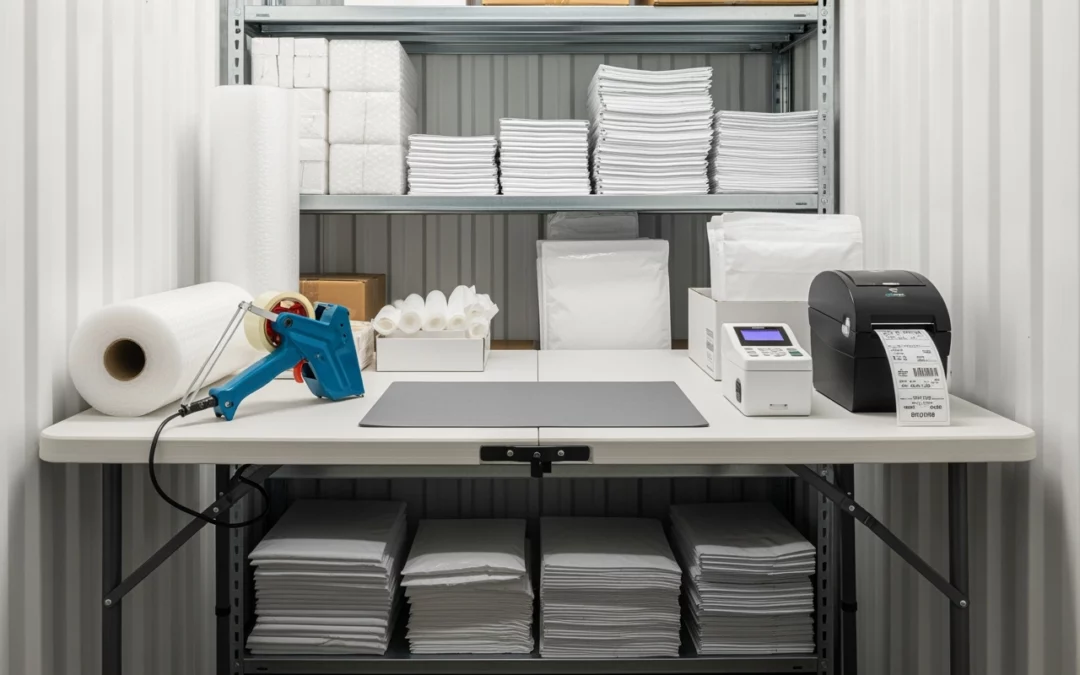
Small businesses shipping products face a constant challenge: where to store inventory, pack orders, and coordinate dispatch without paying premium warehouse rates. Converting a self storage unit into a functional packing station self storage setup solves this problem whilst keeping overhead costs manageable.
The concept works because modern self storage facilities offer more than simple lockup space. Many provide ground-floor access, extended opening hours, and vehicle proximity that traditional warehousing cannot match at comparable prices. A properly configured packing station self storage unit becomes a complete fulfilment centre.
Understanding Your Space Requirements
Space planning determines whether your packing station functions smoothly or becomes a frustrating bottleneck. Start by mapping your workflow on paper before committing to a unit size.
Calculate your needs based on three distinct zones. The receiving area holds incoming stock and supplies. The packing zone contains your workstation, packaging materials, and quality control space. The dispatch area stages completed orders ready for collection or courier pickup.
Most small operations function effectively in 100 to 150 square feet, roughly equivalent to a standard single garage. Vertical space matters as much as floor area. Standard units offer eight to ten foot ceilings, allowing tall shelving systems that triple your storage capacity. Think of your unit like a shipping container: you are organising in three dimensions, not just spreading items across the floor.
Essential Equipment for Your Packing Station
The right equipment transforms a bare storage space into a functional workspace. Begin with a sturdy packing table at comfortable working height, typically 36 inches. Folding tables save money initially but wobble under repeated use and create inefficiency over time.
Industrial shelving forms the backbone of your storage system. Metal racking with adjustable shelves accommodates varying product sizes and supports substantial weight. Position frequently shipped items at waist height to minimise bending and reaching. Digital scales accurate to one gram prevent shipping cost surprises, and thermal label printers eliminate the frustration of standard printer jams.
Packaging material storage requires thoughtful organisation. Wall-mounted dispensers for tape, bubble wrap, and packing paper keep supplies within arm’s reach. Essential packing materials stored in clear plastic bins by size make selection quick and prevent the cardboard avalanche that plagues disorganised spaces.
Designing an Efficient Workflow Layout
Workflow design separates productive packing stations from chaotic storage rooms. The principle mirrors a production line: items should move in one direction from receipt to dispatch without backtracking.
Position your receiving area nearest the door. Incoming deliveries get checked, logged, and moved to storage shelving without crossing your packing workspace. Your packing table occupies the central position with packaging materials on one side and completed order staging on the other. This arrangement means you pivot rather than walk during packing, saving dozens of steps per order.
Create a quality control checkpoint between packing and dispatch. A small shelf or designated table section holds orders for final verification before shipping labels attach. I have watched a jewellery maker go from packing orders from her dining table, to moving to a small packing station self storage unit, and within eighteen months operating from three connected spaces processing 200 orders weekly. That transformation required planning, not massive investment.
Newbury Self Store facilities provide ground-floor units with wide access doors that simplify this workflow layout. The ability to reverse a vehicle close to your unit door eliminates carrying heavy parcels across car parks, particularly valuable during peak shipping periods.
Inventory Management Systems
Effective inventory tracking prevents the embarrassment of selling products you have already shipped and the expense of holding dead stock. Stock rotation using the first-in, first-out method protects product quality and prevents items languishing unsold. Date incoming stock with a marker or label, then arrange shelving so older items sit at the front.
Digital inventory systems range from simple spreadsheets to sophisticated software platforms. Integration with shipping platforms eliminates double handling of data. Most ecommerce systems automatically deduct sold items from inventory counts when you generate shipping labels, freeing time for actual packing rather than administrative updates.
Manual backup systems provide insurance against technology failures. A simple wall chart showing fast-moving product levels lets you assess stock at a glance without booting a computer. Low-tech solutions often prove most reliable during hectic periods when your dispatch area storage unit is operating at full capacity and you need quick answers fast.
Setting Up the Packing Station Self Storage Environment
Product integrity and business continuity depend on appropriate environmental controls and security measures. Temperature-controlled units protect products sensitive to heat or cold. Cosmetics, chocolates, electronics, and certain craft supplies deteriorate in extreme temperatures. The modest additional cost of climate control prevents product losses that quickly exceed the premium.
Security features should include individual unit alarms, CCTV coverage, and perimeter fencing at minimum. Your inventory represents both financial investment and customer commitments. Insurance requirements change when you operate a business from storage rather than simply keeping personal items. Notify your insurer about commercial use and verify your policy covers business stock, equipment, and public liability.
Access hours determine operational flexibility. A packing station self storage setup only works if you can access it when you need to fulfil orders. Facilities offering 24-hour access suit businesses shipping internationally or those packing orders outside standard hours. Restricted access premises cost less but limit when you can respond to urgent orders or receive supplier deliveries.
Scaling Your Operation
Smart growth means expanding capacity in step with demand rather than leasing excessive space optimistically. Starting small provides flexibility to test your packing and dispatch processes before committing to larger premises. A modest unit for three to six months reveals workflow bottlenecks and equipment needs that are not obvious in theory.
Affordable business units designed for commercial use provide the professional environment and operational features that home-based dispatch cannot match. Upgrade triggers include consistently working in cramped conditions, storing inventory in secondary locations, or regularly working late because space constraints slow packing.
Multi-unit operations suit businesses with distinct product lines or those wanting to separate their dispatch area storage unit from bulk inventory. Some operators prefer keeping packing separate from storage, using a small unit as the active packing station and a larger space for inventory reserves. Seasonal businesses might maintain a core unit permanently and add affordable container units during busy months, accommodating peak demand without paying for unused space year-round.
Legal and Compliance Factors
Operating a business from self storage requires understanding regulatory requirements and facility rules. Business use permissions must be explicit in your rental agreement. Always disclose your intended use during the rental process. Attempting to hide business operations risks losing your space without notice.
Health and safety regulations apply even in self storage environments. Maintain clear walkways, store heavy items on lower shelves, and ensure adequate lighting. If employees or contractors work in your unit, you assume employer responsibilities including risk assessments and appropriate insurance coverage.
Fire safety requirements prohibit storing flammable materials beyond small quantities of standard packing supplies. Waste disposal and packaging recycling should not happen in your unit. Establish regular waste removal routines, taking cardboard and packaging waste to recycling centres or arranging commercial waste collection.
Making Your Packing Station Work Long-Term
A well-designed packing station self storage area delivers professional fulfilment capabilities without warehouse costs. The key lies in thoughtful layout, appropriate equipment, and systematic processes that scale with your business.
Success requires treating your storage unit as a genuine workspace. Flexible short-term storage options allow you to test the model before committing to a larger, longer-term arrangement, reducing the risk of over-committing to space you have not yet proven you need. Invest time in proper organisation initially, then maintain those systems consistently.
The businesses that thrive using this model share common traits: they plan workflows carefully, choose appropriate spaces for their needs, and remain willing to adapt as operations evolve. Your packing station should serve your business, not constrain it.
Call 01635 581 811 or contact us to discuss unit options suited to your packing and dispatch requirements.