
 01635 581 811
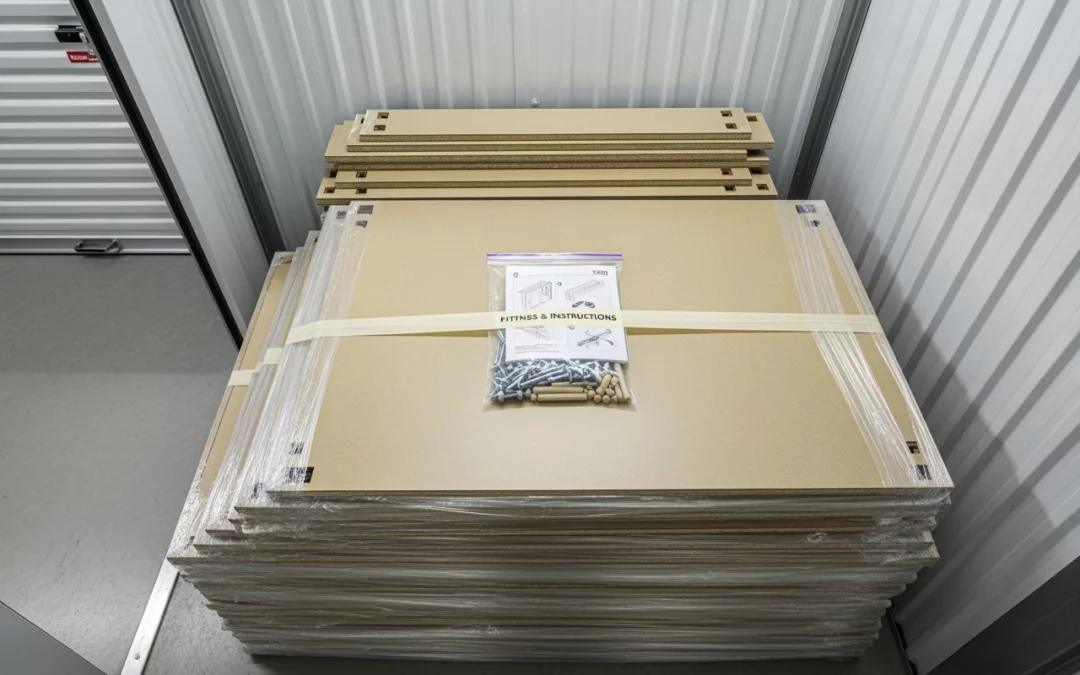
Flat-pack furniture has transformed how we furnish homes and offices, but storing flat pack furniture presents unique challenges that traditional furniture never posed. The very design that makes these items affordable and transportable also makes them vulnerable during storage. Lose a single cam lock or dowel, and a perfectly good wardrobe becomes unusable.
The problem extends beyond missing parts. Pressed wood panels warp in humid conditions, laminate surfaces scratch when stacked incorrectly, and instruction manuals vanish precisely when you need them most. These issues multiply when you are storing multiple pieces simultaneously, creating a frustrating puzzle when reassembly time arrives.
Why Flat-Pack Furniture Needs Special Storage Preparation
Flat-pack furniture differs fundamentally from solid wood pieces. Manufacturers design these items for single assembly, not repeated disassembly and storage. The particle board and MDF cores absorb moisture readily, causing expansion and warping. Laminate surfaces, whilst durable during normal use, chip easily when panels slide against each other during storage.
The hardware presents its own challenges. A typical bookcase contains 15 to 30 individual fasteners, including cam locks, dowels, screws, and plastic caps. These small components scatter easily, and replacing them proves surprisingly difficult. Manufacturers rarely sell individual parts, and generic hardware seldom matches original specifications precisely.
I once helped a family retrieve their stored office furniture after 18 months, only to discover they had placed all hardware from three desks into a single unmarked bag. We spent four hours sorting components and cross-referencing instruction manuals. Two screws remained unidentified, forcing us to source replacements from a specialist supplier. That experience taught me the value of meticulous organisation from the very start.
Think of this process like creating a time capsule for your furniture. You are packaging not just physical components but also the knowledge needed to resurrect the piece. Every label, photograph, and organised bag represents future time saved and frustration avoided when packing flat pack for storage correctly.
The Complete Disassembly Process
Successful storage begins with methodical disassembly. Start by photographing the assembled furniture from multiple angles, capturing how components connect and align. These images provide invaluable reference points during reassembly, showing details that instruction manuals often omit.
Work systematically, removing one section at a time. As you extract each fastener, immediately place it in a small, labelled plastic bag. Write the component name and location directly on the bag using permanent marker. “Left side panel, top hinge screws” provides specific context that “miscellaneous screws” never could.
Keep the instruction manual with the furniture components throughout storage. If you have discarded the original, download a digital copy from the manufacturer’s website and print it. Place this document in a clear plastic sleeve and attach it securely to the largest panel using packaging tape.
Packaging Materials That Prevent Flat-Pack Damage
Proper materials make the difference between furniture that emerges storage-ready and pieces requiring repair or replacement. Bubble wrap provides essential protection for laminated surfaces, preventing scratches and chips. Wrap each panel individually, securing the wrap with tape that will not leave residue.
Corner protectors shield vulnerable edges where the particle board core lacks the density of solid wood. Once chipped, these edges absorb moisture and deteriorate rapidly. For hardware storage, small zip-lock bags prove superior to paper envelopes or loose containers. The transparent plastic allows quick visual identification, whilst the seal prevents spillage if bags shift during transport.
Durable packing boxes purpose-made for storage provide better protection than repurposed cardboard, featuring consistent sizing for efficient stacking and thicker walls that withstand long-term storage conditions without deteriorating. Furniture blankets or old sheets provide additional protection between wrapped panels, preventing hard edges from pressing against one another and creating pressure points.
The Master Parts System
Create a master parts inventory before storing anything. This simple document lists every piece of furniture, its components, and the location of associated hardware. Assign each piece of furniture a unique identifier using coloured stickers or numbered labels, applying identical markers to all components and hardware bags belonging to that piece.
Store all hardware bags together in a single, clearly marked transparent plastic storage box with a secure lid. This allows you to see contents without opening whilst protecting against moisture and pests. Position this master hardware container in an easily accessible location, not buried beneath furniture panels.
Photograph your organised hardware bags before storage. This digital backup proves invaluable if labels fade or bags shift during storing flat pack furniture over longer periods. The photograph shows your organisational system at its peak, providing a reference point for locating specific components months later.
How Professional Storage Facilities Support Furniture Storage
Climate-controlled environments provide crucial protection for flat-pack furniture. Particle board and MDF respond dramatically to humidity fluctuations, expanding in moist conditions and contracting when dry. These dimensional changes stress joints and fastener holes, potentially rendering furniture unassemblable after extended storage in uncontrolled conditions.
Newbury Self Store provides purpose-designed spaces that accommodate the awkward dimensions of disassembled furniture. Standard panels from wardrobes and desks measure approximately 2 metres tall but only 40 centimetres deep, creating challenging storage geometry. Purpose-built storage units offer the vertical clearance needed for efficient panel storage whilst maintaining security and environmental control throughout the year.
The accessibility of professional storage matters when you need to retrieve specific items in stages. Well-designed facilities allow you to access your unit without disturbing other customers, providing adequate lighting and space to safely manoeuvre large panels. This accessibility proves particularly valuable for households managing phased renovations or relocations.
Stacking and Positioning Strategies
Vertical storage works best for large panels. Stand panels on their long edges, leaning them slightly against a wall for stability. This orientation minimises the weight pressing on any single point, reducing the risk of warping or indentation. Place the heaviest, thickest panels at the back, with lighter components towards the front.
Never stack flat-pack panels horizontally like a stack of books. The weight of upper panels concentrates on the edges of lower ones, creating pressure points that indent or crack the particle board. Even moderate weight causes problems over time, particularly in the centre of large panels where support is minimal.
Create barriers between different furniture pieces using cardboard sheets or furniture blankets. These separators prevent components from different items becoming confused and provide additional protection against scratches. Position your master hardware container at the front of your storage space, easily accessible without moving furniture panels.
Long-Term Storage Considerations
Moisture remains the primary enemy of flat-pack furniture during storage. Even climate-controlled facilities benefit from additional moisture protection. Silica gel packets placed inside hardware containers and between wrapped panels absorb residual moisture, providing an extra layer of protection against humidity spikes.
Regular inspection schedules help catch problems before they become serious. If possible, check stored furniture every three to six months, looking for signs of moisture damage, pest activity, or shifting components. Store between moves with a personal storage unit that keeps flat-pack furniture and other household items together in one accessible, climate-controlled space during renovation or relocation.
Consider the reassembly environment when planning storage duration. The cost of storing flat pack furniture indefinitely eventually exceeds replacement value for budget pieces, particularly given the risk of damage or lost components over extended periods. Matching your preparation effort to anticipated storage duration is one of the most practical pieces of advice for successful long-term management.
Common Mistakes That Compromise Flat-Pack Storage
Mixing hardware from multiple furniture pieces creates the most common and frustrating problem. Those cam locks might look identical, but subtle differences in length or thread pitch make them incompatible across different furniture lines. Always keep hardware separated by piece, even when storing items from the same manufacturer.
Inadequate labelling seems harmless initially but causes significant problems later. Labels that simply say “screws” or “shelf parts” provide insufficient information for confident reassembly. Storing flat pack furniture in non-climate-controlled spaces like garden sheds or garages exposes items to extreme temperature swings and humidity fluctuations that warp panels and corrode fasteners.
Organised business storage solves the common problem businesses face when temporarily storing office furniture during refits or relocations. Purpose-built commercial units provide the climate control and accessibility that office furniture requires, preventing the warping and component loss that often occurs in unmanaged interim storage.
For larger quantities of flat-pack furniture, such as complete house moves or office clearances, ideal house move container storage provides the space, ground-level access, and environmental control needed to store large volumes of panels and components safely without compromising on protection.
Protecting Your Investment Through Proper Storage
The systematic approach to packing flat pack for storage might seem excessive initially, but the alternative proves far more costly in time and money. A few hours spent photographing, labelling, and properly wrapping components saves days of frustration during reassembly. The modest investment in proper packaging materials protects furniture worth hundreds or thousands of pounds.
Professional storage facilities provide the controlled environment that flat-pack furniture requires for long-term preservation. The consistent temperature and humidity prevent the warping, swelling, and deterioration that plague furniture stored in garages, sheds, or unheated spaces. Knowing exactly where every component and fastener resides eliminates the anxiety that typically accompanies storing flat pack furniture for the first time.
Remember that flat-pack furniture storage success depends entirely on preparation quality. Invest time in proper preparation, and you will thank yourself when reassembly day arrives. Your future self, pulling out perfectly preserved panels and finding every fastener exactly where it should be, will confirm that the effort was worthwhile.
Call 01635 581 811 or contact us to discuss professional storage solutions for your flat-pack furniture and household items.