
 01635 581 811
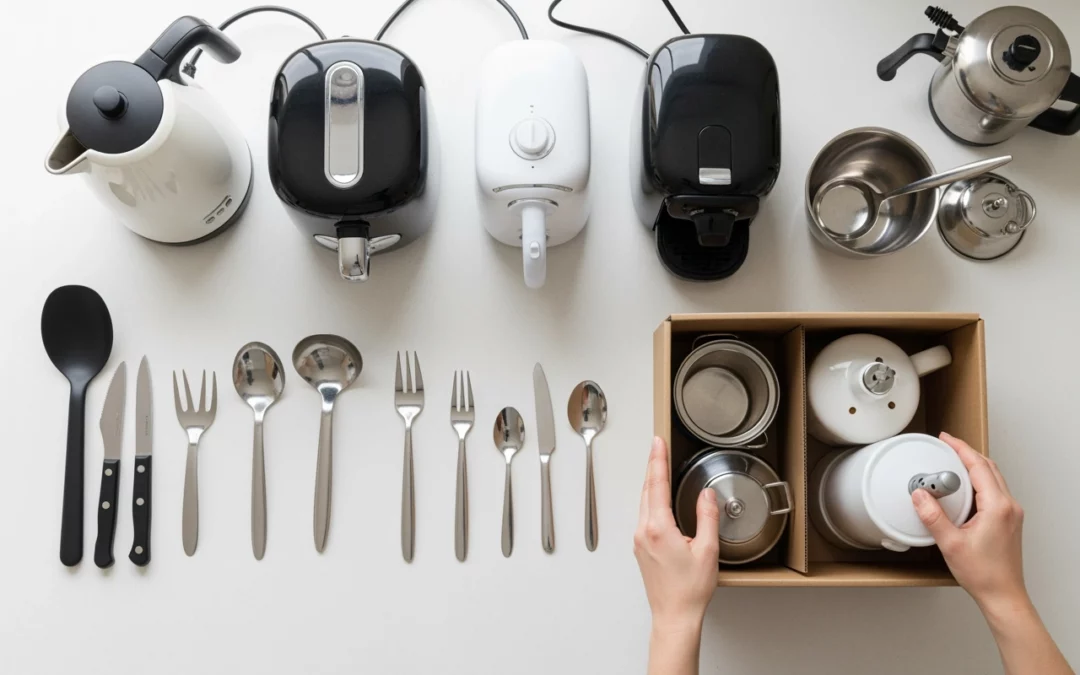
The average British kitchen accumulates approximately 40% more items than its owners actually use. Cupboards bulge with duplicate utensils, drawers jam with forgotten gadgets, and worktops disappear beneath rarely touched appliances. This excess creates more than visual chaos. Following a kitchen declutter guide approach transforms what should be a functional workspace back into one that actually works for you.
Kitchen clutter does not appear overnight. It builds gradually through well-intentioned purchases, inherited items, and the persistent belief that someday you will need that avocado slicer gathering dust at the back of the drawer. The result is a space that works against you rather than for you, where finding a simple whisk becomes an archaeological expedition.
Understanding What Creates Kitchen Clutter
Three psychological patterns drive most kitchen clutter. The first is the “just in case” mentality, where items remain because they might prove useful during some hypothetical future event. That bread maker you received as a wedding gift five years ago sits unused, occupying valuable cupboard space on the slim chance you will suddenly develop a passion for home baking.
The second pattern involves emotional attachments. Grandmother’s china service for twelve holds sentimental value, yet you have used it precisely twice in eight years. These items create guilt when you consider removing them, despite the practical burden they impose on your daily kitchen function.
The third culprit is impulse purchasing driven by cooking shows and social media. That spiraliser looked essential when you watched a celebrity chef create vegetable ribbons, but it joined seventeen other single-purpose gadgets after its inaugural use. Marketing convinces us we need specialised tools for tasks a simple knife accomplishes equally well.
The Three-Category System: Keep, Store, Let Go
Effective kitchen decluttering requires a decision framework that removes emotion from the process. Every item in your kitchen should fall into one of three categories: keep in daily rotation, move to storage, or let go entirely. This kitchen declutter guide system works because it acknowledges that not everything you own deserves prime kitchen real estate.
Think of your kitchen like a professional chef’s station. Everything within arm’s reach serves a specific, frequent purpose. Less-used but valuable tools sit in nearby storage, accessible when needed but not cluttering the workspace. Anything that does not contribute to either category has no place in the system.
Some items have genuine value but do not require immediate access. Others serve no purpose beyond occupying space and creating visual noise. A systematic approach addresses both categories decisively without forcing unnecessary permanent decisions.
What to Keep in Your Kitchen
Items that remain in your kitchen should pass a simple test: you have used them within the past thirty days, or you will definitely use them within the next thirty. This rule eliminates the hypothetical thinking that preserves clutter whilst focusing on actual behaviour patterns.
Essential cooking equipment includes one quality chef’s knife, one paring knife, and one serrated blade. Most home cooks need no more. Similarly, two saucepans, one frying pan, and one larger pot handle 95% of everyday cooking tasks. The specialised cookware can move elsewhere.
A client once showed me her utensil drawer containing seven wooden spoons, four spatulas, and three sets of measuring spoons. When we applied the thirty-day rule, she realised she used the same wooden spoon and one spatula for everything. The duplicates existed purely from accumulated gift-giving and impulse purchases over the years. That single realisation freed an entire drawer.
What Belongs in Storage
Seasonal items represent the perfect storage category. Christmas baking tins, summer barbecue accessories, and preserving equipment serve genuine purposes but only during specific times of year. Create space today with personal storage that keeps these items accessible yet out of your daily workflow.
Occasional entertaining supplies also fit this category perfectly. That serving platter for dinner parties, the punch bowl for celebrations, and the fondue set for special occasions have value, but they do not require kitchen cupboard space. Bulk purchases benefit from proper storage as well. Buying in quantity saves money, but only if you have appropriate space that does not compromise your kitchen function.
Specialty equipment you use quarterly rather than weekly falls into this category too. Newbury Self Store offers climate-controlled environments that protect these investments whilst freeing your kitchen for daily essentials. Quality cookware and appliances represent significant investments, and proper storage protects them from damage, dust, and deterioration rather than cramming them into overcrowded cupboards where they risk scratches and chips.
What to Let Go Without Regret
Expired items represent the easiest decluttering decisions. That spice collection with dates from 2019 has lost its potency and flavour. Expired tinned goods, stale baking supplies, and mystery containers from the back of the fridge all belong in the bin, not your cupboards.
Duplicate tools rarely justify their existence. Keep the highest quality version of each tool and release the rest. Single-purpose gadgets promise convenience but deliver clutter. Unless you use a specialised tool weekly, it is consuming more value in space than it provides in function.
Gifts you have never used create particular guilt, but keeping them does not honour the giver’s intention. They wanted to give you something useful, not something that burdens you with storage obligations and guilt. Donate these items to charity shops where they might actually serve their intended purpose for someone else. Damaged items often linger through inertia rather than logic. If you have not repaired them by now, you will not.
The Physical Decluttering Process
Successful kitchen decluttering follows a systematic zone-by-zone approach rather than attempting everything simultaneously. Start with one cupboard or drawer, completely emptying its contents onto your worktop. This forces active decision-making about each item rather than passive reorganising of existing clutter.
Sort items into four boxes as you work: keep in kitchen, move to storage, donate, and discard. Handle each item once and make an immediate decision. Clean each cupboard or drawer before returning the keep items. This provides a psychological reset, marking the difference between your old cluttered kitchen and your new functional workspace.
One family I worked with discovered they had been storing three complete dinner services despite having only four regular diners. The everyday set remained in the kitchen. The formal set moved to storage for the twice-yearly occasions it actually saw use. The third set, inherited but never liked, went to a charity shop where it could serve someone who would actually appreciate it. Clear-out container access made moving the formal service straightforward without navigating narrow kitchen corridors with large boxes.
Maintaining a Clutter-Free Kitchen
Daily habits prevent clutter from re-establishing itself. The one-in-one-out rule works effectively: when you acquire a new kitchen item, something else must leave. This maintains equilibrium and forces conscious decision-making about purchases.
Monthly reviews catch accumulation before it becomes overwhelming. Spend fifteen minutes scanning your kitchen for items that have migrated back from storage, new purchases that have not earned their keep, or duplicates that somehow appeared. Before any kitchen purchase, ask three questions: what specific problem does this solve? What will I stop using when I start using this? Where exactly will this live in my kitchen?
Kitchen packing supplies and proper protective materials matter when moving items to storage. Document storage solutions principles apply equally to recipe archives, instruction manuals, and warranties that accumulate in kitchen drawers: file what you reference, archive what you must keep, and shred what has expired.
Resist the temptation to fill newly empty spaces. That cleared cupboard shelf represents breathing room and flexibility, not an invitation to acquire more items. Empty space in your kitchen is a feature, not a problem requiring a solution. This single mindset shift, understood and maintained, is what separates people who follow a kitchen declutter guide successfully from those who repeat the cycle every few years.
Call 01635 581 811 or contact us for guidance on optimising your kitchen through strategic storage decisions.