
 01635 581 811
Running a House in Multiple Occupation (HMO) in West Berkshire is a different beast to managing a single-let property. When you’re keeping track of five or six separate tenancies under one roof, HMO furniture storage stops being a convenience. It becomes a core part of how you operate.
Students graduate, professionals move on, and rooms turn over constantly. Each change brings a new logistical puzzle. Without a clear system in place, that puzzle costs you time and money, often both at once.
The problem compounds quickly. You’ve got good furniture left behind by a departing tenant, but your new arrival has their own. The pieces are too useful to bin, yet they’re sitting in space that could be earning rent. Multiply this across several rooms throughout the year, and you’ve got a recurring headache that quietly chips away at your profits.
Why HMO Landlords Need Dedicated Furniture Storage
The numbers tell the story. A typical six-bedroom HMO in Newbury sees roughly 40% tenant turnover each year. That’s around three rooms changing hands annually. At every transition, you’re making calls about what to keep, what to store, and what to replace.
September is the crunch point for most landlords. Students leave several rooms at once. New tenants arrive days later, some expecting a furnished room, others bringing their own things. Without proper storage in place, you’re making rushed decisions under pressure. Furniture ends up stacked in hallways, crammed into damp outbuildings, or skipped before its time.
The smarter approach is to treat your furniture as a business asset, because that’s exactly what it is. A bed, wardrobe, desk, and chair set costs between £800 and £1,200. Across six rooms, that’s up to £7,200 in furnishings. Storing those items properly during transitions makes far more financial sense than replacing them repeatedly.
I’ve worked with HMO landlords who thought storage was unnecessary overhead. One property manager in Thatcham changed her mind after losing £3,400 worth of furniture to water damage in a garage she’d assumed was weatherproof. The storage fees she’d avoided over eighteen months came to just £540. The lesson was a painful one. She now keeps a rolling inventory system using purpose-built business storage in Newbury that protects her assets all year round.
The Real Cost of Poor Furniture Management
Poor furniture management doesn’t just cost you money on replacements. It costs you time, and that’s often the bigger loss. Arranging removals, hunting for replacements, and managing deliveries eats into hours you’d be better spending on viewings, maintenance, or growing your portfolio.
It also affects how tenants feel about your property. A new occupant who walks into a room with mismatched leftovers or missing pieces forms a poor first impression instantly. In a competitive market like Newbury, that matters. Well-presented, consistent furnishings help you hold onto good tenants and justify stronger rents.
Think of it like running a vehicle hire fleet. Rental companies don’t leave cars in random car parks and hope for the best. They maintain dedicated facilities with proper systems, scheduled checks, and organised rotation. HMO furniture works the same way; it generates income through repeated use across different occupants. Once you apply that operational mindset, the case for proper storage becomes obvious.
Cash flow is another factor many landlords overlook. When three rooms turn over in September, you might face £2,400 in furniture costs alongside safety certificate renewals and maintenance bills. Strategic storage changes that equation. You buy quality pieces during sales and draw from your stock as rooms become available, spreading the cost rather than absorbing it all at once.
Strategic Furniture Rotation for HMO Properties
Smart HMO operators build a furniture rotation system rather than buying new every time. The idea is straightforward: maintain a core stock of solid furnishings that move between rooms as tenants come and go. You pull from storage when needed and replenish thoughtfully, not reactively.
This works especially well when you understand your seasonal patterns. Student lets experience predictable tenant turnover in September and January. Professional tenancies follow job market rhythms. Once you know your cycle, you can plan furniture movements to coincide with natural vacancies rather than scrambling at short notice.
Rotation also makes upgrading easier and cheaper. When you want to lift the standard in one property, the displaced furniture doesn’t go to landfill. It goes into storage, then into another property at its next turnover. The result is a steady improvement across your whole portfolio without the cost of wholesale replacements.
Newbury Self Store is built to support exactly this kind of flexible approach. HMO landlords can scale up their storage during busy turnover periods and give just two weeks’ notice when they no longer need it. There are no lengthy contracts to worry about, so you’re not locked in when your situation changes.
Protecting Your HMO Investment During Refurbishments
Renovation projects create their own storage headaches. Whether it’s a full refurbishment or targeted fire safety upgrades, works displace furniture and leave it vulnerable to dust, paint, and damage from contractors working around it.
The 2023 updates to HMO licensing standards in West Berkshire pushed many landlords to carry out physical modifications. That meant making decisions about HMO furniture storage quickly and under pressure. Leaving it in place risked damage. Disposing of it meant starting from scratch afterwards. Proper storage offered a straightforward middle ground.
Refurbishments are also a good opportunity to take stock. Items that worked well in the old layout might not suit the updated space. With furniture safely in storage, you can assess each piece properly once work is done, rather than making hasty disposal calls during the chaos of construction.
There’s an insurance angle worth noting too. Most landlord policies expect you to take reasonable care of your property during renovation work. Storing furniture in a secure, documented facility is evidence of that duty of care. Leaving valuable pieces exposed to a building site could complicate any claim if something goes wrong.
What Makes Storage Suitable for HMO Furniture
Not every storage facility is fit for purpose. HMO furniture storage needs somewhere that ticks three boxes: a dry and secure environment, flexible access, and proper security measures. Miss any one of those, and you’re either damaging your assets or creating operational bottlenecks.
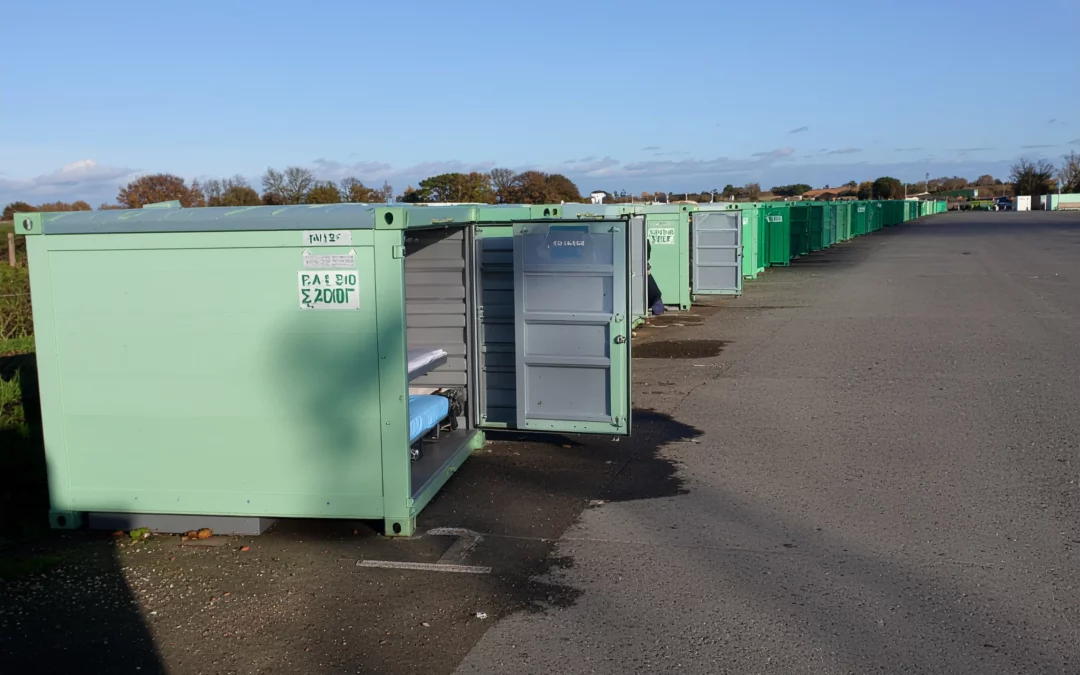
A dry environment is the biggest priority for furniture protection. Upholstery, wood, and mattresses all deteriorate quickly in damp conditions. Mould sets in faster than most people expect. For landlords with large or bulky items to move between properties, ground-level shipping container units offer a practical option. Containers sit at ground level for easy loading and unloading, and they’re accessible around the clock, so you’re never restricted to office hours.
Flexible access is just as important for indoor units. HMO management doesn’t run to a timetable. Tenants give unexpected notice. Move-in dates shift. Newbury Self Store is open seven days a week with staffed hours, so you can access your unit when you need to rather than being left waiting.
Security rounds out the picture. Quality furniture has real value, and it deserves proper protection. Newbury Self Store uses a monitored alarm system, CCTV, and reinforced steel entrance shutters to keep stored items secure. These measures give you peace of mind that your assets are looked after between tenancies.
Practical Steps for HMO Furniture Storage
Start with a proper inventory. Before anything goes into storage, photograph it. Note the condition, dimensions, and which property it came from. A simple spreadsheet works fine. The goal is to know exactly what you have, where it is, and when it went in. That clarity saves significant time when you’re planning a room setup or dealing with an insurance query.
Preparation before storage matters just as much as the facility itself. Mattresses need breathable covers to prevent moisture build-up. Wooden furniture benefits from a coat of polish to buffer against humidity changes. Upholstered items should be professionally cleaned before storage, since organic matter attracts pests and accelerates wear. Stocking up on boxes, bubble wrap, and protective furniture covers before anything goes into storage extends the life of every piece and reduces how often you need to replace things.
A good labelling system pays for itself quickly. Use colour-coded tags to indicate furniture type, condition, or which property it came from. Labels visible from the unit entrance mean you’re not unpacking half the room to find what you need. As your inventory grows across multiple properties, this kind of organisation becomes increasingly valuable.
How you arrange the unit matters too. Put heavy items like wardrobes and bed frames around the perimeter. They create a stable frame and protect lighter pieces in the middle. Keep the things you access regularly near the front. Items you rarely need can go deeper in. A bit of thought at the start saves a lot of time and handling later.
How Professional Storage Supports HMO Operations
Good storage isn’t a standalone expense. When it’s set up properly, it becomes part of how your whole operation runs. It cuts costs, speeds up turnarounds, and raises the standard of what tenants walk into.
Scaling is where it really proves its worth. Your first HMO might manage with improvised solutions. By the time you’re running three or four properties, you need systems. Centralised storage gives you a professional foundation that grows with your portfolio without adding proportional complexity. You develop repeatable furniture rotation processes for maintenance and deployment that work across every property you manage.
It also gives you room to experiment without risk. Want to try standing desks in one room? Store the traditional desk during the trial. If tenants respond well, roll the change out gradually using stock you already have. That’s a much lower-risk way to improve your offering than committing wholesale to untested changes.
Building a long-term relationship with your storage provider brings its own advantages. Regular, predictable business gives providers reason to accommodate your needs, whether that’s help with deliveries, advice on the right unit size, or flexible terms that suit your portfolio’s tenant turnover patterns. These relationships are part of the professional network every serious HMO operator relies on.
There’s also a less obvious benefit: mental clarity. Knowing your assets are secure, organised, and accessible removes a persistent low-level concern from your headspace. That frees you up to focus on the things that actually grow your business, such as acquisitions, compliance, and tenant relationships.
Building Storage into Your HMO Business Model
The most effective HMO landlords don’t treat storage as a surprise cost. They plan for it from the start, budgeting alongside insurance, maintenance reserves, and certificate renewals. That way, the money is always there when you need it.
The numbers make a compelling case. A £1,000 bedroom set that lasts eight years with proper care costs you £125 a year. The same set replaced every three years due to poor HMO furniture storage costs £333 a year, plus the time spent buying replacements repeatedly. Over ten years, across several properties, that difference adds up to a substantial amount.
Storage also gives you more flexibility with tenants. When you have an organised system, you can genuinely offer furnished or unfurnished options because you have the stock to back it up. That broadens your potential tenant pool and lets you charge a premium for furnished rooms when the market supports it.
Finally, there’s the tax angle. Systematic furniture management means clear records: purchase dates, storage costs, disposal notes. That documentation supports capital allowance claims and expense deductions. HMRC expects a paper trail, and professional storage with formal invoicing provides exactly that. Improvised solutions in personal garages tend not to hold up as well under scrutiny.
Conclusion
HMO property management in West Berkshire demands more than good instincts. It requires systems, and HMO furniture storage is one of the most important ones to get right. The constant cycle of tenant changes, refurbishments, and portfolio growth creates challenges that improvised solutions simply can’t keep up with. Professional storage turns furniture from a recurring problem into a managed asset.
The financial case is straightforward once you do the sums. Replacement costs, tenant satisfaction issues, and the time lost to poor systems all erode your margins far more than a modest storage arrangement ever would. Treating furniture like the business asset it is means protecting it accordingly.
A proper furniture rotation system changes how you operate. Instead of buying new pieces reactively or accepting gradual deterioration, you maintain a managed stock that moves through your properties based on actual need. Less waste, lower costs, and more flexibility to meet what tenants want.
The benefits go beyond the numbers too. Well-maintained, consistent furnishings signal a professional operation to tenants and fellow landlords alike. That reputation compounds over time, influencing everything from how long good tenants stay to the terms you can negotiate on future financing.
If you’re managing HMO properties in West Berkshire and HMO furniture storage has become a problem worth solving, the right infrastructure makes a real difference. To find out which option suits your portfolio, call 01635 581 811 or contact our team today.