
 01635 581 811
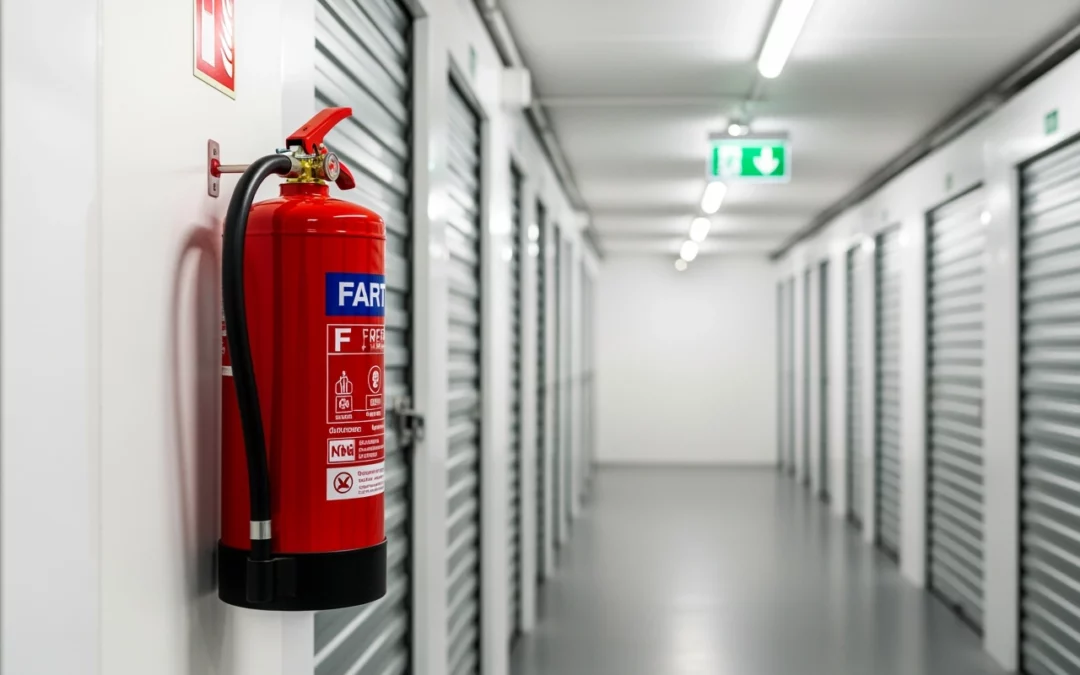
Storage fires represent one of the most serious risks in the self storage industry, yet many customers never consider fire safety when choosing a facility. Understanding how modern storage centres protect against fire hazards gives you confidence that your belongings remain secure, whether you are storing family heirlooms or critical business documents.
The statistics tell a sobering story. According to Fire Protection Association data, storage facilities experience approximately 300 fire incidents annually across the UK. These fires result in millions of pounds in property damage, with the average storage fire causing losses exceeding £150,000. Most concerning is that roughly 60% of these incidents could have been prevented through proper safety measures and customer awareness. Self storage fire safety UK standards exist precisely to address these preventable risks.
The Reality of Fire Risk in Storage Facilities
Storage environments present unique fire challenges compared to residential or commercial buildings. The concentration of stored goods, often packed tightly together, creates significant fuel loads that can accelerate fire spread. Three primary ignition sources account for most storage fires. Electrical faults within the facility infrastructure cause approximately 40% of incidents, whilst improper storage of flammable materials contributes another 30%. The remaining 30% stems from external factors including arson and lightning strikes.
Temperature fluctuations inside storage units rarely cause fires directly, but they can create conditions that increase risk. Batteries stored in extreme heat may leak or rupture, aerosol cans can pressurise and burst, and certain chemicals become unstable. I recall a situation three years ago where a customer unknowingly stored old paint tins in their unit during a particularly hot July. The expanding vapours did not ignite, but the pressure caused several tins to leak, creating a hazardous mess that required professional cleaning. That incident reinforced why strict prohibited items lists and regular facility inspections remain essential for fire protection storage unit management.
Active Fire Protection Systems
Smoke detection forms the first line of defence in self storage fire safety UK protocols. Modern facilities install addressable smoke detectors throughout the building, with sensors positioned in corridors, individual units, and common areas. These sophisticated devices communicate their exact location to a central monitoring system, allowing rapid identification of the fire’s origin point.
Unlike simple residential smoke alarms, commercial detection systems use multiple sensing technologies simultaneously. Optical sensors detect visible smoke particles, whilst ionisation sensors respond to invisible combustion products. Heat detectors provide backup monitoring, triggering when temperatures rise beyond preset thresholds. This multi-layered approach reduces false alarms whilst ensuring genuine threats receive immediate attention.
Sprinkler systems provide automatic fire suppression, activating when heat reaches critical levels. Contrary to popular belief, sprinklers do not all activate simultaneously in response to smoke alarms. Each sprinkler head contains a heat-sensitive element that triggers individually, releasing water only where fire actually exists. Early Suppression Fast Response sprinklers deliver larger water droplets at higher pressure, penetrating through rising heat to reach the fire’s base more effectively. These systems can control or extinguish fires before they spread beyond the initial unit.
Passive Fire Protection Measures
Whilst active systems detect and suppress fires, passive protection prevents fire spread through building design and construction materials. Fire-resistant construction materials form the facility’s structural defence. Modern storage buildings utilise concrete, steel, and fire-rated plasterboard that resist combustion and maintain structural integrity during fires. External walls typically achieve 120-minute fire resistance ratings.
Compartmentalisation divides facilities into separate fire zones, preventing flames from spreading throughout the entire building. Think of compartmentalisation like watertight bulkheads on a ship. Just as bulkheads prevent flooding from sinking an entire vessel, fire walls contain blazes within limited areas, protecting the majority of stored goods even if fire occurs in one section. Fire-rated doors equipped with automatic closing mechanisms seal these compartments, maintaining separation even when staff forget to close doors manually. Access corridors must remain unobstructed at all times, which is why responsible facilities prohibit customers from storing items in hallways.
What Customers Can Do to Minimise Risk
Customer behaviour significantly impacts self storage fire safety UK outcomes. Prohibited items lists exist for specific safety reasons. Flammable liquids, compressed gases, fireworks, and ammunition are absolute prohibitions with no exceptions. Lithium-ion batteries in laptops, power tools, and recreational equipment can experience thermal runaway, generating intense heat and flames. If you must store items containing these batteries, remove them first.
Safe packing practices reduce fire risk whilst protecting your belongings. Avoid overfilling boxes, which restricts airflow. Leave space between stacked items to promote ventilation. Never store items directly against walls, as this blocks sprinkler coverage and creates hidden areas where fires might smoulder undetected. Regular unit checks when you visit your safeguard your valuables personal storage space allow you to spot unusual odours, pest activity, or water damage that might indicate developing problems. Report any concerns to facility management immediately.
How Professional Facilities Maintain Fire Safety
Behind the scenes, reputable storage facilities implement comprehensive fire safety programmes. Fire safety training covers evacuation protocols, fire extinguisher operation, and communication procedures. Staff learn to identify potential hazards during daily rounds, recognising warning signs like unusual smells or heat from specific units.
Regular inspections maintain system functionality. Fire detection equipment undergoes monthly testing to verify sensors, alarms, and communication links operate correctly. Sprinkler systems receive quarterly inspections checking water pressure, valve operation, and head positioning. Annual comprehensive assessments by certified fire safety engineers ensure compliance with current regulations, including the Regulatory Reform (Fire Safety) Order 2005, which requires facility owners to conduct fire risk assessments and maintain detailed records.
Integration with emergency services establishes response protocols before incidents occur. Fire brigades conduct familiarisation visits, learning facility layouts and identifying hydrant locations. This pre-planning ensures firefighters understand building construction, sprinkler system specifications, and access routes, enabling faster, more effective responses during actual emergencies.
Newbury Self Store: Fire Safety Integration
Newbury Self Store maintains 24/7 monitoring integration, providing continuous oversight that protects stored belongings around the clock. Fire alarm integration connects detection systems to facility management teams, ensuring automated alerts notify emergency services within seconds, even during unstaffed hours.
Facilities offering business archives secured conditions often implement enhanced fire safety measures recognising the critical nature of commercial documents and inventory. These might include upgraded detection sensitivity, additional sprinkler coverage, or specialised suppression systems for high-value storage areas.
For customers needing protect large belongings in external container storage areas, fire protection coverage must extend to these spaces equivalently. Always verify that your facility provides consistent fire protection regardless of whether your unit is internal or external to the main building.
When sourcing keep items protected quality packing materials, choosing boxes and wrapping that maintain proper airflow and reduce heat accumulation contributes to the overall fire protection storage unit environment. Properly packed units are safer units.
Business-Specific Fire Safety Considerations
Businesses face unique challenges when storing archives, inventory, and equipment. Document and archive protection requires consideration of fire risks versus water damage from sprinkler systems. Waterproof storage containers and elevated shelving keep documents above potential water accumulation. Some businesses require specialised storage for items containing flammable components; attempting to store these in standard units violates safety regulations and potentially invalidates insurance coverage.
Insurance implications of self storage fire safety UK standards cannot be overstated. Commercial insurance policies typically require businesses to store goods in facilities meeting specific fire safety standards. When evaluating storage options, request documentation of fire safety systems and compliance certifications. Reputable operators provide this information readily, understanding that business customers need verification for insurance and regulatory purposes.
Choosing a Fire-Safe Storage Facility
Start by requesting specific information about detection and suppression systems. What type of smoke detectors does the facility use? Are sprinklers installed throughout the building or only in common areas? How quickly do alarms notify emergency services? Look for facilities certified to BS EN 15713, the European standard for self storage services that includes fire safety requirements.
Physical inspection reveals details that marketing materials might obscure. Visit facilities during your evaluation process, observing construction quality, corridor cleanliness, and equipment condition. Red flags warrant immediate concern: reluctance to discuss fire safety systems, inability to provide compliance documentation, or staff unfamiliarity with emergency procedures.
Protecting Your Belongings Through Smart Choices
Use appropriate packing materials designed for long-term storage. Create clear pathways within your unit allowing air circulation and providing access for inspections. Label boxes clearly identifying contents, which serves fire safety purposes beyond simple organisation: if facility staff notice heat or odours from your unit, detailed labelling helps them assess whether contents might pose fire risks.
Seasonal reviews of stored items reduce accumulation of unnecessary materials whilst providing opportunities to identify developing hazards. Self storage fire safety UK standards are not just the facility’s responsibility; they are a partnership between the operator and every customer. Understanding your role in that partnership protects your belongings and everyone else’s.
Call 01635 581 811 or contact us for expert guidance on fire safety systems and storage best practices.