
 01635 581 811
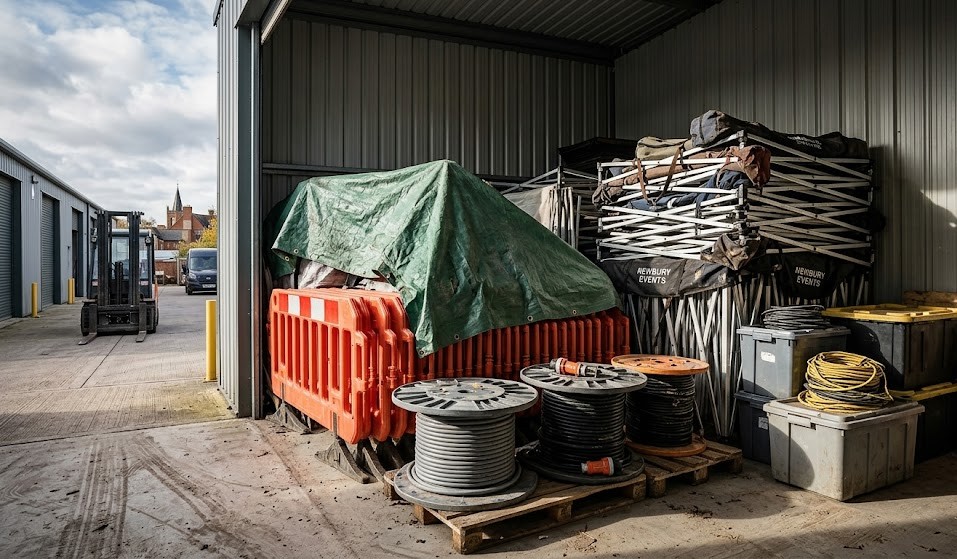
Running a festival means juggling countless moving parts, but here’s something most organisers learn the hard way: the real challenge isn’t the event itself. It’s what happens to all that infrastructure once the crowds go home and the music stops. Stages, barriers, signage, lighting rigs, generators, portable bars – you’ve invested thousands in these assets, and they need somewhere secure to live for the other 50 weeks of the year.
The festival industry has shifted dramatically over the past decade. Single-use everything is out, and reusable infrastructure is in. That’s brilliant for sustainability and your bottom line, but it creates a storage headache that grows with every successful event. You can’t just shove £50,000 worth of staging into someone’s garage and hope for the best.
Why festival equipment storage demands a professional approach
Festival kit isn’t like storing Christmas decorations. We’re talking about substantial investments in infrastructure that must survive multiple seasons whilst remaining in perfect working order. A corroded barrier system or weather-damaged stage deck doesn’t just cost money to replace – it creates safety risks and can delay your entire setup schedule.
Most festival organisers start small, perhaps keeping gear in a lock-up or borrowed warehouse space. That works until you scale up. Then you’re faced with a choice: rent expensive commercial premises year-round, or find a flexible festival equipment storage solution that grows with your needs without the overhead of a permanent facility.
Climate control matters more than you might think. Electronic equipment, particularly sound and lighting systems, deteriorates rapidly in damp conditions. Wooden staging absorbs moisture, warps, and becomes unsafe. Even metal barriers can develop surface rust that makes them look tatty and unprofessional. The cost of replacing damaged equipment quickly outweighs any savings from choosing cheap, unsuitable storage.
What actually needs storing between events
Let’s be specific about the infrastructure most festivals need to protect year after year. Understanding the full scope helps you calculate the right storage size and conditions.
Stage and structural elements form the backbone of any festival. Modular staging systems, roof trusses, support poles, decking sections, and stairways take up serious space. These items are heavy, awkward to stack, and absolutely cannot be damaged. A single bent truss can compromise an entire stage structure.
Crowd management infrastructure includes barriers, fencing panels, gates, and queue management systems. These multiply quickly – a medium-sized festival might use 500+ barrier sections. They stack reasonably well, but you need proper racking or storage methods to prevent damage and make inventory management possible.
Signage and branding materials represent your festival’s identity. Professionally printed banners, directional signs, sponsor boards, and decorative elements aren’t cheap to reproduce. They need dry, clean storage where they won’t fade, tear, or get crushed under heavier items.
Power and lighting equipment demands the most careful storage. Generators, distribution boards, cable reels, lighting fixtures, and control equipment are both expensive and sensitive to environmental conditions. These items justify climate-controlled storage on their own.
Catering and bar infrastructure rounds out the list. Portable bar units, refrigeration equipment, water tanks, and food service structures all need secure storage. Many organisers overlook this category until they’re scrambling to find space for a dozen portable bar units after their first successful event.
Here’s an analogy that helps: think of festival storage like a professional theatre’s prop and scenery warehouse. You wouldn’t store Shakespearean costumes in a leaky shed, and you shouldn’t treat your festival infrastructure any differently. These are the tools of your trade.
Calculating your storage requirements
Getting the size right saves money and hassle. Too small, and you’re playing Tetris with expensive equipment or renting multiple units. Too large, and you’re paying for empty space you don’t need.
Start with a complete inventory. Document every piece of infrastructure you own, including dimensions when packed or stacked. Most festival organisers discover they have more kit than they realised once they actually list everything. Don’t skip this step.
Small festivals (up to 2,000 capacity) typically need 200-400 square feet of storage. That accommodates a basic stage setup, essential barriers, signage, and some technical equipment. Think of it as roughly the size of a single garage.
Medium festivals (2,000-10,000 capacity) jump to 400-800 square feet. You’re now storing multiple stages, extensive barrier systems, substantial technical equipment, and more elaborate infrastructure. This is where drive-up access becomes essential – you can’t hand-carry stage sections down narrow corridors.
Large festivals (10,000+ capacity) require 800+ square feet, often split across multiple units. At this scale, you’re essentially running a small warehouse operation. Organisation becomes critical because you’ll have staff accessing equipment throughout the year for maintenance and smaller events.
But here’s what most organisers miss: you need 20-30% more space than your equipment actually occupies. Why? Because you need access. Equipment stacked floor-to-ceiling with no walking space is useless when you need to pull out specific items for maintenance or smaller events. Build in working room.
Security features that actually matter
Festival equipment is attractive to thieves. It’s valuable, often portable, and can be sold quickly. A lighting rig worth £15,000 fits in a van. Your storage facility needs proper security, not just a padlock on a shed door.
Look for 24/7 CCTV coverage with recorded footage. Not dummy cameras – actual working systems that cover access points and corridors. If something goes missing, you need evidence for insurance claims and police reports.
Individual unit alarms add another layer. These trigger if someone forces entry to your specific storage space, even if they’ve somehow bypassed facility security. It’s like having a burglar alarm on your storage unit itself.
Controlled access systems mean not just anyone can wander into the facility. Pin codes, key fobs, or card access systems create an audit trail of who entered when. This matters for insurance purposes and gives you peace of mind.
On-site management or security staff make a real difference. Facilities with regular patrols or permanent staff presence deter opportunistic theft far more effectively than purely electronic systems. Someone actually walks past your unit regularly and notices if something’s wrong.
Accessibility and logistics planning
You’ll access your festival storage far more often than you expect. Maintenance checks, equipment loans for smaller events, pre-season preparation, post-event returns – it all adds up. Choose storage that makes these tasks easier, not harder.
Drive-up access is non-negotiable for anything larger than a small community festival. You need to reverse a van or lorry directly to your storage unit door. Hand-carrying stage sections across a car park in the rain gets old fast, and increases damage risk.
Wide access corridors and high doors matter when you’re moving bulky items. Standard doorways don’t accommodate 8-foot barrier sections or rolled stage decking. Check actual dimensions before committing to a unit.
Loading equipment availability is worth asking about. Does the facility have trolleys, pallet jacks, or loading ramps? These simple tools make the difference between a two-hour load-out and a six-hour ordeal.
Flexible access hours give you operational freedom. Festival prep doesn’t stick to 9-5 schedules. You might need equipment at 6am on a Saturday or late evening during setup week. Some facilities offer 24/7 access, whilst others restrict hours – know what you’re getting.
Consider proximity to your festival site or transport routes. Storage 50 miles away might be cheaper, but factor in the extra fuel costs, driver time, and logistics complexity. Sometimes paying slightly more for convenient location saves money overall.
Organising storage for quick access
We’ve worked with organisers who’ve spent hours hunting for specific items in chaotic storage units. Proper organisation isn’t just tidiness – it’s operational efficiency that saves time and reduces stress during your busiest periods.
Zone your storage by category. Group similar items together: all barriers in one section, staging in another, signage separately, technical equipment in its own area. This seems obvious, but you’d be surprised how quickly organisation breaks down when you’re rushing to pack up after a muddy weekend.
Create clear labelling systems for everything. Waterproof labels on boxes, tags on equipment, numbered sections with corresponding inventory lists. When a team member needs “the spare generator control panel,” they should find it in minutes, not hours.
Stack strategically with frequently accessed items near the front. Equipment you need regularly (perhaps for smaller events or maintenance) shouldn’t be buried behind rarely-used items. Think about access patterns throughout the year.
Maintain clear walkways through your storage space. That 20-30% extra space we mentioned earlier? Use it for internal access. You should be able to reach any section of your storage without moving mountains of equipment first.
Photograph your storage layout after organising it properly. This becomes your reference point. When multiple team members access storage throughout the year, they can return items to their correct locations using the photos as a guide.
Here’s a real scenario: a regional music festival we know stores their equipment at Newbury Self Store. They use a simple colour-coding system – red tags for staging, blue for barriers, green for technical equipment. Combined with a basic floor plan stuck to the inside of their unit door, any team member can find and return items without confusion. Simple, but effective.
Climate control considerations
British weather creates storage challenges. Damp, temperature fluctuations, and humidity affect different materials in different ways. Understanding these impacts helps you decide whether standard or climate-controlled event infrastructure storage makes sense for your equipment.
Electronic equipment absolutely demands climate control. Sound desks, lighting controllers, power distribution units, and anything with circuit boards deteriorates rapidly in damp conditions. Condensation causes corrosion, and moisture damages sensitive components. These items represent substantial investments that justify the extra cost of climate-controlled storage.
Wooden components – stage decking, platform sections, signage boards – absorb moisture from the air. This causes warping, swelling, and eventual rot. Wood that’s been stored damp won’t fit together properly during setup, creating safety issues and frustrating delays.
Fabric and soft materials including banners, flags, decorative draping, and any textile elements develop mould and mildew in damp conditions. Once that distinctive musty smell sets in, it’s nearly impossible to remove. Prevention through proper storage is far easier than remediation.
Metal infrastructure seems robust, but surface rust develops surprisingly quickly in humid environments. Barriers, trussing, and framework develop that orange-brown coating that looks unprofessional and weakens structural integrity over time.
Standard storage works fine for robust metal barriers, basic fencing, and similar infrastructure that can handle environmental exposure. But if your inventory includes any electronic, wooden, or fabric elements, climate control pays for itself by extending equipment life and maintaining professional appearance.
Maintenance access throughout the year
Festival equipment needs regular maintenance between events. Generators require servicing, electrical equipment needs testing, and everything benefits from inspection and cleaning. Your storage solution should facilitate this ongoing care, not hinder it.
Schedule regular maintenance visits to your storage facility. Quarterly checks catch problems early – a small rust spot treated now versus major corrosion next season. These visits also keep you familiar with your inventory and help plan for equipment replacement or expansion.
Create a maintenance log that travels with your equipment. Note inspection dates, repairs completed, and any concerns flagged for attention. This documentation proves invaluable for safety compliance and helps plan maintenance budgets.
Allocate workspace within your storage unit for basic maintenance tasks. A small folding table, good lighting, and space to lay out equipment makes it possible to complete simple repairs and inspections on-site rather than transporting items elsewhere.
Some organisers use storage access as an opportunity for team training. Bringing new crew members to storage for equipment familiarisation sessions means they understand what they’re working with before the pressure of event setup. It’s a smart use of the space beyond simple storage.
Insurance and documentation requirements
Your festival equipment represents significant capital investment. Proper insurance coverage protects that investment, but insurers have specific requirements about storage conditions and security.
Photograph all equipment when it enters storage. Detailed images document condition and prove ownership if theft occurs. Update these photos annually or after major equipment additions.
Maintain detailed inventory records with serial numbers, purchase dates, and current values. Spreadsheets work fine – you don’t need fancy software. Just keep it updated and backed up digitally.
Understand your insurance policy’s storage requirements. Some policies specify minimum security standards for covered storage. Using a facility that doesn’t meet these requirements might void your coverage. Check before signing a storage contract.
Keep insurance certificates and facility contracts in an accessible location. You’ll need these for event licensing, equipment loans, and any insurance claims. Store copies both digitally and in a secure physical location.
If you’re storing equipment for multiple events or on behalf of partners, clarify ownership and insurance responsibility for each item. Mixed ownership in shared storage creates complications if problems arise.
Seasonal scaling and flexible contracts
Festival businesses are inherently seasonal. You might run one major annual event plus several smaller gatherings, or operate a summer festival season with quiet winters. Your storage needs fluctuate accordingly.
Flexible storage contracts accommodate this reality. Look for facilities offering monthly terms rather than rigid annual leases. This lets you scale up storage before your busy season and potentially reduce space during quiet periods.
Plan for growth when choosing initial storage size. That small festival you’re running this year might double in size next year if it’s successful. Moving storage facilities is disruptive and time-consuming – better to have slight excess capacity than outgrow your space immediately.
Consider overflow options for peak periods. Perhaps you maintain year-round storage for core infrastructure, but rent additional space temporarily before and after your main event for items like hired equipment, extra supplies, or sponsor materials that don’t need permanent storage.
Some organisers coordinate with other local festivals to share storage costs. If you run a summer music festival and someone else runs a winter food festival, your peak storage needs might not overlap. Shared facilities can work, but establish clear agreements about space allocation, access, and liability.
Preparing equipment for storage
How you pack and prepare equipment before storage directly impacts its condition when you retrieve it months later. Take time to do this properly after each event, even when you’re exhausted and just want everything dealt with quickly.
Clean everything thoroughly before storage. Mud, food residue, spilled drinks – all attract pests and accelerate deterioration. A pressure washer and some elbow grease now prevents unpleasant surprises later.
Dry equipment completely before storing. Even climate-controlled storage can’t fix equipment that enters damp. Let items air-dry fully after cleaning, particularly fabric and wooden components.
Disassemble items properly following manufacturer guidelines. Don’t force components apart or use shortcuts that damage connectors and fittings. Proper disassembly means easier reassembly next season.
Protect vulnerable components with appropriate packing materials. Packaging supplies like bubble wrap, furniture covers, and sturdy boxes protect against dust, scratches, and accidental damage. This is particularly important for electronic equipment, signage, and any items with finished surfaces.
Bundle small items together in labelled containers. Loose cables, connectors, fixtures, and fittings disappear easily in large storage spaces. Plastic storage boxes with clear labels keep everything organised and retrievable.
Cost management and budget planning
Festival budgets are tight, and storage represents an ongoing operational cost. Smart planning ensures you get necessary protection without overspending.
Compare total costs rather than just monthly rates. A facility with slightly higher rent but included features like trolleys, good lighting, and flexible access might cost less overall than a cheaper facility where you’re constantly buying padlocks, hiring vans for multiple trips due to poor access, or replacing damaged equipment.
Factor storage into your event pricing model. Storage isn’t an optional expense – it’s fundamental infrastructure cost like insurance or licensing. Build it into your financial planning from the start rather than treating it as an unexpected burden.
Calculate equipment replacement costs to understand what you’re protecting. If you’ve invested £30,000 in reusable infrastructure, spending £200-300 monthly on proper event infrastructure storage looks very reasonable compared to replacing damaged equipment every few years.
Plan for equipment expansion in your budget. Successful festivals grow, and growing festivals need more equipment and storage. Budget for this reality rather than being caught off-guard.
Some organisers overlook the opportunity cost of poor storage. Time spent dealing with damaged equipment, hunting for misplaced items, or making multiple trips to badly organised storage is time not spent on event planning, sponsor relationships, or programme development. Efficient storage saves time that translates to better events and potentially more revenue.
Finding the right storage partner
Not all storage facilities suit festival equipment needs. The right partner understands your specific requirements and accommodates the realities of seasonal event businesses.
Look for facilities with experience serving business storage clients, particularly those with bulky or valuable inventory. They understand operational needs beyond just providing a locked room.
Visit facilities in person before committing. Photos and websites don’t show you whether corridors are actually wide enough for your equipment, whether lighting is adequate, or whether the facility feels secure and well-maintained.
Ask about other clients in the events industry. Facilities serving multiple festival organisers, event production companies, or entertainment businesses understand your needs better than those primarily serving household storage customers.
Test access procedures during your visit. How long does it take to get through security? Can you actually reverse a van to the unit door? Are there awkward turns or tight spaces that complicate loading?
Discuss your specific requirements openly. Explain that you’ll need frequent access during certain periods, that you’re storing valuable equipment, and that you might need to scale up or down seasonally. The right facility will work with you rather than presenting rigid policies.
Making storage work for your festival business
Festival equipment storage isn’t just about finding empty space – it’s about protecting your investment, enabling efficient operations, and supporting your festival’s growth. The infrastructure you’ve built represents both financial capital and the practical foundation for creating memorable events year after year.
Proper event infrastructure storage with adequate security, appropriate environmental conditions, and convenient access transforms equipment management from a logistical headache into a straightforward operational component. You’ll spend less time worrying about whether your gear is safe and more time focusing on what matters: creating outstanding festival experiences.
The festivals that thrive long-term are those that treat their infrastructure professionally. That means proper storage, regular maintenance, good organisation, and planning for growth. It’s not glamorous work compared to booking headline acts or designing site layouts, but it’s absolutely fundamental to sustainable festival operations.
Whether you’re running your first small community festival or managing a major regional event, getting festival equipment storage right from the start sets you up for success. It protects your investment, simplifies logistics, and gives you the foundation to grow confidently. That’s worth far more than the monthly storage cost.
If you’re ready to explore storage solutions for your festival infrastructure, contact us to discuss your specific requirements and find the right solution for your events.