
 01635 581 811
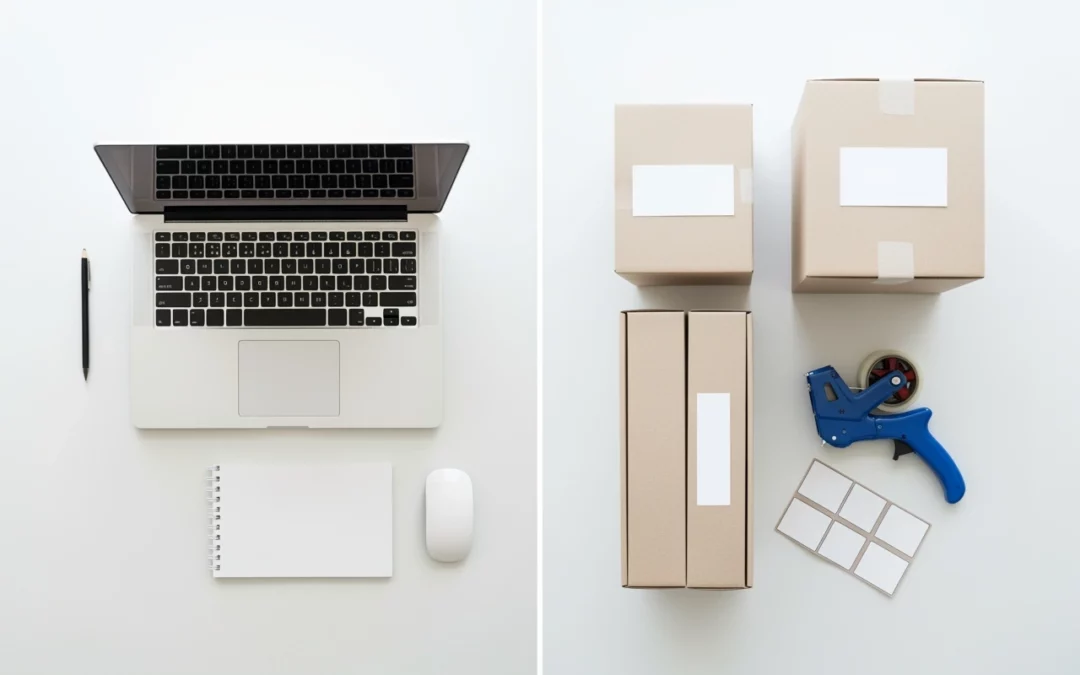
The profit margins on your online business are not being squeezed by competition alone. They are being eroded by a fundamental decision most UK sellers make without proper analysis: whether to use dropshipping vs self storage for their stock management. This choice affects everything from customer satisfaction to your actual take-home profit, yet many sellers treat it as a simple either-or decision rather than a strategic business lever.
The numbers tell a stark story. A typical dropshipping arrangement leaves you with 10 to 20% margins after supplier cuts, platform fees, and advertising costs. Hold your own stock, and those margins can double or triple. But there is a catch: you need somewhere to store inventory, and traditional warehouse contracts can lock you into commitments that destroy the very flexibility you are trying to maintain.
The True Cost of Dropshipping
Dropshipping appears elegant on paper. You list products, customers order, suppliers ship directly, and you never touch the inventory. No storage costs, no packing time, minimal upfront investment. For sellers testing new markets or running lean operations, it offers a low-risk entry point.
The reality proves more expensive than most anticipate. Your supplier takes their cut, often 50 to 70% of the retail price. Payment processors and selling platforms take another 5 to 15%. Marketing costs to acquire customers can consume 20 to 30%. What remains barely covers your time, let alone builds a sustainable business.
Quality control becomes someone else’s problem, which sounds convenient until it becomes your problem. When a supplier ships damaged goods, sends the wrong item, or misses delivery windows, your customer blames you. Shipping times from overseas suppliers test customer patience further. In an era when Amazon has conditioned customers to expect next-day delivery, a week-long wait damages conversion rates and increases return requests.
Why Physical Stock Control Changes Everything
Holding your own inventory transforms these dynamics. You inspect products before they reach customers, catching defects and ensuring quality standards. This single factor can reduce return rates by 40% or more, a metric that directly impacts profitability. The choice between dropshipping vs self storage becomes clearer when you calculate what a 40% reduction in returns actually means for your bottom line over a year.
Dispatch speed becomes your competitive advantage. Stock sitting in a holding stock storage unit can ship same-day or next-day, meeting customer expectations that dropshipping simply cannot match. Faster delivery correlates directly with better reviews, higher repeat purchase rates, and improved search rankings on platforms like eBay and Amazon.
Profit margins improve substantially. Products you might sell for £30 as a dropshipper, keeping £5, suddenly yield £12 to £15 profit when you buy wholesale and hold stock. You also gain control over packaging and presentation. Custom branded packaging and careful product presentation create memorable unboxing experiences that generate social media content and word-of-mouth referrals. Dropshippers sacrifice these brand-building opportunities entirely.
Self Storage as a Business Asset
Traditional warehouse space commits you to lengthy contracts, often 12 months minimum, with rates that only make sense at scale. A small online seller moving 50 to 100 units monthly does not need 1,000 square feet of industrial space, but conventional warehousing offers few alternatives.
Self storage units provide flexibility that aligns with how online businesses actually grow. You can start with a 50 square foot unit for £80 to £120 monthly, expanding to larger spaces as your inventory requirements increase. No long-term contracts mean you can scale down during quiet periods without penalty. The full cost comparison is compelling: a traditional warehouse space might run £800 to £1,200 monthly with business rates, utilities, and insurance, whilst a self storage unit offering adequate space for a growing online business costs £150 to £300 monthly, fully inclusive.
Newbury Self Store demonstrates how storage facilities integrate into ecommerce operations. Accessible hours allow you to pack and dispatch orders on your schedule, whether early mornings before a day job or evenings after family commitments. Heavy-duty storage solutions with drive-up access mean loading and unloading stock takes minutes rather than navigating warehouse protocols, particularly valuable when dealing with bulky products or pallet deliveries.
The Hybrid Approach
Smart sellers do not choose between dropshipping and holding stock. They use both strategically, optimising for different product categories and business objectives.
Fast-moving products with proven demand justify holding stock. If you sell 30 units monthly of a particular item, buying 90 units at wholesale prices and storing them in a holding stock storage unit makes financial sense. The margin improvement and dispatch speed advantages outweigh storage costs convincingly.
Slow-moving products, test items, or extremely bulky goods suit dropshipping better. Seasonal businesses benefit enormously from flexible storage. Packaging for storage materials are a worthwhile investment when you are holding stock, as proper protection during storage prevents the damage that generates returns and refunds.
One seller we worked with started purely dropshipping garden furniture. Margins sat around 12%, and customer complaints about delivery times damaged their seller rating. They identified their top 10 products, invested £3,000 in wholesale stock, and rented a 100 square foot storage unit. Within three months, margins on those products reached 35%, delivery times dropped from 7 to 10 days to next-day, and their seller rating recovered. The storage unit paid for itself within six weeks purely through margin improvement. That is the practical reality of the dropshipping vs self storage decision made correctly.
Making the Numbers Work
Break-even analysis determines whether holding stock makes financial sense for your specific situation. A product selling for £40 might yield £6 profit dropshipped. Buying wholesale at £15, selling at £40, minus £3 platform fees and £2 shipping, leaves £20 gross profit. If storage costs £200 monthly and you sell 50 units, that is £4 per unit storage cost, leaving £16 net profit. You have nearly tripled your profit per unit.
Stock rotation prevents capital from sitting idle. First-in, first-out systems ensure older inventory ships before newer stock, reducing the risk of products becoming outdated. Space optimisation maximises your storage investment. Vertical shelving units, stackable containers, and careful planning can double or triple the inventory capacity of a given holding stock storage unit. Think of your storage space like a game of Tetris: thoughtful arrangement makes every square foot count.
Common Mistakes to Avoid
Over-committing to inventory ranks as the most common mistake. Sellers get excited about wholesale prices, invest their entire budget in stock, then discover they have tied up capital in slow-moving products. Start conservatively, buying four to eight weeks of inventory for proven products rather than six months of hopeful stock.
Underestimating storage needs creates operational chaos. Measure your product dimensions, calculate how many units fit per shelf, and add 30% buffer space for packing materials, returned items, and growth. Business-ready units sized appropriately from the start prevent the expensive and disruptive process of upgrading mid-season when you are at your busiest and least able to absorb operational disruption.
Think of storage space like a business utility rather than an expense. You would not try to run an online business without internet access, even though it costs £30 to £50 monthly. Storage space functions the same way for product-based businesses: it is infrastructure that enables profit rather than overhead that reduces it. Storage for life personal storage options work well for sole traders beginning to transition away from pure dropshipping, providing a low-commitment starting point before investing in dedicated business units.
Implementation Steps
Starting with held stock requires less capital than most sellers assume. Identify your three to five best-selling products, calculate two months of inventory at wholesale prices, and secure storage space that accommodates that stock plus 50% growth room.
Setting up efficient systems from the start prevents problems later. Designate specific areas for incoming stock, packed orders ready to ship, and returned items requiring inspection. Label everything clearly. Create a simple checklist for receiving inventory, packing orders, and conducting weekly stock counts.
Scaling operations happens naturally when systems work properly. You will recognise when current storage space becomes constraining, giving you time to arrange larger units before you are actually desperate. Growth becomes manageable rather than crisis-driven.
Conclusion: The Strategic View
The dropshipping vs self storage decision is not about choosing one model forever. Dropship your experimental and slow-moving products. Hold stock on proven performers where margin improvement and dispatch speed create competitive advantages. Use flexible storage solutions that scale with your business rather than constraining it.
The mathematics favour holding stock once you have validated product demand. The margin improvements, customer satisfaction benefits, and operational control outweigh storage costs convincingly for products moving at reasonable velocity. Storage space transforms from an expense into a profit-generating asset when you view it through this lens.
Call 01635 581 811 or contact us for expert guidance on storage solutions tailored to your ecommerce operations.