
 01635 581 811
Amazon FBA sellers face a constant operational challenge that most courses and gurus conveniently skip over: the physical reality of storing, prepping, and dispatching inventory on tight timelines. Between the moment your stock arrives from suppliers and when it needs to reach Amazon’s fulfilment centres, there is a critical window where everything must happen flawlessly. Miss a receiving appointment, send improperly prepped units, or fail to meet labelling standards, and you are looking at penalties that eat directly into already thin margins.
The gap between product arrival and Amazon dispatch is not just a logistical inconvenience. It is where most FBA businesses either establish operational excellence or descend into chaos. Amazon FBA self storage provides the physical space to inspect shipments, apply FNSKU labels, polybag items, create shipment plans, and stage pallets for collection. Trying to manage this from a spare bedroom or garage works until it does not, and that breaking point usually arrives during your first serious inventory push.
Why Amazon FBA Sellers Need Dedicated Storage Space
Volume fluctuations define the FBA business model. You might order 500 units in January and 5,000 in September as you prepare for Q4. Your supplier ships via sea freight to save costs, meaning entire container loads arrive simultaneously rather than in manageable batches. Suddenly, your living room resembles a distribution centre, and you are prepping units at 2am because there is simply nowhere else to work during daylight hours.
The prep bottleneck becomes painfully apparent once you scale beyond hobby-level selling. Every unit must meet Amazon’s exacting standards: proper labelling, compliant packaging, accurate shipment creation, and damage-free presentation. Rush this process in cramped conditions and you will send inventory that gets rejected at the warehouse, returned to you at your expense, or accepted but flagged for future account health issues.
Quality control before dispatch is not optional. It is the difference between a 98% acceptance rate and a 78% rate that triggers account reviews. Dedicated space allows you to establish proper workflows: receiving and inspection zones, prep stations with adequate lighting and work surfaces, staging areas for completed shipments, and storage for packaging materials and equipment. This is precisely why Amazon FBA self storage is not a convenience but a competitive necessity.
The True Cost of Operating Without Buffer Storage
Amazon’s receiving windows operate with zero flexibility. When you create a shipment and book an appointment slot at a fulfilment centre, that delivery window is final. Arrive late or miss it entirely, and you are rescheduling for days or weeks later, during which time your inventory sits useless, tying up capital and preventing sales. I have watched sellers lose entire product launches because they could not prep and dispatch inventory fast enough from inadequate home setups.
Penalties for improper prep extend beyond immediate rejection. Amazon tracks your shipment defect rate, and consistent problems lead to coaching notifications, then restrictions, then suspension. A single improperly labelled pallet might cost £150 in manual processing fees. Repeat the mistake across multiple shipments and you are damaging seller metrics whilst haemorrhaging money.
Home-based operation limitations reveal themselves in unexpected ways. Your landlord or housing association may prohibit commercial activity. Neighbours complain about daily courier collections. Insurance policies exclude business inventory from coverage. The moment you need to receive a pallet delivery, you discover your residential street cannot accommodate an articulated lorry. An FBA prep storage unit UK removes every one of these constraints in a single move.
How Self Storage Transforms FBA Operations
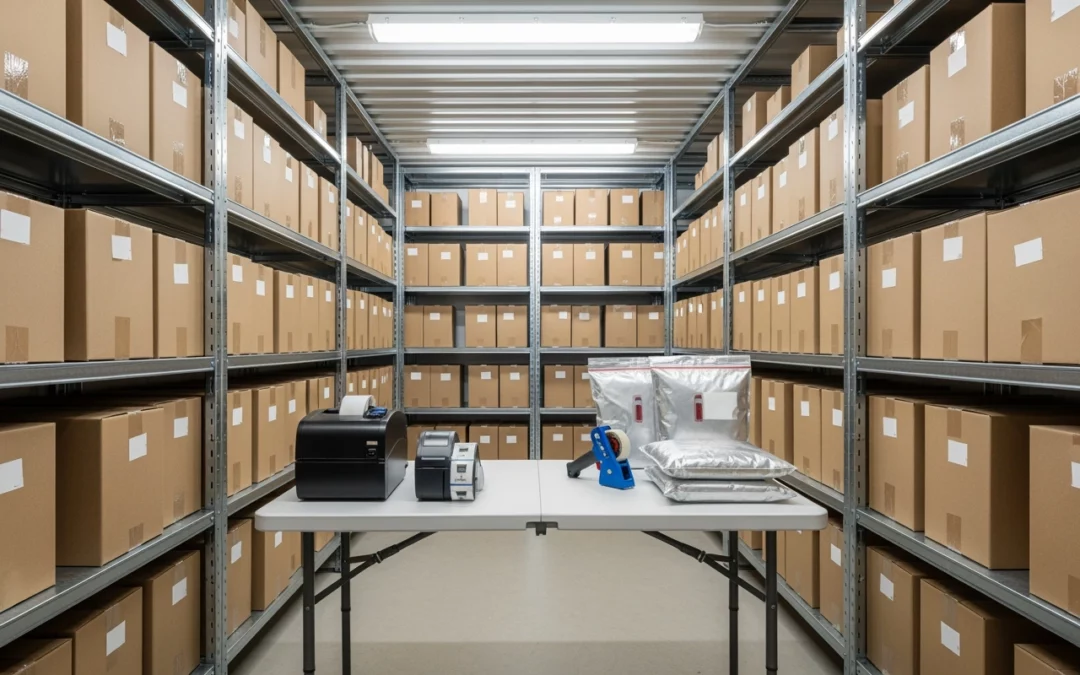
Creating a dedicated prep centre removes every constraint that hobbles home-based operations. You establish a professional workspace where inventory flows logically from receiving through prep to dispatch staging. There is room for proper shelving, packing benches, label printers, and all the equipment that makes prep work efficient rather than exhausting.
Newbury Self Store provides exactly this kind of flexible commercial space, allowing FBA sellers to scale operations without committing to expensive warehouse leases or dealing with residential property restrictions. The facility layout and extended access hours reflect the reality of how FBA businesses actually operate, not how commercial property landlords assume they do.
Inventory staging and batch processing become viable when you have dedicated square footage. Instead of prepping 50 units at a time because that is all your dining table can accommodate, you process entire shipments in single sessions. Think of it like cooking in a professional kitchen versus a caravan kitchenette. Both can technically produce meals, but one has the layout, equipment, and space to do it efficiently and consistently.
Setting Up Your FBA Storage System
Zone allocation for different processes prevents the chaotic mixing of raw inventory, work-in-progress, and completed shipments. Designate one area for incoming stock that needs inspection. Create a separate prep zone with tables, adequate lighting, and power outlets for label printers and heat sealers. Establish a staging area where completed, labelled boxes await collection, organised by shipment ID and destination fulfilment centre.
Equipment and shelving requirements scale with your operation size, but certain basics apply universally. Industrial shelving rated for your product weight prevents collapses and allows vertical storage maximisation. A proper packing bench at comfortable working height prevents the back problems that plague sellers who prep whilst hunched over floors or coffee tables.
Climate considerations matter more than most sellers initially recognise. Electronics, cosmetics, supplements, and numerous other product categories require stable temperatures and humidity levels. A unit that reaches 35°C in summer will damage inventory that Amazon then refuses. When evaluating create breathing room personal storage options for FBA use, always prioritise climate-controlled units for anything remotely sensitive to environmental conditions.
Managing Seasonal Inventory Surges
Q4 preparation strategies separate sellers who capitalise on peak season from those who watch opportunities evaporate due to logistics failures. By August, successful FBA sellers have already secured additional storage capacity, knowing their September and October inventory orders will dwarf normal volumes. Trying to cram Q4 stock into your regular setup is like attempting to fit a week’s worth of groceries into a handbag.
Container delivery and bulk storage present unique challenges that easy loading access container facilities specifically address. When your supplier ships a 20-foot container, you need somewhere with drive-up access where a lorry can actually deliver and unload. You need ground-level access, wide doors, and enough internal space to actually work with pallet loads rather than simply stack them floor to ceiling.
Last November, I worked with an FBA seller who had ordered aggressively for Black Friday but had nowhere to receive the shipment when it arrived three weeks early. Their garage was full, their supplier was charging demurrage fees for container delays, and Amazon’s receiving windows were filling fast. We set them up with a container unit, they unloaded directly into the space, and spent the next fortnight systematically prepping and dispatching in batches that matched their booked appointments. Without that FBA prep storage unit UK buffer, they would have paid thousands in delay fees or faced rejection rates from rushed prep work.
Optimising Your Prep-to-Dispatch Workflow
Batch processing efficiency transforms when you have dedicated space. Spend two hours applying FNSKU labels to 500 units, then two hours polybagging, then an hour box building. This assembly-line approach reduces errors and increases throughput compared to completing one unit at a time from start to finish.
Quality control checkpoints catch problems before they become expensive mistakes. Establish a final inspection station where every completed box gets verified against your shipment plan before sealing. Check label placement, ensure barcodes scan correctly, confirm packaging meets requirements, and verify box weights match your shipment creation. This five-minute check per box prevents receiving problems that cost hundreds to resolve.
Labelling and packaging stations benefit enormously from proper setup. Mount your label printer at eye level so you are not constantly bending. Keep moving supplies available within arm’s reach, organised by size and type. Set up a laptop or tablet dedicated to Seller Central so you are not juggling devices. These small ergonomic improvements compound into massive time savings across hundreds of units.
Business Growth and Storage Scalability
When to upsize your unit becomes obvious once you are consistently using 80% of available space. Do not wait until you are playing Tetris with inventory or storing boxes in your car because the unit is full. Proactive expansion prevents operational disruptions and gives you headroom for the next inventory order.
Multi-unit strategies for different ASINs make sense once you are managing diverse product catalogues. Some sellers dedicate separate units to different product categories, particularly when mixing items with different prep requirements or storage needs. Hazmat items, oversized products, and standard inventory might each warrant separate spaces to simplify workflow and prevent cross-contamination of processes.
Scale your storage with a professional business unit that signals a crucial transition in your Amazon FBA self storage journey. You are no longer a hobbyist selling a few units monthly from your spare room. You are operating a legitimate business with inventory management systems, professional prep processes, and scalable logistics. This mindset shift often precedes significant revenue growth because you have removed the operational constraints that previously capped your potential.
Protecting Your Investment
Security considerations extend beyond basic door locks. Your storage unit contains thousands of pounds worth of inventory, packaging materials, and equipment. Facilities with 24-hour CCTV, individual unit alarms, and controlled access provide essential protection. Insurance coverage specifically for business inventory stored off-site is non-negotiable; your home contents policy will not cover commercial stock in a storage facility.
Inventory organisation systems prevent the nightmare scenario of knowing you have stock but being unable to locate specific units when you need them. Implement a simple SKU-based shelving system where each product has a designated location. Label shelves clearly, maintain a basic inventory spreadsheet, and conduct monthly counts to catch discrepancies before they become problems during shipment creation.
The Numbers Behind Dedicated Storage
A 100 square foot unit might cost £120 monthly, whilst a single rejected shipment due to improper prep in cramped conditions costs £150 or more in fees alone. Factor in the time savings from efficient workspace, the ability to accept larger inventory orders, and the reduction in stress from not operating out of your living room, and the return on investment becomes obvious.
Revenue scaling correlates directly with operational capacity. Sellers confined to home storage typically plateau around £3,000 to £5,000 monthly revenue because they simply cannot process more inventory. Move to dedicated Amazon FBA self storage with proper systems, and that ceiling lifts to £10,000, £20,000, or higher, limited only by capital and product selection rather than physical logistics constraints.
Time reclamation might be the most undervalued benefit. Hours previously spent moving inventory around your home, clearing dining tables, or explaining to visitors why your hallway resembles a warehouse disappear entirely. You work in your storage unit, then you go home. For any FBA prep storage unit UK operation, that separation is worth more than any spreadsheet can quantify.
Call 01635 581 811 or contact us for tailored advice on the right unit size and setup for your specific FBA inventory needs.