
 01635 581 811
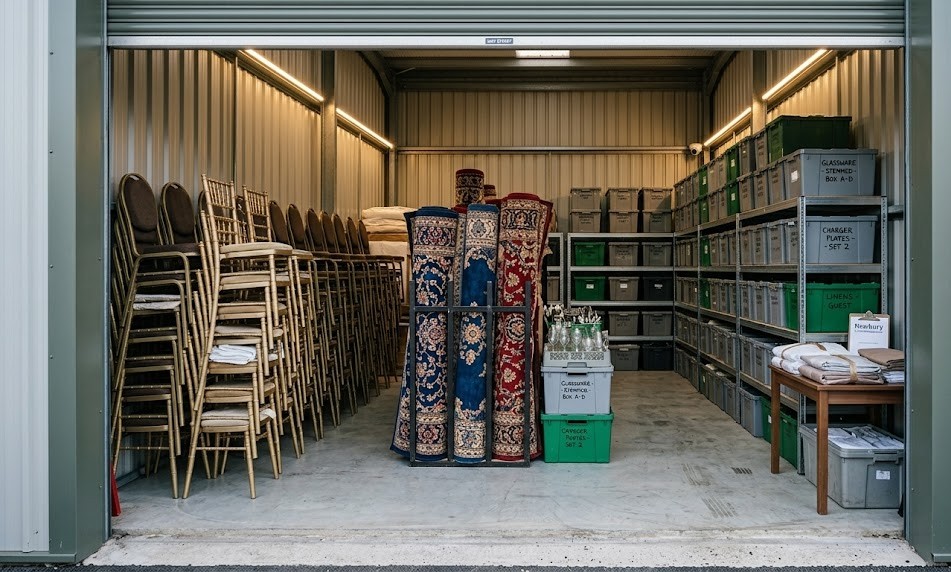
Newbury Racecourse hosts over 30 race days each year, drawing thousands of visitors to high-profile racecourse events like the Hennessy Gold Cup and Al Shaqab Lockinge Day. Behind the glamour of these occasions lies a logistical challenge: where do hospitality providers, catering companies, and event suppliers store their equipment between race meetings?
The seasonal nature of racecourse events creates a unique storage problem. Marquee poles, portable bars, glassware crates, and commercial kitchen equipment can’t sit idle in expensive commercial premises for weeks at a time. For hospitality businesses serving the hospitality sector around Newbury Racecourse, flexible racecourse hospitality storage solutions make the difference between profitable operations and costly overheads.
Why Racecourse Hospitality Equipment Needs Dedicated Storage
Event hospitality operates on tight margins. A catering company might serve 200 guests at a corporate box one week, then have nothing scheduled for a fortnight. During those gaps, hospitality equipment sits unused but still occupies valuable space.
Most hospitality businesses face three core challenges. First, commercial premises in Newbury come with high rental costs that don’t pause between events. Second, equipment like chafing dishes, glass racks, and portable refrigeration units requires proper storage conditions to prevent damage. Third, access needs to be flexible – you can’t afford to wait until Monday morning when an event starts Friday evening.
Traditional warehouse leases don’t solve these problems. They lock you into long-term contracts with fixed costs, regardless of how many events you’re actually servicing. A self-storage approach offers something different: space that scales with your business rhythm, available when you need it without the commitment of a full commercial lease.
What Hospitality Equipment Actually Requires Proper Storage
The kit list for a single racecourse hospitality event runs longer than most people realise. A mid-sized corporate hospitality provider typically manages dozens of item categories, each with specific storage requirements.
Furniture and fixtures form the bulk by volume. Folding tables, chairs, portable bars, and display units need protection from moisture and physical damage. Stacking them incorrectly leads to bent legs, scratched surfaces, and equipment that looks tired before it even reaches the venue.
Glassware and crockery present obvious fragility risks. A single crate of champagne flutes represents hundreds of pounds in replacement costs if stored poorly. These items need stable environments without extreme temperature swings that could cause condensation inside sealed boxes.
Linen and soft furnishings – tablecloths, napkins, cushion covers – must stay clean and dry between events. Damp storage conditions invite mould growth that ruins fabric in weeks. You can’t serve premium hospitality with tablecloths that smell musty or show water stains.
Commercial kitchen equipment includes everything from portable ovens to coffee machines. These items often contain electronic components sensitive to humidity. Storing them in a garage or outdoor container risks corrosion and electrical faults that create safety hazards.
Branded materials and signage represent your clients’ corporate identities. Pop-up banners, custom menu boards, and branded glassware can’t be replaced quickly if damaged. They’re also surprisingly awkward to store – too large for standard shelving but too valuable to leave in a van overnight.
Think of it like preparing for a camping trip, but at commercial scale. You wouldn’t store a £2,000 tent in a damp shed, yet some businesses treat £20,000 worth of hospitality equipment with less care.
How Container Storage Solves the Racecourse Equipment Challenge
For businesses managing substantial volumes of equipment, container storage offers practical advantages over traditional unit types. The drive-up access alone transforms loading and unloading from a logistics headache into a straightforward task.
Picture this scenario: you’ve just finished a two-day event at Newbury Racecourse. Your team’s packed everything into a hired van, and it’s 9pm on a Sunday evening. The last thing anyone wants is to carry crates up flights of stairs or navigate narrow corridors. With container storage, you reverse up to your unit, open the doors, and unload directly. Job done in 30 minutes instead of two hours.
The space itself matters too. A 20-foot container provides roughly 160 square feet of floor space – enough for the complete kit needed to service a 150-guest corporate hospitality event. You can create zones within the container: glassware at one end, furniture stacked in the middle, kitchen equipment secured near the door for quick access.
Security becomes simpler with container storage. Your equipment stays in a single, lockable unit within a fenced facility with CCTV coverage. There’s no shared access corridor or communal areas where items might go missing. Everything you store remains exactly where you left it.
Organising Storage to Match Your Event Calendar
Random storage creates problems. When you’re racing against time before an event, you can’t afford to spend an hour searching for the right box of serviettes or discovering your portable bar’s buried under six stacks of chairs – it’s like searching for a specific file in an unsorted filing cabinet where everything’s jumbled together.
Start with an inventory system that actually works. Number each box, crate, or equipment piece, then maintain a simple spreadsheet listing contents and location within your storage unit. When someone asks “where are the wine glasses?”, you should be able to answer in seconds, not after a frantic search.
Zone your storage space by item type and usage frequency. Equipment used at every event – basic glassware, standard table linen, portable bars – should sit near the entrance for quick access. Specialist items for specific clients or seasonal events can go further back. This isn’t complicated, but it requires discipline to maintain.
Vertical stacking maximises space but demands proper technique. Heavy items form the base, with lighter boxes stacked above. Never stack so high that you can’t safely retrieve items from the top. A collapsing stack of equipment doesn’t just damage your kit – it creates a genuine safety hazard.
Protect fragile items with proper packing materials. Glassware needs dividers between each piece. Crockery requires bubble wrap or foam padding. The cost of packaging materials’ negligible compared to replacing broken items or, worse, arriving at a venue short of essential equipment.
Consider seasonal rotation too. In winter, outdoor furniture and marquee equipment might see less use, so they can move to the back of your storage space. Summer items shift forward. This rotation keeps your most relevant equipment accessible as the racing calendar progresses.
Temperature and Humidity Considerations for Equipment Storage
Most hospitality equipment tolerates standard storage conditions without problems, but understanding the risks helps you protect your investment. The key enemies are moisture, extreme temperature swings, and condensation.
Moisture damage affects different items in different ways. Fabric develops mould and mildew. Metal components corrode. Wooden furniture warps. Electronic equipment fails. A storage environment doesn’t need to be bone-dry, but it should remain consistently dry rather than alternating between damp and dry conditions.
Temperature fluctuations cause condensation when warm, humid air meets cold surfaces. This commonly happens when equipment stored in a cold unit gets exposed to warm air. The moisture that forms can soak into fabrics, settle on glassware, or penetrate electronic components.
For most hospitality businesses, standard storage units provide adequate protection. The structure keeps rain out and provides better ventilation than a garage or outdoor container. Items stored in proper boxes, with appropriate packing, survive perfectly well between events.
Certain equipment warrants extra attention. Commercial coffee machines with internal water systems should be fully drained before storage. Portable refrigeration units need their doors propped open to prevent mould growth inside. Fabric items benefit from breathable storage bags rather than sealed plastic, which can trap moisture.
Managing Multiple Events with Strategic Storage Planning
The busiest periods at Newbury Racecourse see events scheduled back-to-back, sometimes with just days between race meetings. Catering companies serving multiple clients during these periods need storage that functions as an active logistics hub, not a static warehouse.
Separate storage by client when you’re managing equipment for different corporate accounts. Mixing one client’s branded glassware with another’s creates confusion and risks embarrassing mistakes on event day. Dedicate specific areas of your storage space to each major client, keeping their equipment isolated and clearly labelled.
Maintain a pre-event checklist that lives with your inventory system. Before each race day, you should know exactly which items need to come out of storage, which need cleaning or inspection, and which might require replacement. This prevents the nightmare scenario of discovering missing or damaged equipment the night before an event.
Build buffer stock for consumables and frequently damaged items. Glassware breaks. Tablecloths get stained beyond recovery. Having spare stock in storage means you can replace items immediately rather than scrambling for emergency purchases at premium prices.
Schedule access strategically around your event calendar. If you know you’ve got three events in April, plan your storage visits to minimise trips. Load everything for events one and two during your first visit, storing event two’s equipment separately for quick collection before that race day.
The goal isn’t just to store equipment – it’s to create a system that makes your business more efficient. When storage works properly, it becomes invisible. You spend less time managing logistics and more time delivering excellent hospitality experiences.
Cost Comparison: Storage vs Commercial Premises
The numbers tell a clear story for seasonal hospitality businesses. A small commercial unit in Newbury suitable for equipment storage costs £800-1,200 per month on a standard lease. That’s £9,600-14,400 annually, regardless of how many events you actually service.
Compare that to business storage on a flexible monthly basis. A container-sized unit runs roughly £200-300 per month with no long-term commitment. Even if you need it year-round, you’re spending £2,400-3,600 annually – less than a third of commercial premises costs.
The flexibility multiplies these savings. If you only need storage for six months covering the peak racing season, your annual cost drops to £1,200-1,800. For businesses just starting out or testing the racecourse hospitality market, this difference between affordable and prohibitively expensive.
Hidden costs matter too. Commercial premises often require business rates, utilities, insurance, and maintenance contributions. Self-storage typically includes security, basic insurance options, and facility maintenance in the monthly fee. There’s no surprise bill for roof repairs or car park resurfacing.
Insurance and Security for High-Value Equipment
A full hospitality equipment inventory easily reaches £15,000-30,000 in value. Some items – branded glassware, commercial kitchen equipment, custom furniture – cost thousands to replace and take weeks to reorder. Protecting this investment requires both proper insurance and practical security measures.
Most storage facilities provide basic security through perimeter fencing, CCTV, and individual unit locks. This deters opportunistic theft and provides reasonable protection for standard items. For business equipment, you should verify exactly what security measures your facility offers.
Individual unit locks should be high-quality. Don’t rely on a cheap padlock from a hardware store. Invest in a closed-shackle padlock or disc lock that resists bolt cutters. Some storage facilities offer cylinder locks as upgrades – these provide better security for high-value contents.
Insurance coverage needs careful attention. Your business insurance might cover equipment in transit and at event venues, but does it extend to items in storage? Check your policy specifics, and if storage isn’t covered, arrange additional coverage through your storage facility or a specialist insurer.
Inventory documentation serves two purposes: operational efficiency and insurance claims. Photograph your equipment before storage, noting serial numbers for electronic items and documenting the condition of furniture and fixtures. If you ever need to make a claim, this evidence proves what you owned and its condition.
Access records provide an audit trail of who entered your storage unit and when. Most modern facilities use electronic access systems that log every entry. If equipment goes missing, these records help identify when the loss occurred and who had access during that period.
Scaling Storage as Your Hospitality Business Grows
Most businesses serving Newbury Racecourse hospitality start small – perhaps one or two corporate clients, a modest equipment inventory, and a single storage unit. Growth changes everything. Suddenly you’re managing multiple events simultaneously, storing equipment for five different clients, and running out of space.
The beauty of flexible storage lies in its ability to scale with your business. You don’t need to commit to a larger space before you’re ready. When your current unit fills up, you simply add another or upgrade to a larger container. No lease negotiations, no notice periods, no penalties for changing your requirements.
One catering company started with a single 10-foot container three years ago. They now use two 20-foot containers: one for standard equipment used across all events, another for client-specific branded materials and specialist kit. This separation keeps their operations organised as their client base expanded from two regular accounts to seven. They’ve found that dedicated storage for each function lets them respond to booking requests in minutes rather than hours because they know exactly where everything is.
Growth indicators that suggest you need more storage space include spending more than 30 minutes searching for items, stacking equipment so high it becomes unsafe, or storing items in your vehicle because there’s no room in your unit. These aren’t just inconveniences – they’re operational inefficiencies that cost you time and money.
Seasonal flexibility works both ways. During quiet periods when you’ve stored equipment for just one or two clients, you might downsize to a smaller unit and reduce costs. When the racing calendar intensifies, upgrade again. This flexibility lets your storage costs track your revenue more closely than fixed commercial premises ever could.
Preparing Equipment for Long-Term Storage Between Seasons
The gap between Newbury’s spring racing season and autumn fixtures creates a storage period of several months. Equipment sitting unused for that long needs proper preparation to ensure it emerges in perfect condition for the next event.
Clean everything thoroughly before storage. Food residue on kitchen equipment attracts pests. Wine stains on tablecloths become permanent if left untreated for months. Dust and dirt on glassware etches into the surface over time. The hour you spend cleaning before storage saves days of remedial work later.
Disassemble where practical to save space and reduce damage risks. Folding tables and chairs obviously collapse for storage, but consider breaking down portable bars, display units, and modular furniture too. Smaller components stack more efficiently and suffer less stress during storage.
Protect surfaces from scratches and scuffs. Furniture blankets, bubble wrap, or even old tablecloths can separate stacked items and prevent damage. Metal components benefit from a light coating of oil to prevent rust, especially if your storage environment isn’t climate-controlled.
Label everything with both contents and storage date. When you return to your unit after three months, you won’t remember which box contains champagne flutes versus wine glasses. Clear labelling on all sides of each box means you can identify contents without moving everything around.
Create a retrieval plan before you need it. Make notes about which items you’ll need first when the season resumes, and position those near your unit entrance. The last thing you want is to unpack your entire storage space searching for essential items the week before a major race meeting.
Making Storage Work for Your Racecourse Hospitality Business
Newbury Racecourse’s packed calendar creates genuine opportunities for hospitality businesses, but only if you can manage the logistics efficiently. Equipment storage isn’t glamorous, but it’s the foundation that lets you take on more clients, expand your service offering, and operate profitably.
The businesses that succeed in this sector treat storage as a strategic asset, not an afterthought. They invest time in organisation, maintain proper inventory systems, and choose storage solutions that match their operational rhythm. They understand that the hour spent arranging their storage space properly saves five hours of frantic searching before events.
For companies serious about serving the racecourse hospitality market, flexible storage removes one of the biggest barriers to growth. You’re no longer limited by how much equipment you can fit in your commercial premises or how much unused space you’re willing to pay for during quiet periods. Storage costs scale with your business, rising when you’re busy and falling when events slow down.
If you’re currently managing racecourse hospitality equipment from a garage, spare room, or overcrowded commercial unit, the operational improvements from proper storage will surprise you. The time you save, the stress you avoid, and the professional standards you can maintain all translate directly to better client service and stronger business performance.
Newbury Self Store understands that racecourse hospitality storage requires more than just empty space. You need facilities where glassware stays protected, kitchen equipment remains secure, and your entire operation can scale without tying up expensive commercial property. We know that your equipment isn’t just kit – it’s the foundation of your reputation and the tools that deliver memorable events for your clients.
Whether you’re preparing for your first season serving Newbury Racecourse events or expanding an established hospitality operation, getting your storage strategy right makes everything else easier. It’s not about finding somewhere to dump equipment between events – it’s about creating a system that supports efficient, professional operations throughout the racing calendar.
For businesses ready to solve their equipment storage challenges, contact us to discuss container options that match your specific requirements and event schedule. Your focus should be on delivering exceptional hospitality, not managing storage logistics.