
 01635 581 811
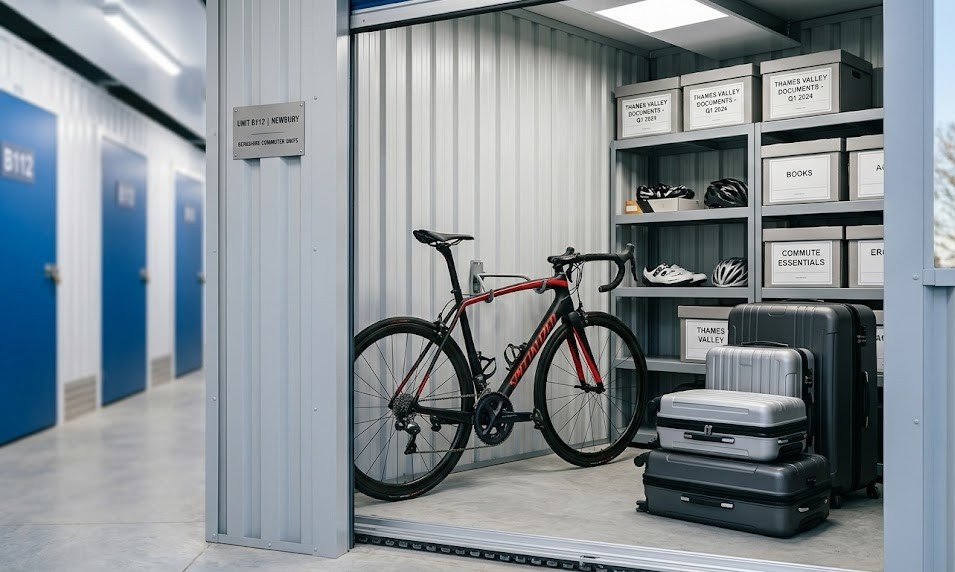
The Thames Valley has become one of the UK’s most dynamic hybrid working hubs, with working professionals splitting their time between London offices, local co-working spaces, and home desks. This new working pattern creates a specific storage challenge: you need commuter storage solutions that adapt as quickly as your schedule does.
When you’re commuting three days a week but working from a spare bedroom the other two, your home becomes both office and living space. That box room filled with client samples? It’s also where you need to set up video calls. The garage storing your tools and equipment? That’s now competing with gym gear and the kids’ bikes. For Thames Valley professionals juggling flexible working schedules, the question isn’t whether you need more space – it’s how to create it without disrupting the work-life balance you’ve fought to establish.
Why Commuter Professionals Need Different Storage Solutions
Traditional storage advice assumes you’re either moving house or clearing out a loft once. But flexible working professionals face ongoing space management challenges that shift with their schedules.
Consider the account manager who hot-desks in London Monday to Wednesday, then runs client meetings from her home office Thursday and Friday. She needs professional presentation materials accessible within an hour’s notice, but her two-bedroom flat in Thatcham can’t accommodate filing cabinets alongside a proper home office setup. Or the consultant who stores product samples for quarterly trade shows – items that sit unused for months, then suddenly become essential with 48 hours’ notice.
Commuter storage solves this by creating a flexible extension of your working space. You’re not putting things away permanently; you’re creating a system where professional materials, seasonal equipment, and overflow belongings have a designated place that doesn’t compromise your living environment.
The difference matters because your storage needs change with your working pattern. When projects ramp up, you might need quick access to archived files. When you’re office-based for a month, those home office supplies can move temporarily. Fixed storage solutions can’t adapt to this rhythm. Purpose-designed personal storage can.
What Thames Valley Professionals Actually Store
The contents of a flexible worker’s storage unit tell a story about modern professional life. These aren’t just boxes of old paperwork – they’re the tools and materials that support a career without cluttering a home.
Professional archive materials top the list. Client files, project documentation, and reference materials that you legally need to retain but realistically won’t access weekly. One Reading-based architect stores completed project portfolios spanning fifteen years – essential for award submissions and reference checks, but impossible to house alongside active work. He visits his unit quarterly to retrieve specific projects, then returns them once he’s extracted what he needs.
Presentation and event equipment comes next. Pop-up banners, product samples, demonstration kits, and promotional materials. A pharmaceutical sales rep stores presentation cases for twelve different product lines, rotating them based on quarterly targets. She collects what she needs the day before client visits, then returns items when campaigns shift.
Seasonal business inventory matters for anyone running a side business alongside employment. The teacher who sells handmade crafts at Christmas markets stores materials from January to October. The IT consultant who does wedding photography in summer months keeps lighting equipment and backdrops ready without surrendering his dining room year-round.
Home office overflow includes the printer you need monthly but not daily, the filing cabinets from your pre-hybrid setup, the spare monitors and tech equipment that’s too valuable to discard but too bulky to keep underfoot. Think of professional storage like a well-organized garage for your career – everything has its place, you know where to find it, but it’s not cluttering your daily workspace.
Here’s a real example: A Newbury-based marketing consultant stores client presentation boards, six years of campaign materials, backup IT equipment, and her collection of industry awards. She accesses the unit twice monthly, usually collecting specific client materials before pitches. Her home office now accommodates a proper desk setup and video call background instead of floor-to-ceiling storage boxes. That’s the difference between working around your storage and making storage work around your career.
Choosing the Right Unit Size for Flexible Working Needs
Most professionals overestimate how much space they need because they’re mentally packing their entire spare room. But you’re not storing furniture – you’re storing specific professional items that, when properly organised, occupy far less space than you’d think.
A 25 sq ft unit suits consultants and freelancers with primarily paper-based archives and presentation materials. Picture a walk-in wardrobe – enough for filing cabinets, boxed documents, and presentation equipment. One financial advisor uses this size for seven years of client files, compliance documentation, and quarterly reporting materials, all on industrial shelving that maximises vertical space.
50 sq ft units work for professionals with equipment alongside documentation. Product samples, demonstration kits, photography gear, or small business inventory fit comfortably here. A Thatcham-based sales professional stores product samples for three different suppliers, rotating stock based on seasonal campaigns. The space accommodates shelving units, hanging storage for garment samples, and a small packing area where she prepares client presentation boxes.
75-100 sq ft spaces suit those combining professional storage with household overflow. When your home office expansion means the guest room furniture needs relocating, or when you’re storing business inventory alongside family belongings during a house renovation, this size provides genuine flexibility. Think of it as a single garage – enough room to create distinct zones for different storage needs.
The key question isn’t “What do I want to store?” but “What do I need to access, and how often?” Items you’ll collect weekly need easy access near the front. Archive materials you’ll reference annually can sit towards the back. Seasonal equipment needs labelling and clear pathways. Your unit layout should mirror how you actually work, not just maximise capacity.
Location Matters: Accessibility for Commuters
When you’re already juggling London commutes and home-based work, storage access needs to fit your existing travel patterns, not create new journeys.
Proximity to transport corridors makes the difference between convenient and impractical. A unit five minutes from the A34 or M4 means you can collect materials during your normal commute route. One Basingstoke professional stops at his storage unit every Monday morning en route to London, collecting the week’s client materials. The detour adds eight minutes to a journey he’s making anyway – hardly noticeable when you’re already driving an hour.
Extended access hours matter when your working day doesn’t follow 9-to-5 patterns. Early morning access suits professionals who pack the car before London meetings. Evening access works for those collecting materials after office days. Weekend availability serves anyone preparing for Monday presentations or running side businesses around employment hours.
The facilities at Newbury Self Store include seven-day access and ample parking – practical considerations that sound minor until you’re trying to load presentation equipment in the rain before a 7am departure.
Drive-up access eliminates the lift-and-carry struggle. When you’re moving filing boxes, product samples, or equipment cases, pulling up directly outside your unit saves time and physical effort. It’s the difference between a five-minute collection stop and a twenty-minute ordeal involving trolleys and multiple trips.
Think about your actual usage pattern. If you’ll access storage during commuting hours, proximity to your regular route matters more than being closest to home. If you’ll collect materials for specific events or meetings, advance planning and longer opening hours outweigh convenience. Match the facility to your working rhythm, not just your postcode.
Organising Storage for Quick Access
A storage unit packed floor-to-ceiling with unmarked boxes defeats the purpose for flexible workers. You need a system that lets you locate specific items in minutes, not excavate for an hour.
Zone your space by access frequency. Items you’ll need weekly belong at the front within arm’s reach. Monthly materials can sit in the middle zones. Archive storage and seasonal items go towards the back. One management consultant uses this system with three distinct areas: active client files at the front, reference materials in the middle, and completed project archives at the back. She can collect current materials in under five minutes because she’s not moving boxes to reach what she needs.
Shelving beats stacking every time. Industrial shelving units create vertical storage whilst maintaining visibility and access. Clear plastic boxes work better than cardboard because you can identify contents without opening each one. Label everything with contents and dates – your future self will thank you when you’re searching for specific materials under time pressure.
Create a digital inventory. A simple spreadsheet listing box contents and shelf locations sounds tedious until you’re trying to remember which box contains the 2022 trade show materials. Take photos of your unit layout and shelving arrangement. When you need something specific, you’ll know exactly where to look before you even arrive.
Pack by project or category, not by date. Grouping all materials for a specific client or project type makes retrieval logical. The alternative – packing chronologically as you finish with items – creates an archaeological dig situation where you’re searching through multiple boxes for related materials.
Here’s how it works in practice: A pharmaceutical rep organises her unit with separate shelves for each product line. Within each shelf, current campaign materials sit at the front, archived materials behind. When her quarterly targets shift, she swaps out entire shelf sections in a single visit. The system adapts to her changing focus without requiring complete reorganisation.
Security Considerations for Professional Materials
Client files, proprietary information, and valuable equipment need more protection than old furniture. Professional storage requires security measures that match the sensitivity of what you’re keeping.
Individual unit alarms provide the first defence layer. When your unit contains client data, intellectual property, or equipment worth thousands, knowing any unauthorised access triggers an immediate alert matters. It’s not paranoia when you’re storing materials you’re contractually obligated to protect.
24-hour CCTV monitoring creates accountability and deterrence. Multiple camera angles covering access points, corridors, and individual units mean any activity’s recorded and reviewable. For professionals storing sensitive materials, this documentation can prove critical if you ever need to demonstrate proper security measures to clients or insurers.
Controlled access systems ensure only authorised individuals can enter the facility and your specific unit. Personal access codes and recorded entry times create an audit trail – useful for compliance purposes and simple peace of mind.
Climate control protects paper documents, electronic equipment, and sensitive materials from humidity and temperature fluctuations. If you’re storing anything that can’t tolerate a damp garage environment – which includes most professional archives and tech equipment – climate-controlled units prevent deterioration and equipment failure.
Consider what you’re actually protecting. Client files might have legal retention requirements and data protection obligations. Product samples could represent thousands in inventory value. Presentation equipment might be essential for income-generating activities. Match your security level to the consequences of loss or damage, not just the replacement cost.
Making Storage Work with Hybrid Working Schedules
The logistics of using storage whilst maintaining flexible working patterns require some practical planning, but the system becomes routine quickly.
Batch your visits. Rather than collecting individual items as needed, plan weekly or fortnightly visits where you swap out materials based on upcoming schedules. One consultant reviews her calendar every Sunday evening, then stops at her unit Monday morning to collect everything needed for the week ahead. This rhythm means storage access becomes part of her routine, not an additional errand.
Keep a running list of items to collect or return. When you finish with client materials or realise you’ll need specific files next week, note it immediately. Your next storage visit becomes efficient because you know exactly what you’re collecting before you arrive.
Coordinate with commute patterns. If you’re driving to the office or station, factor storage access into that journey. The marginal time cost drops dramatically when you’re already on the road. A unit that’s “15 minutes away” becomes “3 minutes off my normal route” – a completely different proposition.
Prepare for seasonal shifts. Flexible working patterns often change with business cycles. Q4 might mean more office time, summer could involve more home working. Adjust what you’re storing based on these predictable patterns. Winter coats and summer sports equipment can rotate through your unit, freeing home space for whatever your current working pattern requires.
The goal’s making storage feel like an extension of your workspace, not a separate location requiring special trips. When access fits naturally into your existing routine, you’ll actually use it rather than letting things pile up at home “until you have time” to sort them properly.
Cost-Benefit Analysis for Professional Storage
Monthly storage costs prompt an obvious question: is this actually worth it compared to just managing at home? The calculation depends on what you’re optimising for.
Space value at home provides the clearest metric. If you’re paying £1,200 monthly rent for a two-bedroom flat, each room costs roughly £600 monthly. When professional storage occupies half a bedroom, you’re paying £300 monthly for space that a £80 storage unit could handle. The financial case becomes obvious.
Productivity impact matters more than most professionals initially realise. Working from a cluttered spare room with boxes stacked around your desk creates cognitive load and projects an unprofessional image on video calls. One marketing consultant calculated she was losing roughly three hours weekly to searching for materials and working around storage constraints. At her hourly rate, that time cost exceeded storage fees within the first month.
Professional image considerations affect client-facing professionals particularly. When you’re conducting video calls from home, the background matters. A proper home office setup projects competence; a spare room doubling as a storage area raises questions. For consultants, freelancers, and anyone whose home workspace appears in client interactions, storage enables a professional environment that supports rather than undermines your positioning.
Equipment protection provides insurance value. Professional equipment stored properly in climate-controlled, secure facilities lasts longer and maintains value better than items crammed into damp garages or hot lofts. When you’re storing thousands in photography equipment, IT hardware, or product samples, the preservation value alone can justify costs.
The break-even point typically arrives within 2-3 months for most flexible workers. Beyond financial calculations, there’s the less quantifiable benefit of mental clarity – knowing your professional materials are organised, accessible, and not competing with your living space for every square foot.
Combining Personal and Professional Storage
Most flexible workers aren’t just storing professional items – they’re managing household overflow alongside career materials. The challenge becomes creating organisation within your unit that keeps these categories distinct whilst maximising space efficiency.
Physical separation works best. Use one side of your unit for professional materials, the other for personal belongings. Or create front-to-back zones with work items at the front for easy access and household storage behind. The key’s avoiding mixed boxes where you’re digging through Christmas decorations to find client files.
Different packing approaches suit different content types. Professional materials need clear labelling, weather-proof containers, and systematic organisation for quick retrieval. Personal belongings can use more flexible packing methods since access requirements differ. One Newbury professional uses industrial shelving for work materials and stacked boxes for seasonal household items – different systems for different needs.
Access planning should reflect usage patterns. If you’re collecting work materials weekly but only need personal items quarterly, position them accordingly. Don’t let bulky household furniture block access to professional equipment you need regularly.
This combined approach particularly suits professionals managing life transitions alongside career development. The consultant storing business archives whilst her house undergoes renovation. The freelancer keeping client materials organised whilst downsizing from a family home to a flat. The side-business owner managing inventory alongside household belongings during a house move.
Business storage options can accommodate these mixed needs, particularly when you’re storing significant professional inventory alongside personal items. The flexibility to adjust what you’re storing as circumstances change – adding household furniture during a move, then converting to purely professional storage afterwards – provides genuine adaptability.
Practical Tips from Experienced Flexible Workers
The professionals who use storage most effectively have developed systems through trial and error. Their insights skip the learning curve.
Photograph your unit layout after each major reorganisation. When you need something specific, reviewing photos reminds you exactly where items sit without requiring a physical visit. One consultant keeps a photo album on her phone showing each shelf section – she can direct her assistant to collect specific materials by describing the exact location from the photos.
Use clear containers for anything you’ll access regularly. Being able to see contents at a glance eliminates opening multiple boxes during collection visits. Opaque containers work fine for archive materials you rarely need, but active items deserve visibility.
Invest in proper packing materials for valuable items. Bubble wrap for equipment, archive boxes for documents, garment bags for presentation clothing. Proper protection prevents damage and extends the life of professional materials. It’s a small upfront cost that prevents expensive replacements later.
Keep a duplicate key or access code somewhere secure but separate from your primary access method. When you’re rushing to collect materials before a client meeting, discovering you’ve left your key at home creates unnecessary stress.
Review your inventory quarterly. What you needed six months ago might not reflect current requirements. Regular reviews prevent storage drift – that phenomenon where units gradually fill with items you no longer need because you never systematically evaluate contents.
Create a collection checklist for regular visits. If you’re swapping out materials weekly or monthly, a standard checklist ensures you don’t forget essential items. One sales professional uses a templated list she modifies based on upcoming appointments – it takes two minutes to prepare but prevents missing critical materials.
When to Upgrade or Downsize Your Storage
Storage needs change as careers evolve and working patterns shift. Recognising when your current arrangement no longer fits prevents paying for unused space or cramming too much into inadequate capacity.
Upgrade signals include difficulty accessing items because the unit’s too full, regularly needing to move multiple boxes to reach what you need, or storing valuable items without adequate security or climate control. If you’re avoiding using storage because access has become difficult, the space isn’t serving its purpose.
Downsize indicators include consistently empty areas, paying for space you haven’t accessed in months, or significant changes in working patterns that reduce storage needs. When you’ve transitioned from hybrid working to full-time office-based work, you might no longer need the home office overflow storage you required previously.
Seasonal adjustments make sense for some professionals. The events coordinator who needs extra space from September to December for seasonal inventory, then reduces to minimal storage in quieter months. The flexibility to adjust unit size based on predictable business cycles prevents paying for unused space whilst ensuring adequate room when you need it.
Life changes often prompt storage reassessment. Moving house, changing jobs, starting or ending a side business, or shifting from hybrid to fully remote working all affect what you need to store and how you’ll access it.
The conversation about changing storage needs shouldn’t feel complicated. Speaking with the team at Newbury Self Store about adjusting your unit size based on changing requirements takes minutes and ensures you’re paying for what you actually need, not what you needed six months ago.
Making the Initial Transition to Using Storage
The gap between recognising you need storage and actually implementing a system stops many professionals from solving their space problems. Breaking the process into manageable steps makes it achievable.
Start with a clear-out. Before moving anything to storage, sort through professional materials and eliminate what you genuinely don’t need. Expired client files past legal retention periods, outdated product samples, broken equipment, and superseded marketing materials can all go. You’re not paying to store rubbish.
Categorise everything. Group items by how frequently you’ll need them, by project or client, or by type. This categorisation determines your storage layout and packing approach. Spending two hours on this sorting process saves dozens of hours in inefficient access later.
Plan your unit layout before moving anything in. Measure large items, sketch a basic floor plan, and decide where different categories will live. Walking into an empty unit with a plan beats randomly stacking boxes and reorganising later.
Move systematically, not all at once. Start with archive materials and items you definitely won’t need for a month. Get those properly stored and organised. Then add the next category. Building your storage system gradually prevents the overwhelming feeling of trying to solve everything simultaneously.
Newbury Self Store understands that Thames Valley professionals need storage that works around their commuting schedules, not the other way round. You need facilities close to major transport routes, access hours that match your unpredictable working patterns, and the flexibility to scale up or down as your career evolves. We know that your professional materials aren’t just boxes – they’re the tools that support your income and the archive that protects your business relationships.
If you’re juggling hybrid working patterns and finding that professional materials are overwhelming your home space, contact us to discuss how flexible storage can support your career without disrupting your life. Your focus should be on doing great work, not managing the logistics of where everything lives.