
 01635 581 811
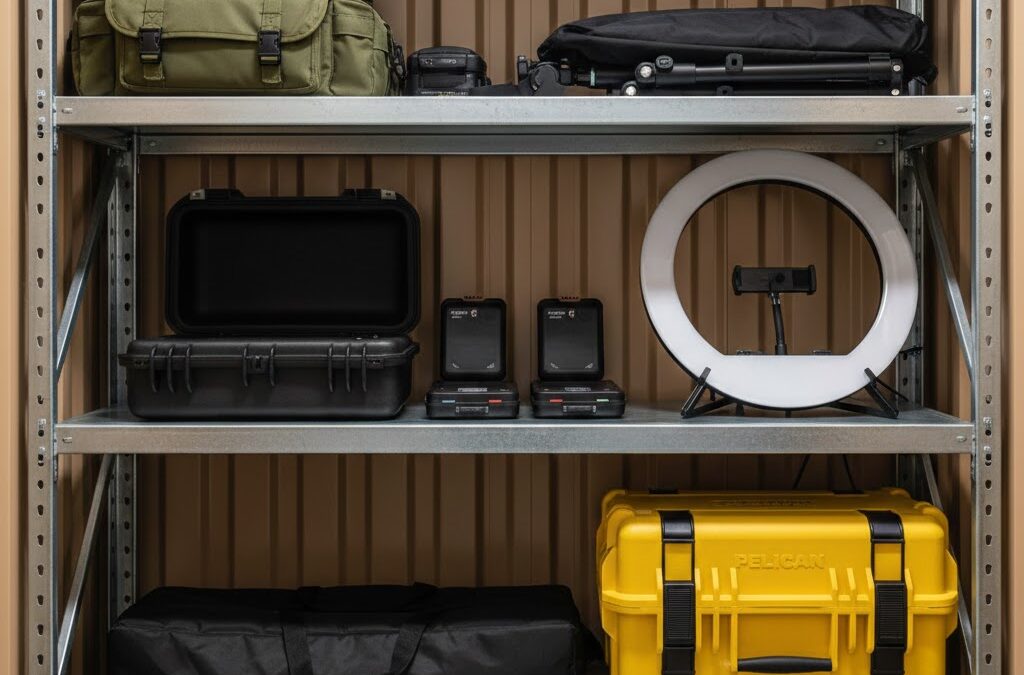
Capturing stunning landscapes across continents and sharing adventures with thousands of followers represents the dream career for many. Yet behind every perfectly composed sunset shot and expertly edited video lies a practical reality: you own thousands of pounds worth of delicate equipment that needs proper protection between assignments. Home storage rarely provides adequate security or environmental control for sensitive electronics. Travel tech gear storage becomes essential infrastructure for protecting cameras, lenses, drones, and editing equipment from damage, theft, and environmental degradation.
Professional content creators face unique challenges that standard domestic storage doesn’t address. Your equipment isn’t just valuable – it’s your income source. Blogger equipment safety demands purpose-built solutions that understand the specific vulnerabilities of photography and tech gear whilst accommodating the unpredictable schedules that travel work creates.
This isn’t about finding somewhere to dump boxes. It’s about establishing professional infrastructure that protects your livelihood.
Why Travel Professionals Need Specialist Storage
Travel bloggers, photographers, and videographers accumulate equipment that’s simultaneously expensive, fragile, and essential. A professional camera body costs £2,000-£5,000. Quality lenses run £500-£2,500 each. Add drones, lighting equipment, audio gear, and editing workstations, and you’re looking at £10,000-£30,000 worth of kit easily.
This equipment can’t simply be shoved in a garden shed or spare bedroom. The technical precision that makes cameras and lenses perform brilliantly also makes them vulnerable to environmental damage. Temperature fluctuations warp lens elements. Humidity encourages fungus growth that ruins optical quality. Dust infiltrates camera sensors and mechanical components. These aren’t theoretical risks – they’re genuine threats that cause expensive damage remarkably quickly.
Professional storage provides environmental stability that protects your investment. It’s not luxury – it’s essential maintenance for income-generating assets that require specific conditions to remain functional.
Preparing Equipment for Storage Properly
Simply boxing up cameras and hoping for the best guarantees problems. Proper preparation determines whether you retrieve equipment in perfect working order or discover damage that could have been prevented.
Critical Cleaning and Preparation Steps
Clean everything thoroughly before storage. Dust, dirt, and residue create perfect conditions for problems to develop during storage. Use proper camera cleaning supplies – microfibre cloths, blowers, lens cleaning solution – to ensure equipment is spotless. Don’t rush this step.
Remove all batteries without exception. Batteries left in cameras, flashes, and devices can leak during storage, causing irreparable damage to delicate electronics. Corrosion from battery leakage often costs more to repair than the equipment is worth. Remove batteries, clean contacts, and store batteries separately in sealed containers.
Protect optical elements meticulously. Lenses require special care. Ensure front and rear lens caps are secure. Wrap each lens individually in microfibre cloths before placing in padded cases or wrapping with bubble wrap. Even minor impacts during storage can damage lens coatings or alignment.
Include moisture protection. Silica gel packets or moisture absorbers inside sealed containers prevent humidity damage. This small investment prevents fungus growth that ruins lenses and camera sensors. Replace moisture absorbers regularly if accessing storage frequently.
You can source quality protective materials – sturdy boxes, bubble wrap, silica gel packets, lens wraps, and sealing tape – from the packaging shop to ensure everything stays properly protected.
Strategic Packing Approaches
Use hard cases for valuable items. Pelican cases, Nanuk cases, and similar hard-shell containers provide superior protection compared to soft bags or cardboard boxes. Yes, they’re more expensive initially, but they prevent damage that costs far more to repair.
Avoid original packaging for long-term storage. Manufacturer boxes look nice but aren’t designed for extended storage. They weaken quickly, provide inadequate protection, and stack poorly. Use proper storage solutions instead.
Label everything comprehensively. Mark each case or box with detailed contents – “Camera Bodies – Sony A7R IV + Canon R5” rather than just “Cameras.” This specificity saves enormous time when you need particular items urgently.
Create digital inventories with photographs. Document every piece of equipment before storage. Include serial numbers, condition notes, and photographs. This documentation proves invaluable for insurance claims and helps you verify everything’s present when retrieving items.
Think of packing like preparing for a shoot – you wouldn’t throw £5,000 worth of lenses into a rucksack without protection, would you? Apply the same care to storage preparation.
Selecting Appropriate Unit Sizes
Choosing the right storage space resembles selecting the correct lens for a shot – you need the right tool for the job, not the biggest option available. Oversized units waste money monthly. Undersized units force poor organisation that risks equipment damage.
Compact Solutions for Essential Backup Gear
Minimalist travel bloggers storing backup equipment – perhaps a second camera body, spare lenses, a drone, and hard drives – often find 25 sq ft units perfectly adequate. This size accommodates several hard cases stacked efficiently with room for tripods and smaller accessories. It’s enough space without paying for emptiness.
Expanded Space for Studio Equipment
Content creators with comprehensive gear – multiple camera systems, lighting kits, backdrops, audio equipment, editing workstations – require more substantial space. 50 sq ft units provide approximately the capacity of a large walk-in wardrobe, offering floor area to stack equipment cases whilst leaving narrow access paths for retrieval.
75-100 sq ft units suit professionals storing complete studio setups including large light stands, backdrop systems, props, and extensive archives. This capacity accommodates substantial gear collections whilst maintaining organisation.
Business storage solutions understand that professional equipment isn’t just personal belongings – it’s business inventory that generates income and deserves equivalent protection and accessibility.
Why Climate Control Isn’t Optional
For photography and tech equipment, climate-controlled storage isn’t a premium feature – it’s fundamental protection that prevents expensive damage. The cost difference between standard and climate-controlled units is trivial compared to repair costs for damaged equipment.
Humidity Damage Destroys Equipment
High humidity represents the single biggest threat to cameras and lenses. Excess moisture causes several catastrophic problems: fungus growth on lens elements (often called lens haze or lens rot), corrosion of electronic components, and oxidation of mechanical parts.
Fungus on lenses is particularly insidious. It starts as barely visible spots but spreads rapidly, permanently degrading optical quality. Professional cleaning costs £100-£300 per lens minimum, assuming the fungus hasn’t penetrated too deeply. Severe cases render lenses worthless. Climate control prevents this entirely.
Temperature Fluctuations Cause Condensation
Uncontrolled storage environments experience significant temperature swings – hot during summer days, cold overnight, cycling repeatedly. These fluctuations cause condensation to form inside sealed camera bodies and lenses. This internal moisture damages electronics, encourages rust, and degrades optical coatings.
Professional editing equipment suffers similarly. Hard drives, computers, and monitors contain sensitive components that temperature extremes and condensation damage irreparably. Climate control maintains stable conditions that protect all electronic equipment effectively.
Consider Emma’s expensive lesson. She stored £12,000 worth of camera equipment in a standard garage unit during an eight-month assignment abroad. When she returned, three lenses showed fungus growth, her camera’s sensor had developed spots from condensation, and hard drives had failed. Repair quotes exceeded £4,000. She’d saved £25 monthly on storage costs but lost thousands in damaged equipment. Don’t repeat her mistake.
Security Standards for High-Value Equipment
Photography and tech gear represents enormous financial value in compact, portable packages – exactly what opportunistic thieves target. Blogger equipment safety demands comprehensive security measures that exceed basic standards significantly.
Multi-Layered Protection Systems
Perimeter security establishes the first defence layer. Proper fencing, controlled access points, and electronic gates requiring unique codes prevent unauthorised entry. You want facilities where casual wanderers can’t simply walk in hoping to find opportunities.
Individual unit alarms provide crucial additional protection. Even if someone bypasses perimeter security somehow, they can’t open your specific unit without triggering alerts that bring immediate response. This layer specifically protects your equipment rather than just the facility generally.
24/7 CCTV monitoring means every area stays under constant surveillance. Visible cameras deter potential problems before they develop. Comprehensive recording provides evidence if incidents occur. More importantly, professional monitoring means someone’s actually watching, not just recording.
Secure access logging tracks every entry and exit electronically. This digital record establishes exactly who accessed the facility when, creating accountability that significantly enhances security.
Newbury Self Store implements these security measures as standard features, understanding that professional equipment deserves professional protection.
Maximising Organisation and Efficiency
Well-organised storage saves enormous time and prevents frustration when you need specific equipment urgently. Poor organisation means unpacking entire units to find individual items – completely impractical when you’re preparing for assignments on tight timelines.
Strategic Space Utilisation
Install shelving systems. Industrial shelving units transform storage efficiency. Rather than stacking boxes precariously, shelving creates stable levels that maximise vertical space whilst maintaining easy access. This investment pays for itself through improved organisation.
Stack strategically by usage frequency. Items you access regularly belong near the front at convenient heights. Rarely needed equipment can occupy back corners or high shelves. Archive materials – old hard drives, outdated gear – go in the least accessible spaces.
Maintain access paths. Leave narrow walkways between stacks so you can reach items without dismantling everything. Think of it like organising a camera bag – everything has its place, and you can grab what you need without unpacking completely.
Use colour-coded labels. Different coloured labels for different equipment categories – red for camera bodies, blue for lenses, green for lighting – speeds identification dramatically. Combined with detailed content descriptions, this system makes finding specific items remarkably quick.
Take Marcus’s transformation. He’s a wildlife photographer storing extensive gear between international assignments. Initially, his 75 sq ft unit was chaotic – boxes piled randomly, everything requiring unpacking to find anything. After implementing proper shelving and a systematic labelling approach, he reclaimed nearly 40% of his floor space and reduced preparation time for shoots from half a day to under an hour.
Flexible Contracts for Unpredictable Schedules
Travel work doesn’t follow predictable patterns. Three-month assignments extend to six months. Year-long projects finish early when circumstances change. You need storage contracts that accommodate this unpredictability rather than punishing it.
Month-by-month rolling contracts provide genuine flexibility. You’re not locked into fixed terms that may not suit changing circumstances. Need to extend storage whilst taking an unexpected assignment? Simple continuation. Ready to retrieve everything earlier than planned? Give notice and collect your gear without penalties.
Unit sizing flexibility matters equally. Perhaps you initially need substantial space for complete equipment sets but later sell older gear or adopt more minimalist approaches. Downsizing units reduces costs immediately. Conversely, if you acquire new equipment or expand your business, upsizing accommodates growth without complications.
For particularly large equipment collections or those requiring drive-up loading convenience, container storage options provide robust security with vehicle access that simplifies handling bulky cases and equipment.
Location and Accessibility Considerations
Travel tech gear storage needs convenient access that accommodates unpredictable schedules. Facilities located near major transport routes or close to home save significant time when you need equipment urgently for last-minute assignments.
Extended access hours – or ideally 24/7 availability – mean you can collect gear regardless of flight arrival times or unexpected schedule changes. Nothing’s more frustrating than missing assignment opportunities because you couldn’t access storage outside restrictive opening hours.
Wide access paths and vehicle-accessible loading areas make transporting heavy equipment cases considerably easier. Struggling through narrow corridors with multiple Pelican cases while trying to meet departure schedules adds unnecessary stress to already demanding logistics.
Maintaining Your Professional Edge
Your equipment represents more than just financial investment – it’s the foundation of your professional reputation and income. Clients don’t care that your lenses developed fungus in storage or that temperature damage degraded your camera’s sensor. They care about quality deliverables on schedule.
Professional storage isn’t expense – it’s infrastructure investment that protects your ability to work effectively. The monthly cost is trivial compared to equipment replacement expenses or lost income from damaged gear that prevents accepting assignments.
Establishing Your Professional Foundation
Every successful travel blogger and content creator eventually recognises that managing equipment properly separates professionals from amateurs. You can’t maintain consistent quality whilst worrying about whether your gear’s safe or gambling with inadequate storage that risks expensive damage.
Professional travel tech gear storage provides the foundation that lets you focus entirely on creating brilliant content rather than constantly managing logistics and worrying about equipment safety. It’s the invisible infrastructure that makes visible success possible.
Ready to establish proper protection for your professional equipment? Contact the team for straightforward advice about climate-controlled units, security measures, and flexible contracts designed specifically for professional content creators’ needs.