
 01635 581 811
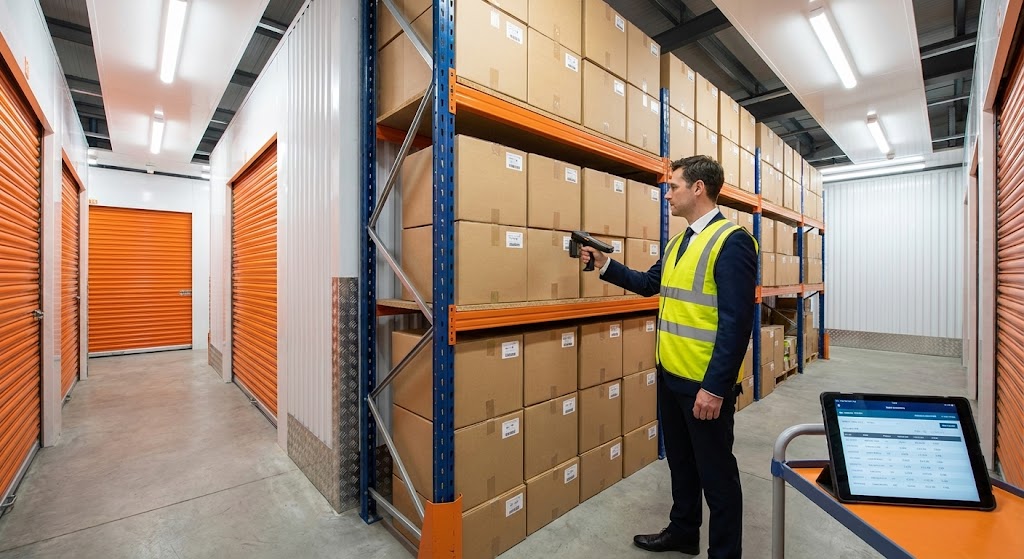
Radio-Frequency Identification, or RFID, might sound like complex tech, but it’s essentially a system that uses radio waves to automatically identify and track tags attached to physical objects. Think of it as a next-generation barcode that doesn’t need a direct line of sight to be scanned. For any company relying on self-storage, RFID storage solutions move the management of stock from manual effort into a seamless, digital process. When you’re managing a fast-paced operation, adopting a smarter system for commercial storage Newbury can make a huge difference to your bottom line.
This advanced approach transforms the traditional relationship businesses have with their inventory, particularly for those using business storage solutions for excess stock or equipment. It allows for unprecedented precision in inventory checks and greatly enhances operational security. We’re here to help you understand how this innovative technology can be integrated into your existing storage strategy, ensuring your secure storage units Berkshire remain a hub of efficiency for modern companies.
Understanding the Practical Application of RFID Technology
RFID is fundamentally composed of three parts: a tiny microchip attached to an antenna, known as the tag; a reader that emits radio waves and receives signals; and software to process the data. When the reader sends out a signal, the tag is activated and transmits its unique identification data back. This happens instantly, providing real-time visibility into the whereabouts of tagged assets.
This capability is potent because it doesn’t require staff to scan each item or even physically open a box manually. You gain immediate clarity on stock levels and location simply by passing a handheld reader near your stored items. Compared to traditional barcodes, which demand accurate placement and direct scanning, RFID storage solutions offer speed and efficiency that businesses can rely on. Barcodes are great for point-of-sale systems, but they don’t offer the automated, bulk-reading ability that transforms inventory tracking in a storage environment.
The Technology Behind the Tag
An RFID tag can be either passive or active, depending on whether it draws power from the reader’s signal or uses its own battery source. Passive tags are most common in storage environments due to their lower cost and long life, but they require the reader to be close by. Readers can be fixed in doorways for access control, or used as handheld devices for comprehensive inventory audits.
The software component is the brain of the operation, linking each unique tag ID to specific stock details, purchase orders, and locations. It’s this digital link that allows you to instantly pull up a report showing all items currently residing in your unit. Properly configured systems can even notify you if tagged items leave the designated storage area without proper authorisation.
Achieving Real-Time Visibility and Control
Implementing RFID grants immediate real-time visibility, which is crucial when managing urgent shipments or rapid stock replenishment. No longer must you rely on outdated paper logs or spreadsheets that are rarely accurate. Everything is managed digitally, reducing the margin for human error and accelerating operations.
This level of control is especially valuable for businesses that require frequent access to their goods outside of normal working hours. For clients using our facilities with 24/7 access, knowing exactly where an urgent piece of equipment is located saves significant time during late-night pickups. It removes the stress of unnecessary searching, ensuring your team can grab what they need and get back to business quickly.
Revolutionising Commercial Inventory Management
The most significant immediate benefit of using RFID in self-storage is the ability to virtually eliminate the time spent on manual stock takes. Instead of spending hours counting boxes, a quick sweep with an RFID reader can confirm every item’s presence in mere minutes. Business inventory tracking becomes effortless when you’re no longer dependent on clipboards and guesswork. This allows smaller teams to be more productive, dedicating their valuable time to sales, marketing, and customer service.
RFID makes locating individual items incredibly fast, a massive efficiency boost for companies storing similar-looking archived files or large quantities of retail merchandise.
Take the example of James, who runs a building contractor business in Berkshire, relying heavily on a secure storage unit to house specialised tools and valuable, low-volume machinery. He used to spend an hour every Monday confirming all the expensive welding equipment and scaffolding components were accounted for before sending out his crews. Since introducing simple RFID tags to the larger assets, he now completes that inventory check in less than ten minutes using a handheld reader. That extra fifty minutes every week quickly turns into huge time savings over a year, demonstrating the tangible benefits for his company’s productivity.
Enhancing Operational Efficiency and Cost Savings
For businesses, time directly equals money, and manual inventory management is inefficient. By embracing business inventory tracking through RFID technology, your business can significantly optimise storage space and internal processes. Knowing the exact dimensions and contents of every box digitally allows you to stack more strategically, minimising wasted space within your unit.
This efficiency translates into genuinely affordable storage options over the long term, as streamlined processes reduce labour costs and prevent the costly loss of essential inventory. When you can quickly confirm the location of stock, you avoid the mistake of prematurely reordering items you already own, further safeguarding capital.
Layering Security and Accountability
When you store high-value stock or sensitive documents, security is always the paramount concern. RFID technology provides an additional layer of accountability beyond the already robust features of secure storage units Berkshire. Tags can be used as part of an integrated system to log the time and identity of the last person who accessed or moved an item.
This audit trail is invaluable for tracking internal movements and confirming accountability among staff members. It supports our commitment at Newbury Self Store to providing the most secure environment possible, complementing our state-of-the-art 24/7 CCTV monitoring and secure perimeter access controls. For businesses storing confidential archives or sensitive materials, this digital proof of custody is non-negotiable.
Practical Steps for Implementing RFID in Your Storage Unit
If you’re keen on enhancing your storage operation with RFID storage solutions, the implementation process is straightforward but requires careful planning. First, evaluate your stock: what needs tagging? High-value assets and large quantities of homogeneous stock are prime candidates for RFID.
Your selection of RFID tags must be appropriate for your environment; for instance, metal products require specialised tags to prevent signal interference. You don’t need to install a complex network; many businesses start simply with a robust handheld reader, using it once a week for batch scanning. Once the hardware is chosen, you’ll need to secure sufficient packing materials for a smooth transition. The team can help you find all the packaging supplies you need, from durable boxes to protective wrapping, ensuring your items are ready for tagging and secure storage.
The Right Tool for the Job: An Analogy
Think of integrating RFID like upgrading your business from using an old-fashioned street map to modern satellite navigation. The street map gets you there eventually, but it takes time, involves guesswork, and requires manual recalculation if you take a wrong turn. Satellite navigation, like RFID, gives you an instant, precise location and plots the most efficient route.
It might require an initial investment in the navigation unit (the reader and software), but the time saved and the accuracy gained far outweigh the upfront cost. It’s an investment in the productivity and intelligence of your entire storage operation.
Exploring Flexible Storage Contracts and Options
Many businesses require flexibility, particularly start-ups or those with highly seasonal stock cycles. You don’t want to be locked into a rigid agreement when your needs might fluctuate dramatically throughout the year. Our flexible storage contracts allow you to adjust unit size or rental duration easily, without penalty.
Whether you need a compact unit for documentation or a large unit for bulk Container Storage, using RFID helps you maximise the value of the space you rent. This intelligent tracking is less useful if you’re only looking for Personal Storage while moving house, but for high-volume commercial needs, it’s a game-changer.
Is RFID Right for Your Business’s Future?
RFID storage solutions suit complex, high-volume inventory operations better than simple personal storage. While initially costly, they quickly pay off for businesses with hundreds of SKUs or high-value stock through loss prevention and labour savings. Advanced business inventory tracking delivers measurable returns by eliminating hours of manual counting and reducing the risk of stock discrepancies that cost money.
We recommend assessing the cost of lost stock and manual labour hours before making a decision. When you calculate those losses, the investment in a superior tracking system often becomes a clear financial winner. If you’d like an initial assessment or to explore our different unit sizes, please contact us to discuss your requirements. Choosing a forward-thinking storage partner like Newbury Self Store is the first step toward a more efficient future for your business.