
 01635 581 811
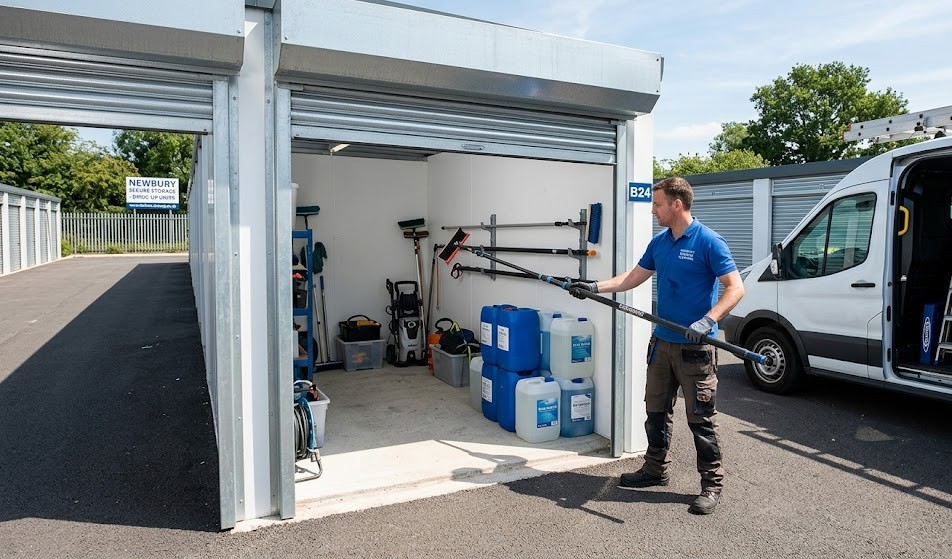
Window cleaning businesses face a unique challenge when winter arrives or demand drops: what do you do with £5,000 worth of equipment, ladders, and chemical solutions when they’re not in constant use? Leaving them in a van invites theft. Storing them at home creates hazards. And cluttering your workspace with seasonal gear makes daily operations frustrating.
Professional window cleaners know that proper storage isn’t just about clearing space. It’s about protecting investments, maintaining chemical integrity, and ensuring equipment’s ready to perform when the busy season returns. A water-fed pole system that’s been stored incorrectly can develop leaks. Cleaning solutions exposed to temperature extremes lose effectiveness. And ladders left in damp conditions become safety hazards.
The difference between a window cleaning business that thrives year-round and one that struggles often comes down to how well they manage their off-season storage. Let’s examine the practical realities of storing window cleaning equipment and chemicals safely.
Why Window Cleaning Equipment Needs Dedicated Storage
Window cleaning gear accumulates faster than most tradespeople expect. You start with a bucket and squeegee, then add extension poles, water-fed systems, pure water tanks, generators, pressure washers, and multiple ladder sizes. Before long, you’re operating a mobile warehouse.
The problem intensifies during seasonal transitions. Domestic window cleaning peaks in spring and summer when homeowners prepare for garden parties and want their homes looking pristine. Commercial work remains steadier year-round, but even that sees fluctuations. During quieter months, keeping all your equipment in a van or workspace becomes inefficient.
Consider what happens when you don’t have proper storage. Equipment gets damaged from being constantly moved around. Chemicals freeze or degrade in unheated spaces. Ladders stored outdoors corrode. And insurance companies take a dim view of valuable equipment left unsecured, which can affect your premiums or invalidate claims.
A dedicated storage solution protects your business assets whilst freeing up working space for current operations. It’s not an expense – it’s risk management – like the difference between leaving your car outside in all weathers versus keeping it in a proper garage where it stays protected and maintains its value.
Understanding Chemical Storage Requirements for Window Cleaning Solutions
Window cleaning chemicals aren’t as straightforward as they appear. Professional-grade solutions contain surfactants, detergents, and sometimes acids or alkalis that require specific storage conditions. Store them incorrectly, and you’ll discover they’ve separated, crystallised, or lost effectiveness when you need them most.
Temperature control matters significantly. Most window cleaning chemicals should be stored between 5°C and 25°C. Drop below freezing, and water-based solutions expand, cracking containers and creating hazardous spills. Exceed 30°C consistently, and chemical bonds break down, reducing cleaning power.
Light exposure degrades many formulations. UV rays break down chemical compounds, particularly in clear or translucent containers. This is why professional chemicals come in opaque bottles, but once opened and decanted, they become vulnerable.
Ventilation prevents dangerous fume accumulation. Even “safe” cleaning chemicals release vapours. In confined spaces without air circulation, these vapours concentrate to levels that become health hazards or fire risks, especially around electrical equipment.
One window cleaner in Reading stored £800 worth of concentrated cleaning solution in his garage over winter. The garage wasn’t insulated, and temperatures dropped below freezing for three consecutive nights in January. When he opened the containers in March to prepare for spring work, he discovered half had cracked from frozen expansion, and the solutions had separated beyond recovery. The liquid that remained was unusable – it wouldn’t mix properly and left streaks on windows during testing. He’d essentially poured £400 down the drain because he didn’t account for temperature fluctuations. Proper climate-controlled storage would’ve cost £80 monthly for three months (£240), saving him £160 whilst ensuring his chemicals remained in perfect condition.
The solution? Store chemicals in a climate-controlled environment with proper ventilation. That doesn’t necessarily mean expensive climate control – it means choosing a storage space that maintains stable temperatures and allows air circulation.
Seasonal Equipment Rotation: What to Store When
Window cleaning businesses operate on seasonal rhythms. Recognising these patterns and rotating equipment accordingly maximises efficiency whilst protecting gear during off-peak periods.
Spring and summer demand different equipment than autumn and winter. Warmer months see increased demand for exterior residential work, requiring more ladders, water-fed poles, and pure water systems. Colder months shift toward commercial interior work and conservatory cleaning, where compact equipment and specialised solutions take priority.
Smart window cleaners don’t keep everything accessible year-round. They store seasonal equipment during off-peak months and rotate it back into service as demand increases. This approach reduces clutter in vans and workspaces whilst ensuring equipment receives proper maintenance during storage periods.
Consider this rotation strategy:
March to September: Store heavy-duty pressure washers, winter-specific chemicals, and backup ladders. Keep water-fed systems, extension poles, and summer cleaning solutions readily accessible.
October to February: Store pure water systems requiring regular use, summer-specific chemicals, and lightweight aluminium ladders. Prioritise heated water systems, winter-formulation cleaners, and sturdy fibreglass ladders for wet conditions.
This rotation isn’t just about space management. It’s about equipment longevity. A water-fed pole system sitting unused for six months develops issues if not properly prepared and stored. Seals dry out. Hoses crack. Pumps seize. But store it correctly with proper preparation, and it’ll work perfectly when needed.
Preparing Equipment for Storage: The Professional Approach
Throwing equipment into storage without preparation guarantees problems. Professional window cleaners follow systematic preparation protocols that protect investments and ensure equipment emerges storage-ready.
Water-fed pole systems require thorough preparation. Drain all water from hoses, poles, and pumps. Even small amounts of residual water can freeze and crack components. Flush the system with a weak vinegar solution to remove mineral deposits, then flush again with clean water. Disconnect and remove batteries from pumps, storing them separately in a charged state.
Ladders need cleaning and inspection before storage. Remove dirt and debris that can trap moisture against metal or fibreglass surfaces. Check for cracks, loose rivets, or damaged rungs. Apply a light coating of silicone spray to moving parts and hinges. Store ladders horizontally on brackets to prevent warping – never lean them against walls for extended periods.
Squeegees, scrapers, and hand tools require individual attention. Remove and clean rubber blades, checking for nicks or tears. Store blades flat, never bent or compressed, as this creates permanent deformation. Clean metal components and apply a thin layer of protective oil to prevent rust. Wrap tools in cloth or bubble wrap to prevent scratching during storage.
Cleaning chemicals need proper labelling and organisation. Ensure all containers are tightly sealed and clearly labelled with contents and date. Group chemicals by type – acids separate from alkalis, solvents away from water-based solutions. Never store chemicals in unmarked containers or transfer them into food or drink bottles, regardless of how temporary you think it’ll be.
One Berkshire window cleaner stored a water-fed system without draining it completely in November, assuming his storage unit wouldn’t get cold enough to freeze. He was wrong. A cold snap in January caused residual water to freeze, cracking the pump housing and splitting two hose connections. The repair cost £340 and delayed his spring work by two weeks whilst he waited for replacement parts. Thorough preparation would’ve taken 30 minutes and prevented every penny of that loss.
Choosing the Right Storage Unit Size for Window Cleaning Equipment
Window cleaners typically underestimate their storage needs. They calculate based on current equipment, forgetting that businesses grow and gear accumulates. Choosing too small a unit means cramming equipment together, creating access problems and increasing damage risk.
A 25-50 square foot unit suits window cleaners with basic equipment: a couple of ladders, hand tools, and a modest chemical inventory. This works for sole traders doing primarily residential work without water-fed systems or pressure washers.
A 50-100 square foot unit accommodates growing businesses with water-fed pole systems, multiple ladder sizes, pressure washers, and substantial chemical inventories. This size allows proper organisation with shelving units and provides space to access equipment without moving everything around.
100+ square foot units serve established window cleaning businesses storing equipment for multiple teams, backup gear, and bulk chemical purchases. At this level, you’re essentially operating a mini-warehouse that requires proper racking systems and inventory management.
Consider your growth trajectory, not just current needs. Upgrading storage units costs time and money. Starting with slightly more space than you immediately need prevents the hassle of moving within a year.
Think of it like choosing a suitcase for a trip. Pack a small case to absolute capacity, and you’ll struggle to find anything quickly. Choose one size larger, and everything has its place, making packing and unpacking effortless. Storage units work the same way.
Security Considerations for Valuable Window Cleaning Gear
Window cleaning equipment represents substantial investment. A professional water-fed system costs £2,000-£4,000. Add ladders, pressure washers, and chemical inventory, and many window cleaners have £5,000-£10,000 in equipment. That’s worth protecting properly.
Insurance companies scrutinise how you store business equipment. Many policies require specific security measures – particularly for equipment stored off-premises. Failing to meet these requirements can invalidate claims if equipment’s stolen or damaged.
Standard security features to prioritise include individual unit alarms, CCTV coverage, perimeter fencing, and controlled access systems. Some window cleaners add additional security by using their own padlocks rated to insurance standards and installing battery-powered motion sensors inside units.
Location matters for security. Storage facilities in industrial areas often have better security infrastructure than those in residential zones. They’re designed for business use, with security systems reflecting the higher value of stored contents.
Document your stored equipment with photographs and serial numbers. Keep an inventory list updated as you add or remove items. This documentation proves invaluable for insurance claims and helps you track what’s actually in storage versus what you think’s there.
Maintaining Chemical Integrity During Extended Storage
Professional window cleaning chemicals aren’t cheap. A 25-litre container of quality cleaning solution costs £50-£150 depending on formulation. Multiply that across your chemical inventory, and you’re looking at hundreds of pounds in stock. Losing that to improper storage hurts.
Chemical shelf life varies significantly. Most professional window cleaning solutions last 12-24 months unopened in proper conditions. Once opened, that drops to 6-12 months. But these timeframes assume storage within manufacturer specifications – usually controlled temperatures and protection from light.
Separation’s the first sign of chemical degradation. If you open a container and see distinct layers that don’t remix with gentle shaking, the formulation’s broken down. Using separated chemicals produces streaky results and wastes time.
Crystallisation indicates temperature problems. Some chemicals crystallise when exposed to cold, forming solid deposits at container bottoms. Whilst some formulations can be recovered by gentle warming, others are permanently damaged.
Colour changes signal chemical breakdown. If your blue cleaning solution’s turned green or your clear additive’s yellowed, chemical bonds have broken down. Don’t use it – you’ll get unpredictable results and potentially damage surfaces.
Store chemicals on shelving, never directly on concrete floors. Concrete conducts cold and heat, exposing containers to temperature extremes. Use wooden or plastic shelving that insulates chemicals from floor temperature fluctuations.
Group chemicals by type and usage frequency. Keep frequently used solutions at eye level for easy access. Store rarely used or seasonal chemicals on higher or lower shelves. This organisation system prevents accidents and makes inventory management straightforward.
Access and Convenience: Balancing Security with Practicality
Storage security matters, but so does convenient access. Window cleaners need to retrieve equipment quickly when jobs arise or weather windows open unexpectedly. A storage facility that’s secure but requires 48-hour notice for access becomes a business hindrance rather than an asset.
Extended access hours suit window cleaning businesses. Weather dictates work schedules, and you can’t always predict when you’ll need to swap equipment or collect supplies. Storage facilities offering 6am-10pm access or even 24-hour access provide flexibility that matches how window cleaning businesses actually operate.
Drive-up access eliminates handling difficulties. Loading and unloading ladders, water tanks, and equipment from storage units located on upper floors or down long corridors wastes time and increases injury risk. Container storage with vehicle access directly to your unit transforms what could be a 30-minute retrieval into a 5-minute stop.
Location relative to your operating area matters. A storage facility 30 miles from your primary work area saves money on rent but costs time and fuel every trip. Calculate the true cost including travel time, fuel, and the opportunity cost of jobs you can’t take because equipment retrieval takes too long.
One Reading window cleaner switched from a cheap facility 25 miles away to a more expensive one 5 miles from his primary work area. His storage costs increased £40 monthly, but he saved 90 minutes per visit and could respond to same-day jobs requiring equipment changes. Within three months, the additional revenue from improved responsiveness far exceeded the extra storage cost. Sometimes paying slightly more delivers significantly better value.
Organising Your Storage Unit for Maximum Efficiency
A disorganised storage unit wastes time every visit. Professional window cleaners who treat their storage units like organised workshops rather than dumping grounds operate more efficiently.
Create zones within your storage space. Designate specific areas for ladders, chemicals, hand tools, and larger equipment like water-fed systems or pressure washers. This zoning system means you know exactly where to look for any item.
Install shelving designed for your needs. Heavy-duty metal shelving supports chemical containers and equipment weight whilst maximising vertical space. Adjustable shelving accommodates different container sizes and allows reorganisation as your inventory changes.
Label everything clearly. Use waterproof labels on shelves indicating what belongs there. Label chemical containers with contents and storage dates. This labelling system prevents mistakes and helps when you send employees to retrieve items.
Keep frequently used items near the door. Place seasonal or rarely used equipment toward the back. This arrangement minimises the amount of moving around required during quick visits.
Maintain clear pathways. Don’t fill every square foot of floor space. Leave walkways that allow you to reach any area without moving multiple items. Think of it like a well-designed warehouse – efficiency comes from accessibility, not maximum density.
Use wall space for vertical storage. Install hooks or brackets for hanging ladders, poles, and hoses. This approach protects equipment from floor moisture whilst freeing valuable floor space for other items.
Insurance and Liability: Protecting Your Business Assets
Window cleaning equipment storage isn’t just about convenience – it’s about protecting business assets that your livelihood depends on. Insurance considerations affect both what you store and how you store it.
Business insurance policies often specify storage requirements. Many insurers require equipment stored off-premises to be in secure, weatherproof facilities meeting specific standards. Storing valuable equipment in residential garages, garden sheds, or unsecured locations can void coverage.
Check your policy’s definition of “secure storage.” Some insurers require CCTV coverage, individual unit alarms, or specific lock standards. Understanding these requirements before choosing storage prevents discovering you’re uninsured after a theft.
Separate business and personal storage. Mixing business equipment with household items in personal storage can create insurance complications. Business equipment requires business insurance, and storing it alongside personal items can confuse coverage when claims arise.
Document your stored inventory thoroughly. Photograph equipment, record serial numbers, and maintain an up-to-date inventory list. Store this documentation separately from the equipment itself – ideally in cloud storage or at your business address. This documentation proves ownership and value if you need to make claims.
Consider the liability implications of chemical storage. If improperly stored chemicals cause damage to neighbouring storage units or the facility itself, you could face liability claims. Following proper storage protocols protects you from these risks.
Professional window cleaners should review their insurance annually, ensuring coverage reflects current equipment values and storage arrangements. Equipment values increase as businesses grow, but insurance policies don’t automatically adjust.
Preparing for Seasonal Transitions: A Practical Timeline
Smart window cleaners don’t wait until the busy season starts to retrieve and prepare equipment. They plan transitions weeks in advance, ensuring everything’s ready when demand increases.
6-8 Weeks Before Season:
- Review stored equipment inventory
- Identify items requiring maintenance or replacement
- Order replacement parts or new equipment with delivery time built in
- Plan your retrieval and setup timeline
2-4 Weeks Before Season:
- Retrieve equipment from storage
- Perform thorough inspections and maintenance
- Test all systems (water-fed poles, pressure washers, pumps)
- Replace worn components before they fail in the field
1 Week Before Season:
- Conduct trial runs with all equipment
- Verify chemical supplies are sufficient and still effective
- Organise vehicles and workspaces for efficient operations
- Train or refresh staff on equipment use and safety
This timeline prevents the chaos of discovering critical equipment needs repairs on the first busy day of spring. It also spreads the workload of preparation across several weeks rather than creating a frantic weekend of setup.
Similarly, preparing equipment for storage at season’s end requires planning. Don’t simply throw dirty equipment into storage on the last work day. Schedule time for proper cleaning, inspection, and preparation. That investment pays dividends when you retrieve equipment months later and find it ready to use immediately.
Making Storage Work for Your Window Cleaning Business
Effective storage transforms from a necessary expense into a business advantage when approached strategically. Window cleaners who treat window cleaner equipment storage as part of their operational infrastructure rather than an afterthought operate more efficiently, protect their investments better, and respond to opportunities faster.
The key’s matching your storage solution to your specific business needs. A sole trader with basic equipment requires different storage than an established business running multiple teams. Consider your current situation, but also plan for growth. Upgrading storage arrangements midway through a busy season disrupts operations unnecessarily.
Evaluate storage options based on security, accessibility, location, and cost – in that order. Cheap storage that compromises security or adds hours to your working week costs more than slightly expensive storage that protects equipment and saves time.
Remember that proper storage extends equipment lifespan significantly. A water-fed system stored correctly will serve you for 7-10 years. One stored carelessly might need replacement in 3-5 years. Those savings dwarf storage costs over time.
Newbury Self Store understands that window cleaners need storage supporting seasonal operations, not generic warehouse space. You need facilities where cleaning equipment stays organized, where chemical storage maintains product integrity, and where security protects your substantial equipment investments. We know that your window cleaning equipment isn’t just gear – it’s the foundation of professional services that clients depend on for pristine windows and maintained properties.
If you’re currently struggling with equipment storage or preparing for business growth that will exceed your current capacity, exploring business storage options designed for trade professionals makes practical sense. The right storage solution should feel like an extension of your business workspace – secure, organised, and accessible when you need it.
Professional window cleaning demands professional storage. Your equipment represents years of investment and enables your livelihood. Protecting it properly isn’t optional – it’s fundamental to running a sustainable, profitable business. Start by assessing your current storage situation honestly, identifying gaps or risks, and making a plan to address them before they become expensive problems. Your future self will thank you when that busy spring season arrives and everything’s ready to go.
Contact us to discuss storage solutions that match how window cleaning businesses actually work. Proper window cleaner equipment storage protects your tools, organizes your seasonal transitions, and ensures clients never experience delays because equipment was lost or damaged during off-season storage.