
 01635 581 811
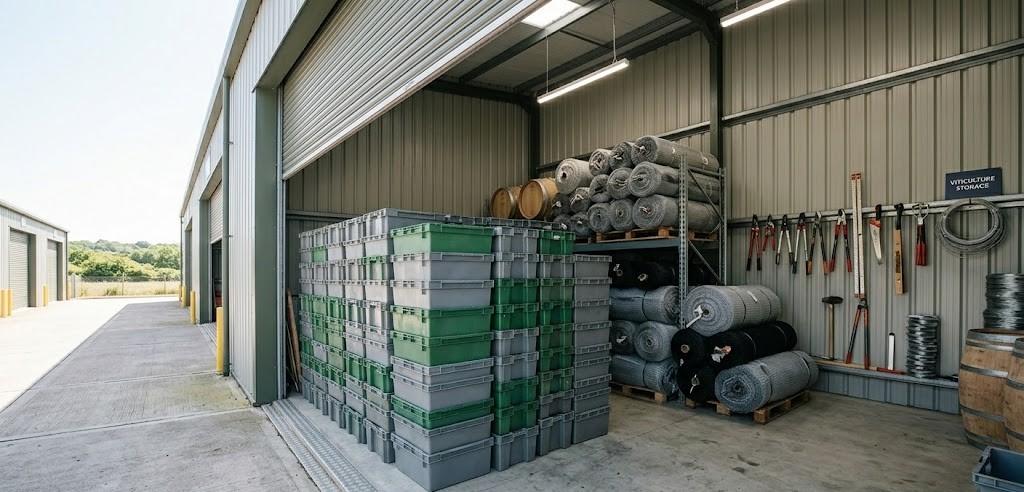
West Berkshire’s wine industry has transformed from a handful of pioneering vineyards into a thriving sector producing award-winning English sparkling and still wines. This growth brings practical challenges that many vineyard owners and managers face: where to store seasonal equipment, how to protect valuable machinery during off-peak months, and how to manage space efficiently as vineyard operations expand.
The equipment needed to run a successful vineyard doesn’t disappear when harvest ends. Pruning tools, netting systems, spray equipment, tractors, and bottling machinery all require proper vineyard equipment storage to maintain their condition and extend their lifespan. For small to medium-sized West Berkshire vineyards operating on tight margins, finding cost-effective storage solutions that keep equipment secure and accessible makes a tangible difference to the bottom line.
The Seasonal Nature of Vineyard Operations
Vineyards operate in distinct cycles throughout the year, each requiring different equipment and tools. During the growing season from April to September, you’ll need regular access to spray equipment for disease prevention, netting to protect ripening grapes from birds, and machinery for canopy management. Come harvest time in September and October, picking equipment, crates, and processing machinery become essential.
But what happens to all this specialised equipment during the quieter winter months? Leaving valuable vineyard machinery exposed to the elements accelerates wear and tear. Storing everything on-site might seem convenient, but it often means valuable land that could be used for expansion or additional planting gets taken up by equipment sheds instead.
Many vineyard managers find themselves playing a constant game of Tetris, shuffling equipment around to make space for whatever’s needed that week. It’s inefficient, time-consuming, and increases the risk of damage when items are stacked haphazardly or left in unsuitable conditions.
Equipment That Needs Proper Storage
The range of equipment a working vineyard accumulates over time’s substantial. Even smaller operations quickly discover they need more storage space than initially anticipated.
Tractors and machinery represent significant capital investments. Compact vineyard tractors, sprayers, and specialised cultivation equipment can’t simply be left outside year-round without suffering accelerated deterioration. Rust, seized components, and weather damage reduce resale value and increase maintenance costs.
Netting and bird protection systems take up considerable space when not in use. These materials need to be stored dry and organised to prevent tangling and damage. A vineyard using netting across several hectares might have hundreds of metres of material to store properly between seasons.
Pruning and hand tools might seem small individually, but a working vineyard accumulates dozens of secateurs, saws, tie guns, and other implements. Proper storage keeps them organised, prevents theft, and ensures they’re ready when needed rather than scattered across multiple locations.
Bottling and processing equipment for vineyards handling their own bottling presents particular storage challenges. Bottle fillers, corking machines, labelling equipment, and associated materials need clean, dry conditions to function reliably. Many smaller vineyards only bottle once or twice annually, meaning this equipment sits idle for months at a time.
Seasonal equipment including stakes, ties, fertilisers, and pest control products requires organised storage that keeps them accessible but secure. Chemical storage in particular demands proper conditions to maintain efficacy and meet safety regulations.
Space Constraints at Vineyard Sites
Land suitable for growing quality grapes in West Berkshire comes at a premium. Every square metre dedicated to equipment storage is land that could potentially be planted with vines or used for visitor facilities that generate revenue.
Traditional farm buildings might seem like an obvious solution, but they’re often poorly suited to modern vineyard needs. Old barns lack security, may have damp problems, and rarely provide the organised space needed for efficient equipment management. Building new storage structures on vineyard land requires planning permission, represents significant capital expenditure, and still ties up valuable space.
Here’s a scenario that plays out regularly: a vineyard starts with a modest equipment collection that fits comfortably in an existing outbuilding. As the business grows and production increases, more specialised equipment becomes necessary. Within a few years, equipment’s stored in multiple locations around the site, making it difficult to locate specific items and increasing the time spent simply finding the right tool for the job.
One West Berkshire vineyard manager described spending an entire morning searching for a specific spray nozzle that should’ve taken five minutes to locate. That’s time that could’ve been spent on productive work, and it’s a frustration that repeats itself whenever equipment isn’t properly organised and stored. He eventually found it mixed in with irrigation fittings in a corner of the barn – nowhere near where spray equipment should’ve been kept.
Why Off-Site Storage Makes Practical Sense
Moving seasonal equipment to off-site storage creates immediate benefits for vineyard operations. The most obvious advantage is freeing up on-site space for revenue-generating activities or expansion. Land that was previously occupied by storage can be replanted, developed into tasting facilities, or simply kept clear for easier movement around the vineyard.
Security improves substantially when valuable equipment’s stored in a purpose-built facility with proper access control and monitoring. Vineyard sites, particularly those in rural locations, can be vulnerable to theft. Removing high-value machinery and tools to secure storage reduces this risk significantly.
Equipment condition benefits from consistent, dry storage conditions. Unlike barns or makeshift shelters that may have leaks or damp problems, professional storage units maintain equipment in good condition between uses. This extends equipment life and reduces maintenance costs over time.
Organisation becomes manageable when you have dedicated space designed for storage rather than trying to squeeze everything into whatever space happens to be available on-site. Proper organisation means you can locate equipment quickly when needed and maintain an accurate inventory of what you own.
Flexibility to scale storage space up or down as needs change provides operational agility. During expansion phases, you might need more storage temporarily. Conversely, if you sell equipment or streamline operations, you’re not stuck with empty buildings on valuable land.
Choosing the Right Storage Solution
Not all storage options suit vineyard equipment equally well. The specific requirements depend on what you’re storing and how frequently you need access.
Container storage works particularly well for larger vineyard equipment and machinery. Drive-up access means you can load and unload tractors, sprayers, and other wheeled equipment without hassle. Containers provide weather-tight protection and can accommodate bulky items that wouldn’t fit easily in standard storage units. For vineyards storing equipment that’s only needed seasonally, container storage offers the space and accessibility required.
Standard storage units suit smaller equipment, tools, and supplies perfectly. These provide secure, organised space for the dozens of smaller items that accumulate in vineyard operations. Climate-controlled options protect sensitive equipment and materials that might be affected by temperature extremes or humidity.
Size considerations matter more than many vineyard managers initially realise. It’s tempting to choose the smallest unit that might theoretically fit everything, but this approach creates problems. Equipment crammed into insufficient space becomes difficult to access, increases the risk of damage, and makes inventory management nearly impossible. Choosing a unit size that allows proper organisation and easy access proves more cost-effective in practice.
Think of storage unit sizing like choosing the right van for a house move. You could technically cram everything into a smaller vehicle, but you’d spend hours playing Tetris with boxes, risk damaging items, and probably need multiple trips. A properly sized space makes the entire process smoother and more efficient.
Preparing Equipment for Storage
Simply moving equipment into storage isn’t enough. Proper preparation ensures items remain in good condition and are ready for immediate use when needed again.
Cleaning equipment thoroughly before storage prevents corrosion and makes it easier to spot any damage or wear that needs attention. Spray equipment in particular should be flushed completely to remove any residual chemicals that could damage seals and components during storage.
Performing maintenance before storage rather than waiting until you need the equipment again saves time during busy periods. Change oils, grease moving parts, and address any minor repairs whilst you have the equipment out and accessible.
Protecting surfaces with appropriate covers or treatments prevents rust and deterioration. Metal surfaces benefit from light oil coating, whilst rubber components might need specific protectants to prevent cracking during extended storage.
Organising strategically means placing items you’ll need first near the front of the storage space. If you store equipment in autumn after harvest, think about what you’ll need access to first in spring when the growing season begins again.
Documenting what’s stored prevents the frustrating situation of knowing you own a specific tool but not being certain whether it’s in storage or somewhere on the vineyard. A simple inventory list saves time and reduces the temptation to purchase duplicate items unnecessarily. Quality packing materials help protect equipment and keep everything organised for easy identification.
Managing Seasonal Access Requirements
Vineyard operations don’t follow a nine-to-five schedule, particularly during critical periods like harvest. Storage solutions need to accommodate the reality of how vineyards actually operate.
Flexible access hours matter when you might need to collect equipment early in the morning or return it late in the evening. Facilities offering extended or 24-hour access provide the flexibility vineyard operations require without forcing you to adjust your schedule to storage facility hours.
Proximity to your vineyard affects how practical off-site storage becomes. Storage located within a short drive means collecting equipment doesn’t consume significant time. For West Berkshire vineyards, storage facilities in Newbury offer convenient access without the premium costs associated with on-site storage buildings.
Advance planning reduces last-minute trips to storage. Thinking ahead about what equipment you’ll need for upcoming tasks allows you to collect everything in a single trip rather than making multiple journeys as you realise you need additional items.
Cost Considerations and Return on Investment
Storage costs need to be weighed against the alternatives and the value they provide. Building equivalent storage on vineyard property involves substantial upfront costs for construction, ongoing maintenance, and the opportunity cost of land that could be used more productively.
Professional storage facilities spread these costs across multiple users, making the per-unit price significantly lower than building and maintaining your own structures. You’re also not locked into a permanent commitment – storage needs can be adjusted as your operation evolves.
Insurance costs may decrease when valuable equipment’s stored in secure facilities rather than in basic farm buildings with limited security. The reduction in insurance premiums can offset a portion of storage costs.
Equipment lifespan extends when items are properly stored rather than exposed to weather and potential theft or vandalism. The cost of replacing equipment prematurely due to poor storage conditions quickly exceeds the cost of proper storage facilities.
Time savings from having equipment properly organised and accessible translate directly into operational efficiency. The hours saved not searching for misplaced items or reorganising chaotic storage areas represent real value that’s easy to overlook when comparing costs.
Supporting West Berkshire’s Wine Industry Growth
The English wine industry continues to expand, with West Berkshire playing an increasingly important role in the wine industry. As more vineyards establish themselves and existing operations scale up production, practical infrastructure challenges become more pressing.
Storage solutions that allow vineyards to focus their on-site space on wine production rather than equipment management support sustainable growth. New vineyards can start operations without immediately needing to invest in permanent storage buildings, reducing barriers to entry. Established vineyards can expand production capacity without being constrained by existing storage limitations.
The flexibility that professional storage provides helps vineyard businesses adapt to changing conditions. A particularly successful vintage might mean additional equipment purchases that year. Conversely, equipment that’s no longer needed can be sold without leaving empty buildings on valuable land.
For vineyard owners considering their storage options, the question isn’t whether equipment needs proper storage – it clearly does. The question’s whether building and maintaining that storage on-site represents the best use of resources compared to using professional facilities designed specifically for this purpose.
Many West Berkshire vineyard managers have found that moving seasonal equipment to secure off-site storage solves multiple problems simultaneously. Space on the vineyard becomes available for productive use, equipment stays in better condition, organisation improves dramatically, and security concerns diminish.
Making Storage Work for Your Vineyard Operation
If you’re managing a vineyard operation and finding that equipment storage’s becoming increasingly problematic, exploring professional storage options makes practical sense. The investment in proper storage pays dividends through improved efficiency, better equipment condition, and the flexibility to adapt as your operation evolves.
Business storage designed to accommodate commercial requirements provides the solution for businesses needing secure, accessible space for valuable equipment. The right storage approach allows you to focus on what matters most: producing excellent wine. Everything else should support that goal rather than creating unnecessary complications.
Newbury Self Store understands that vineyard equipment storage requires more than just empty space. You need facilities where expensive machinery stays protected from the elements, seasonal equipment remains organised and accessible, and your valuable tools get the security they deserve. We know that your equipment isn’t just machinery – it’s the foundation of your wine production and a significant investment in your business’s future.
Proper equipment storage isn’t glamorous, but it’s one of those practical foundations that makes the difference between an operation that runs smoothly and one that’s constantly fighting unnecessary logistical battles. Contact us to discuss storage solutions that support your vineyard’s growth whilst freeing up valuable land for what you do best – growing exceptional grapes and producing outstanding wine.