
 01635 581 811
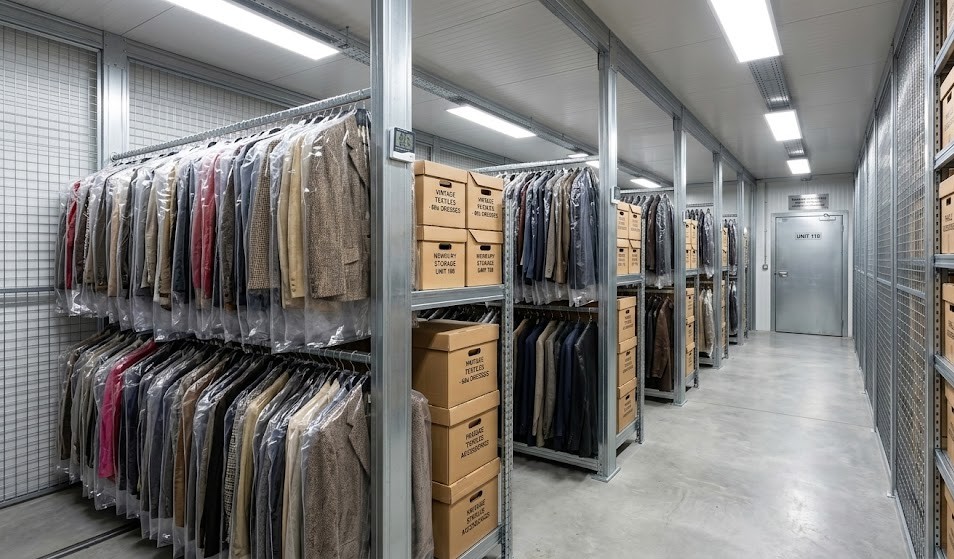
Vintage clothing isn’t just old stock – it’s irreplaceable inventory that gains value over time. A single moth hole in a 1970s Ossie Clark dress or mildew on a pristine 1950s leather jacket can wipe out hundreds of pounds in potential profit. Unlike modern retailers who can simply reorder damaged stock, vintage sellers face a harsh reality: once a piece is ruined, it’s gone forever.
Off-site storage solves the space crunch that plagues most vintage retailers, but it introduces new risks. Temperature swings, humidity, pests, and poor packing methods can silently destroy your most valuable pieces whilst they sit in storage. The difference between profitable stock and worthless rags often comes down to how you prepare, pack, and monitor your vintage clothing during its time away from the shop floor. Getting vintage clothing storage right from the start protects your investment and preserves the quality that makes these pieces valuable.
Why vintage clothing demands different storage standards
Modern clothing can withstand a fair bit of rough treatment. It’s designed for mass production, quick turnover, and relatively short lifespans. Vintage pieces, however, have already survived decades – and their fibres, dyes, and construction methods reflect the standards and materials of their era.
Natural fibres like wool, silk, and cotton break down faster than synthetics when exposed to moisture or temperature extremes. Vintage dyes weren’t always colourfast, meaning they can bleed or fade if conditions aren’t right. Metal zippers, buttons, and embellishments can corrode or tarnish, and delicate embroidery or beading can snag on rough surfaces or other garments.
Think of vintage clothing like antique furniture. You wouldn’t store a Victorian sideboard in a damp shed and expect it to emerge unscathed. The same logic applies to a 1960s Biba mini dress or a 1940s military greatcoat.
The real threats to stored vintage stock
Humidity and moisture sit at the top of the threat list. When relative humidity climbs above 60%, you’re creating a perfect environment for mould and mildew. These fungi don’t just stain fabric – they digest it, leaving permanent damage and that distinctive musty smell that’s nearly impossible to remove.
Temperature fluctuations cause fibres to expand and contract, weakening the fabric structure over time. This is particularly damaging to garments with mixed materials – think a wool coat with a silk lining, or a dress with plastic buttons on cotton fabric. Each material responds differently to temperature changes, creating stress points that can lead to tears or separation.
Pests represent an existential threat to vintage clothing. Clothes moths and carpet beetles actively seek out natural fibres, particularly wool, silk, and fur. A small infestation can spread through your entire stored inventory in weeks, leaving behind holes that render garments unsellable. Silverfish, whilst less destructive, still damage delicate fabrics and feed on the natural starches in cotton and linen.
Light exposure might seem irrelevant for stored items, but if your storage unit has any natural light or you’re frequently accessing stock, UV rays will fade colours and weaken fibres. Vintage dyes are particularly vulnerable – that vibrant 1970s orange can turn to a sad peachy beige with prolonged exposure.
Compression damage happens when garments are packed too tightly or stacked under heavy weight. Delicate fabrics crush, structured pieces lose their shape, and embellishments flatten or break. A pristine 1950s circle skirt stored under a pile of heavy coats will emerge creased and misshapen.
Preparing vintage clothing for storage: the non-negotiables
Clean everything before it goes into storage. This isn’t optional. Body oils, perfume residues, food stains, and even invisible perspiration attract pests and create conditions for mould growth. What looks clean to the naked eye might be covered in organic matter that becomes a feast for moths or a breeding ground for bacteria.
Professional dry cleaning is worth the investment for high-value pieces, but ensure the cleaner understands vintage fabrics. Some modern cleaning methods are too harsh for delicate or aged materials. For items you can wash at home, use gentle, pH-neutral detergents and air-dry completely – and we mean completely. Even slight dampness can trigger mould growth in storage.
Inspect every garment for existing damage. Small tears, loose buttons, or weak seams will worsen in storage, particularly if items shift or settle. Make repairs before storing, or at minimum, document the condition with photographs. This protects you if you’re storing stock for insurance purposes and helps you track which pieces need attention before they hit the sales floor.
Packing methods that actually protect your stock
Acid-free tissue paper is your first line of defence. Regular tissue paper contains acids that can yellow and weaken vintage fabrics over time. Acid-free tissue costs more, but it’s a small price compared to replacing damaged stock. Use it to line boxes, stuff sleeves, and cushion folds in garments that must be folded rather than hung.
Breathable garment bags work well for hanging items, but avoid plastic at all costs. Plastic traps moisture and creates the exact conditions mould loves. Cotton or muslin garment bags allow air circulation whilst protecting against dust and light exposure. For particularly valuable pieces, consider individual bags rather than cramming multiple garments into one.
Sturdy archive boxes beat flimsy cardboard every time. Look for boxes specifically designed for textile storage – they’re typically made from acid-free materials and constructed to support weight without collapsing. Standard moving boxes might seem cheaper, but they can compress under weight and don’t offer the same protection against environmental factors. Investing in quality packing supplies ensures your vintage stock remains in pristine condition.
Here’s a real-world example: A vintage seller we know stored a collection of 1980s designer blazers in regular cardboard boxes stacked five high. The bottom boxes collapsed under the weight, crushing the structured shoulders and leaving permanent creases. She lost nearly £2,000 in potential sales because she skimped on proper storage boxes.
Hanging versus folding
Hang structured pieces like coats, blazers, and dresses with boning or internal structure. Use padded or wooden hangers – wire hangers create stress points that can distort shoulders. Fold heavy knits (hanging stretches them), beaded or embellished pieces (the weight can tear fabric), and anything with delicate straps.
When folding, stuff the folds with acid-free tissue to prevent permanent creases. Think of it like packing a parachute – you want gentle curves, not sharp angles. For particularly delicate items, roll rather than fold where possible.
Choosing the right storage environment
Not all storage units offer the same conditions. For vintage clothing storage, you need specific environmental controls that many basic units simply don’t provide.
Climate control isn’t a luxury – it’s essential. You need consistent temperature (ideally between 15-21°C) and humidity levels (40-50% relative humidity). These parameters prevent the temperature swings and moisture buildup that destroy vintage textiles. Standard storage units without climate control can reach 35°C in summer and drop near freezing in winter, with humidity spiking during wet months.
Ground-floor or drive-up access matters more than you might think. If you’re regularly rotating stock or accessing seasonal pieces, you don’t want to haul boxes up stairs or navigate long corridors. The easier the access, the more likely you’ll properly maintain and check your stored inventory. At Newbury Self Store, many vintage retailers specifically choose container storage for this reason – you can drive right up, load and unload efficiently, and minimise handling that might damage delicate garments.
Security features protect your investment. Vintage stock represents significant value, and some pieces are highly sought-after by collectors. Look for facilities with individual unit alarms, CCTV coverage, and controlled access. Your insurance company will likely ask about security measures if you ever need to make a claim.
Size considerations require honest assessment of your inventory. Cramming too much into a small unit forces you to stack boxes dangerously high or pack garments too tightly. Better to choose a slightly larger unit that allows proper organisation and air circulation. If you’re storing stock for your business storage needs, factor in room for growth – vintage inventory tends to expand as you source new pieces.
Pest prevention: your ongoing battle
Even in the best storage conditions, pest prevention requires active management. Moths and beetles don’t announce their arrival – by the time you notice damage, they’ve likely been breeding for weeks.
Cedar blocks and lavender sachets provide natural deterrents, but they’re not foolproof. Cedar loses its effectiveness over time and needs refreshing every few months. Lavender repels moths but won’t kill existing larvae. Use these as part of a broader strategy, not as your only defence.
Pheromone traps detect moth activity early. Place them strategically throughout your storage unit – if you catch even one moth, inspect your entire inventory immediately. These traps won’t prevent an infestation, but they’ll alert you to a problem before it becomes catastrophic.
Regular inspection schedule
Visit your storage unit monthly during peak moth season (April to September) and quarterly during cooler months. Check for signs of pest activity: tiny holes, loose fibres, or the moths themselves. Look for webbing in corners or along seams – this indicates active larvae.
Don’t store anything with food stains or organic residues. That vintage picnic blanket with grass stains? Clean it thoroughly first. That 1950s cocktail dress with a faint perfume smell? Air it out and spot-clean before packing. Pests follow their noses, and organic matter is an open invitation.
Organisation systems that protect value
Random packing leads to damaged stock. When you can’t find a specific piece, you’ll tear through boxes, disturbing carefully packed items and increasing handling damage. A proper organisation system protects your inventory whilst making stock rotation efficient.
Categorise by era and type rather than dumping everything together. Keep 1950s separate from 1980s, and store coats separately from dresses. This prevents heavier items from crushing delicate ones and makes it easier to locate specific pieces when customers request particular styles or periods.
Label everything clearly with contents, era, and any special handling notes. Use labels that won’t damage boxes if you need to reuse them. Include a master inventory list that you update every time you add or remove items. Store a copy outside the unit – if something happens to your physical inventory, you’ll have documentation for insurance claims.
Stock rotation strategies
Rotate stock seasonally to prevent items from sitting untouched for years. Vintage clothing that never sees daylight or gets handled can deteriorate just from sitting still. Plan regular rotations where you inspect pieces, refresh pest deterrents, and move items between storage and your retail space.
Create a simple map of your storage unit showing where different categories live. This saves time and reduces the need to disturb multiple boxes when you’re looking for something specific. Think of it like organising a library – the Dewey Decimal System exists because random shelving is chaos.
Monitoring and maintenance schedule
Set calendar reminders for storage unit visits. It’s easy to forget about stock that’s out of sight, but neglect leads to expensive surprises. Proper vintage stock care requires a consistent maintenance schedule:
Monthly during peak risk periods (spring and summer): Check for pest activity, verify climate control is functioning, and inspect high-value pieces. Bring a torch and examine garments closely – early detection prevents disasters.
Quarterly during lower-risk periods (autumn and winter): Full inventory check, refresh pest deterrents, and rotate stock if needed. This is when you’ll catch any environmental issues before they cause serious damage.
Annual deep inspection: Pull everything out, inspect thoroughly, and reorganise. Replace any boxes showing wear, refresh all tissue paper, and clean the unit itself. This might seem excessive, but it’s far cheaper than replacing destroyed inventory.
Keep a simple log of each visit. Note any concerns, changes in conditions, or items that need attention. This documentation proves invaluable if you ever face insurance claims or need to track patterns of deterioration.
The cost-benefit reality of professional storage
Proper vintage clothing storage costs money. Climate-controlled units cost more than basic storage, quality packing materials add up, and regular maintenance takes time. But compare these costs to your potential losses.
A single 1970s Biba dress in excellent condition might sell for £200-300. A pristine 1950s Dior-style coat could fetch £500 or more. Rare pieces from sought-after designers or periods can command thousands. Now imagine losing 20-30% of your stored inventory to moth damage or mould. The maths becomes very clear very quickly.
Professional storage also protects your business reputation. Vintage buyers are savvy – they spot moth holes, smell mildew, and notice faded colours. Selling damaged goods tanks your credibility and your prices. Customers who trust you to source and maintain quality vintage will pay premium prices and return repeatedly.
If you’re serious about vintage retail, treat your stored inventory with the same care you’d give stock on your shop floor. The pieces sitting in storage are future revenue – protect them accordingly. If you’re unsure about the right unit size or storage solution for your needs, contact us to discuss your specific requirements and ensure your vintage stock receives the protection it deserves.
Building long-term storage success
Successful vintage stock care isn’t about finding the cheapest unit and hoping for the best. It’s about understanding that your stored inventory is working capital that needs active protection. The retailers who thrive in the vintage market are those who recognise that preservation is part of their core business model.
Start with the best storage conditions you can afford, invest in proper packing materials, and commit to regular monitoring. Your future self – and your bank account – will thank you when you pull out pristine pieces that have maintained their value and appeal. The vintage clothing market rewards quality and condition above almost everything else. Don’t let preventable storage damage rob you of the profits you’ve worked hard to source.
Effective vintage stock care combines the right environment, proper packing techniques, and consistent monitoring. When these elements work together, your vintage clothing storage becomes a reliable extension of your retail operation rather than a source of anxiety and lost revenue.