
 01635 581 811
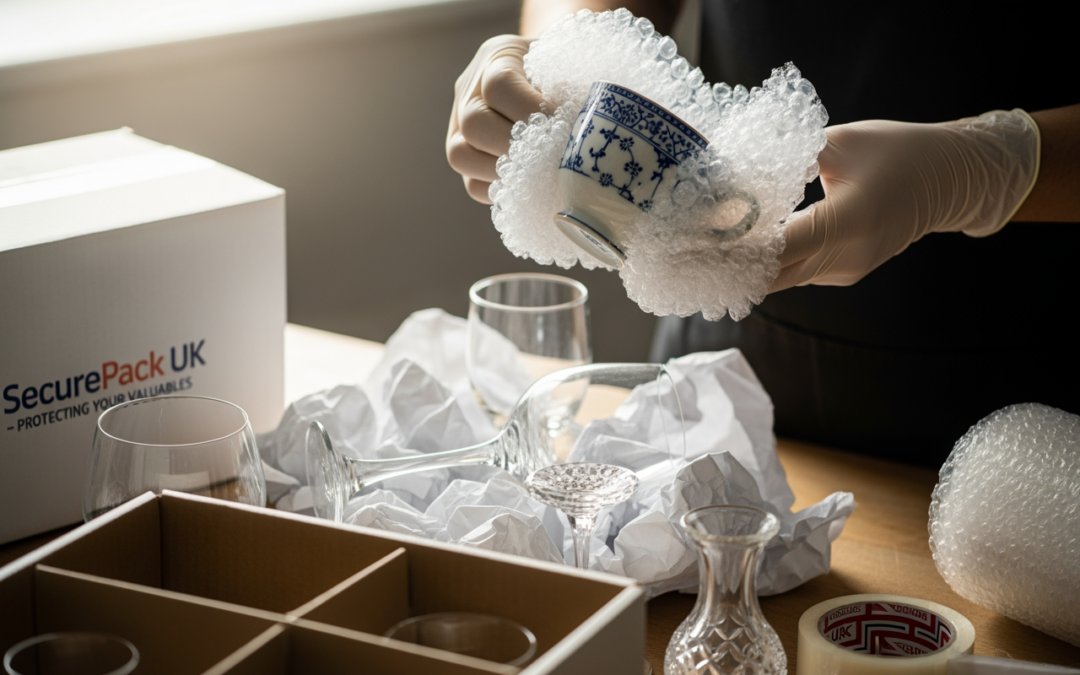
A distinct sense of apprehension often arises when facing the task of packing up a home or business, particularly when attention turns to those items. We’re talking about the delicate china passed down through generations, the expensive piece of technology your business depends upon, the one-of-a-kind artwork that defines your space, or simply those boxes brimming with memories that are, quite frankly, priceless. The prospect of these treasures sustaining damage during a move or whilst in storage can be genuinely unsettling. Packing Fragile Items is more than just placing them into a box; it’s a careful practice, a methodical approach, and an expression of care. And when it comes to Packing Irreplaceable Items, the significance of getting it right is amplified considerably.
However, there is positive news: with a little know-how, the correct materials, and a systematic process, you can substantially reduce the risk and make the entire endeavour far less intimidating. Whether you are a homeowner preparing for a relocation, aiming to declutter, or undertaking renovations, or a business needing to store sensitive equipment, crucial archives, or valuable stock, these top tips will serve as your guide to protecting what is most important. And once you are prepared, knowing your precious goods are expertly packed means you can confidently seek out a secure haven. For such secure solutions, you might consider the options we offer here at Newbury Self Store, where we prioritise the safety of your belongings.
Why Special Care for Your Valuables Truly is Non-Negotiable
Let’s be candid: the notion of a cherished item breaking or an essential piece of business equipment becoming unusable represents far more than a mere inconvenience. For personal possessions, there’s the emotional impact. Imagine unpacking after a move to discover your grandmother’s antique tea set shattered. It’s not solely about the monetary value; it’s about the loss of connection, of personal history. Correctly Packing Irreplaceable Items is your primary defence against this type of distressing outcome. These are the items that a straightforward insurance claim cannot truly replace – the photographs, the childhood drawings, the unique collectibles.
For businesses, the repercussions can be equally, if not more, severe. Damaged specialist equipment can result in operational downtime, lost revenue, and considerable repair or replacement costs. Compromised archival documents could lead to compliance issues or the loss of vital business intelligence. So, when we discuss meticulous packing, we are fundamentally talking about safeguarding your livelihood and your legacy. It is an investment that yields dividends in peace of mind and financial security.
Getting Started: The Crucial Preparation Before a Single Box is Touched
Before you even contemplate engaging with bubble wrap, a small amount of preliminary work can make a substantial difference. Rushing this initial stage is frequently where errors begin to occur, so take a moment, perhaps with a cup of tea, and let’s establish the foundation for successful packing.
Take Stock and Declutter: What Genuinely Needs This Level of Meticulous Care?
It may seem self-evident, but the initial step in protecting fragile items is to determine what truly requires such gentle handling and what, perhaps, does not need to accompany you at all. We all accumulate possessions. Homes gather knick-knacks, and businesses can find themselves with outdated equipment or items that are seldom used.
Review your belongings with a discerning eye.
- For Households: Is that chipped mug truly irreplaceable, or is it consuming valuable packing space and effort? Could some items be sold, donated, or recycled? The fewer items you need to pack, the less stress (and cost) will be involved.
- For Businesses: Examine your inventory and equipment. Are there items that are now obsolete? Are there documents that have surpassed their retention period (and can be securely disposed of)? Streamlining at this point means less to move, store, and ultimately, worry about.
This exercise is not about being ruthless for its own sake; it is about concentrating your energy and resources on the items that genuinely warrant special handling.
Create an Inventory: Your Future Self Will Genuinely Be Grateful for This!
This step is an undeniable game-changer, particularly when dealing with items that are fragile or valuable. Compiling a detailed inventory list before you commence packing might appear to be a tedious task, but believe me, its worth is immeasurable.
- What to include: A description of the item, its current condition (it’s a good idea to take photographs of particularly valuable pieces before they are packed), any pre-existing damage, and where it is intended to be packed (e.g., “Box 12 – Fragile Glassware”). For businesses, recording serial numbers for equipment can be critically important.
- Why it’s so beneficial:
- Insurance: Should the unfortunate occur and you need to make a claim, a detailed inventory serves as invaluable proof.
- Organisation: You will know precisely what you have and its location. This eliminates frantic searching for that specific presentation remote or your favourite vase when you eventually unpack or retrieve items from your storage unit. For instance, if you use our Personal Storage for household goods or our Business Storage for company assets, having this list will simplify retrieval.
- Peace of Mind: Simply knowing you possess a comprehensive record can be incredibly reassuring.
You can utilise a simple notebook, a spreadsheet, or even a dedicated inventory application. The chosen method is less important than the diligence applied.
Gather Your Packing Toolkit: The Right Supplies are Half the Battle in the careful packing of fragile items
Attempting to pack delicate items with substandard materials is an exercise in futility; it is unlikely to yield a positive outcome. Investing in good quality packing supplies is an essential component of the process. Consider these supplies as protective armour for your valuables.
Here’s your essential shopping list:
- Sturdy Boxes: Do not depend on flimsy, discarded supermarket boxes. Obtain proper moving boxes in a variety of sizes. Double-walled boxes are an excellent choice for heavier or more delicate items. Think about specialised boxes such as:
- Dish packs (or cell boxes): These contain cardboard dividers that are perfect for glassware and china.
- Wardrobe boxes: Ideal for transporting clothes on hangers, but also surprisingly effective for tall, awkwardly shaped items that can be suspended or protected within.
- Bubble Wrap: Your most reliable ally when it comes to cushioning. Ensure you have both small-bubble (for wrapping individual items) and large-bubble (for padding out boxes or larger items) varieties.
- Packing Paper: Plain, unprinted packing paper (often referred to as newsprint, but ensure it is ink-free) is vital for wrapping items and filling empty spaces. Avoid using actual newspapers, as the ink can transfer and potentially stain your belongings, particularly ceramics and fabrics.
- Packing Peanuts or Void Fill: Useful for occupying empty spaces within boxes to prevent items from shifting during transit. Biodegradable options are available if environmental considerations are important to you.
- Strong Packing Tape: Do not economise on this! You require a good quality PVC or polypropylene tape to securely seal your boxes. A tape gun can also be a significant time-saver and simplifies the task.
- Furniture Covers/Blankets: For protecting larger items such as furniture, mirrors, or artwork from scratches, dust, and minor impacts. Old, clean blankets or duvets can suffice, or you can purchase specialist moving blankets.
- Speciality Boxes for Artwork/Mirrors: Tall, flat boxes specifically designed to protect these vulnerable items are often a prudent investment.
- Permanent Markers: For clear, bold labelling.
- Labels: Pre-printed “FRAGILE” or “HANDLE WITH CARE” labels can be helpful, but always supplement them with detailed descriptions of the contents.
- Utility Knife/Scissors: For opening boxes and cutting materials.
- Gloves (Optional but Recommended): For improved grip and to protect your hands.
If sourcing all these items seems like an additional burden, remember that many storage facilities, including us at Newbury Self Store, offer a comprehensive selection of Packaging supplies. This can save you a journey and ensure you are acquiring materials that are fit for purpose, designed to offer the best protection for your belongings.
The Main Event: Expert Techniques for Packing Fragile Items
Right, you have completed your preparations, gathered your supplies, and you are poised to tackle the actual packing. Take a deep breath. Let’s break down the process by category, concentrating on those crucial techniques for Packing Fragile Items.
Crystal, Glassware, and China: The Wrap, Cushion, and Conquer Method
These are frequently the items that cause the most concern. That delicate clinking sound can be delightful on the dinner table, but rather alarming when emanating from a moving box!
- Prepare the Box: Before placing any items inside, line the bottom of your sturdy box (a dish pack is ideal here) with a generous layer of crumpled packing paper or a sheet of large bubble wrap. A minimum of 2-3 inches of cushioning provides a good starting point.
- Wrap Individually: Every single item must be wrapped.
- Plates: Place a plate in the centre of a stack of packing paper. Pull one sheet over the top, then place another plate, and pull another sheet over. Continue this for 3-4 plates, then wrap the entire bundle securely with more paper or bubble wrap. Crucially, always stack plates on their edge within the box, not flat – they are significantly stronger in this orientation.
- Bowls: Nest 2-3 bowls of similar size with a layer of packing paper or thin bubble wrap between each one. Then, wrap the entire bundle.
- Glasses & Cups: These items are particularly vulnerable. Wrap each one individually in packing paper, paying meticulous attention to handles and stems. Stuff the inside of cups and glasses with crumpled paper to provide internal support. Following this, consider an additional layer of bubble wrap around each. Place them rim down in your cell box or cushioned box.
- Fill the Gaps: As you place wrapped items into the box, ensure there are no empty spaces where they might knock against each other. Utilise crumpled packing paper, packing peanuts, or small pieces of bubble wrap to fill every void. The contents should be snug but not forcibly crammed.
- Top Cushioning: Once the box is filled (without becoming too heavy – aim for a weight you can comfortably and safely lift), add another layer of cushioning on top before sealing it.
- Label Clearly: Mark with “FRAGILE – GLASSWARE,” “THIS WAY UP,” and a brief list of the contents.
A little scenario: Imagine Sarah, carefully packing her wedding china. She recalls her mother advising her to tap each glass lightly after wrapping; if it ‘rings’, it indicates a need for more cushioning. It’s these small, often passed-down pieces of wisdom, combined with appropriate materials, that truly make all the difference.
Electronics, Gadgets, and Delicate Equipment: Protecting Your Tech Investments
From your home computer and television to vital business machinery, electronics are both valuable and susceptible to damage. Packing Fragile Items such as these necessitates a gentle yet secure approach.
- Original Packaging is Optimal: If you still possess the original boxes and inserts for your electronic devices, by all means, use them! They were specifically designed to protect those items during transit.
- Backup Your Data: Before packing any computer or data storage device, ensure that all data is comprehensively backed up. This step is absolutely non-negotiable.
- Disconnect and Organise Cables: Unplug all cables and accessories. Coil cables neatly and label them, or pack them in the same box as the device to which they belong (in a separate, clearly marked bag). This will save you a considerable amount of frustration when setting up again.
- Remove Media and Batteries: Take out any DVDs, CDs, or game cartridges. Remove batteries from remote controls and smaller devices to prevent leakage or potential damage.
- Wrap with Care: If you do not have the original packaging, wrap the item in anti-static bubble wrap (this is essential for preventing static discharge that can damage sensitive electronic components). Pay extra attention to screens and other delicate parts.
- Box Securely: Choose a sturdy box that is slightly larger than the item. Add a thick layer of cushioning (bubble wrap, foam, or crumpled paper) at the bottom. Place the wrapped item in the centre and fill all surrounding gaps with more cushioning material. The item should not be able to move at all within the box.
- Seal and Label: Use strong tape and label clearly: “FRAGILE – ELECTRONICS,” “HANDLE WITH CARE,” “THIS WAY UP,” and the specific contents (e.g., “Office Printer,” “Desktop PC Monitor”).
Consider this for businesses: Think about that expensive diagnostic tool your garage utilises, or the specialised server that stores all your client data. Downtime due to damage is simply not an option. Investing an extra hour to pack these items meticulously is an investment in business continuity. It might also be beneficial to photograph the setup before disassembling complex systems – this can serve as a useful visual guide for reassembly later.
Artwork, Mirrors, and Picture Frames: Handling with Creative Finesse
These items are often large, awkwardly shaped, and remarkably easy to damage. Whether it’s a priceless oil painting, a cherished family portrait, or a large decorative mirror, utmost care is paramount.
- Surface Protection: For paintings (particularly oils and acrylics), do not allow bubble wrap to touch the surface directly, as it can leave imprints or adhere to it. First, use a layer of glassine paper or acid-free tissue paper. For pictures protected by glass, use masking tape to create a star or asterisk pattern across the glass surface. This will not prevent breakage, but it will help to hold the shards together if it does break, thereby protecting the artwork from scratches.
- Corner Guards: Cardboard or foam corner protectors are essential for frames. You can purchase these or create your own from sturdy cardboard.
- Cushion and Wrap: Wrap the entire piece in several layers of large-bubble wrap or a moving blanket, securing it firmly with tape.
- Speciality Boxes or DIY Solutions:
- Picture/Mirror Boxes: These are specifically designed to fit frames and mirrors snugly. They often come in telescopic sections to accommodate different sizes.
- DIY Crate: For extremely valuable or particularly large pieces, you might consider constructing a custom wooden crate or engaging a professional to make one.
- The “Sandwich” Method: For flatter pieces, you can place the wrapped item between two larger sheets of sturdy cardboard, cut to be bigger than the frame, and tape them securely together.
- Label and Orient: Mark clearly with “FRAGILE – ARTWORK/MIRROR,” “HANDLE WITH CARE,” and arrows indicating “THIS WAY UP.” Whenever feasible, store and transport these items on their edge (vertically), not flat.
Antiques, Heirlooms, and Collectibles: Preserving Priceless History and Value
This is where the term “Packing Irreplaceable Items” truly resonates. Antiques and collectibles often possess unique vulnerabilities owing to their age, the materials from which they are made, or their intricate details.
- Understand the Material: Is the item made of delicate porcelain, old wood, tarnished silver, or brittle paper? Each material may have specific requirements. For instance, wood can be highly sensitive to drastic changes in temperature and humidity, so ensure all packing materials are completely dry.
- Minimal Direct Contact (If Extremely Delicate): For very fragile surfaces or items with flaking paint or delicate appliqué, endeavour to create a support system within the box so that packing materials only make contact with the more robust parts of the item. Acid-free tissue paper is invaluable here.
- Wrap with Extreme Care: Use soft, acid-free tissue paper as the initial layer, followed by bubble wrap. Pay particular attention to any protruding parts – wrap these separately before wrapping the entire item if necessary.
- Double Boxing: For exceptionally fragile or valuable items, consider employing the double-boxing technique. Pack the item as described above in a well-cushioned box. Then, place this box inside a larger box, ensuring there are a few inches of cushioning material (packing peanuts, bubble wrap) on all sides between the inner and outer box.
- No Overcrowding: Afford each antique or collectible its own dedicated space. Resist the temptation to squeeze multiple items into a single box to save space, unless they are very small and can be individually protected and adequately separated.
- Climate Considerations: While the selection of a storage unit (e.g., climate-controlled) plays a more significant role in this regard, ensure your packing materials are entirely dry and will not trap moisture. If you are planning for long-term storage, you can ask us at Newbury Self Store about the most suitable storage options for such sensitive items; we’re happy to provide guidance.
Picture this: John inherited his grandfather’s collection of model trains. Some are over 70 years old, featuring tiny, delicate components. He dedicates an entire weekend to carefully wrapping each locomotive and carriage in tissue paper, then bubble wrap, placing them into small, individual boxes. Subsequently, he places these smaller boxes into larger, well-padded containers. This is a labour of love, preserving not just toys, but cherished family history.
Important Documents, Books, and Sentimental Papers for home and business
While perhaps not “fragile” in the same manner as glassware, important documents, valuable books, and irreplaceable sentimental papers such as old letters or children’s drawings require careful handling to prevent damage from moisture, pests, or physical distortion.
- Protect from Elements: Utilise waterproof containers or document bags where possible, especially for vital records like birth certificates, passports, or critical business contracts. Small fire-resistant pouches can offer an additional layer of peace of mind for the absolutely irreplaceable.
- Acid-Free Materials: For the long-term storage of precious photographs or historical documents, use acid-free folders, sleeves, and boxes. Ordinary paper and cardboard contain acids that can cause items to yellow and deteriorate over time.
- Store Flat and Uncramped: Do not overstuff folders or boxes. Documents and books should be stored flat to prevent warping or creasing. If books are stored upright, ensure they are packed snugly enough not to lean, which can cause damage to their spines.
- Digitise as a Backup: For crucial documents and cherished photos, consider creating digital copies as a backup before storing the originals.
- Label Meticulously: Particularly for business archives, clear labelling detailing contents and destruction dates (if applicable) is essential for effective record management.
Specific Packing Strategies Tailored for Businesses
While many of the principles outlined above apply universally, businesses often face unique challenges and possess specific requirements when it comes to packing for storage. Efficiency, security, and ease of retrieval are generally paramount considerations.
Safeguarding Sensitive Equipment, Inventory, and Prototypes
Whether it concerns IT hardware, manufacturing machinery, medical devices, or valuable retail stock, damage signifies more than just the loss of the item itself; it translates to operational disruption and financial repercussions.
- Custom Crating: For very large, heavy, unusually shaped, or extremely valuable pieces of equipment, investing in custom-built wooden crates can be the most secure option. These can be designed to brace the item perfectly and withstand significant handling stresses.
- Detailed Labelling for Teams: If multiple staff members may need to access stored items, your labelling system must be entirely foolproof. Include not just “FRAGILE” and contents, but perhaps department codes, project numbers, or inventory IDs. A master inventory list, accessible to all relevant personnel, is vital.
- Consider the Entire Journey: Think about how the item will be moved from your premises, transported to the storage facility, placed into storage, and potentially retrieved and reinstalled at a later date. Are there specific handling instructions? Does it need to be kept upright? Factor all these considerations into your packing and labelling strategy.
- Protecting Prototypes and Intellectual Property: If you are storing prototypes or items containing sensitive intellectual property, ensure the packing not only protects them physically but also offers a degree of discretion. Opaque wrapping and secure sealing are important aspects.
Archiving Business Records: Where Organisation Reigns Supreme
Storing business documents is not merely about finding adequate space; it is about compliance with regulations, meeting legal obligations, and maintaining operational efficiency.
- Use Uniform Banker’s Boxes: These are sturdy, stackable, and specifically designed for document storage, ensuring a consistent and organised approach.
- Systematic Packing and Labelling: Do not simply toss files into boxes. Organise them logically (e.g., by financial year, by department, by client). Label each box clearly with its contents, the relevant date range, and a destruction date if applicable (and legally permissible).
- Maintain a Master Archive Log: A spreadsheet detailing each box number, its specific contents, its location within the storage unit, and its review/destruction date is invaluable for managing large archives. This significantly streamlines the retrieval process for audits or information requests, making it much quicker and less stressful.
Choosing appropriate Business Storage solutions is key here. You need a facility that understands the unique needs of businesses, offering features like easy access for when you need to retrieve items and robust security to protect your valuable assets.
The Big “Don’ts”: Common Pitfalls in Packing Fragile and Irreplaceable Items
Understanding what not to do is equally as important as knowing the correct procedures. Steer clear of these common blunders:
- DON’T Rush: This is the principal error. Packing fragile items requires time and patience. Rushing inevitably leads to carelessness and, ultimately, breakage. Begin the process early and allocate ample time.
- DON’T Use Poor-Quality Materials: Old, flimsy boxes, cheap tape that fails to adhere properly, or insufficient cushioning materials represent a false economy. You will likely pay the price later in the form of damaged goods.
- DON’T Overpack or Underpack Boxes:
- Overpacking: Renders boxes too heavy to lift safely and places undue stress on both the box itself and its contents. Items can be crushed as a result.
- Underpacking: Allows items to shift and knock against each other during transit or handling. Ensure all empty spaces are filled with appropriate cushioning.
- DON’T Forget to Label EVERYTHING Clearly and Comprehensively: “FRAGILE” is a useful starting point, but it is insufficient on its own. Add “THIS WAY UP,” “DO NOT STACK” (if applicable), and a specific description of the contents. This assists handlers in treating the box with due care and helps you to locate what you need at a later stage.
- DON’T Mix Heavy and Fragile Items (Unless Exceptionally Well Protected): It is generally inadvisable to place a heavy iron skillet in the same box as delicate wine glasses, even if they are separated by a divider. Keep boxes containing fragile items separate and ensure they are clearly and conspicuously marked.
- DON’T Assume All Storage is Created Equal: While this article concentrates on the art of packing, the type of storage unit you select also significantly impacts the ongoing safety of your fragile items. A damp, unsecured, or pest-infested unit can ruin even the most meticulously packed goods.
The Right Storage Environment: An Essential Partner to Good Packing
You can be the world’s most proficient packer, but if your items are subsequently placed in a suboptimal storage environment, your diligent efforts could be severely undermined. Think of good packing as the primary line of defence, and a quality storage unit as the fortress that protects it.
- Cleanliness and Pest Control: These are essential for protecting fabrics, papers, and preventing unwanted pests from establishing a home in your boxes.
- Security: Look for facilities that offer good lighting, CCTV surveillance, secure access controls, and a visible staff presence. This is particularly important when storing valuable or irreplaceable items.
- Climate Control (Consider its Importance): For extremely sensitive items such as antique wooden furniture, delicate fabrics, artwork, electronics, or important archives, a climate-controlled unit can be a very wise investment. These units maintain a more stable temperature and humidity level, thereby preventing warping, mildew, rust, and the degradation that can be caused by extreme environmental fluctuations.
- Accessibility: Ensure you can access your items when you need to, a factor that is especially pertinent for businesses requiring regular access to their stored goods.
At Newbury Self Store, we provide a variety of unit sizes and types to suit diverse requirements. This includes flexible Personal Storage for household goods, tailored Business Storage for commercial needs, and robust Container Storage for larger items or when external access is preferable. All our options are offered with a strong focus on security and cleanliness. We are always pleased to discuss the most suitable solution for your specific needs, particularly when you are looking to store precious and carefully packed cargo.
One Last Check: The Final Review Before You Store Your Treasures
You have undertaken the hard work, and the boxes are packed and sealed. Before they are transported to their temporary home, run through this quick mental checklist:
- Cushioning Check: Gently shake each box containing fragile items. Can you hear any movement? If so, you might need to add more cushioning material. Are the bottoms and tops of the boxes well-padded?
- Labelling Perfection: Is every box clearly labelled with “FRAGILE,” its contents, and appropriate handling instructions (such as “THIS WAY UP”)? Is the writing legible and durable?
- Weight Distribution: Are heavier boxes placed at the bottom of any stacks you might create, with lighter ones on top (this applies both during transport and within the storage unit itself)?
- Photo Finish: Did you take photographs of particularly valuable items before packing them, or perhaps even of the contents of specific boxes? This can be extremely useful for your inventory and for your own peace of mind.
- Inventory Match: Does your packed reality correspond accurately with your inventory list? A quick cross-reference at this stage can prevent future confusion.
Packing Well is an Act of Care
Packing fragile and irreplaceable items, whether for your home or your business, is undoubtedly an involved and detailed process. It demands time, scrupulous attention to detail, and the use of appropriate materials. However, the effort you invest now is a direct investment in protecting the things that hold significant monetary, operational, or deep sentimental value.
There is a genuine sense of accomplishment and profound relief that comes from knowing you have done everything within your power to safeguard your treasures. From that antique vase that tells a poignant family story to the critical piece of equipment that ensures your business runs smoothly, proper packing ensures they remain safe and sound, perfectly ready for their next chapter.
So, take a deep breath, follow these comprehensive tips, and treat your valuables with the respect and care they undoubtedly deserve. And when you find yourself looking for that secure, clean, and reliable place to keep your meticulously packed belongings, remember that we at Newbury Self Store are here to assist. Feel free to explore the range of storage solutions on our Newbury Self Store or get in touch directly via our Contact Us to discuss your specific requirements. Happy packing!