
 01635 581 811
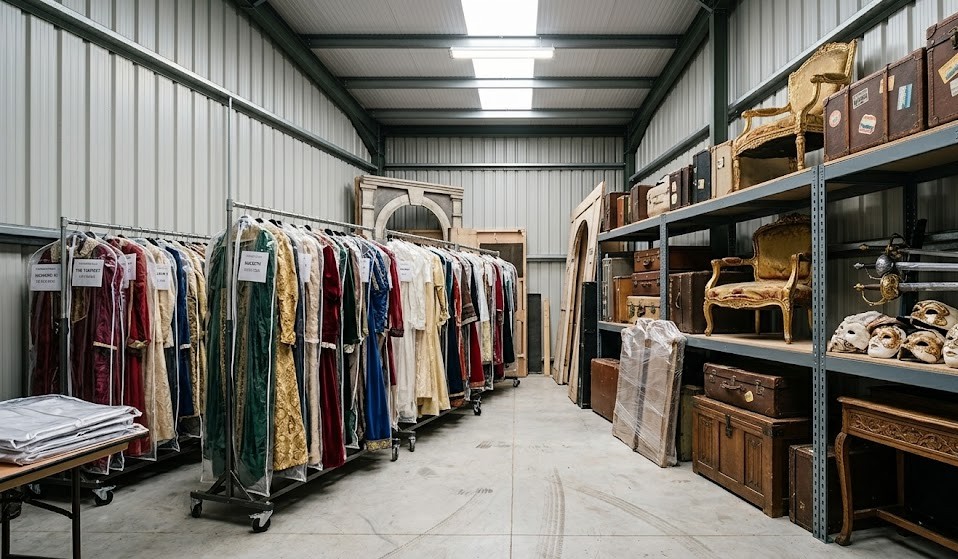
Running a theatre company means juggling dozens of productions, each with its own collection of carefully sourced props, hand-stitched costumes, and painstakingly built set pieces. When the curtain falls and the applause fades, you’re left with a practical challenge: where do you store everything until the next show?
For many theatre companies, especially those without a dedicated warehouse, the answer isn’t straightforward. Props from a Victorian drama can’t share cramped backstage space with futuristic costumes from a sci-fi production. Period costumes need protection from damp. Delicate fabrics require proper storage conditions to prevent deterioration.
Theatre groups across Berkshire have found themselves storing irreplaceable costume pieces in damp church halls or stacking painted flats in corners where they warp and crack. The right storage solution doesn’t just protect your investment – it transforms how efficiently you can plan and execute future productions.
Why Theatre Storage Demands Specialist Attention
Theatre inventory differs fundamentally from typical household or business items. A Victorian ball gown isn’t just fabric – it’s hours of labour, specialist materials, and often irreplaceable vintage elements. Props might include genuine antiques borrowed or purchased specifically for authenticity.
Consider what happens when a community theatre group stores their entire collection of period costumes in a volunteer’s garage. Six months later, when they revive that production, they discover mould damage on the silk pieces and moth holes in the wool. The cost to replace these items far exceeds what proper theatre prop storage would have cost.
Climate control becomes non-negotiable when you’re storing textiles, leather goods, wooden props, or painted backdrops. Temperature fluctuations cause wood to expand and contract, leading to splits and warping. Humidity creates the perfect breeding ground for mould and mildew, which can destroy fabric in weeks.
Security matters equally. Theatre props often include valuable items – real musical instruments, authentic period pieces, or custom-built elements that cost thousands to create. Losing these to theft or damage doesn’t just hit your budget. It can derail upcoming productions entirely.
Organising Your Theatre Collection for Easy Access
The difference between chaotic storage and efficient organisation becomes apparent when you’re preparing for a new production. Imagine needing specific props for a 1920s production and spending hours digging through unlabelled boxes, only to discover the items you need are at the bottom of a pile.
Start by categorising items by production or era. Group all Victorian-era pieces together, separate contemporary items from period pieces, and keep props distinct from costumes. This system means when you’re planning a revival or a new show set in a particular time period, you know exactly where to look.
Detailed inventory lists save countless hours and prevent duplicate purchases. Document each item with a description, condition notes, and which production it belonged to. Include photographs where possible – this helps when you’re planning future shows and need to assess whether existing pieces will work.
Think of your theatre inventory organisation like a library cataloguing system. You wouldn’t shelve books randomly and expect to find them later. Your theatre collection deserves the same methodical approach. Create zones within your storage space: one area for costumes sorted by era and size, another for props grouped by type (furniture, small props, lighting equipment), and a separate section for scenic elements.
Hanging space for costumes prevents creasing and maintains garment shape far better than folding. Period costumes with structured bodices or elaborate detailing need to hang freely. Use proper garment bags to protect against dust whilst allowing fabric to breathe – plastic bags trap moisture and accelerate deterioration.
For props and set pieces, sturdy shelving units maximise vertical space and keep items off the floor. Floor storage risks water damage if any leaks occur and makes accessing items unnecessarily difficult. Label everything clearly, facing labels outward so you can scan quickly without moving boxes.
Protecting Costumes and Fabrics Long-Term
Textile preservation requires more than simply hanging garments in a cupboard. Professional costume designers know that improper costume storage destroys more costumes than actual wear during performances.
Natural fibres need to breathe. Cotton, silk, wool, and linen deteriorate rapidly in plastic containers. Use acid-free tissue paper to stuff sleeves and bodices, maintaining shape without causing stress points. Breathable cotton garment bags protect against dust whilst allowing air circulation.
Vintage or particularly delicate pieces benefit from being laid flat in acid-free boxes with tissue paper between folds. This prevents stress on seams and avoids permanent creasing in fragile fabrics. Never use regular cardboard boxes – the acids in standard cardboard can transfer to fabrics over time, causing yellowing and weakening fibres.
Separate items by fabric type and colour. Dark fabrics can transfer dye to lighter ones if stored in contact. Sequined or beaded costumes need individual protection to prevent embellishments snagging on other garments. Heavy costumes shouldn’t hang for extended periods – the weight pulls on seams and can distort the garment shape.
Moths and carpet beetles pose a constant threat to natural fibres, particularly wool and silk. Rather than relying on chemical mothballs (which leave lingering odours and can damage some fabrics), use cedar blocks or lavender sachets as natural deterrents. Inspect stored costumes regularly, checking for signs of pest activity.
Before storing any costume, ensure it’s completely clean. Body oils, makeup, and perspiration attract pests and cause staining over time. Even if a costume looks clean, residual oils from skin contact will oxidise during storage, creating permanent yellow stains. Professional cleaning before storage’s worth the investment.
Managing Props, Furniture, and Set Pieces
Wooden furniture and props present different challenges from costumes. A beautiful Victorian chaise longue or hand-carved throne represents significant investment, whether purchased, built, or borrowed.
Wooden items need stable conditions to prevent warping, splitting, or joint failure. Rapid temperature changes cause wood to expand and contract at different rates than metal fittings or glue joints, leading to structural damage. Painted or varnished surfaces can crack when subjected to extreme temperature swings.
Raise furniture off the floor using pallets or blocks. This protects against potential water damage and improves air circulation around pieces. Cover items with breathable dust sheets rather than plastic – wood needs to breathe just like fabric does.
For painted backdrops and flats, proper storage prevents cracking and peeling. Roll large canvas backdrops around tubes rather than folding them – creases in painted surfaces become permanent and visible under stage lighting. Store rolled pieces horizontally on racks to prevent the canvas sagging under its own weight.
Small props benefit from clear plastic storage boxes (unlike costumes, non-fabric items can handle plastic containers). Being able to see contents without opening every box speeds up prop selection enormously. Group items logically – all glassware together, all books together, all period-appropriate technology in one place.
Fragile items need individual protection. Wrap delicate props in bubble wrap or foam, ensuring they can’t shift during storage or when boxes are moved. Label boxes clearly with contents and fragility warnings. There’s nothing worse than discovering your collection of period glass decanters has shattered because someone stacked heavy boxes on top.
Seasonal and Touring Production Considerations
Theatre companies often work in cycles – pantomime season, summer productions, touring shows. This cyclical nature means certain items need frequent access whilst others sit unused for months.
Create a rotation system that keeps frequently used items accessible. If you produce a Christmas show annually, store those specific props and costumes where you can reach them easily when planning begins each autumn. Less frequently used items can occupy less accessible areas.
Touring productions present unique storage challenges. You need secure storage space between tour dates, but you also need to pack and access items quickly. Consider how you’ll organise touring inventory – everything should be in portable containers that can move easily from storage to venue and back.
Some theatre companies maintain separate storage for current production inventory versus archived pieces. Active shows need immediate access, often requiring items to move in and out of storage during rehearsal periods. Archived productions can occupy longer-term storage until you plan a revival.
Making Storage Work Within Theatre Budgets
Theatre companies typically operate on tight budgets, with most funding directed towards actual productions rather than behind-the-scenes logistics. Yet poor storage costs money in damaged items, lost pieces, and duplicate purchases.
Calculate the true cost of inadequate storage. If you’re replacing costumes damaged by damp, buying props you already own but can’t locate, or paying for emergency repairs to warped set pieces, these expenses quickly exceed proper storage costs.
Sharing storage costs with other theatre groups can work well, provided you maintain clear organisation systems. Multiple companies using the same space need rigorous labelling and defined areas to prevent confusion. Establish clear access arrangements and ensure everyone understands the security protocols.
Business storage facilities designed for commercial operations often work well for theatre companies. Look for locations offering climate control, good security, and flexible access arrangements. Being able to collect props on a Saturday morning or return items after a Sunday performance matters when you’re working around rehearsal and performance schedules.
The packaging you use affects both protection and cost. Invest in quality garment bags and proper boxes initially – they’ll last for years and provide better protection than makeshift solutions. Check whether your storage provider offers packing materials designed for long-term storage rather than just moving house.
Planning Storage Around Production Schedules
Efficient storage planning integrates with your production calendar. Knowing what shows you’re planning helps you organise storage logically and ensures you can access what you need when you need it.
Before a new production begins, audit your existing inventory. Can you reuse or adapt existing pieces? A Victorian chair might work for an Edwardian production with minor modifications. Costume pieces can often be altered or combined to create new looks without starting from scratch.
Here’s where detailed inventory records prove invaluable. When your director suggests a 1940s production, you can quickly check whether you already own appropriate props and costumes or whether you’re building from scratch. This information shapes budgets and timelines significantly.
Post-production storage should happen systematically, not in a rush after the final performance. Allocate time for proper cleaning, repairs, and documentation before items go into storage. Note any damage or wear that occurred during the production run – this information helps when you’re planning future use of these pieces.
Create a system for tracking items currently in use versus those in storage. Some companies use simple spreadsheets, others prefer dedicated inventory management software. The key’s knowing where everything is at any given time.
Security and Insurance Considerations
Theatre inventory often represents years of accumulated investment. Between purchased items, custom-built props, and costumes created by skilled makers, the replacement value can be substantial.
Document everything thoroughly for insurance purposes. Photograph items from multiple angles, noting any distinguishing features. Record purchase prices or estimated replacement costs. This documentation becomes crucial if you ever need to make an insurance claim.
Understand what your insurance covers regarding stored items. Some policies require specific security measures – particular lock types, alarm systems, or climate control. Verify that your storage location meets these requirements or you might find yourself uninsured despite paying premiums.
Business storage solutions typically offer robust security features including CCTV monitoring, individual unit alarms, and controlled access. These features protect your investment whilst potentially reducing insurance premiums.
Limit access to your storage space to specific, trusted individuals. Maintain a log of who accesses storage and when. This accountability helps prevent loss and makes it easier to locate items if questions arise about what’s stored where.
When Your Collection Outgrows Available Space
Theatre companies accumulate inventory over time. Each production adds pieces, and it’s difficult to discard items that might prove useful later. Eventually, most companies face the reality that their collection exceeds available storage space.
Regular auditing helps manage growth. Annually review your entire inventory, honestly assessing what you’re likely to use again. Items that haven’t been touched in five years probably won’t be used in the next five either. Consider selling, donating, or lending pieces to other theatre groups.
Some items hold sentimental value beyond practical utility. The costume from your company’s first production might never be used again, but it represents your history. Designate a small archive section for genuinely significant pieces rather than trying to justify keeping everything for emotional reasons.
Container storage works well when you need substantial space for large set pieces or extensive costume collections. The drive-up access makes loading and unloading particularly convenient when you’re moving multiple items.
Think strategically about what deserves premium climate-controlled storage versus what can handle standard conditions. Modern synthetic costumes and plastic props might not require climate control, whilst vintage pieces and natural fibres absolutely do. Tiering your storage approach based on item needs optimises costs.
Creating Efficient Retrieval Systems
Storage only works if you can find what you need when you need it. The most organised collection becomes useless if you can’t locate specific items quickly.
Think of your retrieval system like a backstage quick-change area. Everything’s exactly where it needs to be. You can grab what you need in seconds, even in dim lighting. That level of organisation in your storage means rehearsals run smoothly and productions launch without last-minute panics about missing props.
Colour-coded labelling speeds visual identification. Use one colour for costumes, another for props, a third for set pieces. Within each category, use additional labels indicating era or production. This layered system means you can quickly scan a storage space and identify relevant boxes.
Maintain a master inventory accessible to everyone who might need to retrieve items. Cloud-based spreadsheets work well – multiple people can access the same document, and updates happen in real-time. Include storage location details: which unit, which shelf, which box.
Photograph your storage layout. When someone needs to collect specific items, they can reference photos showing exactly where things are located. This visual guide prevents unnecessary searching and ensures items are returned to the correct locations.
Create a booking system for items moving in and out of storage. When someone takes the Victorian tea set for rehearsals, log it out. When it returns, check it back in and note any damage. This system prevents that frustrating situation where you need something but nobody knows where it is.
Making Storage Support Your Creative Work
Theatre storage might not carry the glamour of opening night, but it fundamentally shapes your company’s efficiency and longevity. Proper storage protects your investment in costumes, props, and set pieces whilst making future productions easier to plan and execute.
The companies that thrive are those that treat their inventory as valuable assets deserving proper care. Climate-controlled conditions, systematic organisation, and detailed documentation transform storage from a necessary evil into a strategic advantage. When you can quickly access exactly what you need, adapt existing pieces for new productions, and protect items from damage, you’re freeing up budget and time for the creative work that matters most.
Whether you’re a community theatre group mounting three shows annually or a professional company managing multiple touring productions, your storage strategy deserves the same careful planning you’d give to any other aspect of your operation. The props and costumes you protect today become the foundation for tomorrow’s productions.
If you’re currently working with inadequate storage – items crammed into volunteers’ homes, damp backstage areas, or expensive commercial premises you can barely afford – it’s worth exploring purpose-built solutions. The right storage space doesn’t just house your collection; it preserves your company’s history and enables your creative future.
For smaller community groups just starting to build their collections, personal storage options provide an affordable entry point. As your inventory grows and production schedules intensify, you can scale up to solutions that match your needs. Newbury Self Store understands that theatre companies need flexible access, secure conditions, and space that adapts as productions change.
Contact us to discuss how proper storage can support your theatre company’s needs between productions and beyond. Your creative work deserves a storage solution that works as hard as you do.