
 01635 581 811
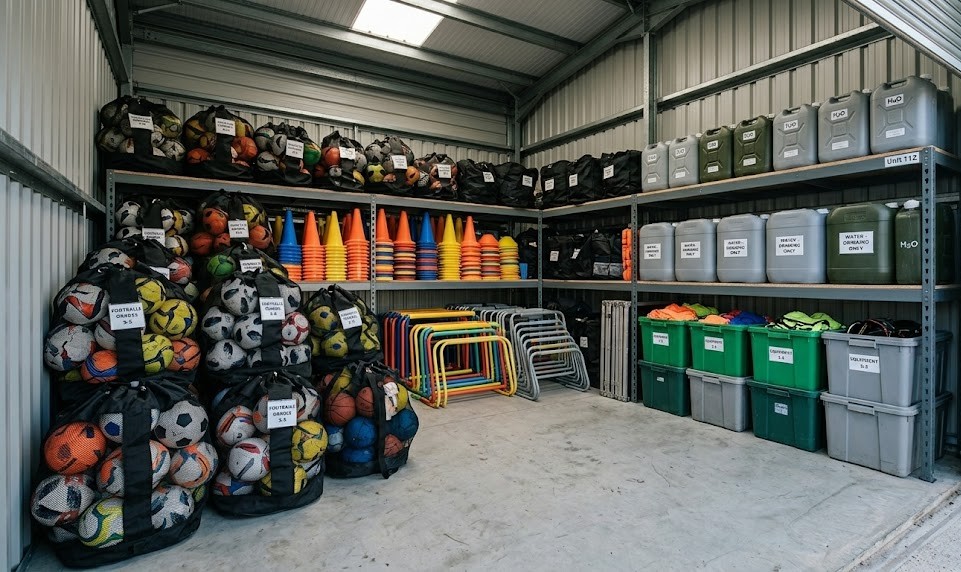
Running a sports coaching business means juggling equipment, training kit, and seasonal demands throughout the year. When the season ends, you’re left with bags of footballs, cricket nets, athletics hurdles, bibs, cones, and everything else that’s been essential for months. Storing it all properly during off-season storage isn’t just about clearing space – it’s about protecting your investment and ensuring your kit’s ready to go when the new season starts.
Many coaches make the mistake of cramming coaching equipment into garages, spare rooms, or the boot of their car, only to discover mould, damage, or missing items when they need them again. Smart storage planning saves money, time, and the frustration of replacing kit that could’ve lasted years longer with proper care.
Why Off-Season Storage Matters for Coaching Businesses
Sports equipment represents a significant investment. A full set of football training kit – goals, balls, cones, bibs, first aid supplies – can easily run into thousands of pounds. Add specialist coaching equipment for athletics, cricket, or multi-sport programmes, and the value climbs quickly.
Leaving this kit in damp sheds or unheated garages damages materials. Leather footballs crack, synthetic surfaces perish, metal frames rust, and fabric items develop mildew. You wouldn’t leave your coaching qualifications to gather dust in a damp corner – your equipment deserves the same respect.
There’s also the practical reality that most coaches don’t have unlimited storage space at home. When you’re running a coaching business, your living space shouldn’t double as a warehouse. Separating work equipment from your personal life creates better boundaries and makes it easier to stay organised.
Common Storage Challenges Coaches Face
The end-of-season scramble’s real. You’ve just finished your final session, the kit bags are muddy, and you’re exhausted. The temptation to shove everything into the nearest available space is strong. Don’t do it.
Moisture and temperature fluctuations are the biggest threats to stored sports equipment. A garage that’s fine in summer becomes a condensation trap in winter. Metal equipment rusts, wooden items warp, and anything fabric-based risks mould growth.
Pest damage is another concern. Mice love nesting in stored fabric, and they’re not fussy about whether it’s your expensive goalkeeper gloves or training bibs. One winter season can reduce perfectly good kit to shredded material.
Disorganisation costs time and money. When you can’t find equipment quickly at the start of the new season, you either waste hours searching or end up buying replacements unnecessarily. Neither option’s good for your bottom line.
Think of storage like pre-season training – put in the work upfront, and you’ll see the benefits throughout the year. Skip the preparation, and you’ll pay for it later.
Preparing Your Kit for Storage
Before anything goes into storage, it needs proper preparation. This isn’t optional – it’s the difference between equipment that lasts and equipment that needs replacing.
Clean everything thoroughly. Mud, grass stains, and sweat contain moisture and organic matter that accelerate deterioration. Footballs, rugby balls, and other leather or synthetic equipment should be wiped down with appropriate cleaners. Fabric items like bibs and training vests need washing and complete drying – even slightly damp fabric will develop mould in storage.
Deflate balls partially but not completely. Leaving balls fully inflated for months can stress the bladder and seams, whilst complete deflation can cause materials to stick together. Reduce pressure to about 50-60% of playing inflation.
Disassemble larger items where practical. Pop-up goals, agility ladders, and portable nets often break down into smaller components. This saves space and reduces the risk of damage during storage. Keep all fixings and small parts in labelled bags attached to the main equipment.
Check for damage before storing. This is your opportunity to identify items that need repair or replacement. Don’t discover a torn net or broken frame when you’re trying to set up for the first session of the new season.
One football coaching business in Berkshire ran sessions for 120 young players weekly across four age groups. They stored their equipment without proper cleaning one summer – exhausted after a long season, they just wanted everything put away quickly. When they retrieved it the following August, they found that grass stains had set permanently into 40 white training bibs, making them look unprofessional. They also discovered that mud left on metal goal frames had caused rust spots on six portable goals. The rust had weakened two frames enough that they failed safety checks and couldn’t be used. Replacing the bibs cost £280, and the two goals cost another £450. The coach calculated that spending two hours properly cleaning everything before storage would’ve saved them £730 and prevented the stress of scrambling for replacement equipment three days before their first session.
Choosing the Right Storage Solution
Not all storage solutions suit sports coaching equipment. You need space that’s secure, accessible, and protects your kit from environmental damage – like the difference between leaving your car outside in all weathers versus keeping it in a proper garage where it stays protected and maintains its value.
Home storage works for minimal equipment, but it has limitations. Garages often lack climate control and can be damp. Spare rooms take up valuable living space. Sheds are rarely secure enough for expensive equipment and offer little protection from temperature extremes.
Business storage provides a dedicated space that separates your coaching equipment from your personal life. It’s particularly valuable if you’re scaling your coaching business and accumulating more kit, or if you run multiple programmes that require different equipment sets.
The key considerations are:
Security: Your equipment needs protection from theft. Look for facilities with individual unit alarms, CCTV coverage, and controlled access.
Accessibility: You’ll need to retrieve items occasionally – perhaps for one-off coaching sessions, equipment checks, or early pre-season planning. Drive-up access makes loading and unloading straightforward, especially when you’re moving multiple bags and larger items.
Environment: Whilst sports equipment doesn’t typically require climate control, it does need protection from extreme temperature swings and moisture. A clean, dry facility prevents the deterioration that affects kit stored in damp outbuildings.
Space flexibility: Your storage needs might change. Starting with a smaller unit and having the option to increase space as your coaching business grows prevents paying for unused storage or cramming too much into insufficient space.
Organising Equipment for Easy Access
How you arrange stored equipment determines how efficiently you can retrieve items when needed. Random piling wastes time and increases the risk of damage.
Group items by sport or programme. If you coach multiple sports, keep football equipment separate from cricket kit, athletics gear separate from rugby equipment. This makes it simple to find what you need without sorting through everything.
Use clear plastic boxes for smaller items. Cones, bibs, whistles, first aid supplies, and training accessories stay organised and visible. Label every box clearly – “U12 Football Bibs” or “Athletics Markers” beats “Mixed Kit” every time.
Store frequently needed items near the front of your storage space. If you occasionally run winter sessions or need to access certain equipment mid-season, don’t bury it behind everything else.
Create a storage map. It sounds excessive until you’re trying to remember where you put the spare footballs at 7am before a coaching session. A simple sketch showing what’s where saves time and stress.
Keep an inventory list. Document what you’re storing, including quantities and condition. This serves three purposes: you know exactly what you have, you can track depreciation for business purposes, and you have a record for insurance if needed.
Think of your storage unit like a well-organised equipment room at a professional club. Everything has its place, everything’s labelled, and you can find what you need within minutes. That’s the standard to aim for.
Protecting Specific Types of Equipment
Different equipment types need different storage approaches. Generic storage advice doesn’t cut it when you’re dealing with specialist sports kit.
Balls should be stored in breathable bags or open containers, not sealed plastic. They need air circulation to prevent material degradation. Keep them off the floor – shelving or pallets provide elevation that protects against moisture and potential flooding.
Goals and nets are bulky and often metal. Disassemble them if possible, and protect metal components from scratching with old towels or bubble wrap between pieces. Store nets in breathable bags – plastic bags trap moisture and cause mildew.
Fabric items (bibs, vests, training tops) must be completely dry before storage. Store them in sealed containers to protect from pests, but include moisture-absorbing packets to prevent any residual dampness causing problems.
Electronic equipment (timing systems, video analysis tablets, speakers) needs extra protection. Original packaging’s ideal if you’ve kept it. Otherwise, use padded cases and store these items off the floor and away from any potential moisture sources.
First aid supplies require checking before storage. Dispose of expired items, restock what’s needed, and keep the kit easily accessible – you might need it for an off-season session or event.
Specialist equipment like agility ladders, hurdles, or resistance training gear should be stored in ways that prevent warping or bending. Flat storage for ladders, stacked carefully for hurdles, and hung or laid flat for resistance bands.
Seasonal Access and Mid-Season Retrieval
Off-season storage doesn’t always mean complete inactivity. Many coaches run holiday camps, one-off sessions, or indoor programmes that require accessing stored equipment.
Plan for this when organising your storage space. Keep a “working kit” bag with essential items you might need for occasional sessions – a few balls, basic cones, bibs, and a first aid kit. Store this near the entrance of your unit for quick retrieval.
If you’re running a Christmas camp or February half-term programme, you don’t want to dismantle your entire storage system to access what you need. Strategic organisation means you can grab specific items without disrupting everything else.
Some coaches maintain two separate equipment sets – one for regular season use and one for off-season or backup. This approach works well if you have the budget and storage space. Your main training kit stays in storage, pristine and ready for the new season, whilst your secondary set handles occasional use.
One multi-sport coach ran football in autumn/winter and cricket in spring/summer, plus holiday camps year-round. She maintained three equipment sets: primary football kit (September-March), primary cricket kit (April-August), and a year-round camp kit with basics for all sports. During football season, her cricket equipment stayed perfectly organized in storage, and vice versa. The camp kit lived in a separate section she could access anytime without disturbing her seasonal equipment. This system cost an extra £800 in duplicate equipment initially, but she’d been coaching for eight years and the organized approach meant her primary kits lasted 50% longer because they weren’t being used for casual camps. She calculated she’d saved over £2,000 in replacement costs compared to coaches who used the same equipment year-round.
Insurance and Business Considerations
Your coaching equipment’s a business asset. Treat it accordingly from an insurance and accounting perspective.
Check whether your existing business insurance covers stored equipment. Some policies require specific security standards for storage locations. Facilities with comprehensive security measures often meet these requirements more easily than home storage.
Document your equipment’s value with photographs and receipts. If you need to make an insurance claim, having detailed records makes the process considerably smoother. Update this documentation annually as you acquire new equipment or dispose of worn items.
For tax purposes, equipment storage costs are a legitimate business expense. Keep receipts and records of storage payments – they’re deductible against your coaching income.
Consider depreciation schedules for major equipment purchases. Understanding how your kit loses value over time helps with financial planning and knowing when replacement becomes more cost-effective than repair.
Planning for the New Season
Storage isn’t just about putting equipment away – it’s about preparing for your return. Smart coaches use off-season storage to plan, not just to rest.
Schedule a mid-winter equipment check. Visit your storage unit in January or February to inspect everything, identify items needing repair or replacement, and start planning purchases for the new season. This prevents last-minute scrambles in March when everyone else is also buying equipment and prices are higher.
Order packaging supplies and storage materials during off-season storage. Boxes, bubble wrap, and protective materials are often cheaper when you’re not buying in a rush. Stock up for next year’s storage cycle.
Review what worked and what didn’t. Did you have enough of certain items? Too many of others? Was your storage system efficient, or did you waste time searching for equipment? Use these insights to improve your processes.
Plan your pre-season retrieval. Book time to collect equipment well before your first session. Give yourself space to check everything, wash any items that need it, and repair or replace anything that’s not up to standard. Starting the season with organised, ready-to-use equipment sets a professional tone.
Making Storage Work for Your Business
Effective off-season storage isn’t an expense – it’s an investment in your sports coaching business. Protected equipment lasts longer, organised systems save time, and professional standards attract and retain clients.
The difference between coaches who thrive and those who struggle often comes down to these operational details. Parents notice when equipment’s well-maintained and sessions run smoothly. They’re less impressed when you’re searching for missing cones or apologising for mouldy bibs.
Personal storage solutions work for coaches just starting out with minimal equipment. As your coaching business grows, dedicated business storage becomes essential. The right facility provides security, accessibility, and the space to organise equipment properly – all of which contribute to running a more professional operation.
If you’re currently storing coaching equipment in less-than-ideal conditions, consider what that’s costing you. Not just in damaged kit that needs replacing, but in time wasted, stress during setup, and the impression you’re making on clients. Better storage solves all these problems.
Professional Standards for Growing Coaching Businesses
Off-season storage for sports coaching equipment isn’t complicated, but it does require planning and proper execution. Clean your kit thoroughly, organise it logically, store it in appropriate conditions, and protect your business investment.
The coaches who succeed long-term are those who treat their equipment with the same professionalism they bring to their sports coaching. That means not accepting makeshift storage solutions that damage kit, waste time, or create unnecessary stress.
Whether you’re coaching a single team or running a multi-sport business with dozens of clients, your equipment deserves proper storage. It’s worked hard all season – give it the off-season care that ensures it’s ready to perform again when you need it. Your future self, standing in front of perfectly organised, pristine equipment on the first day of the new season, will thank you for it.
Newbury Self Store understands that coaching businesses need storage that protects training kit investments and supports professional operations, not generic warehouse space. You need facilities where sports equipment stays rust-free and mould-free, where coaching equipment remains organized for quick pre-season retrieval, and where you can access items for occasional holiday camps. We know that your training kit isn’t just gear – it’s the foundation of professional sessions that parents trust and young athletes enjoy.
If you need help determining the right storage size for your coaching equipment or want to discuss security features and access options, contact us to discuss how we can support your sports coaching business through the off-season and beyond. Proper sports coaching kit storage protects your investment and ensures every new season starts with equipment that’s organized, maintained, and ready to deliver professional coaching sessions.