
 01635 581 811
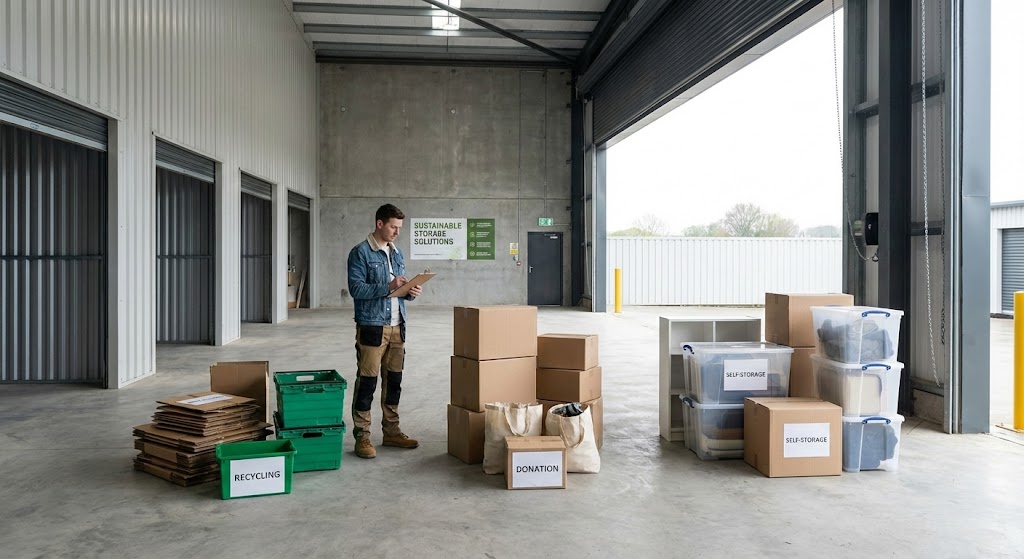
As your Storage Solutions Adviser, I often guide customers through the physical act of packing and moving, but the preparation phase is just as important. Before you place a single item in self-storage, taking the time to declutter responsibly makes perfect financial and environmental sense. This step ensures you’re only paying to store items you genuinely need, which is a key part of choosing cost-effective storage options. By adopting a sustainable storage approach that prioritises eco-friendly item disposal, you not only reduce clutter but also contribute to a greener planet whilst avoiding unnecessary costs.
The Financial and Ethical Case for Pre-Storage Decluttering
Storing unwanted items is one of the easiest ways to waste money, especially if you plan on using storage for a longer duration. Every cubic foot of space you rent should be filled with items that have genuine value or a necessary future purpose. Smart sorting is the most immediate way to make the most of the facilities offered by Newbury Self Store. Getting this step right ensures your entire experience is stress-free and efficient from the start.
Avoiding the “Storage Tax”
Think of unwanted items as an unnecessary “storage tax” you pay month after month. If you store items you haven’t touched in years, you’re essentially paying to keep clutter out of sight. By sorting efficiently, you can often downsize the storage unit you need, leading to immediate monthly savings, which makes a considerable difference over six or twelve months.
Minimising Your Environmental Footprint
Sorting before storing provides an excellent opportunity to practise responsible waste disposal with items you no longer require. We all have possessions that are too good for the bin but not currently useful to us. Disposing of these responsibly through eco-friendly item disposal methods reduces landfill waste, conserves valuable resources, and minimises your overall environmental impact. This simple act aligns with a broader commitment to operating a sustainable lifestyle.
Step One: Assessing Your Inventory – Keep, Store, or Re-home
The hardest part of the process is being honest with yourself about what truly needs to be kept. It’s easy to hold onto items out of sentiment or the fear that “you might need it one day.” A rigorous assessment will create a smaller, more manageable pile for packing and storage. You’ll find that this initial honesty pays off immediately in reduced stress and fewer boxes.
The Three-Question Rule for Decision Making
When looking at any item, apply the three-question rule to decide its fate. If the answer to these is “no,” the item should be re-homed or disposed of using responsible waste disposal practices. Use this method to maintain momentum and avoid getting bogged down by emotional decisions.
- Have I used this item in the last year? (Exceptions are seasonal items or sentimental heirlooms.)
- Does this item have deep sentimental value that cannot be replaced?
- Would it cost less time and money to replace this item than to store it for a year?
Organising for Personal Storage Solutions
Once you’ve decided an item is a keeper but not immediately needed, it moves into the ‘Store’ category. These items are perfect for personal storage solutions and should be categorised by how often you might need access. Essential documents or seasonal clothing should be easily accessible, while bulky furniture can be packed away more densely, grouped with similar items for easy retrieval later.
Your Guide to Responsible Disposal Options in the UK
Once the ‘Toss’ pile is established, your mission shifts from decluttering to decluttering responsibly. Throwing everything in general waste is never the right choice, as almost all unwanted goods can find a new life through donation, resale, or ethical recycling. Implementing responsible waste disposal strategies prevents unnecessary waste and supports a circular economy.
Donating to Charity and Community Groups
Donating clean, usable items to charity is perhaps the fastest and most impactful form of eco-friendly item disposal. UK charities welcome good-quality clothes, furniture, books, and household goods, which help them fund their vital work. This not only supports a great cause but also ensures that the item bypasses the waste stream entirely. Always call ahead or check the charity’s website to confirm they’re accepting the specific items you plan to drop off.
Recycling Responsibly – Knowing Your Local Guidelines
For items that can’t be donated or sold, ethical recycling is the next best step. Recycling responsibly starts with knowing the specific rules set by your local council, as guidelines vary across the UK. Common recyclables like paper, cardboard, glass, and metals should be clean and sorted correctly to be processed efficiently. A simple way to think about this is comparing a poorly insulated loft to going outside in winter without a hat; just as the hat is essential, proper sorting is essential for the recycling system to work.
Making Money by Selling Unwanted Items
Selling unwanted items is an excellent way to recover some of your initial investment and fund your storage expenses. Online platforms like eBay, Gumtree, and various local community groups make it easy to list furniture and electronics, or you can explore local car boot sales for quick, community-focused selling. For example, Sarah and Tom made over £400 selling unused equipment before their move, money they used to purchase premium packing materials and secure a smaller storage unit.
Handling Difficult Items: Responsible Waste Disposal
While donation and recycling cover most household goods, some items require special handling due to their size, composition, or hazardous nature. Dealing with these correctly is a crucial part of responsible waste disposal and environmental stewardship. Never be tempted to leave these items in communal bins or dispose of them illegally.
Bulky Waste and Hazardous Materials
For large items like old carpets, broken furniture, or construction debris, check your local council’s bulky waste collection service. Ensuring proper handling for these challenging items demonstrates commitment to eco-friendly item disposal practices. Remember that hazardous materials like paints, chemicals, and car batteries cannot be placed in general waste and must be taken to a licensed facility, not just stored in a unit, even one offering large, drive-up container storage.
Electronics and WEEE Regulations
Electronics, from old mobile phones to broken washing machines, fall under WEEE regulations and must not go to landfill. These items contain valuable and potentially toxic materials, so ensure you use dedicated WEEE recycling bins at HWRCs or retailer take-back schemes. This approach to responsible waste disposal protects both the environment and public health.
Maximising Efficiency: Preparing Your Remaining Items
Once your inventory is clean, lean, and ready for storage, proper preparation ensures it stays in pristine condition. This is where you transition from decluttering expert to packing strategist. Investing in the right materials and techniques will protect your goods throughout their stay, whether short- or long-term.
Investing in the Right Packaging Supplies
The quality of your packing materials directly impacts the safety of your items. Avoid using flimsy supermarket boxes; instead, use sturdy, double-walled moving boxes that stack securely. You can find high-quality tape, bubble wrap for fragile items, and dust covers for furniture in our online range of specialist packaging supplies.
Strategic Packing Techniques
Label everything clearly with the contents and a number corresponding to your own inventory list to save hours of searching later. When loading, always place heavier boxes at the bottom and lighter, more fragile boxes on top. Leave a small gap around the walls of the storage unit to promote essential air circulation, which helps prevent moisture buildup over time.
A Sustainable Approach for Business and Commercial Storage
This sustainable approach isn’t just for homeowners; it’s an absolute necessity for businesses looking to operate efficiently. Businesses often accumulate obsolete stock, old equipment, and years of physical archives that needlessly take up valuable commercial space, impacting annual accounts.
Reducing Dead Stock for Business Storage Solutions
Reviewing your commercial inventory before storage allows you to eliminate obsolete stock that’s past its expiry or no longer selling. By only storing viable goods, you reduce the cost of renting a larger unit and free up capital tied up in worthless assets. Business storage solutions that flexibly accommodate inventory needs work best when you store only what’s profitable. This efficient approach keeps your business nimble and focused.
Final Thoughts: Achieving a Lighter, Greener Move
Sorting before you store is truly the key to a successful, sustainable, and affordable storage experience. Just as you carefully select the contents of a suitcase before a holiday, you should meticulously choose what goes into your storage unit. By prioritising both eco-friendly item disposal and responsible waste disposal methods, you’ll save money, reduce your environmental impact, and make your eventual retrieval and unpacking process far simpler. If you’re a business owner seeking dedicated storage for stock or archives, or a homeowner needing flexible domestic space, the team is here to help. If you’re ready to secure your space or need further guidance on unit sizing, contact us today for tailored advice.