
 01635 581 811
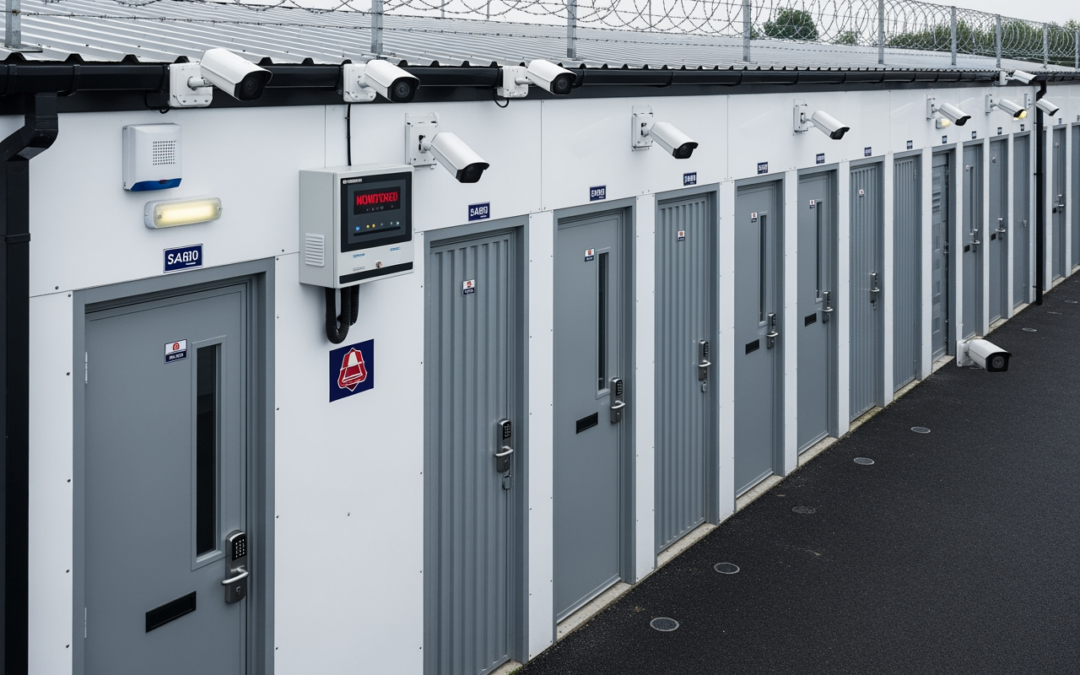
Running a business often involves managing valuable inventory, documents, or equipment, items that are truly its bread and butter, keeping the wheels turning and customers satisfied. The thought of stashing these essential assets away off-site naturally brings concerns about their safety and what might happen if things go wrong. These are not idle worries; they are perfectly valid considerations for any savvy business owner looking into business storage security. After all, your assets are the lifeblood of your enterprise.
The reality is, when it comes to finding a temporary home for your business essentials, not all storage solutions are created equal. This is particularly true when we consider the comprehensive Security Features required. It’s not just about a simple lock on a door; it’s about an entire system meticulously designed to protect what’s invaluable to you. This article is your straightforward guide to understanding the crucial Security Features you should be looking for and the best practices to ensure your inventory remains thoroughly protected. Here at Newbury Self Store, we have extensive experience supporting businesses of all shapes and sizes, and we deeply understand just how vital that peace of mind is.
Why Top-Notch Business Storage Security Isn’t Just a ‘Nice-to-Have’
Let’s be direct. Treating robust business storage security as an optional extra is a significant gamble with your company’s future. The potential consequences of a security breach, whether it’s theft, vandalism, or even damage from unforeseen incidents like fire or flood, extend far beyond the mere replacement cost of the goods.
Consider these points:
- Financial Haymakers: The direct cost of lost or damaged stock can be severe, particularly for smaller businesses or ambitious start-ups. Then there are the indirect costs: potential loss of sales if you are unable to fulfil orders, or the urgent expense of replacing critical equipment to get back up and running.
- Reputation Roadblocks: If sensitive client data or valuable customer property is compromised while under your care (even if stored securely off-site), the damage to your business’s reputation can be substantial. Trust, once eroded, is incredibly challenging to rebuild.
- Operational Paralysis: Imagine key documents, essential operational tools, or your entire product line vanishing or being rendered unusable. The resulting operational downtime can halt your business operations, leading to missed deadlines and understandably frustrated customers.
- The Unseen Asset: Peace of Mind: This aspect is more personal. As a business owner, you already have a considerable amount on your plate without the constant, underlying worry about whether your stored assets are genuinely safe. Knowing your inventory is protected by top-tier Security Features allows you to dedicate your focus to what you do best: growing your business.
- Legal Labyrinths: Depending on the nature of what you are storing, there could be specific legal and compliance obligations to consider. For instance, if you are archiving documents containing personal data, GDPR regulations stipulate that appropriate security measures must be in place to prevent unauthorised access or data breaches. Non-compliance can lead to significant fines.
So, when you are evaluating a storage facility, ensure that comprehensive business storage security is a non-negotiable item at the very top of your checklist. It’s a critical investment in your business’s continuity, its hard-earned reputation, and your own well-being.
The Unmissable Security Features: Your Business Storage Checklist for optimal security
Let’s get down to the specifics. What precise Security Features should you actively seek out? It’s rarely about one single element, but rather a multi-layered security strategy that creates a formidable barrier against potential threats.
Eyes Everywhere: The Lowdown on Surveillance as a key security feature
When you cannot be physically present, technology needs to act as your vigilant eyes and ears. Comprehensive surveillance is an undeniable cornerstone of effective security.
- CCTV – More Than Just a Sticker: Do not be satisfied with a simple sign stating “CCTV in operation.” You need to ask detailed questions.
- Coverage: Where are the cameras positioned? Do they cover all entry and exit points, internal corridors, loading bays, and the entire perimeter? Are there any discernible blind spots? A strategic combination of visible cameras (acting as a deterrent) and more discreetly placed ones can be highly effective.
- Clarity: What is the recording quality like? High-definition footage is absolutely essential for the clear identification of individuals or vehicle number plates should an incident occur. Grainy, unwatchable footage is practically useless for investigation purposes.
- Recording & Retention: For how long is the CCTV footage stored? Is it continuous recording, or is it motion-activated? The longer the footage is retained, the better, especially if a security discrepancy is not noticed immediately.
- Monitoring: Is the CCTV system actively monitored in real-time by security personnel, or is the footage only reviewed after an incident has been reported? Monitored systems offer a much faster, proactive response to any suspicious activity.
- Seeing in the Dark: Criminal activity often seeks the cover of darkness. Therefore, infrared or advanced night vision capabilities on CCTV cameras are crucial for ensuring that surveillance remains effective around the clock, not just during daylight hours.
- Smart Alerts: Modern surveillance systems frequently integrate with other security components. Motion detectors situated in and around units, or along corridors, can trigger alarms and automatically direct cameras to focus on specific areas of activity, providing an immediate alert to on-site staff or a remote monitoring station.
A reputable facility will always be transparent about its surveillance capabilities and other security features. If they appear cagey or evasive, that should be considered a red flag.
Controlling the Flow: Mastering Access to Your Assets for business storage security
Knowing precisely who can gain entry, and by what means, is absolutely fundamental to robust business storage security. This principle does not just apply to your individual unit; it begins right at the facility’s boundary.
- The First Stand: Robust Perimeter Fencing and Secure Gate Systems: The outer defences represent your chosen facility’s first opportunity to deny entry to unauthorised individuals.
- Fencing: Look for high, strong perimeter fencing, ideally an anti-climb design. It must be well-maintained, with no obvious gaps, damage, or weak points.
- Gates: Main access gates should be substantial and strictly controlled. Electronic access systems utilising key codes, proximity fobs, or even automatic number plate recognition (ANPR) are common. Are there separate, clearly defined entry and exit gates? Are these critical points monitored by CCTV?
- Your Personal Vault: Individual Unit Strength: Once you are inside the facility, the security of your actual storage unit is paramount.
- Locks: What type of locks are used or specifically recommended by the facility? High-security cylinder locks, robust disc locks, or shrouded padlocks offer superior protection against tampering, picking, and bolt cutters. Ideally, you should be the sole keyholder, giving you complete control.
- Doors & Construction: Are the unit doors constructed from sturdy, resilient materials like steel? Are they designed to effectively resist forced entry? How solid and secure are the walls between adjacent units?
- Individual Alarms: Some premium storage facilities offer individually alarmed units, which provide an important extra layer of security that immediately alerts staff if your specific unit is breached.
- Modern Gatekeepers: Keypads, Fobs, and Digital Keys: Many facilities now employ sophisticated electronic systems to manage access to the main site and sometimes even to specific zones or floors within the building.
- Audit Trails: These advanced systems can often provide a detailed audit trail, meticulously logging who accessed the facility and precisely when. This data can be invaluable for any security investigations.
- Restricted Access: Can access times be restricted if necessary, for example, outside of your business’s normal operating hours, to further enhance security?
- Pros and Cons: While undoubtedly convenient, it is essential to ensure these electronic systems are themselves secure. How are access codes managed and distributed? What is the protocol if a fob is lost or stolen?
- A Friendly Face, a Watchful Eye: The Benefit of On-Site Personnel: The visible presence of on-site staff during access hours acts as a significant deterrent to potential wrongdoers. They can monitor activity, assist customers with queries, respond swiftly to alarms, and generally help to maintain a secure and orderly environment. Their mere visibility can make potential thieves or vandals think twice.
A facility like Newbury Self Store puts these principles into practice, offering key security features such as strong security fencing and ensuring you are the sole keyholder to your unit, which places you firmly in control of who accesses your goods.
Shining a Light on Safety: How Illumination Deters Trouble
It might seem like a basic point, but good, consistent lighting is a surprisingly effective security tool. Dark, shadowy corners and poorly lit corridors can be inviting for individuals with malicious intent.
- Bright Ideas for Secure Spaces: All common areas, including exterior zones, car parks, loading bays, and internal corridors, should be thoroughly well-illuminated. This not only deters criminals but also significantly improves safety for legitimate users moving around the facility, especially after dark.
- Light When You Need It: Motion-activated lighting in less frequently trafficked areas can be an energy-efficient method to ensure spaces are adequately lit when someone approaches, while also drawing immediate attention to any movement.
Poor or inadequate lighting can make even a facility with otherwise good Security Features feel unsafe and vulnerable.
Beyond Burglars: Guarding Against Fire and Other Mishaps
True security is not just about preventing theft. Protecting your valuable inventory from the devastating effects of fire, water damage, and other potential disasters is equally important for business storage security.
- Early Warnings: Smoke Detectors and Comprehensive Fire Alarm Systems: Every individual unit and all common areas within the facility should be equipped with modern, regularly tested smoke detectors. These detectors should be seamlessly linked to a centralised fire alarm system that effectively alerts on-site staff and, ideally, the local fire brigade automatically.
- Ready for Action: Sprinklers and Accessible Fire-Fighting Gear: Does the facility have a fully operational sprinkler system? Are fire extinguishers readily available, clearly marked, and regularly inspected according to safety regulations? Are fire exits clearly signed and kept completely unobstructed at all times? Do not hesitate to ask about their detailed fire safety procedures.
The Uninvited Guests: Keeping Pests Out of Your Profits
This might not be the first hazard that springs to mind when you consider “security,” but for many businesses, effective pest control is a critical component of protecting valuable inventory.
- Protecting Your Delicate Stock: If your business involves storing documents, textiles, food-related items (where permitted and stored appropriately), or indeed anything susceptible to damage from rodents or insects, a pest infestation can be just as destructive to your bottom line as theft.
- Proactive Prevention: A reputable storage facility will have a regular, professionally managed pest control program in place. You should always ask about this. Any evidence of pest activity, such as droppings or gnaw marks, is a major warning sign that should not be ignored.
Built to Last: The Importance of Structural Integrity
The physical construction quality of the storage units and the overall building itself plays a significant role in both security and the general protection of your stored goods.
- Solid Foundations: Steel Construction and Robust Unit Partitions: Units constructed primarily from steel generally offer better resistance to forced entry and are also more resilient to potential fire and other types of physical damage. Partitions between individual units should be solid and extend right up to the full height of the unit to prevent easy unauthorised access from one unit to another.
- Weathering the Storm: Protection Against Damp, Leaks, and the Elements: Your goods need to be diligently protected from more than just malicious acts. Ensure the facility is well-maintained and that all units are fully weatherproof. Water damage originating from a leaky roof or damp seeping in through walls can ruin stock just as effectively as a thief can steal it.
When you are thoroughly assessing a storage facility, do not be afraid to ask detailed, probing questions about all these essential Security Features. A good, professional provider will be more than happy to demonstrate their unwavering commitment to protecting your valuable assets.
Your Part of the Security Puzzle: Best Practices Within Your Unit
While the storage facility provides the secure external environment, there are also proactive steps that you, as the business owner, can and should take to further enhance the protection of your inventory. Effective security is a partnership.
Know Your Stock: The Power of Smart Inventory Management
You cannot effectively protect what you do not accurately know you have, or where it is precisely located within your unit.
- List It, Snap It, Track It: Maintain a meticulously detailed inventory list of every single item you place into storage. For particularly high-value items, be sure to include serial numbers, comprehensive descriptions, purchase dates, and even photographs. This documentation is invaluable for insurance purposes and, in the unfortunate event of needing to report a loss, for police reports.
- Strategic Stashing: When you are loading your storage unit, think strategically about placement. Position your most valuable or sensitive items towards the back of the unit, making them less immediately visible and significantly harder to access quickly if someone did manage to gain unauthorised entry.
- Wrap It Right: Utilising good quality packing materials is essential not just for maintaining organisation, but also for providing protection against dust, minor impacts, and even ambient moisture. Using sturdy boxes, appropriate protective wrapping materials, and labelling everything clearly will make your life much easier and help keep your items safer during their time in storage. For reliable supplies, you might consider options available from specialists like Newbury Self Store Packaging, where you can find materials specifically designed to protect your goods effectively during storage, helping to maintain their condition and value.
The Safety Net: Getting Your Insurance in Order
Insurance is your ultimate financial safety net. Never assume that your goods are automatically covered by the facility’s insurance.
- What’s Covered?: You must clarify exactly what the storage facility’s own insurance policy covers, and more importantly, what it does not cover regarding your specific goods. Often, their insurance primarily covers the building structure itself, but not the contents of your individual unit.
- Bridging the Gap: You will almost certainly need to arrange your own separate insurance for your stored goods. Check carefully if your existing business insurance policy can be extended to cover items stored off-site at the declared value. If not, you will need to obtain a specific self-storage insurance policy.
- Honest Numbers: Always accurately value your goods when taking out any insurance policy. Under-insuring your items might save a small amount on the premium initially, but it could prove to be a very costly mistake if you ever need to make a substantial claim. Keep detailed records and receipts to substantiate the declared value of your inventory.
The Right Fit: Choosing Your Unit Wisely
The specific type and size of storage unit you choose can also have direct implications for its security and the safety of your items.
- Breathing Room: Resist the temptation to cram too much into a small unit simply to save money. An over-packed unit is difficult to organise effectively, significantly increases the risk of items being accidentally damaged during access, and can make it much harder to spot if something is amiss or missing. It also makes it more challenging to implement strategic placement of your most valuable items for better security.
- Horses for Courses: Carefully consider what type of items you are storing. For some businesses, particularly those with bulky industrial equipment or large quantities of palletised goods, robust Container Storage might be a suitable and highly secure option, as these often offer convenient drive-up access for easier loading and unloading. For other types of sensitive inventory, such as electronics or archives, internal Business Storage units can provide better protection from extreme temperature fluctuations and dust, ensuring items remain in optimal condition. Discuss your specific business needs and inventory types with the storage provider to find the best fit.
Team Access: Managing Employee Entry
If members of your staff need to access the storage unit as part of their duties, you must establish clear and consistently enforced protocols.
- Need-to-Know Basis: Strictly limit the number of employees who are given keys or access codes to the storage unit. The fewer people who have access, the lower the inherent security risk.
- Key Control: Have a stringent procedure in place for managing any physical keys, electronic fobs, or access codes. Keep an accurate, up-to-date record of who has them. If you are using traditional keys, consider using a secure key safe or implementing a formal sign-out and sign-in system.
- Handling Departures: It is absolutely crucial to have a clear process for when an employee who previously had access to the unit leaves your company. If it’s a physical key, ensure it is returned promptly. If it’s an access code, change it immediately without delay. This is a commonly overlooked but vital aspect of maintaining strong business storage security.
Warning Signs: When to Walk Away from a Storage Option
Sometimes, your initial gut feeling about a place is correct. If a storage facility does not feel adequately secure or professionally managed, it is probably best to continue your search elsewhere. Here are a few significant red flags to watch out for:
- First Impressions Count: A poorly maintained, generally dirty, or visibly dilapidated facility strongly suggests a lack of overall care and attention to detail, which likely extends to their security measures and protocols. Broken or damaged fences, overflowing bins, or persistently dimly lit areas are all indicative bad signs.
- Where’s the Security?: If you cannot see any obvious security measures such as clearly visible CCTV cameras, secure perimeter gates, or any sign of staff presence during their advertised access hours, you should be wary.
- Dodgy Answers: If staff members are vague, dismissive, or seem unable to confidently answer your specific questions about their Security Features and operational procedures, it suggests they either do not know the answers or, worse, do not prioritise security.
- No Plan B: Always ask about their established procedures for handling emergencies such as fire, flooding, or extended power outages. A lack of clear, well-documented emergency procedures is a serious concern for any business.
- The Grapevine Speaks: Before committing to any storage agreement, take a few minutes to do a quick online search for reviews of the facility. Pay particular attention to any comments, whether positive or negative, that specifically mention security, safety, or staff responsiveness. Consistent complaints about security lapses or poor management are a major red flag.
Trust your instincts. If something feels off or does not meet your standards, it probably is not the right choice for your business. There are plenty of professional, secure storage providers available, so do not settle for second best when your valuable business assets are at stake.
Newbury Self Store: Your Trusted Partner for Secure Business Storage in Newbury
At Newbury Self Store, we offer more than just storage space; we provide genuine peace of mind for your business. We fully understand that when you entrust your business inventory, vital documents, or essential equipment to us, you are placing a significant amount of trust in our ability to keep them safe and secure. That is precisely why robust business storage security is at the very heart of our daily operations and overall service commitment.
We are dedicated to providing a consistently secure environment for all our valued business clients. Our commitment to superior security includes:
- Comprehensive CCTV Surveillance: We actively monitor key areas of our facility with high-quality CCTV to deter potential threats and detect any unauthorised activity promptly.
- Secure Access Controls: We implement stringent access controls to ensure only authorised personnel can access the storage areas, safeguarding your unit.
- Perimeter Security Fencing: Our site is protected by strong security fencing, providing a robust first line of defence.
- Your Own Lock, Your Own Key: We firmly believe that you should always be in control of your stored items. You are the sole keyholder for your unit, meaning you, and only you, decide who has access.
We believe in complete transparency and are always happy to discuss our extensive Security Features in detail with prospective and existing clients. Why not arrange a tour of our facility? You can come and see our setup for yourself, and our experienced team can talk through your specific business storage requirements. Balancing robust, multi-layered security with convenient, easy access for our legitimate customers is a cornerstone of what we do best. Feel free to get in touch using the details on our Contact Us section to arrange a friendly chat or a no-obligation tour; our team is ready to answer all your security-related questions and help you find the ideal storage solution.
Looking Ahead: The Evolving Landscape of Storage Security and its key security features
The world of security is in a state of constant evolution, and the business storage sector is no exception. We are seeing some exciting technological advancements that further enhance security features:
- Biometric Access: The use of unique biological identifiers like fingerprints or facial recognition for highly secure, personalised access control.
- AI-Powered Surveillance: Smart CCTV systems that can automatically detect unusual or suspicious behaviour and identify specific threats more effectively and rapidly than human monitoring alone.
- Smart Unit Technology: Individual storage units equipped with integrated sensors that can alert you directly via a smartphone app to unauthorised access attempts, significant temperature changes, or even excessive humidity levels.
While these innovative high-tech solutions are becoming more prevalent and offer enhanced capabilities, it is important to remember that the foundational Security Features we have discussed throughout this article – good physical security, comprehensive surveillance, strictly controlled access, and diligent, well-trained staff – will always remain critically important. Technology effectively enhances these fundamentals; it does not entirely replace them.
Securing Your Success: Final Thoughts on Protecting Your Business Assets
Choosing where to store your business’s valuable inventory, essential equipment, or crucial documents is a significant operational decision. It’s not merely about finding the cheapest or geographically closest option; it’s about fundamentally ensuring the continuity and security of your livelihood. The right business storage security measures provide far more than just physical protection; they provide the invaluable confidence and peace of mind to allow you to focus on growth, innovation, and serving your customers, knowing your assets are in truly safe hands.
So, arm yourself with the knowledge gained from this guide. Ask the pertinent, tough questions when you are vetting potential storage providers. Be proactive in implementing your own security best practices within your chosen unit. Your inventory is too valuable, and your business too important, to leave its safety and security to chance.
For a comprehensive overview of all our services and to understand more about our unwavering commitment to security, you can explore the Newbury Self Store. Or, to find a solution tailored to your company’s unique needs, delve into the specifics of our Business Storage options. We are here to help you find the perfect, secure space for your business to flourish.