
 01635 581 811
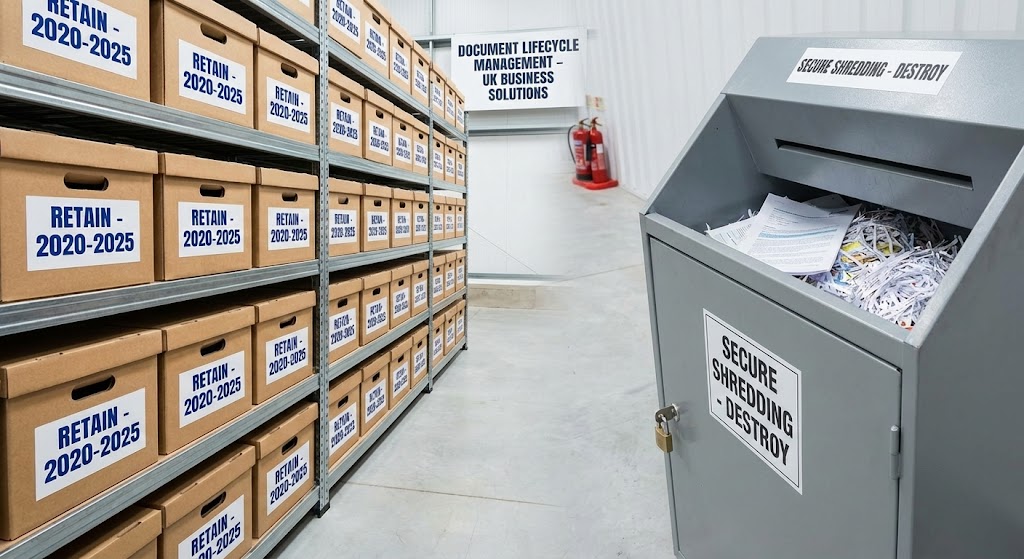
Effective business records management isn’t just about reducing clutter; it’s a foundational pillar of legal compliance and efficient business operation in the UK. Understanding the difference between a document that needs long-term secure self-storage and one that needs immediate destruction is vital for managing risk. Our goal is to help you streamline your document processes, ensuring you only keep what is necessary, organised, and fully protected, positioning Newbury Self Store as your trusted partner.
Records Management: Why It’s More Than Just Decluttering
If you aren’t on top of your retention schedule, you’re essentially playing a risky game with your company’s future. Good organisation, including the use of reliable document shredding services, ensures you stay compliant with UK legal requirements, allows for informed historical decision-making, and safeguards your business against potential legal or financial investigations. Trying to run a company without a clear record-keeping policy is like trying to bake a cake without knowing the recipe; you might get an outcome, but you’re unlikely to be able to recreate success or explain the ingredients.
Properly implemented business records management makes finding that one crucial document significantly easier when you’re under pressure. Nobody wants to spend hours sifting through years of unlabelled boxes when a client or an auditor is waiting on the phone. By adopting a system where documents are either filed for safekeeping or professionally destroyed, you reduce stress and drastically improve operational efficiency.
Understanding UK Data Retention Requirements
When considering which papers to keep, you must distinguish between transactional documents and permanent records, while always adhering to the relevant UK data retention laws. The government and regulatory bodies mandate that certain financial, tax, and employee files must be kept for minimum periods. Ignoring these statutory deadlines can expose your business to severe penalties and compliance failures.
Mandatory Retention Periods for Key Documents
While the specific rules vary by industry, there are crucial retention periods that almost all UK businesses must observe. These periods are essential for satisfying demands from regulatory bodies like HMRC and for defending against potential contractual or employee claims. Knowing these dates allows you to plan your archiving and shredding schedule years in advance.
Here’s a quick overview of common retention requirements:
Financial Records: Companies must usually keep accounts, invoices, VAT records, and payment data for at least six years from the end of the last company financial year they relate to, as specified by HMRC.
Contracts and Agreements: Contracts should be retained for six years after the contract ends (under simple contract rules) or twelve years (if signed under deed), to allow for any legal recourse.
Employee Records: Essential documents such as employment contracts, payroll data, and termination details typically need to be retained for six years after an employee leaves the company.
Health and Safety Records: Specific accident books and maintenance reports might require retention periods of up to 40 years, depending on the nature of the injury or exposure.
The Legal Risks of Premature Shredding
It’s tempting to destroy documents the moment they feel redundant, but acting too soon can be detrimental. Imagine the experience of a small construction firm in Reading that prematurely shredded archived health and safety reports after only three years. A former employee later filed a long-tail claim related to an on-site injury; because the vital records detailing safety protocols were gone, the company couldn’t effectively defend itself in court. Holding onto legally required documents for the full statutory period is a non-negotiable insurance policy for your business.
When to Archive: The Long-Term Value of Stored Records
Documents that don’t have a defined statutory retention limit can still hold significant value to your business beyond their administrative life. These may include records related to intellectual property, company formation, major capital investments, or key strategic decisions. These permanent archives help establish the lineage and history of your business, which is invaluable for investors or future sales.
Think of your records archive like the foundations of a skyscraper. You don’t see them daily, but they support the entire structure and ensure stability during a storm. Your stored corporate records provide stability by validating previous transactions, proving ownership, and providing context for current operations. When you choose to store, you’re investing in your company’s future continuity.
Choosing the Right Environment for Your Business Records
Once you’ve separated the ‘store’ documents from the ‘shred’ documents as part of your business records management strategy, you need a safe place for your archives. Simply stacking boxes in an unused office corner or a damp loft won’t protect them from fire, theft, pests, or humidity damage. If records are damaged, they may be inadmissible as evidence and could trigger regulatory non-compliance issues.
Newbury Self Store provides the ideal infrastructure for dedicated archive storage, offering professional environments far superior to standard office basements. For businesses with large quantities of documents needing long-term, secure access, our dedicated large-capacity container storage options offer maximum flexibility and space efficiency for archiving.
Why Secure Storage is Essential in Berkshire
Choosing a reputable facility is an extension of your company’s security protocols. Secure facilities feature robust systems designed to protect sensitive paper records. These include constant 24/7 CCTV monitoring, perimeter fencing, individual unit alarms, and controlled access points that ensure only authorised personnel can retrieve documents.
We recently helped a local Newbury-based accounting practice move their entire archive from a cramped, high-rent office to one of our units. They regained valuable square footage in their main office and now have confidence that their confidential client files are protected by institutional-grade security. When preparing documents for transport and long-term storage, it’s essential to use high-quality, durable containers; you can find robust professional packing supplies directly through us, ensuring your files remain pristine.
Determining When to Shred: The Security-Focused Approach
The other half of successful business records management is the destruction of documents that are no longer needed. Holding onto excess paperwork clogs up valuable space, increases your administrative burden, and dramatically raises the risk profile of a data breach. Once the legal or operational retention period has passed, the document should be marked for secure destruction.
Documents that contain sensitive, proprietary, or personal information must never simply be thrown into a standard waste bin. You should prioritise shredding business documents that include:
- Expired financial or tax records (past the six-year retention period)
- Outdated customer lists or mailing lists containing personal identifiers
- Drafts, memos, and internal reports containing confidential or strategic data
- Employee application forms and personnel files that have passed the six-year post-departure period
Document Destruction and GDPR Compliance
Under the UK’s GDPR framework, businesses have a legal obligation to process personal data lawfully and keep it only for as long as necessary. Therefore, once the “necessity” ends, a failure to securely destroy that data becomes a breach of the compliance requirement known as ‘storage limitation’. Using professional document shredding services is a core component of GDPR compliance, proving that you’re protecting client and employee privacy until the very end of the data lifecycle.
Securing Your Data’s End-of-Life: Professional Shredding
When the time comes to shred, always use a service that provides industrial-grade cross-shredding and, crucially, a certificate of destruction. This certification is your official proof that the sensitive documents were handled responsibly, providing an auditable record should any future questions arise. Using a home or office strip-shredder simply doesn’t offer the same level of security or compliance evidence.
Choosing professional document shredding services ensures that the process is efficient, secure, and environmentally responsible. It completes the circle of good records management: creation, storage, and certified destruction.
Key Takeaways
Compliance First: Always consult official government and industry guidance to establish mandatory minimum retention periods for financial and employee documents.
Security is Paramount: Utilise secure self-storage with features like 24/7 CCTV monitoring and controlled access for all archived corporate files.
Space Optimisation: Transferring archives to professional storage frees up expensive, operational space within your primary business premises.
Risk Mitigation: Implement a scheduled, certified shredding process to eliminate unnecessary data and meet GDPR’s ‘storage limitation’ requirement.
Ready to take control of your document archives? Whether you need long-term security for essential papers or short-term relief during an office clear-out, you’ll find the support you need at Newbury Self Store. We offer tailored business storage solutions for companies of all sizes, ensuring your valuable papers are kept safe. Don’t hesitate to contact us today to discuss the perfect unit size for your precise document archiving needs.