
 01635 581 811
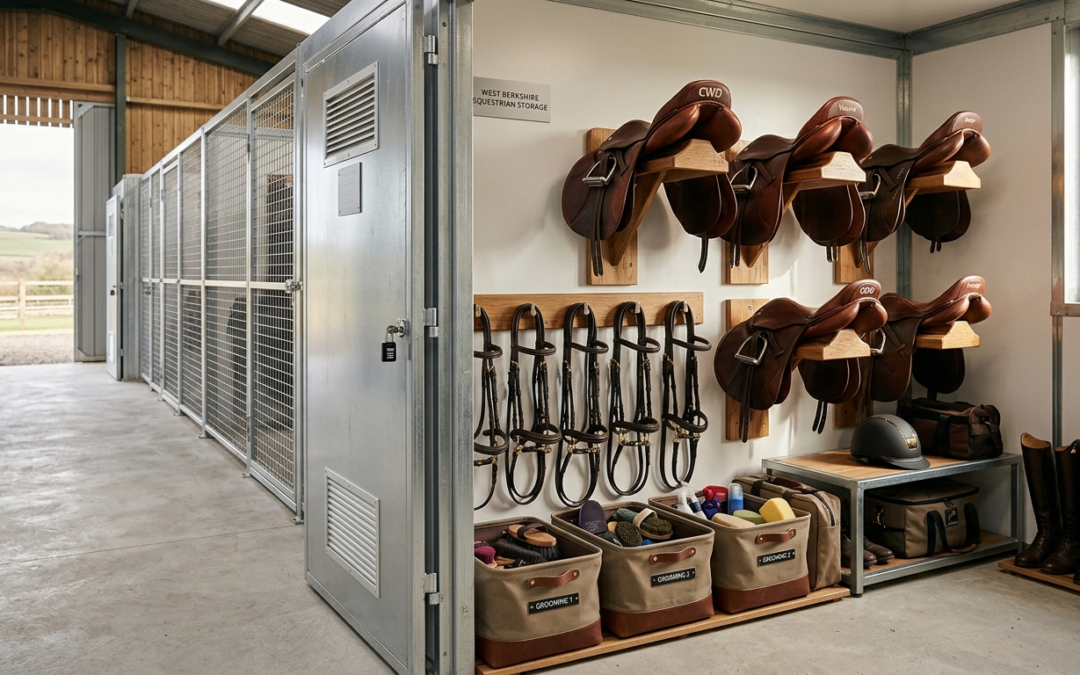
Newbury sits at the heart of British racing country. With the famous Newbury Racecourse drawing crowds year-round and dozens of training yards scattered across the surrounding countryside, this town breathes horses. Behind every successful yard lies a logistical challenge that receives little discussion; where do you store thousands of pounds worth of tack, equipment, and supplies when space is at a premium?
Training yards operate on tight margins. Every square metre counts when you manage stables, exercise facilities, and paddocks. Saddles, bridles, rugs, boots, bandages, feed supplements, veterinary supplies, and grooming kits all demand proper horse equipment storage Newbury yards can rely on. Yet many yards struggle with cramped tack rooms, damp outbuildings, or makeshift storage that puts valuable kit at risk.
Why Traditional Yard Storage Falls Short
Walk into most training yards and you will find tack rooms bursting at the seams. Saddles stacked precariously, bridles tangled on overcrowded hooks, and rugs piled in corners where air cannot circulate properly. It is not through lack of care; it is simply that yards were rarely designed with modern training demands in mind.
The problem intensifies during seasonal transitions. Winter brings heavy-duty turnout rugs, stable rugs, and thermal layers. Summer requires fly sheets, coolers, and lighter exercise equipment. Storing off-season kit in the same cramped tack room creates chaos and accelerates wear through poor storage conditions.
Then there is the equipment that does not fit neatly into traditional tack rooms. Spare feed bins, bulk bedding supplies during promotional purchases, replacement stable fixtures, or exercise equipment between horses all need a home. These items often end up scattered across yards in less-than-ideal conditions.
The Hidden Costs Of Inadequate Storage
Poor storage hits yards where it hurts most; the budget. A decent racing saddle costs upwards of £2,000. Bridles, reins, and specialist bits add hundreds more per horse. When these items suffer mould damage from damp storage or deteriorate through overcrowding, you are not just replacing kit; you are burning cash that could improve training facilities or invest in better horses.
Consider what happens to leather stored in damp, poorly ventilated spaces. Mould takes hold within weeks during Berkshire’s wet months. The leather dries out, cracks, and loses structural integrity. That £300 bridle becomes unsafe and unusable. Multiply this across a yard with twenty horses and the losses mount quickly.
Rugs present another expensive problem. A quality stable rug costs £100 to £200, while specialist turnout rugs reach £300 to £400. Store them incorrectly during the off-season and you will find moth damage, mildew, and degraded waterproofing come autumn. Replacing even half your rug collection annually because of storage issues represents thousands in unnecessary expenditure.
Security Concerns For High-Value Equipment
Tack theft remains a persistent problem across equestrian facilities. Professional thieves target yards specifically for saddles and bridles, which fetch good money through certain channels. A yard storing £50,000 worth of equipment across multiple horses presents an attractive target, particularly when that equipment sits in outbuildings with basic security.
Some yards have experienced repeated thefts despite installing alarms. The issue is not always the security measures themselves; it is that thieves know exactly where to look. Tack rooms are predictable. They are usually separate from main buildings, often in quieter corners of yards where staff are not constantly present overnight.
Moving high-value equipment off-site to a facility with robust equestrian security solutions removes this risk entirely. Thieves cannot steal what is not there. For yards that have suffered losses or operate in areas with known theft problems, this peace of mind proves invaluable.
Climate Control And Equipment Preservation
Leather, fabric, and metal comprise the three materials that dominate equestrian equipment, and all deteriorate rapidly in fluctuating temperatures and humidity. Newbury’s climate, with its damp winters and occasional humid summers, creates challenging storage conditions.
Leather needs consistent humidity levels between 40% and 60% to remain supple without encouraging mould growth. Too dry and it cracks. Too damp and mould appears within days. Most yard tack rooms cannot maintain these conditions for leather tack preservation, especially older buildings with limited ventilation.
Metal components like bits, stirrups, and buckles corrode when exposed to moisture. That green tarnish weakens the metal and creates rough surfaces that can injure horses. Regular cleaning helps, but proper storage prevents the problem entirely.
Think of it like storing wine. You would not keep expensive bottles in a garden shed where temperatures swing from freezing to sweltering. Yet many yards effectively do exactly this with equipment worth far more than most wine collections.
Seasonal Equipment Rotation Made Simple
Training yards accumulate equipment for different seasons, disciplines, and individual horse needs. A typical yard manages heavy stable rugs, thermal exercise sheets, waterproof turnout rugs, fly sheets, and clipping equipment.
Rotating this equipment efficiently requires accessible storage where you can swap items seasonally without major disruption. Cramming everything into one tack room means digging through piles every time you need something specific. Effective seasonal rug storage allows you to keep only current necessities on-site.
I once worked with a yard manager near Lambourn who lost three saddles to damp in a single winter because they were buried under a pile of summer rugs in an unheated barn. The cost of replacing those saddles would have paid for five years of professional storage.
Business Storage Solutions For Training Operations
Professional training yards operate as businesses, often managing horses for multiple owners. This brings additional storage challenges beyond basic tack and equipment. Records and documentation accumulate rapidly, and racing regulations require detailed records of training schedules, veterinary treatments, and medication logs.
Some yards have discovered that using business storage to manage yard logistics transforms their operational efficiency. At Newbury Self Store, we see trainers using units to keep archived records secure yet accessible for inspections, rather than cluttering valuable office space.
Business supplies, from office equipment to marketing materials for attracting new owners, also need organised storage. Feed supplements and bulk-purchased grooming supplies require space that does not impinge on working areas.
Practical Storage Organisation For Yards
Setting up effective storage requires thinking beyond simply moving items off-site. Organisation determines whether storage becomes a useful resource or just relocates the problem.
Start by categorising equipment into access frequency. Daily-use items stay at the yard. Seasonal equipment, archived records, spare kit, and bulk supplies move to storage. This immediately frees up working space while keeping essential items accessible.
Within storage, create clear zones. Dedicate specific areas to seasonal tack, spare equipment, and bulk supplies. Tack room organisation principles apply just as much off-site. Shelving units prevent items sitting directly on floors where moisture can reach them. Clear plastic storage boxes protect fabrics while allowing visual identification of contents.
Cost Analysis: Storage Investment vs Replacement Expenses
Let us examine the mathematics. A modest training yard with fifteen horses might hold equipment valued at £55,000, including saddles, bridles, rugs, and specialist training gear.
Poor storage conditions typically reduce equipment lifespan by 30% to 40%. Items that should last five years need replacing after three. That represents two years of premature replacement across £55,000 worth of kit, which is approximately £22,000 in unnecessary expenses over a five-year period.
Quality storage costs a fraction of this. Even factoring in the investment in proper organisation and storage solutions, the savings through extended equipment life and reduced replacement frequency pay for themselves within the first year.
Security And Access For Multi-Staff Operations
Training yards rarely operate on single-person schedules. Head trainers, assistant trainers, stable staff, visiting farriers, and veterinarians all need access to equipment at various times. Managing this while maintaining security presents challenges.
Traditional yard storage often means either giving multiple people keys to tack rooms or restricting access so tightly that staff cannot retrieve needed items efficiently. Neither solution proves ideal.
Modern storage facilities offer flexible access arrangements. Authorised staff can access storage during extended hours without compromising security. This proves particularly valuable during early morning training sessions or evening stable routines when retrieving specific equipment becomes necessary.
For yards managing equipment for multiple owners, separate units can isolate each owner’s kit. Using personal storage units to secure individual owner equipment prevents mix-ups, demonstrates professional management, and provides clear accountability.
Preparing Equipment For Storage
Simply moving items off-site is not enough. Proper preparation ensures equipment emerges from storage in usable condition.
Leather tack must be cleaned thoroughly with saddle soap to remove sweat, dirt, and oils. Apply leather conditioner to maintain suppleness and allow to dry completely before storage. Never store leather damp, as mould develops rapidly.
Rugs and blankets should be washed according to manufacturer instructions. Ensure they are completely dry; even slight dampness causes mildew during storage. Fold them loosely rather than compressing tightly. To prevent deterioration, you should source protective packaging such as breathable bags rather than sealed plastic where moisture cannot escape.
Managing Archived Records And Documentation
Racing regulations and business operations generate substantial paperwork. Training logs, veterinary records, competition results, owner communications, and financial documentation all require organised retention.
Digital systems help, but many yards maintain paper backups or deal with original documents that regulations require preserving. These accumulate quickly, filling filing cabinets and office spaces that could serve better purposes.
Archived records need organisation that allows rapid retrieval when needed. Regulatory inspections, owner queries, or insurance claims might require producing specific documentation from years past. Proper storage organisation makes this straightforward rather than stressful.
Scaling Storage As Yards Grow
Successful yards expand. Taking on additional horses, attracting new owners, or diversifying into related activities all increase storage requirements. Planning for growth prevents storage becoming a limiting factor.
Starting with slightly more storage capacity than immediately necessary provides room for expansion. It is far easier to gradually fill available space than to urgently seek additional storage when you have suddenly taken on three new horses and their equipment.
Modular storage approaches work well. You might utilise container storage to store bulk stable equipment or rugs, keeping your indoor units free for sensitive tack. This flexibility matches the variable nature of training operations, where horse numbers fluctuate with seasons and success.
Location Matters: Accessibility For Newbury Yards
Storage location significantly impacts practical usefulness. Facilities too far from your yard become inconvenient, reducing the likelihood you will maintain proper organisation or access items when needed.
Newbury’s position means many yards operate within a compact area around the town. Storage that is a short drive away provides the ideal balance; close enough to access easily but far enough to offer competitive pricing.
Drive-up access proves particularly valuable when moving bulky items like rugs, spare equipment, or archived record boxes. Loading and unloading directly from vehicles saves considerable time and effort compared to facilities requiring trolleys and lifts.
Making The Transition To Off-Site Storage
Moving equipment from yard to storage requires planning but need not disrupt operations. Start by auditing everything you currently store. You will likely discover items you had forgotten, duplicates you do not need, or worn equipment ready for disposal.
Sort items into three categories: stays at yard, moves to storage, and dispose. This decluttering process alone often frees up surprising amounts of space. Schedule the move during quieter operational periods. Most yards have seasonal lulls, perhaps after a major race meeting or during mid-season breaks, when you can dedicate time to organisation without compromising training schedules.
Protecting your investment in racing success is not an operational luxury; it is sound business practice. Equipment that lasts its expected lifespan rather than deteriorating prematurely directly impacts profitability. Security that prevents theft protects assets you have worked hard to acquire.
If you are ready to explore how professional storage could benefit your training operation, call 01635 581 811 or contact our team to discuss your specific requirements.