
 01635 581 811
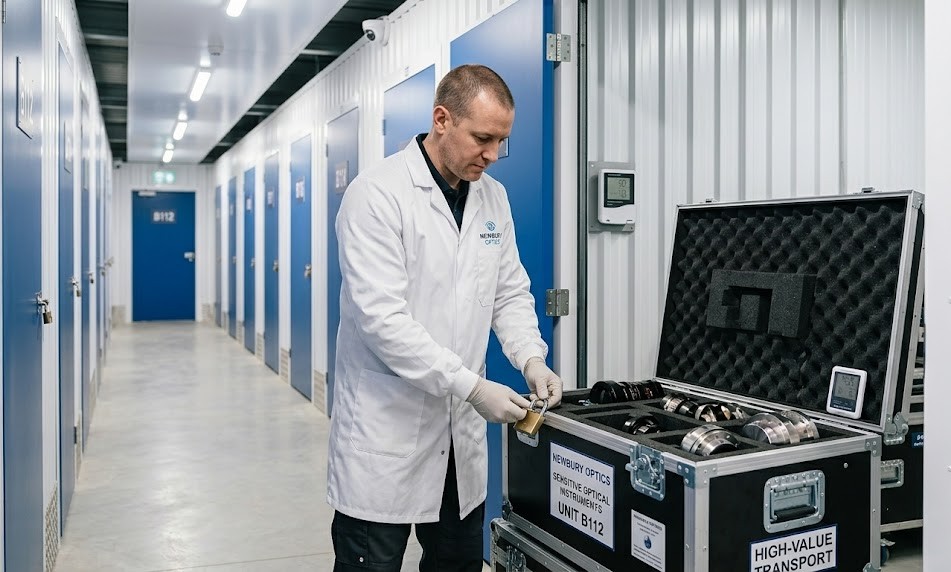
Photography equipment doesn’t just take up space – it demands respect, organisation, and a system that keeps delicate gear safe whilst making everything accessible when you need it most. For professional photography studios in Newbury, Berkshire, or the surrounding areas, managing backdrops, lighting rigs, modifiers, and accessories becomes a daily challenge that directly impacts productivity and profitability.
The average photography studio accumulates £15,000-£40,000 worth of photography equipment over its first few years. That’s not counting the sentimental value of irreplaceable vintage lenses or the custom-built softboxes you’ve fine-tuned over countless shoots. When your studio space fills up faster than your diary, or when you’re spending 20 minutes searching for that specific gel filter before a client arrives, it’s time to rethink how you store and organise your photography gear.
Why Photography Equipment Needs Proper Storage
Professional photography gear wasn’t designed to live in cardboard boxes or stacked haphazardly in corners. Expensive lighting heads with delicate flash tubes crack under pressure. Seamless paper backdrops develop creases that ruin shots. Modifiers like beauty dishes and octaboxes collect dust that shows up in your images.
Beyond the immediate risk of damage, poor organisation costs you money in ways you might not immediately recognise. Every minute spent hunting for equipment’s a minute you’re not shooting, editing, or marketing. When you can’t find that specific backdrop for a booking, you either turn down work or scramble to buy duplicates you already own.
One photographer was storing fabric backdrops folded in plastic bins. After six months, mildew had destroyed three custom-dyed muslins worth £600 combined. The bins were in a garage that seemed fine, but seasonal humidity did the damage. She’d thought she was being clever by keeping everything “protected” in sealed containers, but she’d actually created perfect conditions for mould growth. Proper photography studio storage isn’t just about tidiness – it’s about understanding how different materials react to their environment.
Breaking Down Your Equipment by Storage Needs
Not all photography gear has the same storage requirements. Understanding these differences helps you create a system that actually works.
Backdrops and Seamless Paper
Seamless paper rolls are perhaps the most awkward items in any studio. They’re long, heavy, and incredibly susceptible to damage. A single dent or crease renders an entire section unusable. These need to be stored vertically or horizontally on proper racks that support their full length without pressure points.
Fabric and vinyl backdrops require different treatment. They need to breathe. Storing them in sealed plastic creates moisture problems that lead to mildew, whilst folding heavy canvas backdrops creates permanent creases. The ideal solution involves hanging them on wide hangers or rolling them around tubes, then storing them in climate-controlled environments.
Lighting Equipment
Studio strobes, continuous lights, and speedlights represent significant financial investment. They’re also surprisingly fragile. Flash tubes break easily, modelling lamps shatter, and electronic components fail when exposed to temperature extremes or humidity.
Original packaging offers the best protection, but it’s bulky and impractical for equipment you use regularly. Hard cases with custom foam inserts provide excellent protection whilst remaining accessible. The key’s ensuring each piece has its designated space where it won’t get knocked about.
Modifiers and Accessories
This category includes softboxes, umbrellas, beauty dishes, grids, gels, reflectors, and dozens of smaller items that somehow multiply over time. These pieces are essential for creating your signature lighting style, but they’re also the easiest to misplace or damage through poor backdrop storage practices.
Softboxes need to be stored flat or with their rods removed to prevent warping. Umbrellas should never be stored open – the fabric stretches and the ribs weaken. Gels fade when exposed to light and stick together when stored in heat. Each item needs consideration.
Creating an Effective Studio Storage System
The most successful storage systems share common principles: everything has a designated place, frequently used items remain accessible, and the system scales as your equipment collection grows.
Zone Your Storage
Think of your storage like a well-organised kitchen. Items you use daily live within arm’s reach. Weekly equipment stays nearby but not in prime space. Seasonal or specialised gear can live further away or in personal storage units.
Create distinct zones for different equipment types. Lighting lives together, backdrops have their own area, and accessories get organised by category. This mental map saves time and reduces the chance of misplacing items.
Vertical Storage Solutions
Studio space’s expensive. Using vertical space efficiently can double or triple your effective storage capacity. Wall-mounted systems for backdrop rolls, ceiling-mounted tracks for hanging backdrops, and tall shelving units for boxed equipment all maximise floor space for actual shooting.
Heavy-duty wall racks designed for seamless paper typically hold 6-12 rolls and cost £150-£400 depending on capacity. That’s a fraction of the cost of renting additional studio space, and it keeps your most cumbersome items organised and accessible.
Labelling and Inventory Systems
Professional photographers often own multiple versions of similar items – three different 60cm softboxes, four identical light stands, dozens of cables that look identical but aren’t. Without a labelling system, you’ll waste hours of your life sorting through equipment.
Clear labels on cases, shelves, and storage bins eliminate guesswork. A digital inventory spreadsheet or app takes it further, letting you track what you own, where it’s stored, and when it was last serviced. This becomes invaluable for insurance purposes and when you’re packing for location shoots.
When Studio Space Isn’t Enough
Most photographers start in spare bedrooms or small commercial spaces. As your business grows, so does your equipment collection. At some point, you face a choice: rent larger premises at significantly higher cost, or find alternative storage for equipment you don’t use daily.
This is where business storage becomes a strategic decision rather than an admission of defeat. Storing seasonal equipment, backup gear, or specialised items you only need occasionally frees up valuable studio space without forcing you into a larger, more expensive lease.
What to Store Off-Site
Seasonal backdrops represent an ideal candidate for off-site storage. If you shoot primarily indoor corporate portraits during winter and outdoor family sessions in summer, your beach-themed and autumn-colour backdrops can live elsewhere for six months of the year.
Backup equipment also makes sense for off-site storage. That second set of studio strobes you keep for emergencies or large shoots doesn’t need to occupy prime studio space 95% of the time. Similarly, specialised equipment for niche shoots – product photography setups, green screens for video work, or vintage film cameras – can be stored elsewhere and retrieved when needed.
Archive materials including old backdrops, discontinued equipment you’re keeping for parts, and years of printed portfolios all take up space without contributing to current work. Moving these items to storage creates breathing room in your active workspace.
Choosing the Right Storage Solution
Not all storage facilities suit photography equipment. Climate control isn’t optional – it’s essential. Temperature fluctuations and humidity damage electronics, warp backdrops, and promote mould growth on fabric items. A unit with proper climate control maintains consistent conditions year-round.
Security matters when you’re storing thousands of pounds of equipment. Look for facilities with individual unit alarms, CCTV coverage, and controlled access. Some photographers prefer container storage with drive-up access when they need to move large quantities of equipment regularly.
Accessibility determines whether off-site storage actually works for your workflow. If you need something from storage, you want to retrieve it quickly without advance notice or complicated access procedures. Facilities with extended access hours or 24/7 availability give you flexibility when client needs change.
Protecting Your Equipment During Storage
Proper packing makes the difference between equipment that emerges from storage ready to use and gear that’s been damaged by your storage method.
Preparing Lighting Equipment
Remove batteries from all equipment before storage. Batteries leak over time, and the corrosive damage they cause can destroy expensive electronics. Clean all equipment thoroughly, removing dust and fingerprints that can etch into surfaces over time.
Store lighting equipment in cases or boxes with adequate padding. If you’re stacking boxes, place heavier items at the bottom and ensure nothing presses directly on fragile components. Silica gel packets in cases help control moisture.
Handling Backdrops Properly
Roll fabric and vinyl backdrops around tubes rather than folding them. If you must fold canvas backdrops, use tissue paper between folds to prevent permanent creasing. Store rolls horizontally on racks or vertically if space requires it, but ensure they’re fully supported.
Never store backdrops in sealed plastic bags or containers. They need air circulation to prevent mildew. Breathable fabric bags or simply storing them uncovered in climate-controlled spaces work better than creating moisture traps.
Organising Small Accessories
Cables, gels, grids, and small accessories benefit from clear plastic storage boxes with dividers. You can see what’s inside without opening every container, and dividers prevent items from tangling or scratching each other. Label boxes clearly on multiple sides.
Store gels flat in portfolios or folders designed for the purpose. Keeping them organised by colour or type saves time during shoots. Reflectors should be stored in their original cases or soft bags that protect the reflective surfaces from scratches.
Packing Supplies That Protect Your Investment
Professional packing materials aren’t an unnecessary expense – they’re insurance against damage that could cost thousands to repair or replace. The packing materials you choose directly impact how well your equipment survives storage and transport.
Essential Packing Materials
Bubble wrap remains the gold standard for protecting delicate equipment. Wrap individual items completely, paying extra attention to corners and protruding parts. Use the large-bubble variety for lighting heads and the small-bubble type for lenses and smaller accessories.
Foam sheets and foam corners provide cushioning inside boxes and cases. They’re particularly useful for creating custom-fit protection for oddly shaped items like beauty dishes or strip boxes. Cut foam to size rather than cramming equipment into spaces that don’t quite fit.
Moving blankets protect larger items like backdrop stands and boom arms from scratches during transport or when stacked in storage. They’re reusable, cost-effective, and provide excellent protection for items that don’t need waterproofing.
Choosing the Right Boxes and Cases
Heavy-duty cardboard boxes work for items that don’t need regular access, but invest in proper hard cases for expensive lighting equipment and lenses. Cases with custom foam inserts provide the best protection, though they’re more expensive initially.
Clear plastic storage bins let you see contents at a glance, which speeds up finding specific items. Choose bins with secure lids that won’t pop open if stacked, and ensure they’re rated for the weight you’ll be storing.
Think of equipment protection like matryoshka dolls – each layer adds security. The lighting head goes in bubble wrap, which goes in a foam-lined case, which goes in a sturdy box. Multiple layers of protection mean a knocked box doesn’t become a broken strobe.
Maintaining Your Storage System
Creating an organisation system’s the easy part. Maintaining it as your business evolves requires discipline and regular attention.
Regular Audits and Cleaning
Schedule quarterly reviews of your storage system. Check that everything’s where it should be, clean equipment that’s accumulated dust, and verify that climate control’s working properly. This prevents small problems from becoming expensive disasters.
Use these audits to reassess what you’re storing and where. Equipment you haven’t touched in six months might be better suited for off-site storage. Items you find yourself retrieving weekly should move closer to your active workspace.
Adapting as Your Business Grows
Your storage needs will change as you specialise, expand into new photography niches, or upgrade equipment. The system that worked when you owned three backdrops and two lights won’t serve you when you have twenty backdrops and a full lighting setup.
Build flexibility into your storage approach. Modular shelving can be reconfigured as needs change. Off-site storage units can be upgraded to larger sizes without moving to a different facility. The goal’s creating a system that grows with you rather than requiring complete reorganisation every year.
Making Storage Work for Your Photography Business
Effective equipment organisation isn’t about achieving Instagram-worthy perfection in your studio. It’s about creating systems that save you time, protect your investment, and let you focus on what actually makes money – taking brilliant photographs.
When your backdrop collection outgrows your studio, when lighting equipment starts living in hallways, or when you’re turning down work because you can’t find the right gear, that’s your signal to rethink your approach. Whether that means reorganising your existing space, investing in proper storage solutions, or moving some equipment to a secure facility, the cost of taking action’s far less than the cost of damaged equipment or lost business opportunities.
The photography studios that thrive long-term aren’t necessarily the ones with the most expensive gear or the largest studios. They’re the ones who’ve built sustainable systems that protect their tools, streamline their workflow, and scale as their business grows. Start with the equipment you use most frequently, create systems that make sense for your specific needs, and don’t hesitate to contact us when you need flexible storage solutions that work around your business rather than constraining it.
Newbury Self Store understands that photography equipment needs more than just empty space. You need climate control that protects expensive electronics, security that safeguards your investment, and access hours that match your shooting schedule. We know that your backdrops, lights, and cameras aren’t just equipment – they’re the tools that build your creative business.
Your photography equipment represents years of investment and the foundation of your creative business. It deserves storage that matches its value and supports your success.