
 01635 581 811
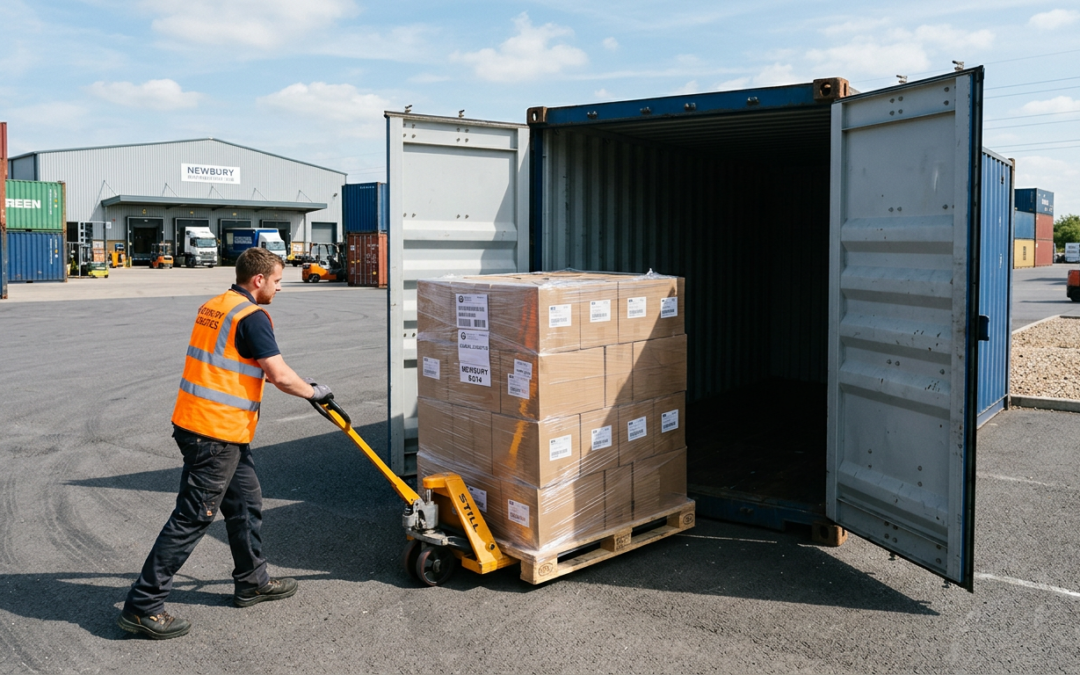
Pallet storage in Newbury offers businesses a practical solution to one of the most common operational challenges: managing bulk deliveries and pallet-based stock without dedicated warehouse space. When you’re receiving goods by the pallet load but lack the room to accommodate them, every delivery becomes a logistical puzzle. Traditional office spaces and retail units weren’t designed for forklifts and pallet jacks, yet businesses increasingly need flexible solutions that bridge the gap between ordering in bulk and storing efficiently.
Container storage offers businesses a practical middle ground, combining the security of traditional self storage with the accessibility required for regular stock rotation and frequent deliveries. For companies ordering wholesale, managing seasonal inventory, or coordinating multiple supplier shipments, having dedicated space that can handle palletised goods without the commitment of a long-term warehouse lease changes how you operate.
Why Newbury Businesses Choose Pallet Storage Over Warehousing
The economics of warehouse rental don’t work for many small to medium-sized businesses. You’re often forced to commit to spaces far larger than you need, with minimum lease terms that lock you in for years. Meanwhile, your actual storage requirements fluctuate. You might need substantial space during peak season but only a fraction of that capacity during quieter months.
Container storage addresses this mismatch directly. Rather than paying for empty warehouse floor space nine months of the year, you secure exactly the capacity your operation requires right now. When a major delivery arrives or you’re preparing for a busy trading period, you can scale up. When stock levels normalise, you scale back down.
The financial difference is significant. A typical warehouse lease in the Newbury area requires upfront deposits, business rates, utilities, and often maintenance contributions. Container solutions eliminate most of these additional costs; you pay for secure storage space with drive-up access, nothing more. For businesses operating on tight margins, this flexibility directly impacts profitability.
What Makes Container Storage Suitable for Pallet Deliveries
Ground-level access is the defining feature that makes container storage practical for palletised goods. Unlike traditional storage units requiring lifts or stairs, containers sit at loading height. You can reverse a delivery vehicle directly to the door, use a pallet truck to wheel goods in, and complete the entire process in minutes rather than hours.
This accessibility matters most when you’re coordinating multiple pallet deliveries or managing stock rotation. Consider an e-commerce business receiving weekly shipments from three different suppliers. Each delivery needs to be checked, logged, and stored in a way that allows easy retrieval when orders come in. With drive-up container storage, your team can drive straight to your unit, unload efficiently, and organise stock without the physical barriers that complicate traditional storage.
The space dimensions work naturally with standard pallet configurations. UK standard pallets measure 1200mm x 1000mm, whilst Euro pallets measure 1200mm x 800mm. A 20-foot shipping container provides approximately 33 cubic metres of space, enough to accommodate 10 to 12 standard pallets in a single layer, or significantly more with careful vertical stacking. For businesses that don’t require full warehouse capacity but regularly handle palletised goods, this capacity hits the practical sweet spot.
How Different Business Types Use Container Storage for Pallets
E-commerce retailers managing inventory from multiple suppliers represent one of the fastest-growing user groups. You’re ordering stock in bulk to secure better wholesale prices, but you’re fulfilling orders individually. Container storage becomes your distribution hub; stock arrives by the pallet, gets organised by product line or SKU, and you collect items as orders come through your system.
One online furniture retailer we worked with a couple of years ago received quarterly shipments of flat-pack items from European manufacturers. Each delivery consisted of 15 to 20 pallets containing different product lines. They’d been trying to manage everything from a unit behind their office, which meant pallets blocking fire exits and stock getting damaged every time someone squeezed past with a trolley. Once they moved to a dedicated container unit, their damage rates dropped almost overnight and their picking times halved. Rather than cramming stock into inadequate premises or paying premium rates for commercial warehouse space, they used flexible business storage that accommodated their delivery schedule without the overhead of permanent facilities.
Tradespeople and contractors storing materials and equipment between projects benefit from the flexibility container storage provides. You might secure a major contract that requires bulk purchasing of materials (tiles, flooring, plumbing supplies, or electrical components) but you can’t leave these materials on-site overnight. Container storage gives you a secure base where pallets of materials can be stored, accessed as needed, and protected from weather and theft.
Small manufacturers and distributors often operate in a middle ground where they’ve outgrown domestic premises but don’t yet justify dedicated warehouse space. You’re receiving raw materials from suppliers and distributing finished products to customers, all whilst managing cash flow carefully. Pallet storage in Newbury allows you to maintain professional operations without the capital commitment of traditional commercial property.
Organising Pallet Storage for Maximum Efficiency
The difference between functional storage and chaotic storage often comes down to how you organise pallets from day one. When you’re working with limited space and need regular access to specific items, systematic organisation isn’t optional. It’s essential.
Create clear access corridors between pallets. It’s tempting to pack every available centimetre, but this approach backfires the moment you need something from the back. Leave sufficient space to manoeuvre a pallet truck or trolley, typically 900mm to 1200mm depending on your equipment. This seemingly wasted space saves hours of unnecessary handling.
Label everything at eye level from multiple angles. When pallets are stacked or positioned side by side, you need to identify contents without moving anything. Use large, clear labels that indicate contents, delivery date, and any handling requirements. For businesses managing multiple product lines, colour-coded labels create instant visual recognition.
Position frequently accessed items nearest the door. This sounds obvious, but businesses regularly make the mistake of organising storage by delivery date rather than usage frequency. Your fastest-moving stock should be most accessible, even if it arrived months ago. Slower-moving inventory can sit further back.
Think of your container like a shop layout: the products customers buy most often sit at eye level near the entrance. The same principle applies to pallet storage. Your business “buys” from this storage regularly, so organise accordingly.
Security Considerations for High Value Pallet Loads
Palletised goods often represent substantial financial investment. Whether you’re storing electronics, branded merchandise, building materials, or wholesale food products, you’re looking at thousands of pounds worth of stock in a single location. Security isn’t an afterthought. It’s a primary requirement.
Individual container units provide inherent security advantages over shared warehouse space. You control who has access to your specific unit, and your goods aren’t visible to other businesses or casual visitors. This matters particularly for high-value or easily identifiable branded goods that might attract attention in shared facilities.
Modern container storage facilities incorporate multiple security layers: perimeter fencing, controlled access gates, CCTV coverage, and individual container locks. For businesses storing valuable inventory, this comprehensive approach to security provides the protection commercial insurance policies increasingly require.
Document your inventory with photographs and detailed records. Beyond security, this documentation proves essential for insurance claims, stock audits, and financial reporting. When you’re storing pallets worth significant money, knowing exactly what you have and where it’s located isn’t just good practice. It’s business-critical.
Managing Deliveries and Collection Logistics
Coordinating supplier deliveries to storage facilities requires clear communication and planning. Unlike deliveries to business premises where someone’s always present, storage facility deliveries need scheduling around access arrangements and your availability to receive goods.
Establish delivery windows with your suppliers that align with your access to the storage facility. Most facilities offer extended access hours, but you’ll need someone available to meet the delivery driver, check the goods, and ensure they’re stored properly. For businesses receiving regular pallet deliveries, this becomes part of your operational routine.
Communicate specific location details to delivery drivers. Provide the facility address, your unit number, and any access codes or procedures well in advance. Delivery drivers working to tight schedules appreciate clear information; it prevents delays and ensures smooth handovers.
Inspect deliveries before signing acceptance documents. Once goods are in storage, identifying delivery damage or shortages becomes significantly harder. Take the extra five minutes at the point of delivery to verify pallet counts, check for obvious damage, and confirm you’ve received what was ordered.
Packing and Protecting Palletised Goods in Storage
Even though pallets are designed for storage and transport, goods still require proper protection, particularly for medium to long-term storage. Environmental factors, handling, and simple time can affect stock condition if you haven’t taken basic protective measures.
Shrink-wrapping or pallet-wrapping provides the first line of defence against dust, moisture, and minor impacts. For goods that arrived without adequate wrapping, it’s worth investing in proper packaging materials before storage. This relatively small expense prevents damage that could render stock unsaleable.
Elevate pallets slightly off the ground where possible, even in container storage. Whilst shipping containers are weather-resistant, condensation can occur during temperature changes. Simple pallet feet or additional base pallets create airflow underneath, protecting bottom layers from potential moisture.
Stack pallets safely with heavier items at the bottom and lighter goods on top. This seems obvious, but the temptation to stack inefficiently, placing whatever arrived most recently on top regardless of weight, creates dangerous situations and damages stock. Take the extra time to stack logically.
Consider how you’d pack a car boot for a long journey: heavy items go at the bottom, fragile items get protected, and everything’s arranged so you can access what you need without unpacking everything else. The same thinking applies to pallet storage.
When to Transition from Container Storage to Dedicated Warehousing
Container storage serves businesses brilliantly during growth phases, seasonal peaks, and periods of operational change. But there comes a point where the volume and complexity of your storage needs justify moving to dedicated warehouse facilities. Recognising this transition point saves money and operational headaches.
Frequency of access is often the determining factor. If you’re visiting your storage unit multiple times daily, coordinating staff schedules around access, and spending significant time travelling between your business premises and storage facility, the convenience advantage of container storage diminishes. Dedicated warehouse space with permanent staff access might prove more efficient.
Stock complexity matters too. When you’re managing hundreds of SKUs, conducting regular stock takes, and coordinating complex picking and packing operations, purpose-built warehouse facilities with proper racking systems, loading bays, and office space become necessary operational tools rather than expensive luxuries.
Volume thresholds vary by business, but as a general principle, if you’re consistently using multiple container units and spending substantial time moving between them, you’ve probably outgrown container storage. This is actually a positive sign. It means your business has grown to the point where dedicated facilities make financial sense.
Cost Comparison: Pallet Storage in Newbury vs Warehouse Rental
Understanding the true cost difference between container storage and traditional warehouse rental requires looking beyond headline rental figures. Commercial property comes with numerous additional expenses that significantly increase your actual monthly outlay.
Business rates apply to most commercial warehouse properties, adding substantial costs depending on the property’s rateable value. These rates can easily add 30 to 40 percent to your base rental costs. Container storage facilities typically handle rates as part of the overall facility management, with costs spread across all users rather than charged individually.
Utility costs for warehouse space (electricity, heating, water) fall to the tenant in most commercial leases. For businesses storing goods that don’t require climate control, you’re paying for facilities you don’t need. Container storage eliminates these variable costs entirely.
Minimum lease terms for commercial property typically start at three years, often longer. Breaking these leases early incurs significant penalties. Newbury Self Store operates on flexible monthly agreements; you can scale up during busy periods and scale down when requirements reduce, paying only for what you actually use.
For a small business storing 15 to 20 pallets of stock, pallet storage in Newbury might cost around £150 to £250 monthly depending on specific requirements. Equivalent warehouse space, once you factor in rates, utilities, insurance, and lease commitments, could easily cost £800 to £1,200 monthly. For businesses where storage is a necessary cost rather than a core operational requirement, this difference directly impacts profitability.
Making Container Storage Work for Your Business Operations
Successful businesses don’t just rent storage space. They integrate it into their operational workflow. This means thinking about storage as an extension of your business premises rather than a separate location where things simply sit.
Schedule regular access times that align with your business rhythm. Rather than visiting storage reactively when you run out of something, establish regular patterns; perhaps Monday mornings for stock checks and Friday afternoons for preparing next week’s requirements. This routine approach reduces the mental load of storage management.
Maintain accurate inventory systems that track what’s in storage versus what’s at your business premises. Simple spreadsheets work for smaller operations, whilst larger businesses might integrate storage into their inventory management software. The key is knowing exactly what you have and where it’s located without needing to physically visit the storage unit.
Train multiple team members on storage access and organisation systems. If you’re the only person who knows where everything is or how to access the facility, you’ve created an operational bottleneck. Sharing this knowledge makes your business more resilient and reduces your personal workload.
Planning for Seasonal Peaks and Bulk Ordering Opportunities
Container storage becomes particularly valuable when you’re managing seasonal business patterns or taking advantage of bulk purchasing opportunities. The flexibility to scale storage capacity up and down without long-term commitments allows you to operate more strategically.
Seasonal retailers can secure additional container space two to three months before peak trading periods, gradually building stock levels without overwhelming their primary business premises. As stock sells down post-season, they release the extra storage capacity, avoiding paying for empty space during quieter months.
Bulk purchasing opportunities often arise unexpectedly. A supplier offers significant discounts for larger orders, or you find an exceptional deal on discontinued stock. Having access to flexible storage means you can take advantage of these opportunities without the constraint of limited premises. The money saved on bulk purchasing often far exceeds storage costs.
For businesses across Newbury, Thatcham, Hungerford and West Berkshire, having a reliable pallet storage partner you can call when opportunities arise provides genuine competitive advantage. You can move quickly when deals appear, secure stock before competitors, and manage cash flow more effectively.
Bringing It All Together
Pallet storage in Newbury through dedicated container units addresses a specific business need that traditional solutions handle poorly. You’re not large enough to justify dedicated warehouse space, but you’re too established to operate from inadequate premises. You need professional storage that accommodates bulk deliveries, provides easy access, and scales with your actual requirements rather than forcing you into rigid long-term commitments.
The businesses succeeding with this approach treat storage as a flexible operational tool rather than a fixed overhead. They organise systematically, access regularly, and integrate storage into their broader business workflows. They recognise that paying for exactly the space they need, when they need it, makes better financial sense than committing to expensive commercial property before they’re ready.
If you’re managing palletised goods and finding your current arrangements inadequate, personal storage and business storage options provide practical alternatives worth exploring. The key is matching your specific operational requirements to storage solutions designed to accommodate them, rather than forcing your business to adapt to storage limitations.
For businesses ready to explore how pallet storage in Newbury might work for their specific requirements, call 01635 581 811 or get in touch with our team to discuss your delivery patterns, stock volumes, and access needs. Finding the right storage solution isn’t about the largest space or the cheapest rate; it’s about matching practical requirements to flexible facilities that support how your business actually operates.