
 01635 581 811
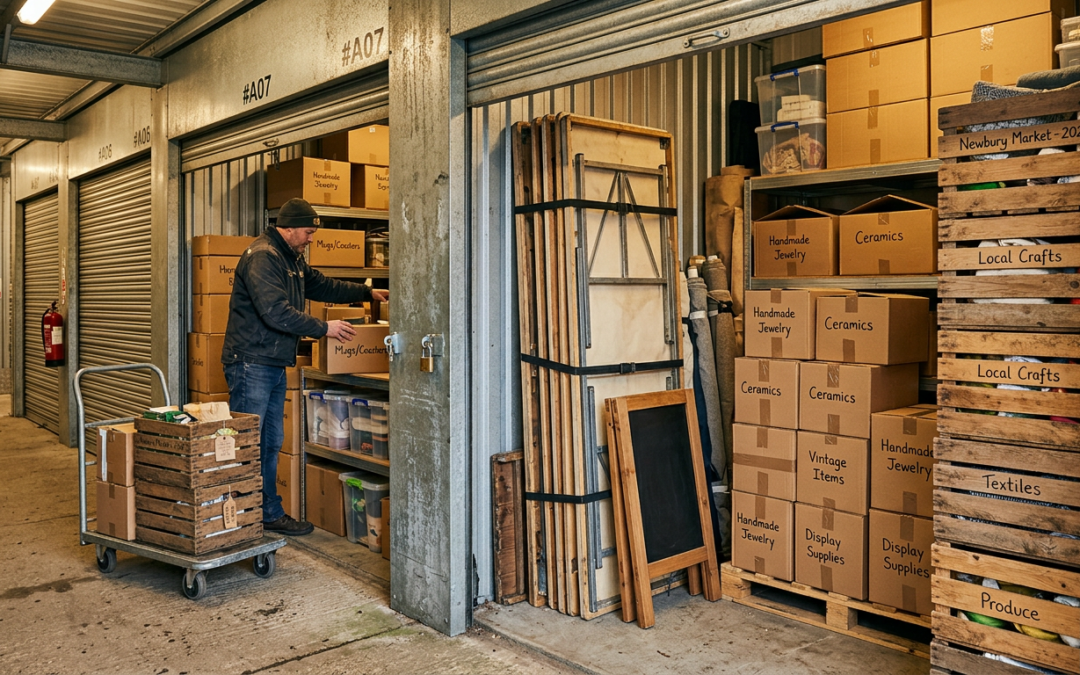
Running a market stall demands early mornings, unpredictable weather, and the constant challenge of managing stock that does not always fit in the back of your van. You might be selling vintage clothing at Newbury Market, fresh produce at local farmers’ markets, or handmade crafts across multiple regional events; regardless of the product, the question of where to store your inventory between trading days becomes a practical headache that affects your bottom line.
Many traders start by cramming boxes into spare rooms, garages, or the hallway under the stairs. However, as your business grows, so does your stock. What began as a side hustle quickly transforms into a proper enterprise, and suddenly you are tripping over merchandise every time you walk through your front door. That is where secure, accessible storage becomes more than a convenience; it is a business necessity.
Why Market Traders Need Dedicated Storage Space
The nature of market trading creates unique storage challenges that most other businesses do not face. You are not operating from a fixed retail location with back-of-house storage. You are essentially packing up and relocating your entire shop every single trading day.
Consider the logistics. You need quick access to your stock, often at unsociable hours. You need security that protects valuable inventory from theft or damage. You need enough space to store not just current stock but also seasonal items, packaging materials, display equipment, and those folding tables that never quite fit anywhere properly.
Think of it like being a travelling circus, but instead of elephants and acrobats, you are managing boxes of jewellery, racks of clothing, or crates of artisan food products. Everything needs a home between performances.
The Hidden Costs of Home Storage
Storing stock at home might seem free, but it costs you in ways that are not immediately obvious. Your living space shrinks. Your household insurance might not cover business inventory. You waste time digging through piles to find specific items. Furthermore, if you are running a food-related business, mixing commercial stock with domestic space can create hygiene and compliance issues.
One Newbury trader we helped, let’s call her Sarah, ran a successful vintage clothing stall. She had been storing her stock in two bedrooms of her three-bedroom house. When she calculated the space cost, specifically what she could have earned by renting out those rooms, added the stress of living in what felt like a warehouse, and factored in the time wasted searching for specific items, she realised home storage was costing her over £500 monthly in lost opportunity and efficiency.
While you could arrange personal storage units to clear household furniture and make room for stock, the professional approach is to move the business inventory out entirely. This restores your home to its primary purpose and puts your stock in a dedicated environment.
What Makes Storage Suitable for Market Traders
Not all storage solutions work for the specific needs of market trading. You cannot just rent any old unit and hope for the best. The right storage facility needs to tick several crucial boxes.
Accessibility is paramount. If you are trading Saturday morning, you need to access your stock Friday evening or very early Saturday. Some facilities restrict access to office hours only, which simply does not work when you are loading your van at 5am. Look for facilities offering extended or 24-hour access; it is non-negotiable for serious traders.
Security matters more when you are storing business inventory. Your stock represents invested capital and future income. Modern facilities should offer CCTV coverage, individual unit alarms, secure perimeter fencing, and proper lighting throughout. You are trusting this space with your livelihood, not just old furniture from the loft.
Location affects your efficiency dramatically. A storage unit that adds 30 minutes to your journey each way means an extra hour of travel per trading day. Over a year, that is days of your life spent driving. Choose trader storage Newbury solutions that sit logically between your home and your main trading locations.
Size Considerations for Different Trading Types
The unit size you need depends entirely on what you are selling and your trading frequency. Here is where many new traders miscalculate; they underestimate the space required for packaging materials, display equipment, and market stall equipment.
A clothing trader needs hanging space and shelving to prevent creasing. A craft seller needs flat storage for delicate items. A food trader requires dry, clean conditions away from potential contamination. Someone selling furniture or larger items needs drive-up access where you can reverse a van right to the door.
Most regular market traders find a 50 to 75 square foot unit sufficient for moderate stock levels and equipment. But if you are trading multiple markets weekly, running an online shop alongside your stall, or dealing with bulky items, you will need to scale up. The beauty of flexible storage is that you can adjust your space as your business evolves.
Organising Your Storage Unit for Maximum Efficiency
Renting the space is just the first step. How you organise that space determines whether you save time or create new frustrations. A poorly organised unit means you will waste precious minutes searching for stock when you should be setting up your stall.
Create clear zones within your unit. Think of it like organising a shop floor. Keep frequently needed items near the front. Store seasonal or backup stock towards the rear. Dedicate specific areas to different product categories or price points.
Use vertical space intelligently. Invest in sturdy metal shelving units that maximise floor-to-ceiling storage. Stack boxes clearly labelled with contents and dates. Keep heavier items on lower shelves for safety and easier handling.
Maintain an inventory management system. This does not need to be complicated; even a simple spreadsheet listing what is in which box saves enormous time. Update it each time you restock or remove items. When you are loading the van at dawn, you will thank yourself for this discipline.
Essential Equipment for Your Storage Unit
Beyond the stock itself, certain equipment makes storage more functional. Good lighting is crucial; many units have basic lighting, but a battery-powered LED work light helps when you are sorting through boxes. A small step ladder gives access to higher shelves safely.
Consider a hand truck or trolley for moving multiple boxes efficiently. If you are storing clothing, invest in proper garment rails rather than leaving items in bags where they will crease. For fragile items, we recommend you purchase durable packing supplies including bubble wrap, packing paper, and sturdy boxes that will not collapse when stacked.
Climate control matters for certain products. Books, fabrics, electronics, and food items all suffer in extreme temperatures or humidity. If you are storing temperature-sensitive stock, choose a climate-controlled unit even though it costs slightly more; the investment protects your inventory value.
Security Considerations for Valuable Stock
Your market inventory represents cash tied up in goods. Protecting that investment requires more than just a padlock on a door. Understanding facility security features helps you make informed decisions about where to store.
CCTV coverage should be comprehensive. Ask potential storage providers about camera placement, recording duration, and monitoring frequency. The best facilities have cameras covering entrances, corridors, and individual unit doors, with footage retained for at least 30 days.
Individual unit alarms add another security layer. These systems alert staff if your specific unit is accessed unexpectedly. Combined with personal access codes that track who enters the facility and when, you have robust security that deters opportunistic theft.
Protecting Specific Types of Stock
Different products need different protection strategies. High-value small items like jewellery or electronics should be stored in locked boxes within your unit; security within security. Keep detailed photographic records of valuable inventory for insurance purposes.
Perishable or time-sensitive items need rotation systems. Mark boxes clearly with dates and use a first-in, first-out approach to prevent stock aging beyond its sell-by date. This applies to food products obviously, but also to fashion items that can look dated if stored too long.
For items vulnerable to damage, proper packaging prevents costly losses. Wrap ceramics and glassware individually. Store paintings and prints flat or properly supported. Keep fabrics in protective plastic containers or breathable garment bags rather than sealed plastic bags where moisture can accumulate.
Seasonal Storage Strategies for Market Traders
Market trading often follows seasonal patterns. Christmas markets, summer fairs, autumn craft events; each season brings different opportunities and different stock requirements. Smart storage management accommodates these fluctuations without wasting money on permanently oversized space.
Plan ahead for seasonal peaks. If you trade Christmas markets, you will need extra storage from September when you are building stock. Rather than renting a large unit year-round, consider scaling up for those busy months then downsizing afterwards. Flexible storage arrangements make this possible without penalty fees or complicated contracts.
Rotate stock systematically. This seasonal stock rotation process is vital. When summer ends, move summer-specific items to the back of your unit and bring autumn/winter stock forward. This simple rotation saves time during your busy season when every minute counts.
Managing Stock Levels Effectively
Good storage enables better stock management, but you need discipline to avoid the trap of hoarding. Just because you have space does not mean you should fill it with slow-moving inventory that ties up capital.
Review your stock regularly; monthly is ideal. Identify items that haven’t sold in six months and make decisions: discount them, bundle them with popular items, or accept the loss and clear the space. Dead stock occupies valuable space and represents money that could be reinvested in products that actually sell.
Track what sells quickly and ensure you maintain adequate stock levels of those items. There is nothing more frustrating than discovering on Friday evening that you are out of your best-selling item and cannot restock before Saturday’s market.
Practical Loading and Unloading Tips
The physical process of moving stock between storage and market becomes routine, but efficiency matters. Shaving 15 minutes off your loading time means 15 extra minutes in bed or 15 minutes more setup time at the market; both are valuable commodities.
Pack your van strategically. Load items in reverse order of how you will need them at the market. Setup equipment and display materials go in last so they come out first. Stock you will need immediately loads last. This seems obvious, but in the pre-dawn rush, it is easy to just throw everything in and sort it out later.
Use consistent containers. Standardised boxes or crates stack efficiently and make loading faster. You will learn exactly how many fit in your van and can pack your unit accordingly. Mismatched boxes waste space and time.
Vehicle Considerations
Your storage location should accommodate your vehicle easily. If you are driving a large van, ensure the facility has adequate access roads and turning space. For traders with heavy stock or bulky display stands, being able to access drive-up units transforms the loading process. You can reverse right up to your unit door and load directly, saving physical effort and time.
Consider the time of day you will typically access storage. If you are loading at 5am Saturday, you want a facility with good lighting and safe access even in winter darkness. Check whether gates operate 24/7 or have restricted hours that might catch you out.
Cost Management and Value for Money
Storage represents a business expense that needs justifying against the value it provides. Understanding the true cost helps you make smart decisions about size, features, and contract terms.
Calculate cost per trading day rather than monthly rent. If you pay £100 monthly and trade twice weekly, that is roughly £12 per trading day for the convenience and security of dedicated storage. When you frame it that way, the value becomes clearer, especially compared to the alternatives.
Factor in time savings. If storage saves you an hour per trading day, and you value your time at £20 per hour, that is £40 weekly or £160 monthly in time value. Suddenly that £100 storage unit is actually saving you £60 monthly in time alone, before considering the other benefits.
Contract Flexibility Matters
Market trading can be unpredictable. Weather affects attendance. Economic conditions influence spending. Personal circumstances change. You need storage arrangements that adapt without punishing you financially.
Look for facilities offering flexible, rolling contracts rather than long fixed terms. You should be able to scale up before busy seasons and scale down during quiet periods without excessive fees. Some providers require lengthy notice periods or charge penalties for changing unit sizes; these rigid terms do not suit the fluid nature of market trading.
Building Storage into Your Business Growth Plan
As your market trading business develops, your storage needs evolve. What works when you are trading one market weekly does not work when you are doing four markets plus online sales. Planning for growth prevents storage becoming a bottleneck that limits your business potential.
Start with adequate space, not minimal space. It is tempting to rent the smallest possible unit to save money, but if you are cramming stock in so tightly that you cannot find anything or access items easily, you are creating false economy. A slightly larger unit that is well-organised is far more valuable than a crammed small unit.
When you have secure, organised storage, you can optimise commercial inventory by buying stock in larger quantities at better prices. You can take on additional markets without worrying about logistics, and maintain better product variety because you are not limited by home space.
Making the Move to Professional Storage
If you are currently storing stock at home and considering professional storage, the transition requires some planning. But the process is straightforward, and the benefits usually become apparent within the first month.
Start by calculating how much space you actually need. Measure your current stock storage area, including all the places you have squirrelled away boxes. Add 20% to 30% to that figure to allow for growth and proper organisation. If you are unsure, Newbury Self Store can help you assess requirements based on your specific business.
Visit facilities before committing. Photos only tell you so much. Walk through the facility. Check the access arrangements. Look at security features. Imagine yourself loading stock at 5am on a cold November morning; does the facility still seem suitable?
Setting Up Your Unit for Success
Your first few weeks with a storage unit set the pattern for how useful it becomes. Take time initially to organise properly, and you will benefit from that effort for years.
Install shelving before you move stock in if possible. It is much easier to assemble shelving in an empty unit than trying to work around boxes. Plan your layout on paper first. Where will frequently needed items go? Where will seasonal stock live? Where will you store display equipment?
Label everything clearly from day one. Use a consistent labelling system; box numbers, contents descriptions, dates if relevant. Create a master list that you keep both in the unit and on your phone. This discipline seems tedious initially but saves enormous time later.
Working With Your Storage Provider
The relationship with your storage facility should be straightforward and professional. Good providers understand your needs and work to accommodate them. If you are contacting a facility for the first time, here is what to discuss.
Explain your business and specific requirements. Be clear about access patterns. Do you need evening access? Weekend access? How frequently will you visit? This helps providers recommend appropriate units and ensure their facility suits your needs.
Most importantly, establish communication channels. Who do you contact if there is a problem? What is the process for accessing the facility out of hours? These practical details matter when you are relying on storage as a business tool.
Maximising Your Storage Investment
Professional storage for your market trading business is not an expense; it is an investment in efficiency, security, and growth potential. The right storage solution gives you back living space at home, protects your inventory, saves time through better organisation, and enables business expansion without logistical headaches.
The traders who succeed long-term are those who treat storage as a core part of their business infrastructure, not an afterthought. They organise systematically, review regularly, and adjust as their business evolves. They understand that the peace of mind from knowing stock is secure and accessible has a value beyond the monthly rent.
Whether you are just starting out with a few boxes of stock or you are an established trader looking to professionalise your operation, dedicated storage transforms how you work. You will arrive at markets calmer and better prepared. You will spend less time searching for items and more time selling.
The market trading life is demanding enough without adding storage stress to the mix. Sort out your storage properly, and you have eliminated one major headache, freeing up mental energy and physical time to focus on what actually makes you money: trading successfully and building your business.
To discuss storage options for your market business, call 01635 581 811 or contact the team today.