
 01635 581 811
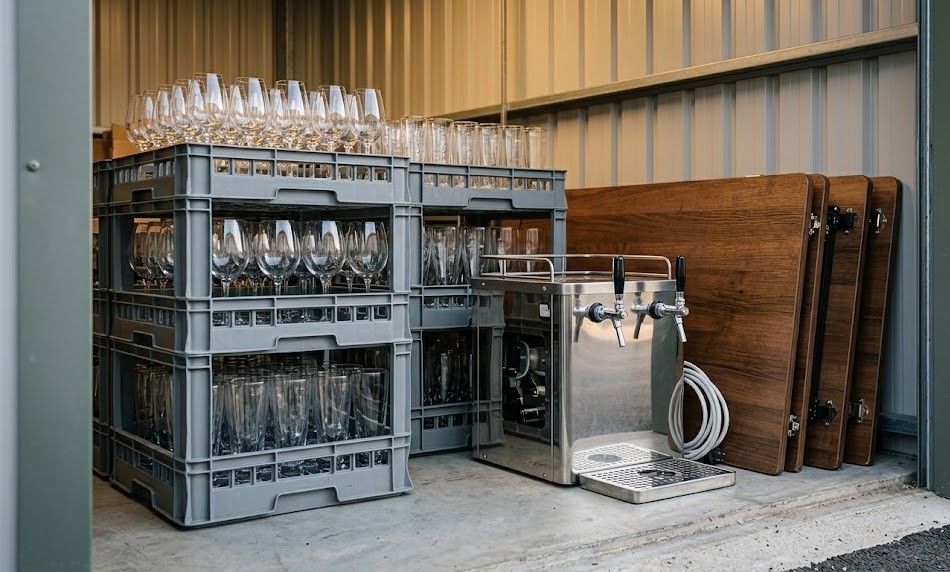
Running a mobile bar business means juggling crystal glassware, beer taps, cocktail shakers, and expensive dispensing equipment between events. One weekend you’re serving craft cocktails at a wedding in the Cotswolds, the next you’re pouring pints at a corporate function in Reading. Between these gigs, all that valuable kit needs somewhere safe, accessible, and organised.
Most mobile bar operators start by cramming everything into a garage or spare room. That works until you break your third set of champagne flutes loading them around the lawnmower, or realise you can’t find the ice bucket you need because it’s buried behind last month’s event supplies. Professional mobile bar storage isn’t just about having space, it’s about protecting your investment and making your operation run smoothly.
Why mobile bar equipment needs specialist storage
The average mobile bar setup represents a substantial investment. A basic dispensing system costs £2,000-£5,000, quality glassware runs £500-£1,500 for a full set, and that’s before you factor in refrigeration units, bar furniture, lighting, and signage. Stack it all up, and many operators have £10,000-£20,000 worth of equipment to protect.
But beverage equipment storage isn’t just about value, it’s about the fragility and variety of what you’re protecting. You’re storing delicate wine glasses alongside heavy steel beer fonts. Electrical equipment needs to stay dry. Wooden bar counters can warp in damp conditions. Everything needs to be accessible quickly because you’ve often got just a few hours between confirming a booking and loading the van.
Effective mobile bar storage is like packing a suitcase for a trip where you need both hiking boots and formal shoes, and everything must arrive unbroken. That’s the challenge every single event.
The real costs of poor storage solutions
I spoke with a mobile bar operator last month who’d been storing equipment in his garden shed. After a particularly wet winter, he discovered mould growing inside his portable bar unit and rust forming on his dispensing taps. The repair and replacement costs exceeded £3,000, money that came straight out of his profit margin.
Another operator kept everything in her garage, which seemed fine until she needed to access specific glassware for a last-minute booking. She spent two hours unpacking and repacking boxes, missed her setup window, and had to rush the bar assembly. The client wasn’t impressed, and she lost a potential repeat customer worth several thousand pounds annually.
These aren’t unusual situations. They’re the predictable result of treating professional equipment like household clutter. Your mobile bar business deserves better.
What mobile bar operators actually need to store
Let’s break down the typical inventory for a professional mobile bar operation:
- Wine glasses (red, white, champagne flutes)
- Pint glasses and half-pint glasses
- Highball and rocks glasses for cocktails
- Specialist glassware (martini glasses, coupe glasses, tiki mugs)
- Serving trays and bar mats
- Beer taps and fonts
- CO2 cylinders and gas lines
- Wine dispensers
- Cocktail shakers, strainers, and bar tools
- Pourers and speed rails
- Bottle openers and corkscrews
- Portable bar counters (often in multiple sections)
- Back bars and shelving units
- Bar stools or high tables
- Signage and branding materials
- Under-counter fridges
- Ice machines or ice storage
- Extension cables and power distribution units
- Lighting equipment
- Napkins, straws, and stirrers
- Cleaning supplies and sanitiser
- Backup glassware
- Promotional materials
A full mobile bar setup typically requires 100-200 square feet of storage space, though this varies based on your service style and event capacity.
Choosing the right storage unit size
Most mobile bar operators find that a 50-75 square foot unit works well for a basic setup serving events up to 100 guests. That’s roughly the size of a small bedroom, giving you enough space to store equipment along the walls with a clear aisle down the middle for access.
If you’re running a larger operation with multiple bar setups or serving events of 200+ guests, you’ll likely need a 100-150 square foot unit. This accommodates duplicate equipment sets, allowing you to have one setup stored ready to go whilst another is out at an event.
Here’s a practical way to estimate: measure your current storage area at home. If everything’s crammed in with no room to move, you need at least 50% more space than you currently have. If you’re constantly moving boxes to reach what you need, double your current space.
The beauty of professional mobile bar storage designed for commercial operators is the flexibility, you can start with a smaller unit and upgrade as your business grows, without the commitment of a long-term commercial lease.
Protecting glassware: the biggest storage challenge
Glassware represents both a significant investment and your most fragile inventory. A single dropped box can destroy £200 worth of wine glasses. Improper storage leads to chips, cracks, and breakages that compromise both safety and presentation.
Professional glassware storage requires proper packing materials. Don’t reuse cardboard boxes from house moves, they weaken with each use and provide inadequate protection. Instead, invest in purpose-built glass storage boxes with internal dividers. These typically cost £15-£25 per box but pay for themselves after preventing just one breakage incident.
Stack glassware boxes on sturdy shelving units, never directly on the floor where they’re vulnerable to knocks and moisture. Label each box clearly with the glass type and quantity, “Wine Glasses (Red) x 24” saves you from opening three boxes to find what you need.
The packaging you use matters enormously. Bubble wrap provides excellent protection for individual glasses, particularly stems and bowls. For everyday storage between events, consider wrapping each glass individually and storing them upright rather than inverted, which reduces stress on the rims.
Organising dispensing equipment for quick access
Proper beverage equipment storage for beer taps, fonts, and dispensing systems is critical because these items are expensive and temperamental. They need careful storage to prevent damage and maintain hygiene standards. Any moisture or contamination during storage can affect beer quality at your next event, potentially ruining an entire keg.
After each event, clean all dispensing equipment thoroughly and allow it to dry completely before storage. This isn’t just good practice, it’s essential for preventing bacterial growth and maintaining the quality your clients expect. Store beer lines in sealed containers with sanitising solution, clearly labelled with the date they were cleaned.
Keep CO2 cylinders upright and secured, even in storage. A falling cylinder is dangerous and can damage other equipment. Store regulators and gas lines separately from cylinders to prevent accidental damage to these precision components.
Create a dedicated zone in your storage unit for dispensing equipment. Use heavy-duty shelving that can support the weight of steel taps and fonts. Group related items together, all the components for your beer system in one area, cocktail equipment in another, wine dispensing gear in a third section.
Climate control: worth the investment?
Beverage equipment storage sits in an interesting middle ground. It’s not as sensitive as fine wine or antiques, but it’s certainly more vulnerable than, say, garden furniture. The question is whether climate-controlled storage justifies the additional cost.
For most mobile bar operators in the UK, standard secure storage provides adequate protection. However, climate control becomes valuable if you’re storing:
- Wooden bar counters or furniture that can warp with humidity changes
- Electronic equipment like sound systems or lighting
- Promotional materials and printed signage that fade or deteriorate
- Premium glassware collections with significant replacement costs
A climate-controlled unit maintains consistent temperature and humidity levels, typically 15-20°C with 50-55% relative humidity. This stability prevents condensation forming on metal equipment, reduces the risk of mould on fabric or wood, and protects electronic components from moisture damage.
The cost difference is usually £10-£30 per month depending on unit size. For many operators, that’s a worthwhile insurance policy against equipment damage.
Security considerations for high-value equipment
Your mobile bar equipment is attractive to thieves. It’s portable, valuable, and easy to sell. A professional dispensing system or a van-load of glassware represents quick cash for opportunistic criminals.
When evaluating storage facilities, prioritise these security features:
Individual Unit Alarms: Each unit should have its own alarm system, not just perimeter security. This means if someone breaches your specific unit, it triggers an immediate alert.
CCTV Coverage: Look for facilities with comprehensive camera coverage, including cameras covering access corridors and unit doors. Ask how long footage is retained, 30 days minimum is standard.
Access Control: Modern facilities use PIN codes or key fobs that create an audit trail of who accessed the building and when. This accountability deters both external theft and internal issues.
Physical Security: Solid construction matters. Units with concrete walls and steel doors provide far better protection than wooden partitions. Check the quality of locks, they should be substantial and resistant to bolt cutters.
Lighting: Well-lit facilities deter criminals. Storage areas should be bright 24/7, not just during business hours.
Don’t forget to inform your business insurance provider about your storage arrangements. Many policies require specific security standards for equipment stored off-premises. Storing equipment at a facility with proper security often reduces insurance premiums, offsetting some of the storage costs.
Creating an efficient loading system
The best beverage equipment storage unit in the world is useless if you can’t quickly load your van before an event. You need a system that lets you grab exactly what you need without unpacking half your inventory.
Start by mapping your storage unit on paper. Divide it into zones based on how frequently you use items. Create a “hot zone” near the door for items you need at every event, standard glassware, basic bar tools, your main dispensing system. Place specialist equipment and backup supplies further back.
Use clear plastic storage boxes for small items like bar tools, pourers, and cleaning supplies. You can see what’s inside without opening them, saving precious time when you’re loading up at 6am for a lunchtime event.
Invest in a sturdy trolley or hand truck. Even with drive-up access, you’ll be moving heavy equipment and multiple boxes. A good trolley pays for itself in reduced back strain and faster loading times.
Label everything obsessively. Not just boxes, but shelves too. Create a master inventory list that shows exactly where each item lives in your storage unit. Update it whenever you reorganise. This might seem excessive until you’re trying to find specific cocktail glasses at midnight before a morning event.
Seasonal storage strategies
Mobile bar businesses aren’t typically seasonal, but demand fluctuates. Summer weddings and Christmas parties create peak periods where you might need additional equipment. January and February often see quieter schedules.
Smart operators use this natural rhythm to their advantage. During quiet periods, conduct thorough equipment audits. Check glassware for chips and cracks. Service dispensing equipment. Clean and inspect everything, discarding items that no longer meet your standards.
This is also the ideal time to reorganise your storage unit. That system you set up eighteen months ago might not reflect your current inventory or working patterns. Rearrange zones, update labels, and create a fresh layout that serves your business better.
Consider whether you need to maintain your full inventory year-round. Some operators rent larger units during peak season to accommodate additional equipment, then downsize during quieter months. The flexibility of personal storage arrangements makes this approach viable, potentially saving £50-£100 monthly during off-peak periods.
Maintenance and hygiene in storage
Equipment stored between events isn’t on holiday, it’s waiting to represent your business at the next function. Proper maintenance during storage prevents problems and extends equipment life.
Schedule monthly storage visits for basic maintenance tasks:
- Inspect glassware for damage
- Check dispensing equipment for corrosion or wear
- Verify that cleaning supplies are stocked
- Ensure nothing has been affected by pests or moisture
- Run electrical equipment briefly to prevent seizing
Hygiene standards don’t pause during storage. Beer lines stored with sanitising solution need that solution changed monthly. Bar surfaces should be wiped down even when not in use. Cloths and towels should never be stored damp, they’ll develop mildew and become unusable.
Create a maintenance log that travels with your equipment. Note when items were last cleaned, serviced, or inspected. This creates accountability and helps you spot patterns, if you’re replacing the same component repeatedly, there’s likely an underlying issue to address.
Insurance and documentation
Your mobile bar equipment is a business asset, and like all business assets, it needs proper documentation and insurance coverage. Storage creates specific considerations that many operators overlook.
Photograph every significant piece of equipment. Take multiple angles, capturing serial numbers, brand markings, and any distinctive features. Store these images digitally with your business records, not in the storage unit itself.
Maintain a detailed inventory spreadsheet listing:
- Item description and brand
- Purchase date and cost
- Current estimated value
- Serial number or unique identifier
- Storage location within your unit
Update this inventory quarterly, or whenever you add or remove items. This document becomes invaluable if you need to make an insurance claim, and it helps you track depreciation for tax purposes.
Review your business insurance policy specifically regarding stored equipment. Standard policies often have limitations on goods stored off-premises. You may need additional coverage or a rider specifically for stored inventory. The cost is typically modest, £100-£200 annually for £15,000-£20,000 worth of equipment, and provides essential protection.
When to upgrade your storage solution
Your storage needs evolve as your business grows. Recognising when to upgrade prevents the frustration and inefficiency of outgrowing your space.
Signs you need larger or better storage:
- You’re stacking boxes three-high because there’s no floor space
- Loading for events takes more than 30 minutes
- You can’t walk through your unit without moving items
- You’re storing equipment at multiple locations
- You’ve declined bookings because you couldn’t access specific equipment quickly enough
Building storage costs into your pricing
Professional storage isn’t free, but it’s a legitimate business expense that should be factored into your pricing structure. Most mobile bar operators spend £100-£200 monthly on storage, depending on unit size and features.
Calculate your annual storage costs and divide by your typical number of events. For an operator doing 50 events annually with £1,800 in annual storage costs, that’s £36 per event. Build this into your base pricing alongside other overhead costs like insurance, vehicle maintenance, and licensing.
Clients don’t need to see a line item for storage, but they benefit from it through better service. Equipment that’s properly stored arrives in perfect condition. You’re not scrambling to replace broken glasses or dealing with malfunctioning taps because everything was maintained correctly between events.
Professional storage also enables you to take last-minute bookings confidently. When someone calls on Thursday wanting a bar for Saturday, you can say yes because your equipment is organised, accessible, and ready to go. That flexibility has real commercial value.
Making storage work for your mobile bar business
Running a mobile bar business means delivering consistent quality across dozens or hundreds of events annually. That consistency starts with how you store and maintain your equipment between those events. Cramming everything into unsuitable spaces might save money initially, but it costs you through damaged equipment, wasted time, and missed opportunities.
Professional mobile bar storage designed for business operators provides the security, accessibility, and organisation that mobile bar businesses need. It’s not about finding the cheapest option, it’s about finding the right solution that protects your investment and supports your operation.
Whether you’re just starting out with a basic setup or running an established business with multiple bar configurations, proper storage makes every aspect of your operation smoother. You’ll spend less time searching for equipment, reduce breakages and damage, and present a more professional service to clients. That’s not just good storage, it’s good business.
The mobile bar industry demands flexibility, reliability, and attention to detail. Your storage solution should reflect those same values, giving you the foundation to deliver exceptional service at every event.
Don’t wait until storage problems affect your service quality. If you’re consistently struggling with your current arrangement, contact us to discuss options that better suit your operational needs. Upgrading storage is an investment in efficiency, not just an expense.