
 01635 581 811
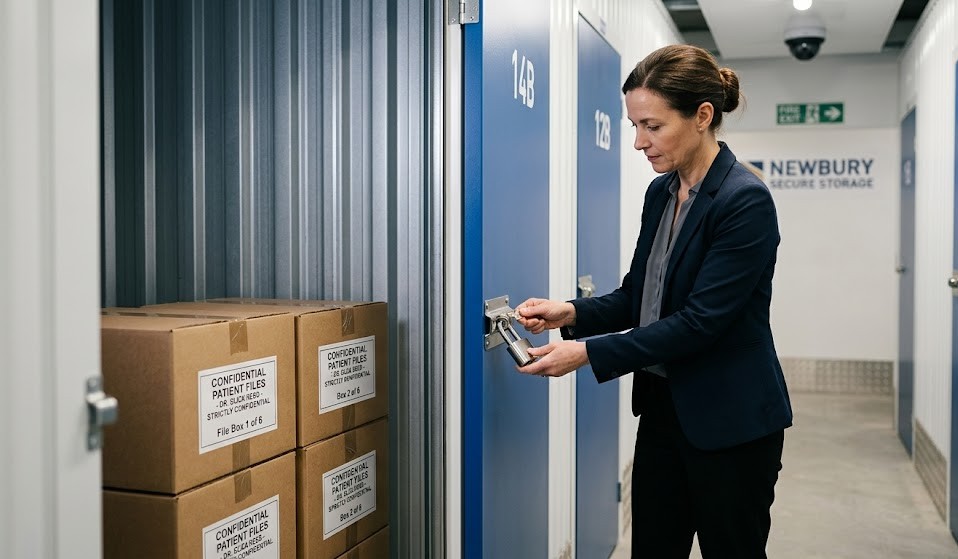
Running a private mental health practice means managing sensitive client information with absolute care. Every session note, treatment plan, and assessment form contains deeply personal details that must remain secure and confidential – not just for ethical reasons, but because the law demands it.
Many practitioners start their careers storing files in home offices or clinic cupboards, but as caseloads grow, so does the volume of paperwork. Before long, you’re drowning in filing cabinets that crowd your workspace and wondering whether those boxes stacked in the spare room truly meet professional storage standards. The reality? They probably don’t.
Confidential document storage isn’t just about finding somewhere to put old files. It’s about maintaining compliance with data protection regulations, protecting client privacy, and ensuring you can retrieve records quickly when needed. For mental health professionals, this becomes even more critical given the sensitivity of the information you handle daily.
Why mental health records require special storage considerations
Client records in mental health practices differ significantly from general business documents. They contain psychiatric diagnoses, medication histories, trauma disclosures, and detailed notes about a person’s most vulnerable moments. Losing these files or allowing them to fall into the wrong hands could devastate clients and destroy your professional reputation.
The Data Protection Act 2018 and GDPR place strict obligations on how you handle personal data. Clinical records must be kept secure, accessed only by authorised individuals, and retained for specific periods – typically seven years after the last contact for adult clients, though longer for children or complex cases. You can’t simply chuck them in a damp garage or unlocked storage room.
Think of your filing system like a locked medication cabinet. You wouldn’t leave controlled substances sitting on a shelf where anyone could grab them. The same principle applies to confidential records.
Professional bodies like the BACP and HCPC also set clear standards for record-keeping. If a complaint arises or you face a professional investigation, you’ll need to produce accurate records from years past. Missing or damaged files won’t just complicate matters – they could jeopardise your registration.
Common storage challenges facing private practitioners
Most mental health professionals work in small clinical spaces where every square metre counts. Your consulting room should feel calm and uncluttered, not dominated by towering filing cabinets. Yet many practitioners find themselves sacrificing valuable clinical space to store years of archived records.
One clinical psychologist we spoke with described her home office as “a paper fortress” after ten years of practice. She’d accumulated 23 archive boxes of client files, assessment reports, and correspondence. They lined the walls, sat under her desk, and gradually encroached into the hallway. Finding a specific file meant excavating through multiple boxes, and she constantly worried about the fire risk.
Security presents another headache. Storing confidential files at home exposes them to risks you can’t fully control – burglary, fire, flooding, or simply family members accidentally accessing sensitive information. One counsellor learned this lesson the hard way when a burst pipe destroyed two years’ worth of client notes stored in her basement.
Then there’s the question of accessibility. You need records available when clients return after a gap in treatment, when writing reports, or when responding to Subject Access Requests. But you don’t need them cluttering your daily workspace. Balancing accessibility with space efficiency becomes increasingly difficult as your practice matures.
What proper confidential document storage actually involves
Effective confidential document storage rests on three pillars: security, organisation, and environmental protection. Get any of these wrong and you’re exposing yourself to serious risks.
Security measures must prevent unauthorised access. This means storing files in locked containers within secure facilities that restrict entry. At Newbury Self Store, individual units are accessed only by keyholders, with 24-hour CCTV monitoring and secure perimeter fencing. You can’t replicate this level of security with a cupboard in your clinic or boxes under your spare bed.
Organisation systems determine whether you can actually find what you need. Before moving files to storage, create a detailed indexing system. Number each box clearly, maintain a master list of contents, and group files logically – perhaps by year or alphabetically by client surname. One therapist uses coloured labels for different record types: green for active files, blue for closed cases, red for safeguarding documentation. Simple, but brilliantly effective.
Environmental protection matters more than many practitioners realise. Paper records deteriorate in damp, fluctuating temperatures, or direct sunlight. Mould can render files illegible within months if conditions aren’t right. Professional storage facilities maintain consistent environments that preserve documents for years without degradation.
Preparing clinical records for off-site storage
You can’t simply box up files and hope for the best. Proper preparation protects both the documents and your ability to retrieve information later.
Start by conducting a thorough audit. Which records must you retain by law? Which can you securely destroy? The Information Commissioner’s Office provides clear guidance on retention periods. Adult mental health records typically require seven years from last contact, but child and adolescent records should be kept until the client’s 25th birthday or eight years after last contact, whichever is longer.
For records you’re keeping, follow this preparation process:
Remove unnecessary materials like duplicate copies, internal drafts, or sticky notes that add bulk without value. Keep only the official clinical record.
Use archive-quality boxes rather than flimsy cardboard that collapses when stacked. Sturdy containers protect contents and make efficient use of vertical space. You can find appropriate supplies through packaging specialists who understand document storage requirements.
Label everything clearly with box numbers, date ranges, and general content descriptions. Avoid writing client names on the outside of boxes – use reference numbers instead to maintain confidentiality even during transport.
Create a master inventory listing every box and its contents. Store this digitally in multiple locations so you can quickly identify which box contains specific files without travelling to the storage facility.
Seal boxes securely with strong packing tape. Consider using tamper-evident seals if you need to demonstrate files haven’t been accessed inappropriately.
One psychiatric nurse described this process as “like preparing for an inspection that never ends.” The effort you invest upfront pays dividends when you need to locate a five-year-old assessment report at short notice.
Choosing the right storage solution for your practice
Not all storage options suit mental health practices equally. You need more than just space – you need security, accessibility, and peace of mind.
Home storage might seem convenient, but it rarely meets professional standards. Your home insurance probably doesn’t cover commercial records, and you’re exposing confidential information to household risks. Plus, if you ever face a complaint investigation, storing client files in your personal residence raises questions about appropriate boundaries.
Clinic storage works for current files but becomes impractical for archives. Renting extra clinical space just to house old files means paying premium rates for what should be a cost-effective storage solution. Your consulting room should serve clients, not filing cabinets.
Professional private practice storage offers the ideal balance. Dedicated business storage facilities provide secure, accessible space at a fraction of clinic rental costs. You can choose unit sizes that match your current needs and upgrade as your archive grows.
Look for facilities offering:
- Individual unit access so only you can enter your storage space
- CCTV monitoring and secure site perimeters
- Dry, temperature-stable environments that preserve paper documents
- Flexible access hours allowing you to retrieve files when needed
- Ground-floor or lift access making it easy to transport boxes
For practices storing substantial archives, container storage provides cost-effective space for dozens of boxes whilst maintaining security and protection.
Maintaining compliance and audit trails
Storing records off-site doesn’t reduce your legal responsibilities – if anything, it requires more rigorous documentation. You must demonstrate you know where files are, who can access them, and that they remain secure.
Create a file movement log recording when boxes leave your clinic, where they’re stored, and any subsequent retrievals. This audit trail proves you’ve maintained appropriate control over confidential information.
Review your storage arrangements annually. Are boxes still in good condition? Does your inventory remain accurate? Have retention periods expired for any files, allowing you to securely destroy them and reduce storage costs?
When the time comes to dispose of records, don’t just bin them. Confidential waste must be securely destroyed through shredding or specialist disposal services. Many practitioners use professional shredding companies that provide certificates of destruction – valuable evidence that you’ve handled client information responsibly throughout its lifecycle.
Real-world impact: a practice manager’s experience
Sarah runs a group therapy practice with four counsellors. After eight years, their small office was bursting with archived files. “We were literally working around boxes,” she explains. “Client confidentiality felt compromised because files were everywhere, and we couldn’t guarantee security.”
They moved to professional private practice storage, dedicating a weekend to organising and boxing 15 years of records. “It felt like archaeology,” Sarah laughs. “We found files we’d forgotten existed.” The process revealed several boxes of records past their retention period, which they securely destroyed, immediately reducing storage needs.
Now their clinical space feels professional again. “Clients comment on how calm the environment feels,” Sarah notes. “And when we need old records – which happens more often than you’d think – I can find them in minutes using our inventory system.”
The cost? Less than they’d spend on a single supervision session monthly. “It’s not an expense,” Sarah insists. “It’s essential infrastructure for running a compliant practice.”
Integrating digital and physical record systems
Many practices now use electronic health records, but few have gone entirely paperless. You’re probably managing a hybrid system – digital notes supplemented by physical assessment forms, client artwork, handwritten letters, or historical records predating your electronic system.
This creates a dual storage challenge. Your digital records need secure backup systems and encrypted storage. Your physical records still require appropriate archival solutions. Don’t assume digital automatically means secure – cloud storage breaches can expose confidential information just as easily as a stolen filing cabinet.
For physical records that must remain accessible, consider scanning key documents before archiving. This creates a digital backup whilst allowing you to store originals securely off-site. However, ensure your scanning process maintains confidentiality – never use public print shops or unsecured scanning services for client records.
Cost-effective storage planning for growing practices
Storage costs should scale with your practice, not overwhelm it. A newly qualified therapist with three years of records needs different solutions than an established practice with multiple clinicians and decades of archives.
Start by calculating your current storage volume and growth rate. If you see 20 clients weekly and retain records for seven years, you’re accumulating roughly 1,000 client files annually. That’s approximately 10-12 archive boxes per year. Plan storage capacity accordingly.
Consider shared storage arrangements if you work within a practice group. Splitting costs for a larger unit can reduce individual expenses whilst maintaining separate, secure sections for each practitioner’s files.
Review your storage annually and destroy records that have exceeded retention periods. This isn’t just good housekeeping – it’s a GDPR requirement. You shouldn’t retain personal data longer than necessary.
Making the transition to professional storage
Moving archived records to professional private practice storage feels daunting, but breaking it into manageable steps makes the process straightforward.
Week one: Audit your current files and identify what needs archiving. Separate active files from closed cases past their immediate usefulness.
Week two: Organise and box records systematically. Create your inventory as you pack, not afterwards. This is tedious but crucial.
Week three: Arrange your storage unit. Visit facilities, compare options, and choose a solution that meets your security and accessibility requirements. Personal storage options work well for sole practitioners, whilst group practices might need larger business solutions.
Week four: Transport boxes and establish your filing system in the storage unit. Arrange boxes logically with frequently accessed materials near the front.
Most practitioners complete this transition over a weekend or two. The immediate benefit? Reclaiming clinical space and knowing your confidential records are properly secured.
Protecting your professional reputation
Your approach to record storage reflects your professional standards. Clients trust you with their most private thoughts and experiences. Demonstrating that you protect this information – even years after treatment ends – reinforces that trust.
When clients ask about confidentiality, you can confidently explain your secure storage systems. When professional bodies conduct audits, you can produce well-organised records without frantic searching. And when you face the inevitable Subject Access Request, you can retrieve files efficiently rather than explaining why records are missing or damaged.
Think of confidential document storage as professional insurance. You hope you’ll never face a complaint or legal challenge, but if you do, proper record-keeping becomes your strongest defence. Missing or poorly maintained files undermine your position, whilst comprehensive, secure archives demonstrate your commitment to professional standards.
Conclusion
Managing confidential documents properly isn’t optional for mental health practitioners – it’s a fundamental professional responsibility. As your practice grows, so does your archive, and storing sensitive client information in clinic cupboards or home offices simply doesn’t meet modern security and compliance standards.
Professional private practice storage solutions provide the security, organisation, and environmental protection that clinical records demand. They free your clinical space for its intended purpose, reduce risks to client confidentiality, and ensure you can access historical records when needed. The investment is modest compared to the peace of mind and professional protection it delivers.
Whether you’re a sole practitioner drowning in filing cabinets or a group practice struggling to manage years of archived records, now is the time to implement proper storage systems. Your clients deserve to know their private information remains secure long after treatment ends. Your professional reputation depends on demonstrating appropriate care for confidential documents throughout their lifecycle.
If you’re ready to reclaim your clinical space and implement professional-grade document security, contact us to discuss storage solutions tailored to mental health practices. Your files – and your clients’ privacy – deserve nothing less than proper protection.