
 01635 581 811
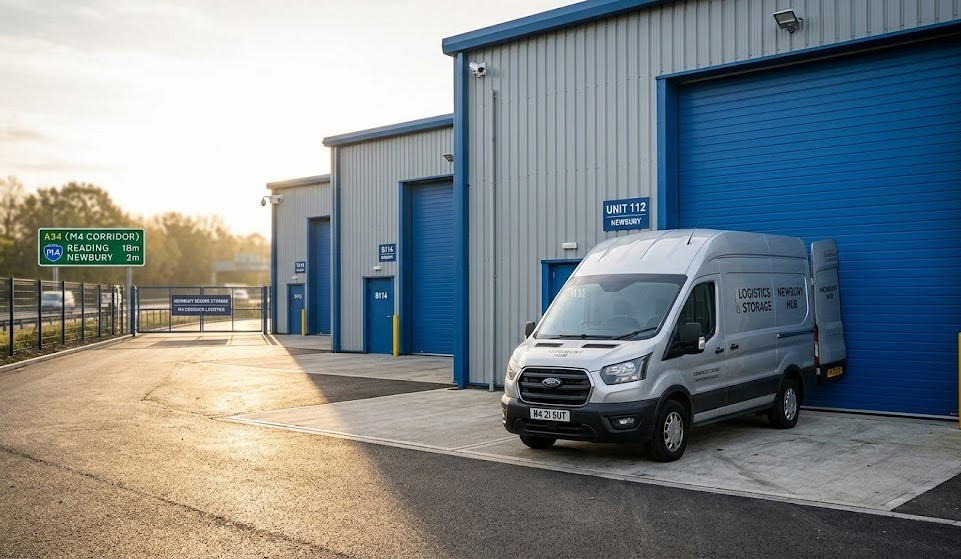
The stretch of the M4 between Reading and Newbury isn’t just a commuter route. It’s one of the UK’s most commercially dense corridors, home to thousands of M4 corridor businesses that need flexible, accessible space without paying London-level rents. If you’re running a business along this corridor, you already know the challenge: commercial property is expensive, and every square metre counts.
M4 corridor business storage has become a practical solution for companies that need room to grow without locking themselves into long-term leases or expensive warehouse contracts. Whether you’re managing stock for an e-commerce operation, storing equipment for a trades business, or archiving records for a professional services firm, self-storage offers a level of flexibility that traditional commercial property can’t match.
Why M4 Corridor Businesses Choose Self-Storage
M4 corridor businesses face a unique set of pressures. You’re operating in a high-cost region, often competing with larger firms for space and talent. You need to stay lean, responsive, and ready to scale up or down depending on demand. That’s where self-storage becomes a strategic asset rather than just a place to dump excess stock.
The advantage of a facility like Newbury Self Store is its location. Positioned just off the M4, it’s accessible from Reading and Newbury, Thatcham, and surrounding areas without the logistical headaches of navigating congested town centres. You can reach the facility quickly, load or unload what you need, and get back on the road.
Drive-up access is critical for businesses that move goods regularly. You don’t want to be hauling boxes through narrow corridors or waiting for a lift. You want to reverse up to your unit, load directly, and leave. That’s the kind of efficiency that saves time and money over the course of a year.
The Cost Advantage: Comparing Self-Storage to Commercial Property
Let’s talk numbers. A small industrial unit in Reading or Newbury can easily cost £1,200 to £2,000 per month, often with business rates, service charges, and long-term commitments. You’re also paying for space you might not fully use, along with the overheads of heating, lighting, and maintenance.
Self-storage, by contrast, is priced by the square metre and typically comes with flexible terms. You pay only for the space you need, and you can scale up or down with a month’s notice. There are no business rates, no utility bills, and no maintenance costs. For a growing business, that flexibility’s invaluable.
Consider a small e-commerce business storing 200 square feet of stock. In a commercial unit, you’d be paying for at least 500-1,000 square feet to meet minimum lease requirements. With self-storage, you pay for 200 square feet and nothing more. When demand increases during peak seasons, you can temporarily add a second unit. When things slow down, you scale back.
What Types of Businesses Use M4 Corridor Storage?
The businesses using business storage along the M4 are diverse, but they share common needs: flexibility, security, and easy access.
E-commerce and online retailers are some of the most frequent users. They need somewhere to hold stock between supplier deliveries and customer shipments. A storage unit becomes an extension of their operation, a place to manage inventory without renting a full warehouse or cluttering their home.
Trades and contractors use storage for tools, equipment, and materials. A plumber or electrician working across Berkshire doesn’t want to lug every tool to every job. They keep their van stocked with essentials and store the rest in a secure unit, accessible whenever they need to restock or swap out equipment.
Professional services firms use storage for records, archives, and seasonal equipment. A law firm might store old case files that must be retained but don’t need to occupy expensive office space. An accountancy practice might store boxes of client documents during tax season, then clear them out once the rush is over.
Event and hospitality businesses store everything from furniture to display materials. A wedding planner might keep backdrops, centrepieces, and decor in a unit, pulling items out as needed for each event. A mobile catering business might store equipment, tables, and serving ware between bookings.
Security and Access: What M4 Businesses Should Expect
Security isn’t negotiable when you’re storing business assets. You need to know that your stock, equipment, or records are protected around the clock. That’s why 24-hour CCTV, individually alarmed units, and secure perimeter fencing are standard features at professional storage facilities.
Access is equally important. Some businesses need to retrieve items outside standard working hours. A contractor might need to restock their van at 6am before heading to a job site. An e-commerce seller might need to pack orders in the evening after their day job. Flexible access hours mean you’re not constrained by someone else’s schedule.
Insurance is another consideration. Most self-storage facilities require businesses to have their own insurance, but this is typically straightforward and inexpensive. It’s worth checking whether your existing business insurance covers goods in storage, or whether you need to add a rider to your policy.
Choosing the Right Unit Size for Your Business
One of the most common mistakes businesses make is either overestimating or underestimating the space they need. Too much space means wasted money. Too little means you’re cramming items in, making them hard to access, or worse, risking damage.
A 50 square foot unit is roughly the size of a small garden shed. It’s enough for a few boxes of documents, some small tools, or a modest amount of stock. Think of it as a filing cabinet’s worth of space.
A 100 square foot unit is closer to a single garage. You can fit racking, several pallets of stock, or a significant amount of equipment. This is a common size for small e-commerce businesses or trades contractors.
A 200 square foot unit is spacious enough for larger operations. You could store the contents of a small office, multiple pallets of goods, or bulky equipment like scaffolding or ladders. Some businesses use this size as a staging area, rotating stock in and out as orders are fulfilled.
If you’re unsure, it’s worth speaking to the facility team. They’ve seen hundreds of businesses move in and can give you a realistic sense of what’ll fit. You can also start smaller and upsize if needed.
Packing and Organising Your Business Storage Unit
How you pack your unit directly affects how useful it is. A poorly organised unit means wasted time searching for items, and wasted time is wasted money – like having a cluttered workshop where you spend more time hunting for tools than actually using them.
Start by investing in sturdy shelving. Racking units keep boxes off the floor, protect them from potential moisture, and make it easy to see what you have. Label everything clearly, using a consistent system. If you’re storing stock, consider using a simple inventory sheet or spreadsheet so you know exactly what’s in the unit without having to visit in person.
Pack heavy items at the bottom and lighter items on top. Use clear plastic boxes where possible, so you can see contents at a glance. If you’re storing documents, use archive boxes with lids and label them by year or category.
Leave an aisle down the middle of the unit so you can access items at the back without having to unpack the entire space. This is especially important if you’re rotating stock regularly or need to retrieve specific items quickly.
For businesses storing equipment, protect tools and machinery with dust covers or bubble wrap. Clean everything before storing it, especially if you’re putting away power tools or metal items that could rust. If you’re storing electronics, remove batteries to prevent corrosion.
You can pick up everything you need from the packaging shop, including boxes, tape, bubble wrap, and labels. It’s worth getting the right materials from the start rather than making do with flimsy boxes that collapse under weight.
Seasonal Storage: Managing Peaks and Troughs
Many M4 corridor businesses experience seasonal demand. Retailers see spikes around Christmas and Black Friday. Event businesses are busy in summer. Accountants are swamped during tax season. Self-storage allows you to scale your space to match these fluctuations.
Instead of paying year-round for a large unit, you can add a second unit during peak months and drop it when demand falls. This kind of flexibility’s impossible with traditional commercial leases, which lock you into fixed space for years.
A garden centre, for example, might store extra stock and equipment during winter, then scale back in spring when everything moves out to the sales floor. An online toy retailer might double their storage space in October and November, then reduce it in January once the Christmas rush is over.
One Reading-based IT reseller experienced this firsthand. They typically kept around 100 laptops and monitors in stock, but during back-to-school season in August and September, demand tripled. Rather than renting permanent warehouse space they’d only fully use two months a year, they added a second storage unit for ten weeks. The flexibility saved them over £8,000 annually compared to leasing additional commercial space year-round.
How Self-Storage Supports Business Growth
Growth is exciting, but it’s also risky. Taking on a larger premises or signing a long-term lease is a big commitment, and if demand doesn’t materialise, you’re stuck with costs you can’t shed.
Self-storage acts as a buffer. It gives you room to grow without overcommitting. You can take on more stock, expand your product range, or increase your service area, all whilst keeping your fixed costs low. If things don’t work out, you can scale back without breaking a lease or paying penalties.
Think of it as a bridge between stages of growth. You’re not ready for a full warehouse, but you’ve outgrown your garage or spare room. Self-storage fills that gap, giving you the space you need to test the market, build demand, and prove the business model before making a bigger investment.
Record Retention and Compliance
If you’re in a regulated industry, you’re likely required to keep certain records for a set number of years. Law firms, accountants, medical practices, and financial advisors all have legal obligations around document retention. But keeping years of files in your office is expensive and impractical.
Business storage is a cost-effective way to meet compliance requirements without sacrificing valuable office space. You can archive old case files, client records, or financial documents in a secure unit, knowing they’re safe, accessible, and protected.
When it’s time to retrieve a file, you can access the unit during business hours or arrange to collect what you need. When the retention period expires, you can dispose of records securely, either by shredding them yourself or using a professional service.
A Newbury-based accountancy firm with twelve staff faced exactly this challenge. They were legally required to keep client tax records for six years, which meant their 1,200 square foot office was gradually filling with archive boxes. By moving historical records to storage, they freed up an entire room that they converted into a meeting space for client consultations. The storage cost was less than £100 monthly – a fraction of what that office space was worth in commercial terms.
Location and Logistics: Why Proximity to the M4 Matters
The M4 corridor is a logistics artery. Businesses here depend on fast, reliable access to suppliers, customers, and transport networks. Choosing a storage facility that’s close to the motorway isn’t just convenient – it’s a competitive advantage.
If you’re based in Reading but your storage is in Basingstoke, you’re adding unnecessary travel time and fuel costs. If you’re in Newbury and your unit’s in Swindon, you’re wasting half a day every time you need to restock. Proximity matters, especially if you’re visiting the unit multiple times a week.
A facility near Junction 13 of the M4 is accessible from Reading and Newbury, Thatcham, Hungerford, and surrounding areas without fighting through town traffic. You can get in, get what you need, and get back to work.
Making the Switch: What to Expect When You Move In
Moving into a storage unit is straightforward, but it’s worth planning ahead. Start by booking the right size unit and confirming access hours. If you’re moving in a large amount of stock or equipment, check whether the facility has trolleys or pallet jacks available.
Pack and label everything before you arrive. The more organised you are, the faster the move-in process. If you’re using racking, assemble it in the unit and load it systematically, heaviest items first.
Take photos of your setup once everything’s in place. This helps if you need to explain to a colleague where something’s stored, and it’s useful for insurance purposes if you ever need to make a claim.
If you’re moving from commercial premises, don’t underestimate how much space you’re actually using. Measure twice, and if in doubt, contact the team to discuss your needs. They can walk you through the options and help you choose the right unit.
Strategic Storage for M4 Corridor Success
For M4 corridor businesses, self-storage isn’t just a fallback option – it’s a strategic tool that supports flexibility, reduces costs, and enables growth without unnecessary risk. Whether you’re managing stock, storing equipment, or archiving records, the right storage solution gives you the space to operate efficiently without the overheads of traditional commercial property.
The key is choosing storage facilities that understand business needs: secure, accessible, flexible, and located where it actually makes logistical sense. If you’re running a business between Reading and Newbury, that means a facility that’s close to the M4, easy to reach, and designed to support the way you actually work.
Newbury Self Store understands that M4 corridor businesses need more than just empty space. You need facilities where your stock stays secure, your equipment remains accessible, and your operations can scale without the commitment of expensive commercial property. We know that your stored items aren’t just boxes – they’re essential business assets that support your growth and profitability.
Don’t let space constraints hold you back. Find the right storage solution, and give your business room to grow. Contact us to discuss flexible storage options that match your operational requirements and support your business goals along the M4 corridor.