
 01635 581 811
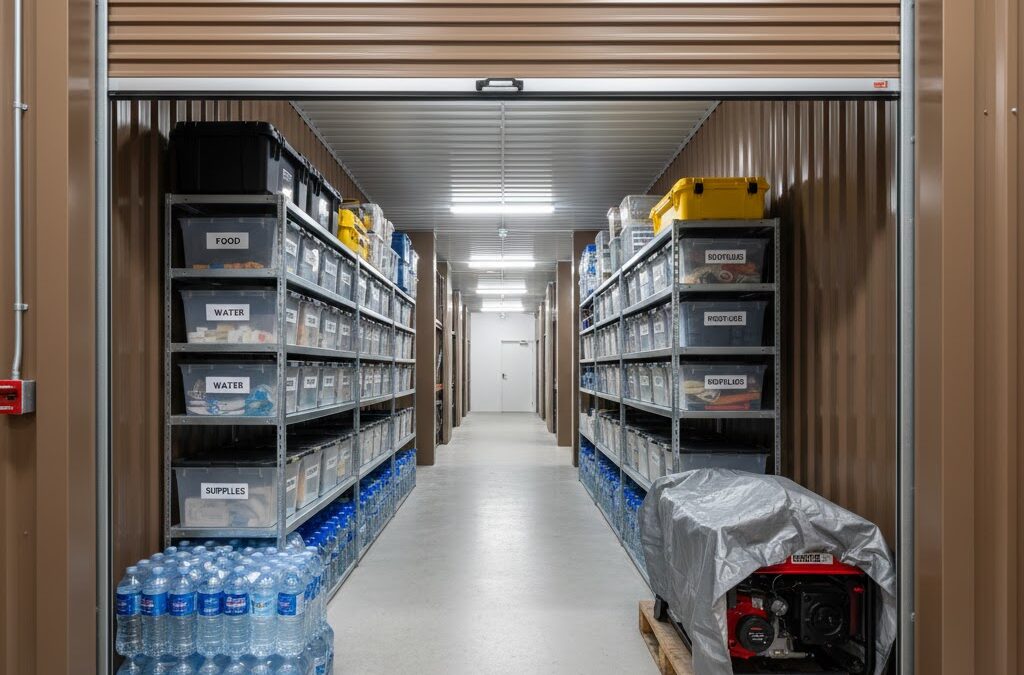
A robust emergency plan extends well beyond keeping a torch and bottled water under the stairs. Genuine preparedness means establishing long-term emergency storage that protects your family’s essential supplies, critical documents, and irreplaceable possessions even when your home becomes inaccessible. This isn’t about preparing for apocalyptic scenarios – it’s about sensible planning for realistic disruptions that affect thousands of UK families annually.
Developing a comprehensive family preparedness plan represents fundamental responsibility rather than paranoia. Floods, fires, extended power cuts, and severe weather events occur regularly throughout Britain. Families with proper off-site storage weather these crises considerably more calmly than those scrambling to protect belongings whilst managing emergencies simultaneously.
The key insight is simple: your home might be the source of the emergency. If flooding renders your property uninhabitable or fire damages your house, supplies stored at home become inaccessible exactly when you need them most. Off-site storage eliminates this single point of failure that undermines purely home-based preparation.
Why Home Storage Creates Vulnerabilities
Most people initially assume garages, lofts, or basements provide adequate emergency storage capacity. This assumption proves problematic once you actually calculate requirements. Three months of supplies for a family of four occupies substantial space – dozens of cubic feet minimum before considering water, which weighs enormously and requires significant room.
Home storage also introduces organisational challenges. Emergency supplies mixed with everyday clutter become impossible to locate quickly during actual crises. You need to find specific items within minutes during stressful situations, not spend hours searching through chaotic storage areas.
The fundamental problem is location-based risk. If your emergency stems from property problems – fire, flooding, structural damage, burst pipes – then supplies stored at that property become inaccessible. You’ve invested time and money preparing supplies that prove useless because you cannot reach them. This single point of failure makes purely home-based storage inadequate for serious preparedness.
Think about it practically. Would you keep all your important computer files on a single device with no backups? Obviously not. Physical emergency supplies deserve equivalent redundancy through geographic separation.
Strategic Advantages of Professional Off-Site Storage
Moving emergency reserves to secure professional facilities provides distinct advantages that dramatically improve preparedness effectiveness. You’re not just relocating supplies – you’re establishing protected infrastructure that remains accessible regardless of what happens at your primary residence.
Security That Exceeds Home Standards
Professional storage facilities implement security measures that homes simply cannot match. 24/7 CCTV monitoring provides constant surveillance across all areas. Perimeter fencing with electronic gates prevents unauthorised access. Individual unit alarms protect your specific storage space. Controlled access systems create digital records of every entry and exit.
These multiple security layers ensure emergency supplies remain protected against theft whilst staying accessible when you actually need them. Your home might have basic locks, but professional facilities offer bank-level security for everything stored within them.
Newbury Self Store implements these security standards as baseline requirements, understanding that emergency supplies represent investments in family safety that deserve professional protection.
Accessibility When You Actually Need It
Extended access hours or 24/7 availability mean you can retrieve emergency supplies regardless of when crises occur. Emergencies don’t follow convenient schedules. Flooding happens at 2am. Power cuts occur during weekends. Having storage accessible whenever needed proves essential.
Flexible access also accommodates rotating supplies, checking inventory, and adjusting storage contents as family circumstances change. You’re not restricted to business hours that might not suit your schedule.
Climate Control Protects Sensitive Items
Certain emergency supplies require environmental stability that home storage rarely provides. Important documents warp and mould in damp conditions. Medications lose effectiveness when exposed to temperature extremes. Electronics suffer condensation damage from humidity fluctuations. Long-term food storage degrades rapidly without proper conditions.
Climate-controlled units maintain consistent temperature and humidity levels that preserve sensitive supplies indefinitely. This protection isn’t luxury – it’s essential infrastructure ensuring everything remains functional when crises occur. The modest additional cost prevents expensive supply degradation that wastes your preparedness investment.
For bulk supplies or large equipment requiring maximum security, container storage options provide drive-up access whilst maintaining robust protection standards.
Consider the Thompson family’s experience. When a kitchen fire made their home uninhabitable for six weeks, they retrieved essential clothing, toiletries, and all important documents from their storage unit immediately. Having these necessities readily available eliminated enormous stress during an already difficult period. Their neighbours, who kept everything at home, lost access to crucial items precisely when they needed them most.
Essential Inventory for Emergency Reserves
Knowing what to store matters as much as where you store it. Your long-term emergency storage inventory should focus on items ensuring health, communication, and self-sufficiency for extended periods away from home.
Sustenance and Medical Supplies
Non-perishable food with extended shelf lives forms the foundation. Canned goods, dried fruits, nuts, pasta, rice, and high-calorie energy bars targeting at least three months’ supply per person provide genuine security. Calculate actual requirements – a family of four needs substantial quantities that quickly fill multiple boxes.
Water remains your absolute priority. Adults need roughly one gallon daily for drinking and basic sanitation. Three months for four people means 360 gallons – that’s significant weight and volume requiring dedicated storage space that homes often cannot spare. Include water purification tablets as backup if storing actual water proves impractical.
Comprehensive first aid supplies address injuries and health maintenance. Stock bandages, sterile gauze, antiseptic wipes, pain relievers, antihistamines, and adequate supplies of any prescription medications family members require. Include basic medical manuals if you’re not confident about emergency treatment procedures.
Establish rotation schedules checking expiration dates regularly. Use “first in, first out” methods ensuring nothing expires before use. This maintenance keeps supplies genuinely useful rather than creating false security from outdated stock.
Clothing, Bedding, and Communication Equipment
Seasonal clothing for all family members occupies substantial space that home storage often cannot accommodate. Include warm layers, waterproof outerwear, sturdy footwear, and spare changes suitable for various weather conditions. Don’t assume regular wardrobes will be accessible during emergencies.
Bedding and comfort items including sleeping bags, blankets, and pillows provide essential comfort during displacement. These bulky items store well off-site without cluttering living spaces. Include comfort objects and familiar items that help children cope during stressful situations.
Communication equipment keeps you informed when normal systems fail. Battery-operated or hand-crank radios provide emergency broadcasts when internet and mobile networks stop working. Portable generators or solar chargers keep essential devices operational. Include backup batteries in various sizes.
Critical Documentation Protection
Important documents require waterproof and fireproof protection within your storage unit. Store copies (not originals you need frequently) of birth certificates, passports, insurance policies, property deeds, wills, and financial records. These documents prove identity, establish ownership, and enable insurance claims after incidents.
Organise documents systematically using clearly labelled folders within sealed containers. Create inventories listing exactly what’s stored where. This organisation proves crucial when you need specific documents urgently during stressful situations.
You can source quality protective storage supplies – waterproof document containers, sealed food storage boxes, sturdy shelving, and labelling materials – from the packaging shop to ensure proper organisation and protection.
Optimising Storage Organisation
Simply moving supplies into storage units doesn’t create effective preparedness. Strategic organisation determines whether your family preparedness plan actually functions during crises or creates additional stress through chaos.
Logical Layout Planning
Organise units to reflect access frequency. Items needed immediately during emergencies belong near the entrance at convenient heights. Seasonal items or rarely accessed supplies can occupy back areas or high shelves. This practical arrangement speeds retrieval when you’re stressed and potentially working in limited lighting.
Use sturdy shelving to maximise vertical space whilst keeping items off floors. This approach prevents water damage if any seepage occurs and dramatically increases usable capacity. Uniform boxes stack more efficiently than mismatched containers.
Label everything comprehensively. “Medical Supplies – First Aid Kit + Prescriptions” proves far more useful than vague “Medical Box” labels. Specific descriptions speed location of individual items without opening every container.
Create detailed inventories – both physical copies inside units and digital backups accessible remotely. Note box numbers and specific contents. This documentation enables locating individual items quickly rather than searching randomly through dozens of similar boxes.
Think of organisation like professional warehouse management. Every item has its designated location. Staff can locate specific products within seconds because systematic organisation makes finding things straightforward rather than chaotic.
Business storage solutions apply similar organisational principles to commercial inventory, demonstrating that systematic approaches work effectively for any stored materials requiring rapid access.
Maintaining Preparedness Over Time
Emergency preparedness requires ongoing commitment rather than one-time setup. Supplies expire, family circumstances change, and maintaining effectiveness demands regular attention.
Regular Inspection and Rotation
Check stored supplies every six months minimum. Inspect for water damage, pest problems, or deterioration. Address any issues immediately before they compromise entire storage areas.
Verify expiration dates on all food, water, and medications. Rotate stock using oldest items first and replenishing with fresh supplies. This rotation ensures nothing expires before use whilst maintaining full inventory levels.
Update supplies when family circumstances change. New babies require nappies, formula, and different clothing. Growing children need larger sizes. Medical conditions require updated medications. Regular reviews ensure supplies match current family needs rather than outdated circumstances.
Test equipment periodically. Torches might have corroded batteries. Radios might have failed components. Generators require maintenance. Regular testing identifies problems whilst you can address them calmly rather than discovering failures during actual emergencies.
Selecting Appropriate Storage Solutions
Choosing the right storage facility and unit size determines how effectively your long-term emergency storage actually protects your family during crises.
Unit Sizing Considerations
Carefully assess total inventory volume before committing to specific unit sizes. Underestimating requirements forces overcrowding that hampers accessibility and organisation. Slightly overestimating provides breathing room for comfortable arrangement and future expansion.
Most families storing three months of comprehensive supplies find 25-50 sq ft units adequate for essential inventory. Larger families or those preparing for extended scenarios might require 75-100 sq ft spaces accommodating substantial reserves comfortably.
Calculate requirements systematically rather than guessing. Measure actual supply volumes, add space for organisation and access, then select units matching these practical needs.
Location and Access Requirements
Choose facilities near home or regular routes that remain accessible even if some roads close during emergencies. Driving 30 minutes to reach storage during normal times might prove acceptable, but that journey becomes considerably harder during crises affecting transport infrastructure.
Verify access arrangements suit potential emergency scenarios. If you might need supplies at 3am during severe weather, can you actually reach and enter the facility? Flexible access proves useless if getting there proves impossible during the emergencies you’re preparing for.
Security and Climate Control
Don’t compromise on security for modest cost savings. Professional security measures protect investments in supplies and provide peace of mind that everything remains safe whilst stored. Electronic access, CCTV monitoring, and individual alarms should be standard features rather than premium upgrades.
Climate control becomes non-negotiable if storing medications, electronics, important documents, or temperature-sensitive supplies. The additional monthly cost prevents degradation that wastes far more money replacing damaged supplies.
Personal storage solutions provide the security and environmental control that domestic emergency storage requires whilst maintaining flexible terms that accommodate changing family needs.
Creating Comprehensive Family Protection
Effective family preparedness plans combine multiple elements – home supplies for immediate needs, off-site storage for extended reserves, clear communication protocols, and regular maintenance ensuring everything remains functional. This systematic approach transforms abstract preparation into practical infrastructure that genuinely protects families during realistic emergencies.
The goal isn’t surviving nuclear war or zombie apocalypses. It’s ensuring your family weathers flooding, extended power cuts, house fires, or similar disruptions that affect thousands of UK households annually without facing preventable hardships.
Off-site storage provides the foundation making comprehensive preparation practical. You gain storage capacity homes cannot provide, security that exceeds domestic standards, and geographic separation that protects against single points of failure undermining purely home-based approaches.
Ready to establish proper emergency storage for your family? Contact the team for straightforward advice about unit sizing, climate control options, and security features that support effective long-term family preparedness planning.