
 01635 581 811
Local authority contractors face a unique challenge that most private sector businesses don’t: managing equipment and materials across multiple council projects simultaneously, often with strict audit requirements and zero tolerance for delays. When you’re responsible for maintaining parks, repairing roads, or upgrading community facilities, the sheer volume of tools, machinery, and materials can quickly overwhelm any available workspace.
The pressure intensifies when councils demand detailed records of every item used, when project timelines shift unexpectedly, or when seasonal work creates massive fluctuations in what you need to keep on hand. A landscaping contractor might need three ride-on mowers and bulk supplies of topsoil in spring, but only basic maintenance tools in winter. A highways contractor could be storing traffic management equipment for six months between projects, yet needs it accessible within hours when a new council contract starts.
Secure, flexible local authority contractor storage becomes not just convenient but essential for maintaining the efficiency and compliance that council contracts demand. The right storage solution protects expensive equipment from theft and weather damage whilst keeping your main depot clear for active projects. It’s the difference between scrambling to find space when you win a new tender and having a scalable system that grows with your workload.
Why Council Contractors Need Dedicated Storage Space
Most council contractors start storing equipment wherever they can find room – in lock-ups, at residential properties, or crammed into increasingly chaotic depot corners. This approach works until it doesn’t. Then you’re hunting for a specific piece of surveying equipment the night before a site inspection, or you’ve lost track of which project consumed your stock of road paint.
Local authority contracts typically require detailed asset management. You need to know exactly what equipment you own, where it is, and which project it’s allocated to. That’s nearly impossible when your gear’s scattered across three different locations, none of which have proper inventory systems.
Security presents another critical concern. Local authorities expect contractors to demonstrate robust measures for protecting public assets and expensive machinery. Leaving a £15,000 excavator in an unsecured yard doesn’t just risk theft – it risks your reputation and future contract opportunities. Insurance companies take note too, often increasing premiums or refusing cover entirely for inadequately secured equipment.
Then there’s the practical matter of space efficiency. Council projects ebb and flow. You might need significant equipment storage during a three-month road resurfacing programme, then minimal space once it’s complete. Committing to a permanent facility you only fully utilise half the year wastes money that could go toward better equipment or competitive tender pricing.
What Local Authority Contractors Actually Need to Store
The range of items requiring storage varies dramatically depending on your specialisation, but certain categories appear consistently across council contracts.
Heavy machinery and vehicles top the list for most contractors. Excavators, dumper trucks, ride-on mowers, street sweepers, and specialist vehicles can’t simply park on residential streets between council projects. They need secure, accessible storage that protects them from weather and vandalism. Many contractors find that storing this equipment off-site – rather than at their main business premises – reduces insurance costs and keeps the primary workspace clear for daily operations.
Hand tools and power equipment might seem less critical, but losing a £400 concrete breaker or having battery-powered tools stolen adds up quickly. Council contractors typically maintain extensive tool collections: everything from basic spanners and hammers to specialist testing equipment for electrical or plumbing work. Proper storage means these tools remain organised, protected, and ready for deployment rather than rusting in a damp shed or walking off job sites.
Seasonal materials create particular headaches. Think of a grounds maintenance contractor storing bulk quantities of winter salt and grit from October through March, then switching to topsoil, compost, and plants for spring planting programmes. These materials need dry, accessible storage that doesn’t contaminate or degrade between uses. You can’t afford to discover your entire winter salt supply’s turned into a solid brick because it was stored improperly.
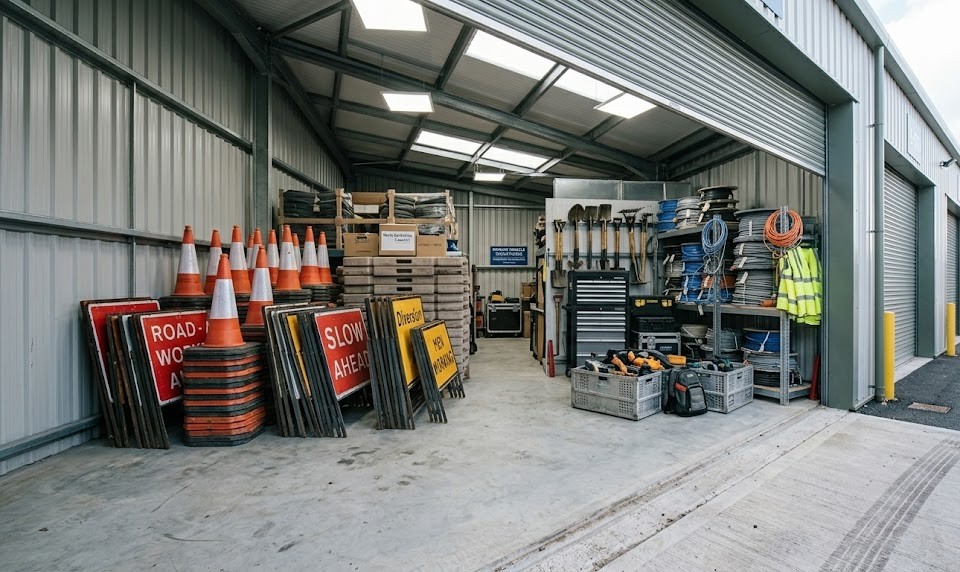
Traffic management and safety equipment represents a significant investment for highways contractors. Road signs, barriers, cones, temporary traffic lights, and high-visibility barriers might only deploy for specific projects, but they must meet strict safety standards. Damaged or faded equipment fails inspections and creates liability issues. Proper storage extends the life of this gear and ensures it’s audit-ready whenever council inspectors come calling.
Documentation and records might not seem like a storage issue, but many council contracts require contractors to maintain physical records for years. Site plans, risk assessments, completion certificates, and inspection reports pile up quickly. Whilst digital storage helps, some authorities still require original documents. Secure storage protects these records from damage whilst keeping your office workspace clear.
Consider a parks maintenance contractor managing contracts for three different councils in Berkshire. Spring arrives, and suddenly they need access to dozens of lawnmowers, hedge trimmers, leaf blowers, and edging tools – plus bulk supplies of fertiliser, weed killer, and spare parts. Come autumn, much of that equipment goes into storage, replaced by leaf collection machinery, tree surgery equipment, and winter preparation materials. They’d calculated that buying a larger permanent depot would cost £18,000 annually in additional rent and rates. Instead, they use a year-round 100 sq ft unit for core equipment (£180 monthly) and add a 200 sq ft seasonal unit from April to October (£280 monthly for 7 months). Total annual cost: £4,120 – saving them nearly £14,000 yearly whilst maintaining better organization than their old cramped depot ever allowed.
Security Requirements for Council Contract Equipment
Local authorities don’t just recommend good security – they often mandate it within contract terms. You’re handling public money and resources, which means demonstrating robust protection measures isn’t optional.
24-hour CCTV monitoring has become standard for any serious equipment storage. Modern systems don’t just record – they provide real-time alerts and remote viewing capabilities. If someone attempts to access your storage unit outside normal hours, you know immediately. This level of monitoring satisfies both council audit requirements and insurance underwriters who increasingly refuse to cover inadequately protected assets.
Individual unit alarms add another security layer that many contractors overlook. CCTV monitors the facility, but a dedicated alarm on your specific unit provides immediate notification if someone breaches your space. It’s the difference between reviewing footage after a theft and potentially preventing one.
Controlled access systems ensure only authorised personnel can enter storage areas. Pin codes, key fobs, or biometric systems create an audit trail showing exactly who accessed equipment and when. This proves invaluable if council auditors question asset management or if you need to investigate internal security concerns.
Perimeter security matters more than many contractors realise. High fencing, security lighting, and controlled entry points deter opportunistic theft before it starts. Professional thieves target easy opportunities – storage facilities with robust perimeter security simply aren’t worth the risk when easier targets exist elsewhere.
Think of security like choosing the right insurance policy. You’re not just protecting against the financial cost of replacement – you’re protecting your reputation, your ability to fulfil contracts, and your relationships with local authorities who expect contractors to take asset protection seriously.
Choosing the Right Unit Size for Your Equipment
Getting unit size wrong costs money in two directions: too small and you’re paying for additional space or can’t store everything you need; too large and you’re wasting money on empty floor space month after month.
Container storage suits contractors with heavy machinery, vehicles, or bulk materials. A standard 20-foot shipping container provides approximately 160 square feet of floor space – enough for a small excavator, several pallets of materials, and shelving for tools and equipment. The drive-up access means you can load and unload directly from your van or truck without navigating narrow corridors or lifts.
For contractors managing multiple council projects simultaneously, container storage offers the flexibility to scale up during busy periods and down when work slows. You’re not locked into permanent space you don’t always need.
Small to medium units work well for contractors focusing on lighter equipment and tools. A 50-75 square foot unit accommodates extensive tool collections, safety equipment, and documentation whilst remaining affordable for businesses with modest storage needs. These units suit electricians, plumbers, or specialist contractors who don’t handle heavy machinery but need secure space for valuable equipment.
Large commercial units become necessary when you’re storing the contents of entire project sites or maintaining equipment for multiple teams. A 150-200 square foot unit can hold several vehicles, extensive tool collections, bulk materials, and still provide workspace for equipment maintenance or inventory management.
The key’s honestly assessing what you actually need to store, not what you might theoretically store someday. Make a complete inventory of equipment and materials requiring storage. Measure larger items. Calculate how much shelving you’ll need for smaller tools and supplies. Then add roughly 20% for growth and ease of access – cramming a unit to absolute capacity makes finding anything a nightmare.
Accessibility and Operational Efficiency
Security matters, but so does getting to your equipment quickly when a council project needs it. The best storage solution balances protection with practical accessibility.
24/7 access has become increasingly important for local authority contractors. Council emergencies don’t respect office hours. When a fallen tree blocks a main road at 2am or a burst water main floods a community centre on Sunday morning, you need immediate access to equipment. Storage facilities offering round-the-clock access mean you’re never stuck waiting for someone to unlock a gate whilst a council project manager demands to know why you’re not on site.
Drive-up access saves enormous time and effort for contractors handling heavy equipment or bulk materials. Being able to reverse your van directly to your storage unit means loading and unloading takes minutes instead of hours. You’re not hauling equipment through corridors or waiting for lifts. This efficiency becomes particularly valuable when you’re moving between multiple job sites in a single day.
Loading equipment and facilities might seem like a minor consideration until you’re trying to move a pallet of paving slabs or a ride-on mower into storage. Facilities with trolleys, pallet jacks, or forklift access make the job significantly easier. Some contractors even use their storage unit as a staging area – collecting everything needed for a project the day before, then loading their vehicle in one efficient session.
Location relative to contract areas directly impacts operational efficiency. Storage that’s 30 minutes from your primary council contract areas costs you an hour of travel time every trip. That’s an hour you could spend on productive work. Choosing storage centrally located relative to where you actually work minimises this dead time whilst keeping equipment accessible for rapid deployment.
Managing Seasonal Fluctuations in Storage Needs
Local authority contracts create predictable seasonal patterns that smart contractors plan for rather than react to. Understanding these patterns and choosing storage that accommodates them prevents wasted money and operational headaches.
Summer peaks hit grounds maintenance and highways contractors hardest. Suddenly you need storage for multiple mowers, extensive landscaping equipment, road marking machinery, and bulk supplies of materials. This equipment can’t simply disappear during winter – it needs secure storage that protects it from weather damage and keeps it ready for the next season.
Winter requirements shift dramatically for many contractors. Gritting equipment, snow ploughs, and winter maintenance supplies replace summer gear. The contractors who thrive are those with storage solutions flexible enough to accommodate these swings without paying for space they don’t need year-round.
Project-based fluctuations occur regardless of season. You win a major council contract requiring significant equipment and materials storage for six months. The project completes, and suddenly you need far less space. Fixed storage commitments that don’t accommodate this reality force you to either waste money on empty space or scramble to find storage when new contracts begin.
Flexible storage arrangements – where you can scale space up or down with reasonable notice – solve this problem elegantly. You’re paying for what you actually need when you need it, rather than maintaining expensive permanent capacity for peak periods that might only occur a few months each year.
Organising Your Storage Unit for Maximum Efficiency
Having storage space means nothing if you can’t find what you need when a project demands it. Proper organisation transforms storage from a dumping ground into a strategic asset.
Shelving systems keep smaller items organised and accessible. Heavy-duty metal shelving units withstand the weight of power tools, paint supplies, and equipment whilst keeping everything visible and within reach. Label each shelf clearly – ideally with a simple inventory system that tells you exactly what should be there.
Equipment zones help maintain order as your storage needs grow. Designate specific areas for different categories: hand tools in one section, power equipment in another, materials and supplies in a third. This zoning approach means you’re not hunting through everything to find one specific item. You know the surveying equipment lives in the left corner, so that’s where you look.
Vertical space utilisation often gets overlooked. Storage units have height – use it. Stack plastic storage boxes on shelving. Hang tools on wall-mounted systems. Mount bike hooks for storing cable reels or hoses. The more you can store vertically, the more floor space remains clear for larger equipment and easy movement.
Clear pathways must remain accessible throughout your unit. It’s tempting to pack every square inch, but if you can’t reach equipment at the back without moving everything at the front, you’ve created inefficiency that costs time on every visit. Maintain at least one clear pathway from the door to the back of the unit.
Inventory management separates professional contractors from amateurs. Maintain a simple spreadsheet or use inventory management software that tracks what’s in storage, where it’s located within the unit, and which project it’s allocated to. Update this system every time you add or remove items. It seems tedious until the day a council project manager asks about specific equipment and you can answer immediately with confidence.
Here’s a practical approach: imagine you’re packing a suitcase for a trip where you’ll need different outfits for different occasions. You don’t just throw everything in randomly. You organise by type, keep frequently needed items accessible, and ensure you can find your formal shoes without unpacking everything. Apply the same logic to equipment storage.
Cost Considerations and Budgeting for Storage
Storage represents a legitimate business expense that should appear in your project costings and tender calculations. Understanding the true cost – and the value it provides – helps you make smart decisions.
Direct storage costs include your monthly rental fee, which varies based on unit size and facility features. A basic unit costs less than one with climate control, 24-hour access, and comprehensive security. The question isn’t which is cheapest, but which provides the best value for your specific needs.
Insurance savings often offset storage costs more than contractors realise. Many insurance providers reduce premiums for equipment stored in secure, professionally managed facilities compared to keeping everything at residential properties or unsecured yards. Request quotes comparing your current arrangement to professional storage – the difference might surprise you.
Efficiency gains deliver indirect but substantial value. Time saved not searching for equipment, reduced damage from improper storage, and the ability to respond quickly to council requirements all contribute to profitability. Calculate how much time your team currently wastes on equipment management and what that time costs in wages.
Alternative costs provide important context. What would you pay for additional space at your main depot? What does it cost to rent temporary storage when you win a large contract? Professional storage often proves more economical than these alternatives whilst providing better security and flexibility.
Tax implications mean storage costs are typically fully deductible as business expenses. Consult your accountant, but in most cases, storage directly supporting your contracting work qualifies as a legitimate operational cost that reduces your tax liability.
The contractors who succeed with council work understand that proper equipment management isn’t an expense to minimise – it’s an investment that enables you to take on more work, respond faster to opportunities, and maintain the professional standards that win repeat contracts.
Compliance and Audit Requirements
Local authorities take asset management seriously, and contractors working on council projects must demonstrate robust systems for tracking and protecting equipment.
Asset registers form the foundation of compliance. Councils often require detailed records of what equipment you own, where it’s stored, and how it’s maintained. Professional storage facilities provide the documentation and access records that satisfy these requirements. You can demonstrate exactly where equipment was on any given date, who accessed it, and what condition checks occurred.
Health and safety compliance extends to storage practices. Equipment stored improperly can deteriorate, creating safety risks when it’s eventually used. Councils increasingly audit contractor storage arrangements as part of broader health and safety assessments. Demonstrating that equipment’s stored securely, maintained properly, and accessible only to trained personnel protects you from liability and satisfies regulatory requirements.
Environmental considerations matter more than many contractors expect. Storing materials like fuels, chemicals, or paints requires appropriate containment and safety measures. Professional storage facilities understand these requirements and provide suitable environments that prevent environmental incidents which could damage your reputation and lead to prosecution.
Documentation storage supports compliance in ways that often get overlooked. Risk assessments, method statements, training records, and inspection certificates must be retained for years after council projects complete. Secure storage protects these documents whilst keeping them accessible for audits or legal requirements.
The contractors who win repeated council work are those who make compliance easy rather than treating it as a burden. Proper storage systems support this approach by providing the infrastructure and documentation that auditors expect to see.
Making Storage Work for Your Council Contracts
Professional storage isn’t just about finding somewhere to put equipment between projects. It’s about creating systems that support efficient operations, satisfy council requirements, and enable you to take on more work without operational chaos.
The contractors who thrive on local authority work are those who treat equipment management as strategically important rather than an afterthought. They understand that business storage solutions provide competitive advantages: faster response times, better asset protection, and the scalability to handle multiple contracts simultaneously.
When you’re preparing to tender for council work or managing existing contracts, consider how storage fits into your operational planning. The right solution protects your investment in equipment, satisfies audit requirements, and gives you the flexibility to grow without being constrained by space limitations.
Newbury Self Store understands that local authority contractors need more than generic storage – you need facilities that support compliance, provide audit trails, and accommodate the seasonal fluctuations typical of council work. We know that your equipment isn’t just tools – it’s public assets you’re responsible for protecting whilst maintaining the efficiency that wins repeat contracts.
Whether you need secure space for heavy machinery, organised storage for extensive tool collections, or flexible capacity that accommodates seasonal fluctuations, choosing appropriate storage directly impacts your ability to deliver council projects efficiently and profitably. If you’re currently managing council contracts and finding that equipment management creates operational headaches, contact us to discuss storage solutions designed for the unique demands of local authority work.
Professional storage isn’t an expense to reluctantly accept – it’s infrastructure that enables you to operate more efficiently, protect valuable assets, and position your business for growth in the competitive world of council contracting.