
 01635 581 811
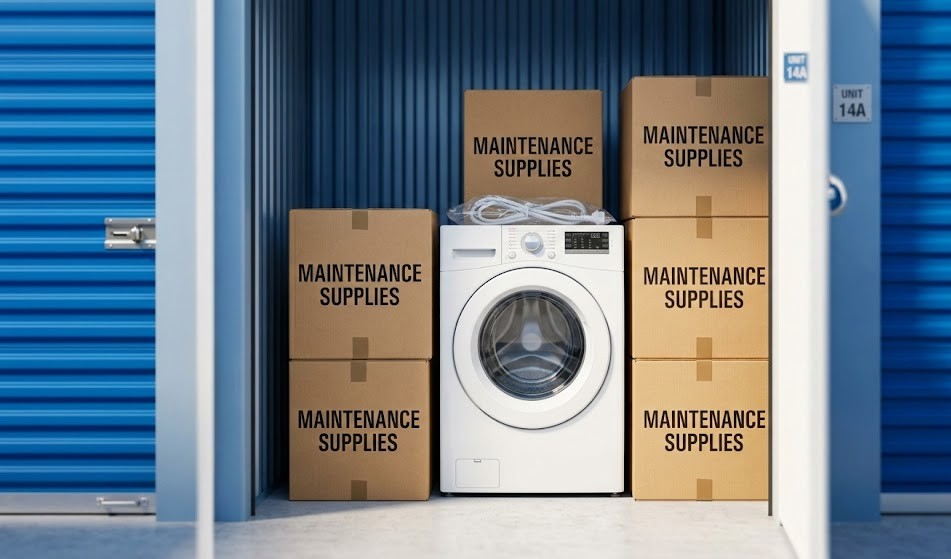
Managing rental properties means dealing with broken appliances at the worst possible times – usually Friday evening or just before a new tenant moves in. Smart landlords keep replacement appliances and maintenance supplies ready, but storing these items properly makes the difference between quick fixes and costly emergencies.
The challenge isn’t just about having spare parts on hand. It’s about protecting your investment whilst keeping everything accessible when you need it most. A replacement washing machine that’s been damaged by damp storage becomes an expensive mistake rather than a time-saving solution.
Why landlords need dedicated storage space
Most landlords manage multiple properties, and each one requires its own set of potential replacements and maintenance supplies. You can’t fit three spare fridges, a collection of white goods, power tools, and seasonal equipment in your garage whilst maintaining easy access to everything.
Consider this: A landlord with five properties faces appliance failures roughly every eight months based on industry averages. Having replacement units ready cuts tenant downtime from weeks to hours. That’s the difference between keeping good tenants happy and watching them leave for properties with more responsive management. Proper landlord appliance storage makes this level of responsiveness possible.
The financial logic is straightforward. Buying appliances during sales and storing them costs less than emergency purchases at full retail price. You’re also avoiding the premium that same-day delivery services charge when tenants need immediate replacements.
Choosing the right storage solution for appliances
Size matters when storing bulky items. A standard fridge-freezer needs roughly 0.7 cubic metres of space, but you’ll need clearance around it for safe access and to prevent damage. Washing machines, cookers, and dishwashers each require similar considerations.
Most landlords with 3-5 properties find that a 75-100 square foot storage unit provides adequate space for:
- Two replacement appliances (fridge and washing machine)
- Seasonal equipment (lawnmowers, hedge trimmers)
- Bulk maintenance supplies (paint, tools, cleaning products)
- Tenant deposit items that need secure storage
Personal storage facilities offer the flexibility landlords need without the long-term commitment of renting warehouse space. You’re not locked into commercial leases that make sense only for large-scale property portfolios. When evaluating landlord appliance storage options, focus on practical features rather than just price.
Ground-floor access is non-negotiable. You can’t safely manoeuvre a washing machine down stairs or squeeze it into a standard lift. Container storage with drive-up access means you can back your van directly to the unit, load the appliance, and reach your property within the hour.
Protecting appliances during storage
Here’s what fourteen years of managing storage facilities has taught me: more appliances get damaged during storage than during transport. Landlords often focus on getting items into storage quickly but overlook the preparation that prevents costly damage.
Moisture is your primary enemy. Even in seemingly dry conditions, condensation builds up inside appliances over time. This leads to mould growth, rust on internal components, and electrical issues that render appliances unusable.
Before storing any appliance:
- Clean thoroughly – Food residue and moisture attract pests and create odours
- Dry completely – Leave doors open for 48 hours before storage
- Disconnect and drain – Remove all water from washing machines and dishwashers
- Secure moving parts – Tape down loose elements to prevent internal damage
One landlord I worked with learned this the hard way. She stored a nearly-new washing machine without draining it properly. Six months later, stagnant water had corroded internal components, turning a £400 appliance into scrap metal. Don’t make that mistake.
Temperature fluctuations damage electronics. Extreme cold affects seals and plastics, whilst heat warps components and degrades lubricants. Climate-controlled storage isn’t essential for all appliances, but it significantly extends their storage life, particularly for units with digital controls and sealed systems.
Think of appliance storage like wine storage – both need stable conditions to maintain quality over time. The upfront cost of proper storage prevents the much larger expense of replacing damaged items.
Organising maintenance supplies for quick access
You’ll need maintenance supplies faster than replacement appliances. A burst pipe or broken window requires immediate action, and fumbling through disorganised storage wastes precious time whilst water damages your property. Effective maintenance stock storage means having the right items exactly where you need them.
Create zones within your storage unit:
- Emergency supplies (front-left) – Plumbing parts, electrical components, emergency tools
- Regular maintenance (front-right) – Paint, brushes, cleaning supplies, basic hardware
- Seasonal equipment (back-left) – Garden tools, winter supplies, decorating equipment
- Replacement appliances (back-right) – Large items that don’t need frequent access
This system means you can grab emergency supplies without moving everything else. You’re not shifting a fridge to reach a pipe fitting when water’s flooding a kitchen.
Label everything clearly. Use a label maker or permanent marker on clear plastic boxes. “Paint – Magnolia – Living Rooms” tells you exactly what’s inside without opening twelve identical containers. It sounds obvious, but you’d be surprised how many landlords skip this step and regret it during emergencies.
Storing specific appliance types
Refrigerators and freezers need special attention. Always store them upright – laying them down damages the compressor and cooling system. If you must transport them horizontally, let them stand upright for 24 hours before use.
Remove all shelving and secure it separately. Glass shelves crack easily when jostled, and replacement parts often cost more than you’d expect. Tape the door shut or use appliance straps – a door that swings open during storage gets damaged and damages other items.
Washing machines and dishwashers must be completely drained. Any residual water becomes stagnant, creates odours, and corrodes internal components. Run a final cycle with white vinegar to clean and disinfect, then leave the door open until completely dry.
Secure the drum in washing machines using transit bolts if you still have them. Without these, the drum moves during transport and storage, potentially damaging the suspension system. You can buy replacement transit bolts online for £10-15 – far cheaper than repairing drum damage.
Cookers and ovens need thorough degreasing before storage. Built-up grease attracts pests and creates fire hazards if you’re storing other flammable materials nearby. Remove all racks and trays, clean them separately, and wrap them in protective material.
Inventory management for multiple properties
Managing supplies across several properties requires a system that’s simple enough to maintain but detailed enough to be useful. Spreadsheets work, but they only help if you update them consistently.
Create a master inventory with three key columns:
- Item description (including brand, model, and condition)
- Purchase date and price (for insurance and replacement planning)
- Location in storage unit (zone system mentioned earlier)
Update this inventory every time you add or remove items. It takes two minutes but saves hours when you’re trying to remember whether you have a spare bathroom cabinet or need to buy one.
Photograph everything. Take pictures of appliances before storage, showing serial numbers and condition. These images prove invaluable for insurance claims and help you remember exactly what you have when planning property upgrades.
One landlord I know uses a simple smartphone app to photograph items with location tags. She can search “washing machine” and immediately see what she has in storage, its condition, and exactly where it’s located. That’s the level of organisation that separates professional landlords from those constantly scrambling.
Cost-benefit analysis of storing versus buying new
The mathematics of appliance storage depends on your property portfolio size and tenant turnover rate. For landlords with 1-2 properties, storing multiple spare appliances rarely makes financial sense. For those with 5+ properties, it’s almost always worthwhile.
Calculate your break-even point:
A mid-range washing machine costs £300-400 new. During sales, you might pay £250. Emergency replacement with same-day delivery? £450-500. Storage costs roughly £80-120 per month for adequate space.
If you avoid one emergency purchase per year by having spares ready, storage pays for itself. You’re also saving time – the hidden cost that landlords often overlook. Hours spent sourcing, purchasing, and arranging delivery add up quickly when you’re managing multiple properties.
But storage isn’t just about appliances. The real value comes from having all your maintenance supplies in one accessible location. Paint for touch-ups, spare keys, seasonal equipment, and emergency repair supplies all justify the storage investment.
Security and insurance considerations
Your stored appliances represent significant financial investment. A unit containing two appliances, tools, and maintenance supplies easily holds £2,000-3,000 worth of equipment. Proper security isn’t optional.
Look for facilities offering:
- Individual unit alarms – Not just perimeter security
- 24/7 CCTV coverage – Particularly in loading areas
- Secure access control – PIN codes or key fob entry
- Good lighting – Deters opportunistic theft
Check whether your landlord insurance covers items in storage. Many policies include off-site storage, but coverage limits vary. You might need additional insurance for high-value items or large quantities of equipment.
Document everything thoroughly. Serial numbers, purchase receipts, and photographs create the evidence you’ll need for insurance claims. Store these records digitally in cloud storage – keeping them in the same unit as the items defeats the purpose.
Seasonal storage strategies
Property maintenance follows seasonal patterns. Garden equipment sits unused for months, whilst winter supplies gather dust during summer. Smart landlords rotate their storage to keep frequently needed items accessible.
Spring and summer priorities:
- Lawnmowers and garden tools at the front
- Exterior paint and maintenance supplies easily accessible
- Winter equipment (heaters, de-icers) moved to the back
Autumn and winter priorities:
- Heating equipment and insulation materials forward
- Emergency supplies (pipe lagging, de-icer) immediately accessible
- Garden equipment stored until spring
This rotation takes perhaps 30 minutes twice yearly but dramatically improves efficiency. You’re not moving a lawnmower to reach pipe insulation during a winter freeze.
Making the most of your storage investment
Business storage principles apply equally to landlord storage – you’re running a business, after all. Treat your storage unit as an extension of your property management system, not just a dumping ground for spare items.
Maximise vertical space using sturdy shelving units. Appliances stay on the floor, but maintenance supplies, tools, and smaller items stack efficiently on shelves. This potentially doubles your usable storage capacity without increasing costs. Combining landlord appliance storage with organised maintenance stock storage on shelving creates a highly efficient system.
Use clear plastic boxes rather than cardboard. They protect contents from moisture, stack more reliably, and let you see what’s inside without opening everything. Yes, they cost more initially, but they last for years and prevent the gradual deterioration that cardboard boxes suffer.
Create an access path down the centre of your unit. You should be able to walk in and reach any section without moving multiple items. This seems obvious until you’re trying to access something at the back during an emergency.
Consider keeping a basic toolkit permanently in your storage unit. Screwdrivers, adjustable wrenches, and utility knives mean you can perform quick fixes or adjustments without returning home for tools. It’s a small detail that saves considerable time.
Preparing for property inspections and turnovers
Tenant turnover creates predictable storage needs. You’ll need cleaning supplies, paint for touch-ups, and potentially replacement appliances if outgoing tenants have caused damage. Having everything ready in storage turns a week-long turnover into a two-day process.
Stock your unit with turnover essentials:
- Deep cleaning supplies – Industrial cleaners, mops, buckets
- Touch-up materials – Paint in your standard colours, filler, sandpaper
- Minor repair items – Spare door handles, light fixtures, cabinet hardware
- Professional equipment – Carpet cleaner, steam mop, pressure washer
These items serve multiple properties, making them more cost-effective than buying supplies for each turnover. You’re also maintaining consistency – using the same paint across properties simplifies future touch-ups.
When storage makes sense and when it doesn’t
Not every landlord needs dedicated storage. If you manage one or two properties locally and have adequate garage space, a storage unit might be unnecessary overhead. But certain situations make storage essential rather than optional.
Storage becomes worthwhile when you:
- Manage 3+ properties without adequate on-site storage
- Buy appliances and supplies in bulk during sales
- Need to store tenant belongings during disputes or renovations
- Lack secure space for valuable tools and equipment
- Want to separate business assets from personal items
The tipping point usually comes around three properties. Below that, you can often manage with home storage and just-in-time purchasing. Above that, the time and money saved through organised storage justify the monthly cost.
Think of it like this: Would you rather spend £100 monthly on storage or waste 3-4 hours every month sourcing supplies and equipment? For most landlords, time is worth far more than the storage cost.
Maintaining quality during long-term storage
Appliances deteriorate during storage if you’re not careful. Seals dry out, moving parts seize, and electronics suffer from disuse. Regular maintenance prevents these issues and ensures your replacement appliances work when needed.
Every 3-4 months:
- Check appliances for signs of moisture or pest activity
- Inspect seals and gaskets, applying silicone lubricant if needed
- Verify that doors still close properly and haven’t warped
- Test any battery-powered items and replace batteries as needed
This quarterly check takes perhaps 30 minutes but prevents the frustration of discovering a stored appliance is unusable when you desperately need it. You’re protecting your investment, not just storing items.
For appliances with motors (washing machines, fridges), consider running them briefly once or twice yearly. This keeps seals lubricated and prevents motors from seizing. Obviously, this requires electrical access, which not all storage facilities provide, but it’s worth considering if available.
Getting started with landlord storage
The best time to set up proper storage was when you bought your second property. The second-best time is now. Start by auditing what you currently have scattered across garages, sheds, and property cupboards.
Make a list of everything you’d benefit from having in one central location. Be realistic about what you’ll actually use versus what’s just taking up space. That broken lawnmower you’ve been meaning to fix for two years? Dispose of it rather than paying to store it.
Visit potential storage facilities in person. Online photos don’t show you the actual access routes, security measures, or how well-maintained the facility is. Can you easily manoeuvre a washing machine through the corridors? Is the loading area well-lit and secure?
Contact us to discuss your specific requirements. Every landlord’s situation differs, and what works for someone managing student lets won’t suit someone with family homes. Professional storage facilities understand these nuances and can recommend solutions tailored to your portfolio.
Creating your storage action plan
Don’t try to organise everything at once. Start with essentials and build your storage system gradually. This prevents overwhelm and lets you refine your approach based on actual needs rather than assumptions.
Month one: Set up basic zones and move in emergency supplies and one replacement appliance. Get comfortable with the space and access procedures.
Month two: Add seasonal equipment and bulk maintenance supplies. Implement your inventory system and ensure it’s practical to maintain.
Month three: Evaluate what’s working and what isn’t. Adjust your layout, add shelving if needed, and establish your routine for accessing and updating storage.
This phased approach costs the same as doing everything at once but gives you time to develop systems that actually work for your specific situation. You’re building a long-term solution, not just filling a storage unit.
Proper storage transforms property management from reactive scrambling to proactive planning. You’re not frantically sourcing a replacement fridge on a Saturday afternoon because you have one ready. You’re not making multiple trips to the hardware store because everything you need is organised and accessible.
That’s not just convenient – it’s professional property management that keeps tenants satisfied, reduces stress, and ultimately protects your investment returns. The landlords who treat storage as a business asset rather than an afterthought consistently report fewer emergencies, faster turnovers, and better tenant retention.
The question isn’t whether you can afford proper storage for your landlord supplies and appliances. It’s whether you can afford not to have it when the next emergency strikes. Based on what I’ve seen over the years, the answer is clear: organised, accessible storage isn’t a luxury for serious landlords – it’s essential infrastructure that pays for itself many times over.