
 01635 581 811
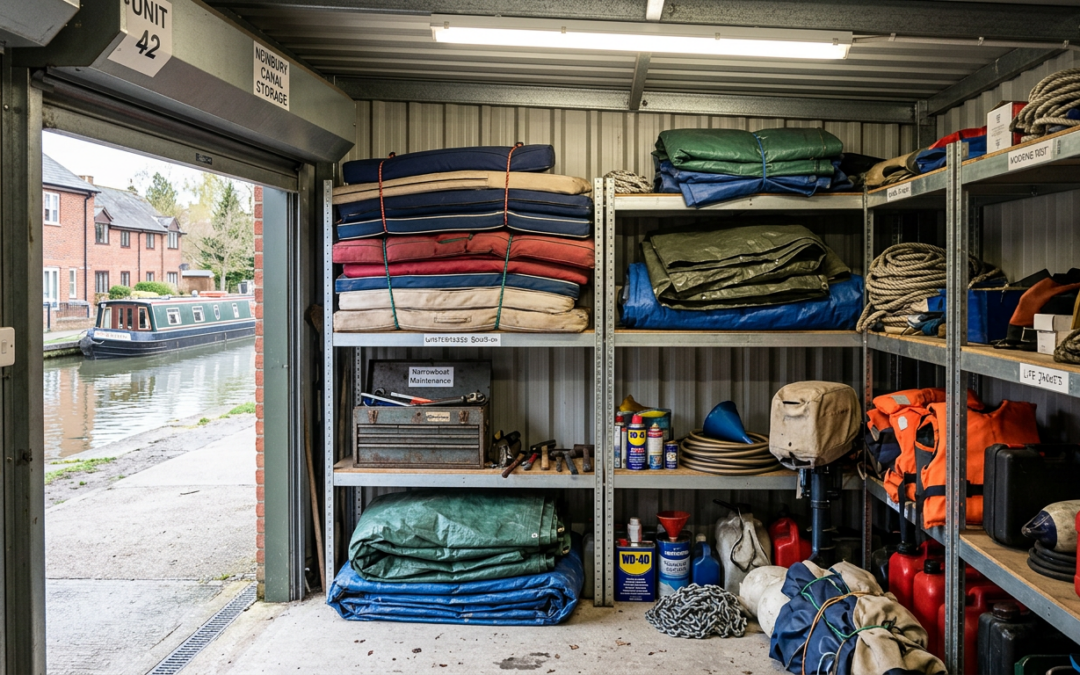
The narrowboat life along the Kennet and Avon Canal offers unmatched freedom during the warmer months, but winter presents a different reality. When temperatures drop and the canal network becomes less hospitable, many continuous cruisers and leisure boaters face a practical challenge: what to do with the equipment, tools, and seasonal gear that clutters precious cabin space during the off-season.
For boaters moored near Newbury, the solution isn’t about abandoning the waterways entirely. It’s about recognising that a 57-foot narrowboat, no matter how cleverly fitted out, simply wasn’t designed to store bulky fenders, spare anchors, summer canopies, and maintenance equipment that won’t be touched until March. The average narrowboat offers roughly 400 to 500 square feet of living space. Boat storage Newbury facilities provide means every square inch aboard can return to its proper purpose.
Why Canal Boaters Need Dedicated Winter Storage
Living aboard or maintaining a narrowboat demands a surprising amount of kit. Seasonal equipment like deck chairs, BBQs, awnings, and inflatable dinghies make summer mooring pleasant. Then there’s the maintenance gear: spare parts, paint tins, tools for blacking, replacement anodes, and the collection of ropes and fenders that accumulate faster than expected.
During cruising season, the crowding is tolerable because most of it gets used regularly. But come November, when more time is spent indoors and the boat becomes a winter refuge rather than a summer adventure vehicle, that same equipment transforms from useful to oppressive.
Many boaters try to make it work. Boxes stacked in the bow, bags hung from every available hook, promises to reorganise “when the weather improves.” It never quite happens. Instead, kayak paddles block the route to the kettle and toolboxes shift every time the engine bay needs access.
I once met a boater who’d spent three winters shuffling the same boxes between bow and stern, never quite finding a system that worked. The breakthrough came when he mapped out exactly what he touched between October and March: less than 20% of what he was storing aboard. The rest was “just in case” equipment that justified its existence once, maybe twice a year. That single audit changed his entire approach to winter preparation.
What Boaters Actually Store During Winter Months
Walk through any marina in October and the telltale signs of boaters preparing for winter become obvious. The items heading into storage fall into predictable categories, each with specific requirements.
Seasonal leisure equipment tops most lists. Folding bicycles that seemed essential for towpath exploration now take up half the saloon. Portable BBQs, camping chairs, and pop-up gazebos all become dead weight. Kayaks and paddleboards, brilliant for exploring quiet backwaters in July, simply don’t justify their footprint when they won’t be launched for five months.
Cruising gear and navigation equipment comes next. Spare windlasses, extra mooring pins, heavy-duty lock ropes, and fender collections all serve specific purposes, just not between November and March. Many boaters also store summer electronics: handheld GPS units, portable chart plotters, and expensive camera equipment.
Maintenance supplies present their own challenge. Half-used tins of blacking compound, spare engine parts, orbital sanders, and pressure washers are bulky, and many are unsuitable for long-term cabin storage due to fumes, moisture sensitivity, or because they’re covered in old grease and canal residue.
The Practical Reality Of Onboard Storage Limitations
Narrowboats represent a masterclass in compact living, but they’re designed around a fundamental assumption: selectivity about what stays aboard. The moment a boat gets treated like a garden shed, the whole system breaks down.
Consider the typical 57-foot cruiser stern narrowboat. Roughly 400 to 500 square feet of interior space, much of it already occupied by fixed furniture, the galley, bathroom, and sleeping areas. The “storage” space (cupboards, the bow locker, engine bay sides, and some under-bed areas) might total 40 to 60 square feet.
The engine bay offers tempting space, but it’s fundamentally unsuitable for most storage. The environment is damp, often oily, and subject to temperature fluctuations that destroy electronics and rust tools. Some boaters invest in roof boxes or exterior lockers, but these add wind resistance, increase air draught (potentially limiting which bridges can be passed under), and create security concerns.
The mathematics simply don’t work in favour of keeping everything aboard. Boat storage Newbury boaters use during winter months solves this equation cleanly.
Condensation Damage And Marine Equipment
Most boaters discover the hard way that marine equipment is simultaneously tougher and more delicate than it appears. Designed to withstand spray and rain, it still can’t tolerate months of condensation in a cold, damp cabin environment.
Electronics represent the biggest vulnerability. A chart plotter, VHF radio, or fish finder might be rated as “water-resistant,” but that doesn’t mean it tolerates months of condensation. Moisture creeps into connection points, corrodes circuits, and turns expensive equipment into scrap.
Canvas and fabric items (boat covers, awnings, and cushions) face different challenges. Stored damp or in poor ventilation, mould cultivates rapidly. The distinctive smell of mildewed canvas is nearly impossible to remove, and the fabric itself degrades once mould takes hold.
Wooden items, from tillers to handcrafted interior fittings, react badly to humidity fluctuations. Wood expands and contracts with moisture changes, leading to splits, warping, and joint failure. Metal components seem indestructible until retrieved after a damp winter covered in surface rust. A dry storage environment prevents all of these issues without excessive oiling or wrapping.
Security For High-Value Boating Equipment
Canal boats attract a specific type of theft. Opportunistic criminals know that boaters often carry expensive, portable equipment, and that many boats sit unattended for days or weeks at a time. An £800 outboard motor, professional-grade power tools, or high-end electronics represent tempting targets.
Insurance companies understand this reality. Many policies include specific clauses about unattended boats, often requiring proof of adequate security measures or limiting coverage for high-value items left aboard.
Off-boat personal storage addresses this vulnerability directly. Purpose-built facilities offer security measures that simply aren’t practical on a boat: CCTV coverage, controlled access, regular patrols, and alarm systems. Equipment is catalogued, locked away, and monitored. There’s also the practical consideration of access; if a boat is moored miles from a winter base, retrieving a specific tool or part becomes a half-day expedition.
Choosing The Right Unit Size
Boaters typically overestimate how much space they need, largely because they’re accustomed to cramped onboard storage where everything feels enormous. In reality, most seasonal boating equipment packs down more efficiently than expected.
For the average leisure boater storing seasonal equipment only (deck chairs, BBQ, folding bikes, summer canopies, and perhaps a kayak) a 25 to 35 square foot unit handles everything comfortably. That’s roughly the size of a small garden shed, but with the advantage of height. Stacking vertically makes an enormous difference.
For maintenance equipment, spare parts, and tools alongside larger items like a tender or substantial materials for a winter refit, a 50 to 75 square foot space provides room to organise properly. A useful comparison: if everything fits in the back of a large Transit or Sprinter van in a single load, a 35 square foot unit is probably sufficient. Two van loads suggests 50 to 75 square feet.
Access patterns matter too. Regular retrieval for maintenance work throughout winter means organising with frequently used items at the front. Mothballing everything until March allows denser packing. At Newbury Self Store, the team helps boaters match unit sizes to specific needs based on exactly what’s being stored and how often it’s needed.
Preparing Equipment For Seasonal Storage
The difference between equipment that emerges ready to use and equipment that’s deteriorated over winter comes down to preparation. An afternoon done properly saves weeks of frustration and potentially hundreds of pounds in replacements.
Cleaning comes first. Everything going into storage should be clean and dry. Canal water, mud, and organic matter create the perfect environment for mould and corrosion. That means washing down fenders, scrubbing ropes, and ensuring fabric items are completely dry before packing.
Lubrication and protection matter for metal items. Tools should be lightly oiled, moving parts given a spray of WD-40 or similar, and any exposed metal protected against corrosion. Battery-powered items need special attention: remove batteries from everything (torches, radios, power tools) as batteries leak over time and the corrosion destroys equipment.
Canvas and fabric require breathing room. Cushions and covers shouldn’t be compressed into vacuum bags or stuffed into tight spaces. They need air circulation to prevent mould. Fold them loosely and, if possible, store them raised off the ground on shelving.
The right packaging materials make a measurable difference. Bubble wrap protects electronics and delicate items. Furniture blankets prevent scratches on painted surfaces. Proper boxes keep everything organised and stackable. Think of it this way: equipment isn’t just being stored; it’s being preserved.
Location Advantages For Newbury-Based Boaters
Newbury sits at a strategic point on the Kennet and Avon Canal, making it a natural hub for boaters navigating between Reading and Devizes. For those moored anywhere between Kintbury and Aldermaston, Newbury represents the nearest town with comprehensive facilities.
The practical advantage of boat storage Newbury provides, rather than keeping everything at a mooring, is accessibility. Winter weather makes canal-side access challenging. Towpaths turn to mud, lock flights ice over, and reaching the boat becomes a significant undertaking. Storage in town means collecting what’s needed on any schedule, without weather dependency.
Boaters can access their equipment without wading through frozen mud or timing visits around daylight hours. The location also supports the practical reality of maintenance work. Many boaters use winter for refits and repairs. Having tools and materials in accessible storage means working on projects at home or in a workshop, rather than in the cramped confines of the boat.
Cost Comparison: Storage Vs Onboard Space Solutions
Boaters often resist external storage on cost grounds, assuming it’s unnecessary expense. But the mathematics tell a different story.
Fitting additional storage to a boat (roof boxes, exterior lockers, or internal modifications) costs money. A decent roof box runs £300 to £500. Custom interior storage work can easily exceed £1,000. These are permanent installations that affect the boat’s profile, weight, and in some cases resale value.
A 35 square foot unit typically runs £25 to £35 per week in the Newbury area. Over a six-month winter period, that’s roughly £650 to £900, comparable to a single piece of fitted storage but with the flexibility to adjust size year to year. For continuous cruisers, reducing onboard weight by several hundred pounds of seasonal equipment translates to measurable fuel savings over a winter’s cruising.
There’s also the hidden cost of onboard clutter. Living in a cramped, disorganised space affects quality of life. The value of reclaiming 40 to 50 square feet of living space isn’t easily quantified, but anyone who’s tried to relax in a cluttered cabin understands it immediately.
Making The Transition
Moving equipment off a boat and into storage requires a systematic approach. Done properly, it’s a one-day job that sets up a comfortable winter.
Start with inventory. Walk through the boat and identify everything that fits the criteria: it won’t be used for 4 to 6 months, it’s taking up significant space, or it’s unsuitable for the onboard environment during winter. If it hasn’t been touched since last March, it won’t be touched this winter either.
Sort by category and destination. Create three piles: definite storage, definite keep aboard, and undecided. The undecided pile usually resolves itself when the space the “definitely keep” items actually need becomes clear.
Pack methodically. Use quality boxes and packing materials. Label everything. Create an inventory list kept both in the storage unit and aboard the boat. Establish a retrieval system by taking photos showing how everything is arranged.
The transition feels significant the first time, but most boaters report it quickly becomes routine. By the second or third winter, the system is refined to the point where it’s simply part of seasonal preparation, like winterising the engine or checking the heating system.
For business storage needs related to commercial boating operations, or those needing larger container storage for substantial equipment collections, boat storage Newbury facilities offer flexible solutions that adapt to any scale. Items like blacking compound, spare anodes, and seasonal canopies all have a proper home while the bow locker aboard returns to holding only what’s genuinely needed.
To discuss specific storage requirements for winter boating needs, call 01635 581 811 or speak to the team about finding the right solution.