
 01635 581 811
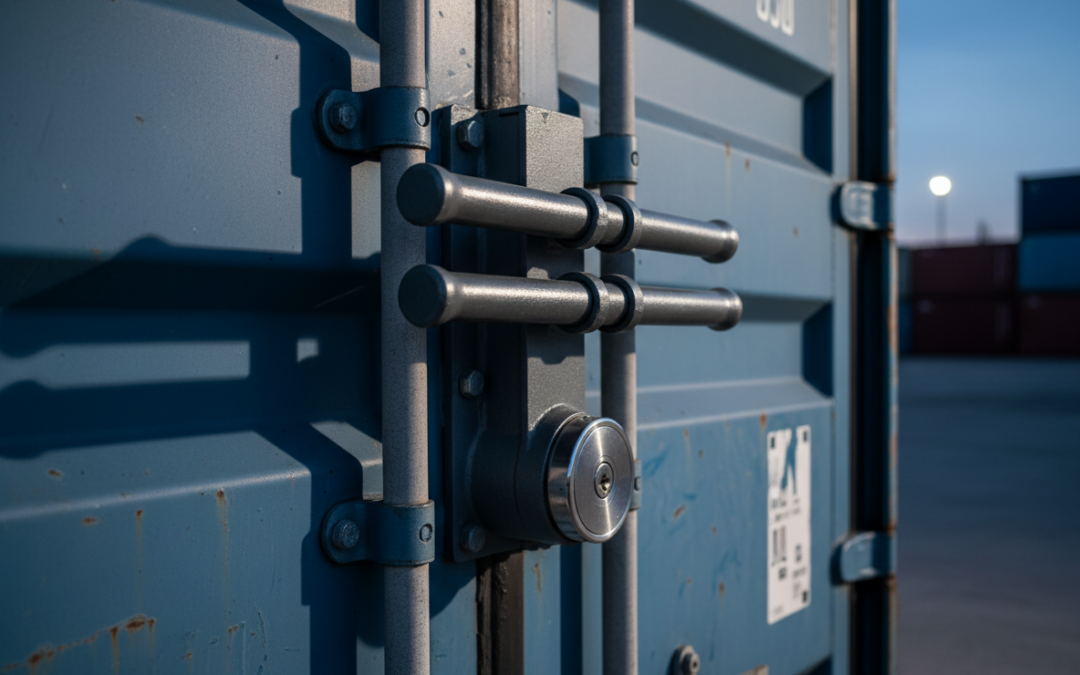
Flexibility and smart resource management are paramount. It is no surprise, then, that savvy UK businesses, from bustling start-ups to established enterprises, are increasingly turning to shipping containers as a versatile solution for inventory storage. They offer space, convenience, and can be a cost-effective alternative to traditional warehousing. But a crucial consideration arises when the items nestled inside aren’t just everyday stock, but high-value business inventory. Suddenly, that simple steel box needs to transform into a veritable fortress. The stakes are significantly higher, and the peace of mind that comes from robust security measures becomes not just a nicety but a critical business necessity.
Consider Sarah, a boutique electronics retailer based in a charming but compact Newbury shop. Her business is thriving, especially with the latest shipment of cutting-edge gadgets. The problem is that her storeroom is bursting at the seams. Her solution has been a sturdy shipping container, but as she locks up at night, a nagging worry persists. Inside that container sits tens of thousands of pounds worth of new-release tech. The question of whether she has done enough to protect it is a common one for many business owners. This article is your comprehensive guide to the best practices in Securing Shipping Containers. Our aim is to help ensure your Secure Container Inventory stays exactly that, secure, letting you focus on what you do best: running your business.
Understanding the Risks to High-Value Goods: a crucial step in securing container inventory
Before diving into solutions, it’s crucial to appreciate what’s truly at risk when considering how to protect your assets. When we talk about “high-value” goods, it’s easy to think purely in terms of monetary price tags. But the definition is broader. It can encompass:
- High-Cost Retail Products: Electronics, designer apparel, luxury accessories.
- Specialised Equipment & Components: Custom-made parts, sensitive machinery, tools vital for your operations.
- Pharmaceuticals & Controlled Substances: Requiring stringent security and environmental controls.
- Irreplaceable Documents & Data: Archives, legal papers, intellectual property blueprints.
- Fine Art & Collectibles: Items whose value extends beyond the purely commercial.
The loss of such items isn’t just about the direct replacement cost, hefty as that might be. Consider the ripple effects: significant business interruption as you scramble to resource or remake items, potential damage to your hard-won reputation if client orders are unfulfilled, and the erosion of customer trust. A determined thief might specifically target a container if they suspect valuable contents, and they’ll be looking to exploit common vulnerabilities , often inadequate locks, poorly secured locations, or a lack of visible deterrents. For truly Secure Container Inventory, a multi-layered approach is essential.
Fortress Foundations , Choosing the Right Container is Your First Security Step
Your first line of defence is, quite literally, the container itself. Not all steel boxes are created equal, and for storing high-value inventory, skimping here is a false economy.
- New or ‘One-Trip’ Containers: These are generally your best bet. Having only made a single journey from their point of manufacture, they exhibit minimal wear and tear, meaning their structural integrity is at its peak. This translates to stronger walls, more reliable door seals, and locking mechanisms that haven’t been subjected to years of use (and potential abuse).
- Corten Steel Construction: Look for containers made from Corten steel (often referred to as weathering steel). This alloy is specifically designed to resist corrosion and atmospheric weathering, forming a stable rust-like appearance that actually protects the steel from further degradation. This inherent durability is a significant plus for long-term security.
- Thorough Pre-Storage Inspection: Before you even think about loading your valuable goods, conduct a meticulous inspection:
- Door Seals: Are they intact, pliable, and creating a watertight seal? Damaged seals can mean water ingress, which is another form of inventory threat.
- Locking Mechanisms: Do the locking rods operate smoothly? Are the cam keepers (the parts the rods lock into) robust and securely welded?
- Structural Integrity: Check for significant dents, rust patches that go beyond surface level, or signs of previous, poorly executed repairs. Any weakness can be an invitation.
- Size and Suitability: While a 20ft or 40ft container offers ample space, ensure the type is right for your goods. Some items might have specific requirements that standard containers don’t meet without modification (though for most high-value inventory, a standard, high-quality dry van container is the starting point).
At Newbury Self Store, we understand the importance of quality. Our Container Storage options are selected with security and durability in mind, providing a solid foundation for your valuable items by offering various sizes of robust steel units.
Unlocking Peace of Mind , The Critical Role of Locks and Advanced Locking Systems in securing shipping containers
Once you have a robust container, the next critical layer is the locking system. That flimsy padlock you use on your garden shed simply won’t cut it when you’re Securing Shipping Containers filled with thousands, or even hundreds of thousands, of pounds worth of inventory.
- Spotlight on Heavy-Duty Padlocks:
- Shrouded Shackles: These padlocks have a protective casing around the shackle, making it extremely difficult for bolt cutters to get a grip.
- Discus Locks (or Circular Padlocks): Their circular design and lack of a vulnerable, exposed shackle make them highly resistant to cutting and prying. Opt for brands known for their pick-resistance and robust materials.
- The Power of Lockboxes: A lockbox is a heavy-duty steel casing that is welded directly onto the container doors, enclosing the padlock within it. This is a game-changer. It means that even if a thief comes equipped with an angle grinder or a pry bar, they cannot directly attack the padlock itself. The lockbox takes the brunt of the assault, significantly increasing the time and effort required to breach the container. This is often a mandatory requirement for insurers when covering high-value goods in storage.
- Exploring Container-Specific Locks:
- Inner Barrel Locks (or Truck Seals with High-Security Features): These fit internally and can offer an additional layer of security, often used in conjunction with an external padlock and lockbox.
- Crossbar Locks (or HGV Container Door Locks): These are substantial steel bars that span across both container doors and are secured with a high-security padlock. They provide a very visible and robust deterrent.
- Key Control Protocols: The Unsung Hero of Security It sounds simple, but meticulous key control is fundamental for maintaining Secure Container Inventory. Who has access to the keys? Are they named individuals? Where are spare keys kept, and are they as secure as the primary keys? Is there a log for when keys are taken and returned? Losing control of your keys effectively negates even the most expensive lock.
I once had a chat with a business owner who learned this the hard way. He’d invested in a top-of-the-range lock for a container holding vintage computer components, some irreplaceable. However, keys were left on a common keyboard in the office. An opportunistic theft occurred, not by breaking the lock, but simply by using an easily acquired key. It was a harsh lesson in an often-overlooked aspect of security. Do not let that be you.
Armouring Up: Physical Enhancements for Ultimate Container Protection
While doors are the most common attack point, determined criminals might probe for other weaknesses. For exceptionally high-value inventory, consider these physical enhancements:
- Strengthening Walls & Roofs: If your container is older or if you have extreme security concerns, consider reinforcing the walls and roof from the inside. This could involve welding steel plates or a heavy-gauge steel mesh to the interior. This makes cutting through the container itself a much more arduous task.
- Securing Vents (If Present): Standard shipping containers for dry goods don’t usually have many vents, but if yours does (perhaps it’s a modified unit), ensure these are secured. Welded grates or internal baffles can prevent them from becoming easy access points.
- The Underbelly , A Consideration for Ground-Level Containers: If your container is placed directly on soft ground or in an isolated area, thieves have been known to try and cut through the floor. Ideally, your container should be on a hard, level surface. When stored at a professional facility, the overall site security often mitigates this risk significantly.
- The Power of Environment: The physical security of the container is amplified by its surroundings. A container tucked away in a dark, unobserved corner of your own premises is far more vulnerable than one situated within a secure, well-lit compound such as Newbury Self Store. The layers of security provided by a dedicated storage facility , perimeter fencing, controlled access, lighting , act as a force multiplier for your own efforts. Our main webpage provides an overview of the site and the general security features we offer.
The Digital Watchmen , Surveillance, Alarms, and Tracking Technologies for secure container inventory
In the 21st century, physical security is powerfully augmented by technology. These digital watchmen provide deterrence, detection, and even recovery capabilities, forming crucial components of modern strategies for Securing Shipping Containers.
- CCTV , Your Unblinking Eye:
- Strategic Placement: Cameras should cover all potential entry points to the container, as well as the general surrounding area. Consider both overt (visible for deterrence) and covert cameras if appropriate.
- Essential Features: Do not skimp here. Look for:
- High Resolution: For clear images that can identify individuals or vehicles.
- Night Vision (Infrared): Theft often occurs under the cover of darkness.
- Motion Detection: To trigger recording only when there’s activity, saving storage space and making review easier.
- Remote Access: The ability to view live feeds or recorded footage from your phone or computer provides immense peace of mind and allows for quick response.
- The Power of Deterrence: Simply seeing well-placed, professional-looking CCTV cameras can persuade many opportunistic thieves to look for an easier target.
- Alarm Systems , Your Immediate Alert:
- Door Contact Sensors: These trigger an alarm if the container doors are opened.
- Motion Sensors (PIR – Passive Infrared): Placed inside the container, these detect movement if someone manages to get past the door sensors or breaches the container elsewhere.
- Vibration Sensors: These can be attached to the walls or roof and will trigger an alarm if they detect forceful impacts, cutting, or drilling.
- Monitored vs. Unmonitored: An unmonitored alarm will make a loud noise locally, which can be a deterrent. However, a monitored alarm system will alert a security company or yourself directly via phone call or app notification, ensuring a swift response even if you’re not nearby. For high-value goods, monitored systems are strongly recommended.
- GPS Tracking , For the Ultimate ‘What If’:
- While it’s a less common threat for securely located containers, the theft of an entire shipping container is not unheard of, especially if it’s stored in an isolated or poorly secured location. A covert GPS tracker hidden on or within the container can be invaluable in locating and recovering it if the unthinkable happens.
- These devices can provide real-time location updates and even send alerts if the container moves outside a predefined geofenced area.
Investing in these technologies transforms your container from a passive box into an actively protected space, enhancing your efforts for secure container inventory.
Controlling the Gates, Robust Access Management Protocols
Even with the best locks and alarms, if you do not control who can legitimately access the container, you have a security hole. Robust access management is about more than just handing out keys.
- Logged Access: Keep a meticulous record, whether it’s a physical logbook stored securely or a digital system, of every single time the container is accessed. This log should include:
- Date and time of entry.
- Name of the person accessing the container.
- Reason for access.
- Date and time of exit.
- Authorised Personnel Only: Clearly define who is authorised to access the container. This list should be kept to the absolute minimum necessary.
- Two-Person Rule or Supervised Access: For exceptionally high-value or sensitive inventory, consider implementing a two-person rule, where two authorised individuals must be present to access the container. Alternatively, any access might require supervision by a designated security manager.
- Facility Access Controls: If your container is stored at a facility like Newbury Self Store, familiarise yourself with our access control measures. These are part of your overall security blanket. Our Business Storage solutions are designed with varied business needs in mind, providing secure and flexible spaces, and our team can explain the site access protocols.
Remember, a significant portion of inventory loss globally isn’t due to external break-ins but internal issues, including unauthorised access. Tighten your procedures here.
The Power of Place: Why Facility Security Amplifies Your Efforts
We’ve touched on it before, but the location of your shipping container plays an enormous role in its overall security. You can have the most advanced locks and alarms, but if the container is an easy, isolated target, you’re fighting an uphill battle. This is where storing at a professional, dedicated self-storage facility truly shines, offering multiple layers that enhance your efforts to maintain Secure Container Inventory.
- Perimeter Security: Reputable facilities invest in robust perimeter fencing, often topped with anti-climb measures. This is the first obstacle any potential intruder faces.
- Controlled Gate Access: Entry and exit points are typically controlled by electronic gates requiring a PIN code, key fob, or even ANPR (Automatic Number Plate Recognition). This means only authorised individuals can access the site.
- Professional Lighting: Well-lit compounds are a significant deterrent. Thieves prefer to operate in darkness and shadows. Bright, strategically placed lighting across the facility minimises these opportunities.
- CCTV Surveillance (Site-Wide): Beyond any cameras you might place on your own container, facilities will have their own comprehensive CCTV systems monitoring roadways, access points, and common areas.
- On-Site Staff or Security Patrols: The presence of facility staff during operational hours, and sometimes security patrols outside of these, adds another human layer of vigilance.
- The Collective Security Effect: When many businesses are all storing responsibly within one secure compound, it creates an environment that is inherently less appealing to criminals than an isolated container.
Storing your high-value goods at a facility such as Newbury Self Store means you’re not just relying on your own security measures, but leveraging the comprehensive security infrastructure of the entire site. It’s a smart move for peace of mind.
Inside Job, Internal Organisation and Environmental Safeguards
True inventory security isn’t just about keeping thieves out; it’s also about protecting your goods from internal threats and environmental damage once they’re safely locked away.
- Meticulous Inventory Management: You need to know exactly what is in your container, its precise location, and its current value. A good inventory management system (whether a sophisticated software or a detailed spreadsheet) is crucial. This helps in:
- Quickly identifying if anything is missing.
- Providing accurate information for insurance purposes.
- Efficiently retrieving items when needed.
- Environmental Controls , Do Not Let Nature Be the Thief:
- Moisture Mitigation: Condensation can be an issue inside shipping containers, potentially damaging sensitive goods. Use desiccants (moisture-absorbing packs) generously. For some goods, controlled ventilation might be considered, but this needs to be balanced against security implications (any opening is a potential vulnerability).
- Temperature Sensitivity: Are your goods susceptible to damage from extreme heat or cold? While standard containers don’t offer climate control, consider if insulation might be beneficial or if you need to explore specialised (though rarer for typical self-storage) temperature-controlled units for ultra-sensitive items.
- The Importance of Quality Packaging: Do not just throw items into the container. Use sturdy boxes, protective wrapping, and palletise if appropriate. Exploring our range of quality Packaging supplies is a wise investment to protect against shifting during loading/unloading and to provide an additional buffer against environmental factors; we offer boxes, bubble wrap, and more to keep your items safe.
- Fire Safety , A Hot Topic:
- Assess the flammability of your stored goods. If you’re storing anything that poses a fire risk, ensure you have appropriate fire extinguishers easily accessible (and that staff know how to use them). For very high-risk contents, you might even research specialised in-container fire suppression systems, though this is an advanced consideration.
Protecting your inventory from these often-overlooked internal and environmental threats is a key part of a holistic approach to Secure Container Inventory.
The Paper Shield , Insurance, Documentation, and Due Diligence
Your physical and digital security measures are your frontline defence. But what if, despite all your best efforts, the worst happens? This is where your “paper shield” , comprehensive insurance and meticulous documentation , becomes invaluable.
- Check Your Business Insurance Policy: Do not assume your standard business insurance automatically covers goods stored off-site in a shipping container, especially high-value items. Contact your insurer and:
- Confirm that off-site container storage is covered.
- Clarify any limits on the value of goods covered.
- Crucially, ask about specific security requirements. Many insurers will mandate certain types of locks (e.g., a specific grade of padlock used in conjunction with a lockbox), the presence of an alarm system, or storage within a secure, recognised facility. Failure to meet these requirements could invalidate your cover.
- Detailed Inventory List for Your Insurer: Your insurer will need proof of what was stored and its value. Maintain a detailed inventory list, including:
- Item descriptions.
- Purchase dates and original costs.
- Serial numbers for electronics or equipment.
- Current replacement values.
- Photographic/Videographic Evidence: Before you lock those container doors, take extensive photographs or video footage of the contents. Document the condition of the items and how they are packed and secured. Store this evidence, along with your inventory list and purchase receipts, in a separate, secure location (e.g., cloud storage, a fireproof safe at your main premises).
This diligence might seem like extra work, but in the event of a claim, it will be absolutely crucial in ensuring you are fairly compensated.
Eternal Vigilance: The Necessity of Regular Security Audits for Securing Shipping Containers
Securing your high-value inventory isn’t a “set it and forget it” task. Threats evolve, equipment wears, and complacency can creep in. Establishing a routine for regular security audits is vital for maintaining the integrity of your protective measures. Think of it like your car’s annual MOT , it’s essential for continued safe and reliable operation.
- Schedule Regular Physical Inspections:
- Locks and Lockboxes: Check for any signs of tampering, rust, or wear and tear. Does the key still turn smoothly? Is the lockbox securely attached?
- Container Integrity: Walk around the container. Look for any new dents, scratches near locking mechanisms, or signs that someone might have attempted to pry or cut any part of it. Check door seals.
- Alarm System Components: Ensure sensors are still firmly in place and that batteries (if applicable) are fresh.
- CCTV Cameras: Clean lenses, check angles, ensure they are recording correctly.
- Test Your Systems:
- Regularly arm and disarm your alarm to ensure it’s functioning. Trigger it deliberately (when you can manage the response!) to confirm sensors are working and that alerts (if monitored) are received.
- Review CCTV footage periodically to check recording quality and data storage.
- Review Access Logs: Make it a habit to check your access logs. Are there any unexplained entries? Does everything align with expected activity?
- Stay Informed and Adapt: Security threats aren’t static. New tools and techniques become available to criminals. Likewise, security technology is constantly improving. Periodically research best practices for Securing Shipping Containers and consider if any upgrades to your current setup are warranted.
A proactive approach to security maintenance ensures your defences remain robust and effective over time, offering ongoing protection for your Secure Container Inventory.
Your Partner in Protection: Newbury Self Store’s Commitment to Your High-Value Assets
At Newbury Self Store, we understand that when you’re storing high-value business inventory, you’re entrusting us with more than just boxes and equipment; you’re entrusting us with a vital part of your livelihood. That’s why we’re committed to providing a secure environment that allows you to store with confidence.
Many of the security measures we’ve discussed are either features of our facility or practices we wholeheartedly support for our business clients. From providing robust, quality Container Storage options, which offer excellent ground-level access and drive-up convenience , within a compound that benefits from perimeter security, controlled access, and good lighting, to understanding the need for businesses to implement their own advanced locking mechanisms and surveillance, we aim to be your partner in protection. We know that businesses handling high-value goods have specific concerns, and we’re here to support those needs. Whether it’s ensuring easy access for you to install your own approved security enhancements or providing well-maintained units, our goal is to complement your security efforts. Even individuals looking for secure Personal Storage for valuable belongings can benefit from our secure site and robust units.
Got valuable inventory that needs an uncompromising level of security? We believe that a combination of your diligent security practices and our secure facility offers a powerful solution. You can explore our full range of storage options on our Newbury Self Store, which provides a gateway to all our services.
Better yet, let’s have a conversation about your specific requirements for Securing Shipping Containers and creating a truly Secure Container Inventory strategy. You can get in touch directly through our Contact Us, where you’ll find our phone number, email address, and an enquiry form, or give us a call. We’re here to help you find the best and most secure storage solution for your peace of mind.