
 01635 581 811
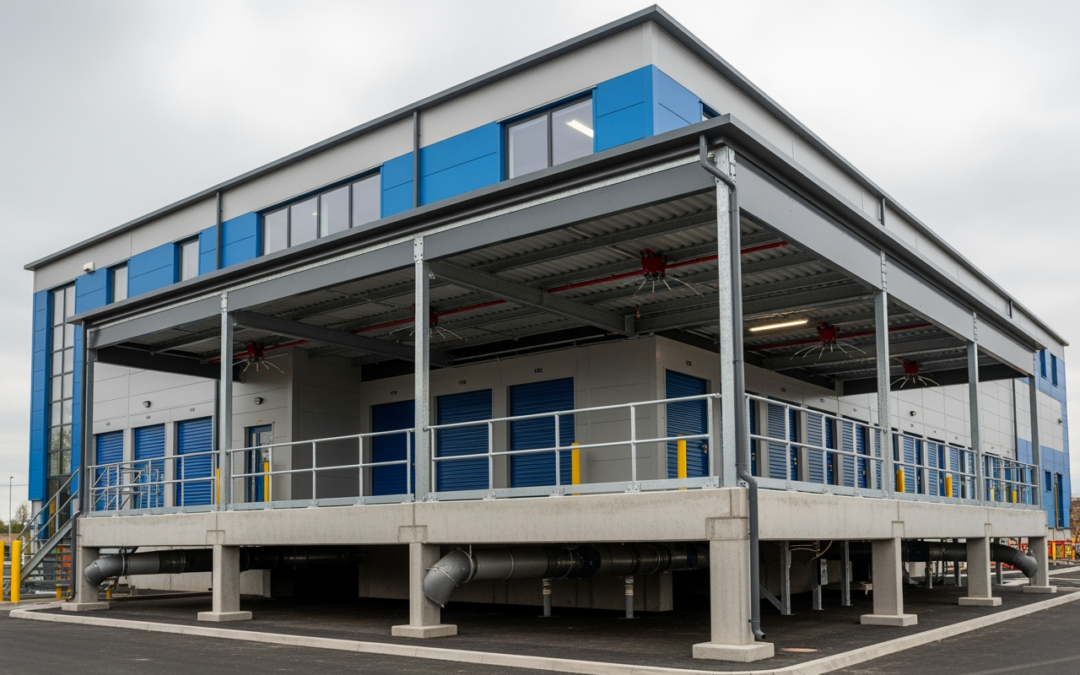
The act of placing belongings into a self-storage unit often brings a considerable sense of satisfaction. Whether the goal is decluttering a home, managing business inventory, or archiving crucial documents, it introduces an element of order and newly found space. Here at Newbury Self Store, this feeling of relief among our customers is a common observation. Alongside this peace of mind, it is prudent to consider methods for keeping these valued items safe, not merely from everyday occurrences but from more significant, disruptive events. This foresight is key to effective disaster storage protection.
The UK, while not typically prone to the extreme natural disasters seen in some other parts of the world, does experience its share of turbulent weather. Localised flooding can present a genuine challenge, storms can deliver unexpected force, and the risk of fire, however minimal, remains a constant consideration for any building. Thinking ahead about these potential emergency situations is not about fostering negativity; it is about engaging in sensible preparation. It involves taking proactive measures to safeguard your stored items, ensuring that what has been carefully stored remains protected, regardless of unforeseen circumstances.
Understanding the Unthinkable: what real-world risks do your stored possessions face for disaster storage protection?
Complacency can be an easy trap to fall into, particularly when daily life demands so much attention. Yet, a small amount of foresight can be exceptionally beneficial in protecting your belongings. When discussing “disasters” or “emergencies” within the UK self-storage context, a realistic assessment of potential threats is necessary.
The Temperamental UK Weather: it’s not always just drizzle when trying to safeguard your stored items
Our renowned British weather is notable for its unpredictability, and at times, it presents conditions more severe than a mere light shower.
- Flooding: This represents one of the more significant environmental threats in certain UK regions. While widespread deluges are uncommon, localised flash floods, overflowing riverbanks, or even extended periods of heavy rain overwhelming drainage systems can result in water ingress. Even if a storage facility is not situated in a designated flood plain, the topography and surface water run-off can still constitute a risk.
- Severe Storms: We are all familiar with news reports following major storms, detailing fallen trees, damaged roofing, and airborne debris. Although a robustly constructed storage facility should withstand high winds, the possibility of secondary damage, such as debris impacting a unit or water penetration through a damaged section of the building’s roof, warrants consideration.
- Temperature Extremes: While perhaps not classified as a sudden “disaster,” prolonged exposure to extreme cold or heat can adversely affect sensitive items. This includes delicate antiques, electronic equipment, or specific types of business stock that might degrade if not kept in a relatively stable thermal environment.
Fire Hazards: a threat that demands respect in any disaster storage protection plan
Fire constitutes a risk in any structure, and self-storage facilities are by no means exempt, though professional operators implement extensive preventative measures.
- Internal Sources: Electrical faults are a frequent cause of fires across many building types. Reputable storage facilities will maintain stringent safety inspections and modern electrical infrastructures, yet it remains a theoretical risk. For this reason, many facilities prohibit the storage of flammable materials , a regulation that is crucial to observe.
- External Sources: A fire originating in an adjacent property could potentially spread, or smoke damage might ensue. Though less frequent, in rural or semi-rural settings, grass or heathland fires, albeit uncommon in the UK, could pose an external threat if a facility is in close proximity.
Man-Made Mayhem and Other Emergencies: beyond Mother Nature’s moods
Considerations extend beyond meteorological events or fires.
- Major Leaks: A burst pipe within the facility, perhaps resulting from freezing temperatures or equipment failure, could lead to considerable water damage in nearby units. This scenario is often more common, yet no less damaging, than extensive flooding.
- Security Issues During Wider Disruptions: In the highly improbable event of significant civil unrest or widespread power outages that compromise security systems, the physical security protocols of a facility become even more paramount.
- Pest Problems Escalating: While competent facilities implement pest control measures, a minor, unnoticed issue could intensify if items attractive to pests are stored improperly, potentially causing damage to goods over time. This can escalate into an emergency for stored goods if not effectively managed.
Contemplating these varied scenarios is not intended to cause undue alarm, but rather to empower. An understanding of potential risks equips you far more effectively to implement meaningful actions to safeguard your stored items and ensure your disaster storage protection strategy is comprehensive.
Your Fort Knox Foundation: why your choice of storage facility is paramount for item safety
It may appear self-evident, but the selection of where your items are stored is the single most critical decision in their protection. Storage facilities vary, and thorough initial research can prevent considerable distress later.
Assessing the Lay of the Land: is the facility itself out of harm’s way?
Before evaluating the unit itself, investigate the facility’s overall location and its planning against environmental risks.
- Flood Risk Due Diligence: It is perfectly reasonable to inquire with facility management whether a flood risk assessment has been conducted. Additionally, a quick review of Environment Agency flood maps online for the locality can provide useful information. Observe the immediate environment: its proximity to rivers, or its position relative to hills where water might accumulate.
- Proximity to External Fire Risks: Ascertain if the facility is situated near businesses or environments that could present an elevated fire risk (for instance, a chemical processing plant or dense woodland during a dry period). While a facility cannot dictate its neighbours, such awareness contributes to a comprehensive risk assessment.
Bricks, Mortar, and Vigilance: the makings of a secure structure for your stored goods
The physical building serves as the primary defence for your possessions.
- Modern Construction Standards: Seek out a facility that is not only well-constructed but, critically, meticulously maintained. Contemporary buildings are often engineered with enhanced resilience to weather phenomena. Look for a clean, orderly appearance, good structural repair, and no evident signs of neglect like cracked masonry or a poorly kept roof.
- Fire Safety Infrastructure: This is an indispensable feature. Inquire about fire detection systems (such as smoke alarms and heat detectors) and suppression systems (like sprinklers). Fire exits should be clearly signposted and kept unobstructed. Regular fire safety inspections and valid certifications ought to be readily available.
- On-Site Water Management: Effective drainage around the facility is vital to avert standing water and localised flooding. Check for gutters and downpipes in good condition and ascertain how surface water is managed across the site.
Eyes and Ears on the Ground: how security systems play a dual role in emergencies
While primarily designed for theft prevention, robust security measures also contribute significantly to disaster preparedness.
- CCTV and Access Control in Emergencies: Comprehensive CCTV surveillance can prove invaluable in the aftermath of an incident to understand its progression. Secure, controlled access ensures that only authorised individuals can enter the premises, a factor of increased importance during potentially chaotic situations.
- The Value of On-Site Personnel: The presence of staff during operational hours, or even a resident manager, means there is someone available to respond swiftly if an issue such as a leak arises, or to manage the situation during a broader emergency. They act as the initial responders for your stored possessions.
At Newbury Self Store, we place utmost importance on the structural integrity and security of our facility, understanding it as the foundation of the peace of mind we provide. We believe in transparency regarding our features, so you should always feel comfortable asking detailed questions.
Mission-Critical Packing: your personal shield against disaster and the need to safeguard your stored items
Having selected a suitable facility, the next most influential factor in protecting your belongings is the manner in_which you pack them. This is where you can exert significant control and substantially improve your disaster storage protection. Conceive of it as fashioning a personal shield for every item.
The Unshakeable Cornerstones of Protective Packing Practices
Resist the temptation to use any available boxes just to expedite the packing process; a modest investment in this area yields substantial returns.
- Investing in Quality Materials: This is not an area for compromise. Sturdy, new boxes are less prone to collapsing if they become damp or when stacked. Strong packing tape, bubble wrap, and protective coverings are essential allies. A comprehensive selection of appropriate supplies can be found by exploring our Packaging section, which details various materials designed to keep your items secure during transit and storage.
- Waterproofing Wisdom: Operate under the assumption that water could originate from any direction , a leak from above, seepage from below, or even high ambient humidity.
- Plastic Crates: For particularly sensitive items such as electronics, vital papers, or delicate textiles, consider employing sturdy plastic crates with securely fitting lids, either as an alternative to or in conjunction with cardboard boxes.
- Protective Wrapping: Encase electronics, photograph albums, and important documents in plastic sheeting or heavy-duty plastic bags prior to boxing them.
- Desiccants: Place a few silica gel packs or other desiccant products inside boxes containing items susceptible to moisture damage. These help to absorb ambient moisture.
- The Simple Genius of Elevation: This is an elementary yet remarkably effective strategy, particularly against ground-level water threats.
- Pallets or Dunnage: If feasible, arrange your boxes on wooden pallets or even strips of timber to elevate them a few inches from the floor. Many facilities, including ours, may provide or permit their use.
- Shelving Units: For those renting a larger unit for an extended duration, investing in freestanding shelving units is an excellent method for keeping all items off the floor and well-organised. These measures are fundamental to effectively safeguard your stored items from common perils.
Tailoring Your Tactics: packing for specific item vulnerabilities
Different categories of items possess distinct vulnerabilities. The following guidance explains how to provide them with customised protection:
- Furniture: Employ furniture covers or old blankets to shield against dust, scratches, and light moisture. If possible, elevate wooden legs on small plastic blocks. Disassemble larger pieces where practical, wrapping individual components.
- Electronics: Ideally, utilise the original packaging if retained. If not, wrap items thoroughly in bubble wrap, giving particular attention to screens and delicate components. Place them in robust boxes and, as previously noted, consider an additional layer of plastic wrapping.
- Documents & Archives: For businesses consigning critical paperwork , a primary motivation for many to use dedicated facilities like our Business Storage options which cater to such professional needs , this is of paramount importance. Use archive boxes engineered for durability. For irreplaceable documents, contemplate waterproof document bags or small, sealed plastic containers. However, the most effective protection for documents is digitisation; maintain digital copies securely stored in the cloud or on a separate hard drive.
- Textiles & Clothing: Ensure these are clean and completely dry before storage. Vacuum-sealed bags are excellent for compressing items and protecting them from moisture, moths, and odours. For delicate or vintage apparel, acid-free tissue paper is advisable.
- Artwork & Valuables: These frequently necessitate specialist handling. For paintings, use mirror boxes or custom crates. Wrap delicate ornaments or collectibles individually in bubble wrap and pack them snugly into boxes with ample cushioning. This type of meticulous care is especially vital for items in Personal Storage, which often hold significant sentimental or financial value and require a secure space tailored for individual needs.
List It to Protect It: the vital role of inventories and labelling for disaster storage protection
This may appear a laborious task during packing, but in an emergency, it proves invaluable.
- Emergency Efficiency: A detailed inventory allows you to know precisely what is in each box. If an incident occurs and only some boxes are impacted, you can swiftly identify potentially damaged items and those requiring inspection, without needing to unpack everything.
- Clear Labelling: Label every box distinctly on multiple sides with a general description of its contents and perhaps a box number corresponding to your inventory. Use a waterproof marker.
- Digital Backups of Inventories: Retain a copy of your inventory list (and ideally photographs of valuable items) in a secure, accessible location , for instance, in cloud storage, on your home computer, or a physical copy with a trusted individual. This is indispensable for any potential insurance claim.
Consider this illustration: A pipe leaks in the corridor above your unit, causing water to drip onto a stack of your boxes. Without an inventory, uncertainty prevails. Which boxes are affected? What were their contents? Are those crucial business files saturated, or is it merely old crockery? With a clear, waterproof label stating “Box 12: Client Invoices 2020-2022” and your inventory corroborating its contents, you can immediately ascertain what is at risk. This enables prioritisation, swift action, and the provision of precise information to your insurer, transforming a potential disaster into a manageable issue.
The Financial Safety Blanket: demystifying self-storage insurance
Careful packing and selection of a reputable facility are vital, but the concluding element in the disaster storage protection framework is insurance. It serves as the financial safeguard that facilitates recovery should the worst transpire. It should not be treated as an afterthought; it is an essential component in protecting your assets.
Is Your Existing Insurance a Fairytale? uncovering coverage gaps
Many individuals presume their home contents insurance or business insurance will automatically extend to items placed in self-storage. Regrettably, this is frequently not the situation, or if coverage exists, it may be severely restricted.
- Check the Small Print: Policies often exclude goods stored outside the primary home or business premises, or they might impose very low limits for such items. Furthermore, they may not cover specific perils pertinent to a storage environment.
- Notification Requirements: Some insurers mandate notification if you intend to place items into storage, and failure to comply could invalidate your coverage.
Relying on existing policies without verification is a precarious gamble. You could find yourself uninsured or substantially underinsured at the precise moment you require assistance.
Purpose-Built Protection: the advantages of specialist self-storage insurance
This is where specialist self-storage insurance policies demonstrate their value. They are specifically formulated for the risks associated with storing goods away from your home or business premises.
- Typical Coverage: Most reputable self-storage insurance policies will encompass loss or damage resulting from common perils such as fire, flood (it is important to check the specifics of water damage cover), theft (consequent to forcible entry), storm damage, and often other risks including malicious damage or impact by vehicles.
- Understanding Policy Limits and Excesses: As with any insurance, there will be a maximum sum the policy will disburse (the sum insured) and an amount you will be required to contribute towards any claim (the excess). Ensure the sum insured adequately reflects the total replacement value of ALL your stored items.
- Matching Cover to Value: It is crucial to accurately appraise the value of what you are storing. If you insure goods worth £5,000, but their actual value is £10,000, you will only receive a partial payout in the event of a total loss.
The Perils of Pinching Pennies: valuing your goods with honesty
It can be tempting to underestimate the value of your stored items to obtain a lower insurance premium. This represents a false economy.
- Under-insurance Risks: Insurers often apply an “average clause.” If you are underinsured by 50%, they may only pay 50% of your claim, even if the claim amount is less than your insured sum.
- Proof of Value: For high-value items, it is prudent to retain receipts, valuations, or photographs as evidence of ownership and value. This will significantly streamline the claims process. Consider items such as antiques, artwork, specialist equipment, or collections.
Questions to Pose to Your Storage Provider (Including Us at Newbury Self Store!)
Most reputable self-storage facilities will either provide their own insurance policy or stipulate that you must have one in place.
- Do they offer insurance? Which company underwrites it? Can you review the policy wording?
- What are the terms? Which specific perils are covered? What are the exclusions? What is the excess amount?
- Can you utilise your own insurer? Some facilities permit this, but they may have minimum cover requirements or request proof of your policy.
- How is the premium calculated? Typically, it is based on the declared value of your goods.
We always advise a thorough discussion of your insurance requirements. The team at Newbury Self Store is pleased to explain the insurance options we can facilitate and offer guidance on what level of cover might be suitable for your goods. You can easily get in touch through our Contact Us section to discuss any queries; we aim for you to feel completely secure.
Expanding Your Defences: proactive measures beyond the unit door to safeguard your stored items
While your unit is the immediate area of focus, a truly comprehensive strategy to safeguard your stored items involves a broader perspective.
Digital Resilience: why backing up data is non-negotiable
This is especially critical for businesses but also increasingly pertinent for personal items.
- Business Data: If you are storing physical archives, invoices, or client records as part of your solution, perhaps using our Business Storage which is designed for such secure document and equipment housing, consider what happens if those originals are compromised. Critical client data, financial records, and operational information should invariably have a digital backup securely stored in the cloud or on an external hard drive kept at a disparate location.
- Personal Data: Contemplate irreplaceable family photographs, personal correspondence, or important digital documents. While physical photo albums might be stored, having digital scans provides an invaluable contingency.
Losing physical items is distressing; however, losing the sole copy of vital information can be catastrophic.
Your Stored Goods Emergency Protocol: planning makes perfect
It might appear overly formal, but devising a simple plan can be extremely beneficial.
- Access and Contacts: Determine who has authorised access to your unit. If you were incapacitated, is there another individual who is aware of the storage arrangements and can act on your behalf? Ensure the storage facility possesses up-to-date contact details for you and perhaps an emergency contact.
- Business Continuity Integration: For businesses, consider how your stored items integrate into your broader Business Continuity Plan. If you store spare equipment or critical stock, how rapidly could you access it if your primary premises were affected by an incident? Deliberating this transforms your off-site storage into a genuine asset during a crisis.
Hedging Your Bets: could diversifying storage locations be for you?
For items of exceptionally high monetary or sentimental value, or items that are genuinely irreplaceable, it might be wise not to consolidate them all in one location.
- High-Value Asset Strategies: This could involve utilising a safe deposit box for very small, extremely valuable items (such as jewellery or crucial digital backups on a small drive), whilst using self-storage for larger items.
- Different Storage Types: Consider the nature of the items. For instance, very robust, less environmentally sensitive items might be perfectly suited to the inherent durability of our Container Storage, which offers a different profile of protection with easy, drive-up access, compared to indoor units that might be preferable for more delicate possessions. Dispersing the risk, even across different types of secure storage, can be a judicious move for ultimate peace of mind.
These supplementary measures add further layers of protection, ensuring that even if one system falters, others are in place to assist you to safeguard your stored items.
Riding Out the Storm: what to do when an emergency hits
Despite all preventative efforts, sometimes the unforeseen does materialise. Whether it is a localised leak or a more widespread incident impacting the area, knowing how to respond can make a substantial difference.
Patience and Prudence: safely accessing your unit post-event
Your initial instinct might be to hurry to your unit, but safety must be the priority.
- Follow Facility Guidance: The storage facility management will serve as your primary source of information. They will evaluate the situation, ensure the site (or specific parts thereof) is safe, and advise on when and how you can access your unit. Temporary restrictions may be imposed for valid safety reasons.
- Potential Hazards: Be cognisant of potential dangers. Following a flood or major leak, there could be standing water, slippery surfaces, or compromised electrical systems. After a fire, there might be structural instability or hazardous materials. Do not enter any area about which you are unsure.
The Power of Proof: documenting damage for insurance success
If your unit has been impacted, clear documentation is absolutely essential for a straightforward insurance claim.
- Photographic/Video Evidence: Before touching or moving anything (assuming it is safe to be in the unit), take copious photographs or videos of the damage. Capture the overall scene, any visible water lines, damaged boxes, and close-ups of affected items. Date-stamped photographs are preferable.
- Preserving Items (if advised): Do not immediately dispose of damaged items unless your insurer or the facility management specifically instructs you to do so. The insurance assessor may need to inspect them. If items are wet, you may need to carefully separate them to prevent mould growth, but endeavour to keep them contained.
Teamwork Triumphs: collaborating with facility staff and insurers
In the aftermath of an incident, clear and calm communication is paramount.
- Open Communication: Keep the storage facility staff apprised of your findings, and heed their advice. They are there to assist in managing the situation. Similarly, contact your insurer as soon as practicable to report the incident and obtain guidance on the claims process.
- What to Expect: Be prepared for the claims process to require some time. Provide all requested information promptly and retain copies of all correspondence. The more organised you are with your inventory and documentation, the smoother the process is likely to be.
Your Valuables, Protected and Prepared with effective disaster storage protection
Taking steps to safeguard your stored items from natural disasters and emergency situations transcends merely protecting “stuff”; it is about protecting your investments, your memories, your business continuity, and ultimately, your peace of mind. This is the core of effective disaster storage protection.
While severe disasters are, thankfully, not a daily occurrence in the UK, the principles of sound preparation, selecting a secure and well-maintained facility like Newbury Self Store, undertaking meticulous packing with an awareness of potential hazards (our Packaging section offers a variety of supplies to help with this), ensuring you possess appropriate insurance cover, and having a basic proactive plan, will serve you exceptionally well against more common mishaps too, such as a minor leak or accidental damage.
It centres on controlling the controllable elements. One cannot stop the rain, but one can elevate boxes. One cannot prevent every eventuality, but one can ensure financial cover is in place if something does go awry.
If you are currently utilising self-storage, perhaps this is an opportune moment to review your arrangements. Are your items packed as effectively as they could be? Is your insurance current and adequate? If you are contemplating storing items, integrate these factors into your decision-making process from the very beginning.
At Newbury Self Store, we are dedicated to providing a secure environment for your belongings, whether for straightforward Personal Storage needs or more complex Business Storage requirements, including our sturdy Container Storage options. We encourage you to consider these protective measures. Should you have any questions regarding our facility, our security protocols, or how we can assist you in storing your items with confidence, please do not hesitate to use the details on our Contact Us section. We are here to help you identify the optimal storage solution, prepared for whatever the future may hold.