
 01635 581 811
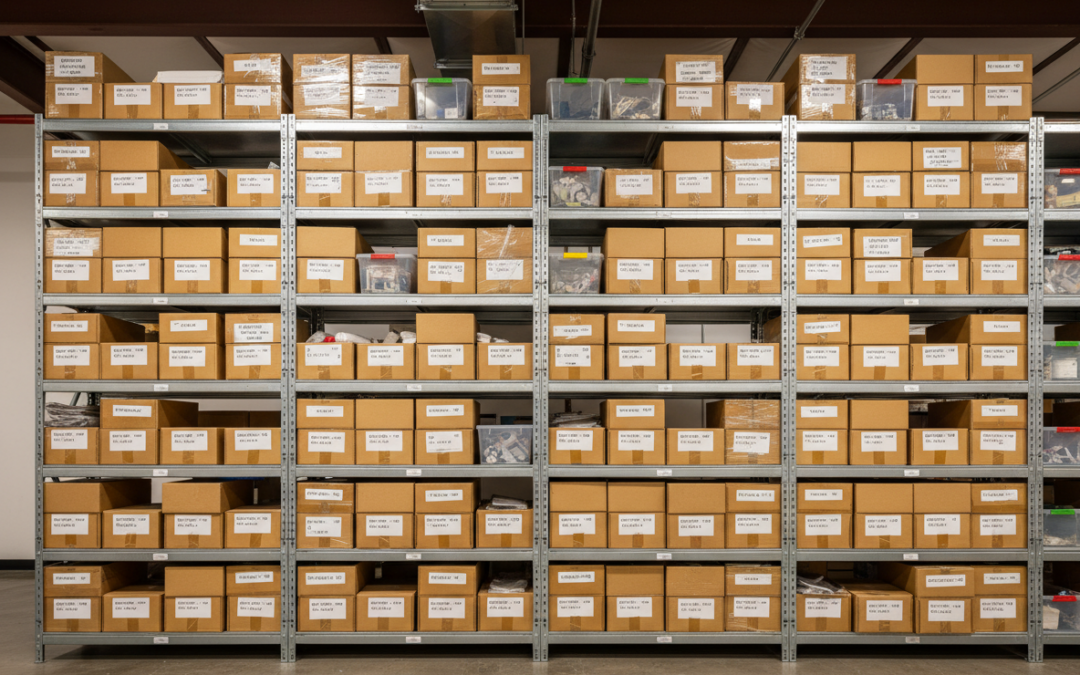
The scene is a common one: the door to a storage unit swings open to reveal a challenging mountain of boxes, stacked precariously, with various items peeking out. The thought of locating one specific item can feel like embarking on an archaeological expedition. This experience, far from ideal, can transform a useful space into a source of unnecessary stress. However, achieving a storage unit where everything is visible, accessible, and well-protected is not an unattainable dream; it is a practical reality that comes with thoughtful planning and the implementation of effective systems. This guide serves as your comprehensive manual, delving into advanced techniques to organise storage units. The focus is on transforming these spaces from cluttered afterthoughts into models of efficiency, particularly when utilising a quality facility such as those we offer at Newbury Self Store, where you can explore the various unit sizes and features available. The key to unlocking this potential often lies in strategic vertical thinking, where shelving and the inherent adaptability of shelving modular storage become indispensable tools, turning potential disarray into a streamlined haven.
Beyond the Boxes: Why Smart Efforts to Organise Storage Units Are a Game-Changer
Before delving into the practicalities of racking and stacking, it is beneficial to consider why investing effort into organising your storage unit yields such significant advantages. This endeavour is about more than achieving mere neatness; it encompasses reclaiming valuable time, substantially reducing stress, and ensuring better protection for your cherished possessions.
There is a distinct psychological impact associated with clutter. Operating within a disorganised environment can subtly erode one’s peace of mind. Many have experienced the frustration of desperately needing a specific document or a sentimental item, only to spend exasperating hours sifting through unsorted belongings. This feeling of escalating panic and squandered effort is precisely what a well-organised storage unit helps to prevent. Instead, one can enjoy the calm assurance that comes from knowing precisely where everything is located.
Furthermore, when you secure a storage unit with us at Newbury Self Store, you are investing in that specific area. It is logical, therefore, to maximise every square inch efficiently. Intelligent organisation, especially the use of vertical space through shelving, enables you to store a greater volume of items more securely, thereby extracting true value from your rental. Ultimately, a proficient organisation safeguards your belongings. Items correctly stored on shelves are significantly less susceptible to being crushed, sustaining damage, or becoming lost in a chaotic shuffle. It is an investment in the longevity and integrity of your possessions.
The Blueprint to Brilliance: Planning to effectively organise storage units
Similar to any undertaking that aims for success, a perfectly organised storage unit commences with a robust plan. Attempting to fill a unit with belongings and flat-pack shelves without preliminary thought is a sure path to future complications. A measure of initial groundwork will yield considerable benefits later on.
-
Step 1: Take Stock for when you organise storage units , What Exactly Are You Storing?
This initial step may appear self-evident, yet a comprehensive inventory is fundamental. Determine the primary nature of the items: are they archived files pertinent to your business storage needs, which our facility caters to with various tailored solutions? Or perhaps overflow from a house move requiring personal storage, a service we provide with a range of sizes for individual requirements? It could be seasonal sports equipment or valuable stock for an e-commerce enterprise. The characteristics of your items, their weight, fragility, and the frequency with which you will need to access them, will heavily influence your organisational strategy.
A crucial principle is to declutter before any packing for storage begins. Adopt a discerning approach; there is little sense in paying to store items that are no longer needed, used, or valued. Consider Mrs. Higgins, a local resident who, upon downsizing, initially rented a larger unit. After a dedicated weekend of sorting, she found that nearly half the items she intended to store were belongings her adult children had left behind years prior. A swift visit to a charity shop and communication with her family resulted in her comfortably fitting into a smaller, more economical unit , all thanks to this essential pre-storage clear-out. Once you have determined what will be stored, categorise these items. This process will aid in deciding upon the most suitable types of shelving and containers.
-
Step 2: Sketch it Out, Visualising Your Layout to Organise Storage Units
Utilise a notepad and pen, or a simple design application. After obtaining the precise dimensions of your selected unit from us at Newbury Self Store, our team is always available to assist with this information and create a bird’s-eye view sketch. Plan the placement of your main shelving units, ensuring that clear walkways are maintained. A frequent error is to pack a unit so densely that accessing items at the rear requires unloading a significant portion of the contents. Contemplate a central aisle, or perhaps a ‘U’ shaped layout, which permits access to most, if not all, items. Consider which categories of items will require the most frequent access and plan for their placement in the most convenient locations.
-
Step 3: Gather Your Gear, Essential Packing and Organisation Supplies for shelving and modular storage
While shelving is a central component, it requires an effective supporting cast. Standardised, robust boxes are paramount for efficient stacking and protection. Flimsy, assorted boxes can lead to organisational difficulties. Investing in high-quality packaging supplies, such as strong cardboard boxes, bubble wrap for delicate items, and durable packing tape , all of which you can find out more about on our dedicated website, will prove beneficial. Furthermore, do not underestimate the importance of a clear labelling system. Good quality marker pens, adhesive labels, or even a dedicated label maker will become invaluable in preventing “mystery box syndrome.” For items of particular delicacy or for specific environmental considerations, protective coverings or moisture absorbers might also be contemplated, although our units at Newbury Self Store are designed to be secure and well-protected against the elements.
Selecting Your Structure: A Deep Dive into shelving and modular storage options to organise storage units
Now, let us focus on selecting the structural elements that will establish order within your unit. The range of shelving options is surprisingly varied, and choosing appropriately is vital for creating a system that is both practical and enduring.
-
The Stalwarts: Traditional Freestanding Shelving Units for when you organise storage units
-
- Metal Marvels: When considering heavy-duty storage, sturdy metal shelving units frequently come to mind, for sound reasons.
- Pros: These are the true workhorses in the world of shelving. They offer exceptional durability and a high weight capacity, rendering them ideal for storing tools, bulky equipment, boxes of documents, or substantial stock for a business. Many metal shelving systems also feature adjustable shelf heights, enabling customisation of the space to perfectly accommodate your items.
- Cons: Their appearance is typically more industrial (which is perfectly acceptable for a storage unit), and assembly can sometimes demand patience and possibly an additional person.
- Best for: Businesses managing inventory, individuals with extensive archives, or anyone storing heavier tools and equipment. We know John, a local plumber, who utilises one of our larger container storage units , designed for exactly such bulky or large-volume needs. He has equipped it with heavy-duty metal shelving, creating an impressive repository of neatly organised copper pipes, fittings, and spare boilers , a paradigm of efficiency that saves him valuable time on every job.
- Plastic Performers: Lightweight and often more budget-conscious, plastic shelving provides a versatile solution for numerous storage requirements.
- Pros: Plastic units are generally very straightforward to assemble (often without tools), light to manoeuvre, and resistant to moisture, rust, and pests. This makes them an excellent choice, and they are also easy to wipe clean. Our units at Newbury Self Store are designed to be dry and secure, complementing these features.
- Cons: Typically, plastic shelving has a lower weight capacity compared to its metal counterparts, making it unsuitable for very heavy loads.
- Best for: Lighter household goods, boxes of clothing or linens, children’s toys, cleaning supplies, or garage overflow.
- Wooden Wonders (Use with Caution): While wood can present a sturdy and sometimes more aesthetically pleasing option, it is accompanied by certain caveats within a storage environment.
- Pros: Untreated pine or chipboard shelving can be an economical choice, and more robust wooden units can support significant weight.
- Cons: Wood is susceptible to moisture and can warp or attract pests if not properly treated or if the storage environment is not consistently dry and climate-controlled. It is also generally heavier than plastic.
- Recommendation: If opting for wooden shelving, ensure it is well-treated or sealed. It is best reserved for items that are not overly sensitive, in very stable, dry environments. For most general self-storage applications, metal or heavy-duty plastic are often more practical choices.
- Metal Marvels: When considering heavy-duty storage, sturdy metal shelving units frequently come to mind, for sound reasons.
-
The Game Changers: Embracing Shelving Modular Storage Systems to effectively organise storage units
This is where storage organisation becomes particularly ingenious and adaptable. Shelving modular storage systems are engineered for flexibility, permitting the creation of customised solutions that can evolve in line with your changing needs.
- Cube Storage Systems (e.g., wire grids, plastic snap-together): These systems are exceedingly popular for home organisation and translate exceptionally well to storage units.
- Pros: The principal advantage is versatility. Cube systems can be configured to fit your specific space and the dimensions of the items being stored. They are excellent for creating individual compartments, which prevents smaller items from becoming lost within larger boxes. Wire grid versions also promote good air circulation.
- Cons: Individual cubes might not be designed to support extremely heavy weights; therefore, it is important to check manufacturer specifications. Stability can also be a concern if they are not assembled correctly or are stacked too high without adequate support.
- How to use them effectively: Ideal for organising smaller, lighter items such as craft supplies, shoes, accessories, or collections of smaller boxed goods. You can establish distinct ‘zones’ within your unit , a cube section for hobby materials, another for small electronics, and so on. Sarah, a local Newbury crafter, shared how she transformed her personal storage unit, where individuals can keep a variety of personal belongings secure, with a wall of colourful fabric cube inserts within a wire modular system. It is now, in her words, “a rainbow of organised joy,” holding her yarn, fabrics, and beads, all instantly visible and accessible.
- Adjustable Track/Rail Systems (Often Wall-Mounted Inspired): While true wall-mounted systems might necessitate drilling (it is always advisable to check with our team at Newbury Self Store regarding any policies on affixing items to unit walls, as we are happy to provide guidance), freestanding versions exist that emulate this adaptability.
- Pros: These systems can maximise vertical space brilliantly. Shelves, baskets, and other components can often be repositioned easily along the tracks or uprights, offering supreme customisation.
- Cons: True wall-mounted versions require an installation process that might not be permissible in all rental units. Freestanding alternatives might be bulkier.
- Best for: Creating a highly customised storage wall, particularly if you have a variety of item sizes and anticipate needing to reconfigure your storage frequently.
- Interlocking Shelf Units (Heavy-Duty Plastic or Resin): These represent an advancement in robustness from basic plastic shelving, often designed for heavier loads.
- Pros: These systems are typically very durable, can often be configured in various L-shapes or tiered setups, and offer good resistance to impact and moisture. They bridge the gap between lighter plastic options and metal shelving.
- Cons: They can be more expensive than basic plastic shelves, and the aesthetic, while functional, is usually quite utilitarian.
- Why they’re a step up: If you require more strength than standard plastic shelving but desire the flexibility to create custom shapes, these heavy-duty interlocking systems are an excellent choice to effectively organise storage units.
The Art of Assembly and Arrangement: Putting Your Plan to organise storage units into Action with shelving and modular storage
You have selected your structural champions, the shelving units and modular systems that will form the backbone of your organised haven. Now comes the rewarding part: assembling and arranging everything.
-
Building a Solid Foundation for your shelving and modular storage
This point cannot be overemphasised: always assemble your shelving units on a flat, level surface. Even a minor incline can compromise stability. Adhere to the manufacturer’s assembly instructions meticulously. It might be tempting to take shortcuts, but a wobbly or incorrectly assembled shelf is not merely inefficient; it is a safety hazard. For taller freestanding units, especially if they are intended to be heavily laden, consider if they possess any built-in mechanisms for stability or if their design inherently prevents tipping. Safety must consistently be your utmost priority.
-
Strategic Placement Within Your Unit to Organise Storage Units Effectively
This is where your earlier sketch becomes invaluable.
- The Aisle is Key: A prevalent error is attempting to overfill the unit, neglecting the need to access belongings. Ensure you leave a clear central aisle, or multiple aisles in larger units. This aisle should be sufficiently wide for comfortable walking, turning, and even manoeuvring a small trolley if moving heavier boxes. Resist the temptation to utilise every last inch of floor space for items; your future self will be grateful when not having to clamber over obstacles.
- Frequency of Access Dictates Placement: Items that you anticipate needing to retrieve regularly should be positioned on shelves near the front of the unit, ideally at a comfortable height between your waist and eye level. Those boxes of seasonal decorations required only once a year can be placed on higher shelves or further towards the back. Archived business accounts from a decade ago are definitely candidates for the back or a top shelf.
- Weight Distribution , The Golden Rule: Consistently place your heaviest boxes and items on the bottom shelves. This provides a stable base for the shelving unit and prevents it from becoming top-heavy and prone to tipping. Lighter items can then be safely stored on the middle and upper shelves. This practice also makes lifting safer for you.
- “Like with Like” , The Organisational Mantra: Group similar items together on designated shelves or in specific sections of your unit. For example, all kitchenware and small appliances could occupy one set of shelves, books another, and sentimental photo albums a third. For businesses, this might translate to all marketing materials in one area and product components in another. This systematic approach is fundamental to effectively organise storage units and makes locating items infinitely quicker.
-
Utilising Your Shelving Modular Storage to its Full Potential
Modular systems, in particular, offer fantastic opportunities for customisation.
- Maximise that precious vertical space. Ensure your shelves are spaced appropriately for the height of your boxes or items, minimising wasted “air” between a box top and the shelf above. Most shelving modular storage systems make this adjustment straightforward.
- Use internal dividers within modular cubes or add smaller containers on shelves to create even more granular organisation. This is excellent for preventing small items from rolling around or becoming jumbled.
- Embrace the flexibility! Do not hesitate to reconfigure your shelving modular storage systems as your storage needs evolve over time. That is their primary advantage , they can adapt with you.
Advanced Organisation Hacks for Shelved Units: Tips to organise storage units with shelving and modular storage
With your main structures established, a few additional touches can elevate your storage unit from merely organised to supremely efficient.
-
The Power of Uniformity (and Transparency) in how you organise storage units
Whenever feasible, use same-sized, stackable boxes or containers. This renders stacking on shelves much more stable and space-efficient compared to using an array of oddly shaped bags and boxes. Clear plastic bins are a fantastic option for many items, as they permit you to see the contents at a glance, saving you from opening multiple boxes. For items requiring protection from light, opt for opaque bins, but ensure your labelling is meticulous. Please, resist the urge to use flimsy supermarket carrier bags or bin bags for anything other than transporting items to the unit. They offer virtually no protection, tear easily, and make any form of orderly stacking on shelves impossible. Investing in good quality packaging , explore our comprehensive range of boxes, tapes, and protective wraps on our website , is an investment in the safety and organisation of your belongings.
-
Labelling Like a Librarian when using shelving and modular storage
If you heed only one piece of advice from this section, let it be this: label everything. And not merely with a vague term like “Stuff.” Be specific! Instead of “Kitchen,” try “Dinner Party Crockery & Glassware” or “Baking Equipment.” For documents, “Household Bills 2023” is far more useful than just “Papers.”
- Place labels clearly on at least two sides of each box (the side facing the aisle and perhaps the top, if visible). This means you will not have to turn boxes around to identify them.
- For an even more advanced system, particularly crucial for business storage with significant inventory, where streamlined access is key to operations, or for very full personal units, create a master inventory sheet. This could be a simple spreadsheet or a dedicated storage inventory app. Number your boxes and even your shelving bays/sections. Your inventory list can then detail the contents of Box #27, located on Shelf C, Section 3. Imagine “ChocoDelight Ltd,” a dynamic local start-up, using their unit at Newbury Self Store for their valuable artisan chocolate-making supplies and packaging. Their meticulously numbered shelving modular storage system, cross-referenced with an inventory app, means they can locate a specific batch of cocoa beans or a particular size of gift box in minutes. This level of organisation is vital for a fast-moving business where time equates to money.
- H3: Think Vertically, Act Safely with your shelving and modular storage While maximising vertical space is essential, always do so with safety in mind.
- Be mindful of the weight capacity of your shelves. Do not overload them. It is preferable to use an additional shelf or another unit rather than risk a collapse.
- Keep a sturdy, foldable step-stool inside your unit. This will enable you to safely access items on higher shelves without resorting to balancing precariously on a box.
- If practical, try to leave a small gap (even an inch or two) between your stacks of items and the unit walls. This can aid air circulation.
- H3: Protecting Your Treasures on the Shelves Even within a secure unit, a little extra protection can make a significant difference.
- Consider using dust sheets or old (clean!) bedsheets to cover entire shelving units if you are storing items for very extended periods or if they are particularly sensitive to dust.
- Ensure electronics, delicate fabrics, or other sensitive items are adequately wrapped and protected within their boxes on the shelves. Bubble wrap, acid-free tissue paper, and sturdy boxes are your allies here.
Maintaining Your Masterpiece: Keeping Your Organised Storage Unit in Top Shape
You have completed the demanding work, and your storage unit stands as a beacon of organisation. The final step is to ensure it remains in this exemplary condition.
- H3: The Occasional Audit of your organised storage unit If it is practical for your schedule, plan a brief visit to your unit every few months. This allows for a quick visual inspection, ensuring everything remains in order, labels are intact, and there are no unforeseen issues. It is also an opportune moment to identify any items you might no longer need to store.
- H3: One In, One Out (or At Least, Re-evaluate) for sustained organisation When you introduce new items to your storage unit, take those few extra moments to place them within your established system correctly. If you remove items permanently, endeavour to update your inventory list (if you maintain one). This practice prevents the gradual return of disorganisation.
- H3: Resist the “Just Dump It” Mentality to keep your storage unit organised After a long day, or when pressed for time, it can be incredibly tempting to simply open the unit door and deposit a new item onto the nearest available space. Resist this urge! A few minutes dedicated to maintaining your organisation will save hours of searching and frustration in the future. Your future self will be profoundly grateful.
Revolutionise Your Storage: Newbury Self Store is Your Partner as You Organise Storage Units
The peace of mind derived from a systematically organised storage unit is genuinely invaluable. It means no more wasted time hunting for misplaced items, no more stress associated with “that storage unit,” and no more risk of damaging belongings through haphazard stacking. By understanding how to effectively organise storage units using the versatile power of shelving modular storage, you can transform any storage space. This applies whether it’s a compact personal storage unit, ideal for decluttering your home and keeping seasonal items safe, a more substantial business storage solution for your company’s stock or archives, providing easy access for commercial needs, or even a spacious container storage option, perfect for larger equipment or bulk inventory.
At Newbury Self Store, we take pride in providing clean, dry, and secure units that serve as the perfect blank canvas for your organisational expertise. Our friendly and experienced team is always on hand to offer advice on the most suitable unit sizes and features to match your specific needs. To truly complete your organised setup, you will need the right tools; we can also guide you towards excellent packaging materials, where you can find a variety of boxes and protective wrappings to keep your items safe on their shelves.
Why delay experiencing the satisfaction of effortless access and a clutter-free mind? Take the first step towards storage serenity! You can learn more about our offerings and find the ideal space by exploring the options on our Newbury Self Store, or for specific advice tailored to your needs and to get a no-obligation quote, please contact Newbury Self Store today. Let us work together to get you, and your belongings, perfectly organised!