
 01635 581 811
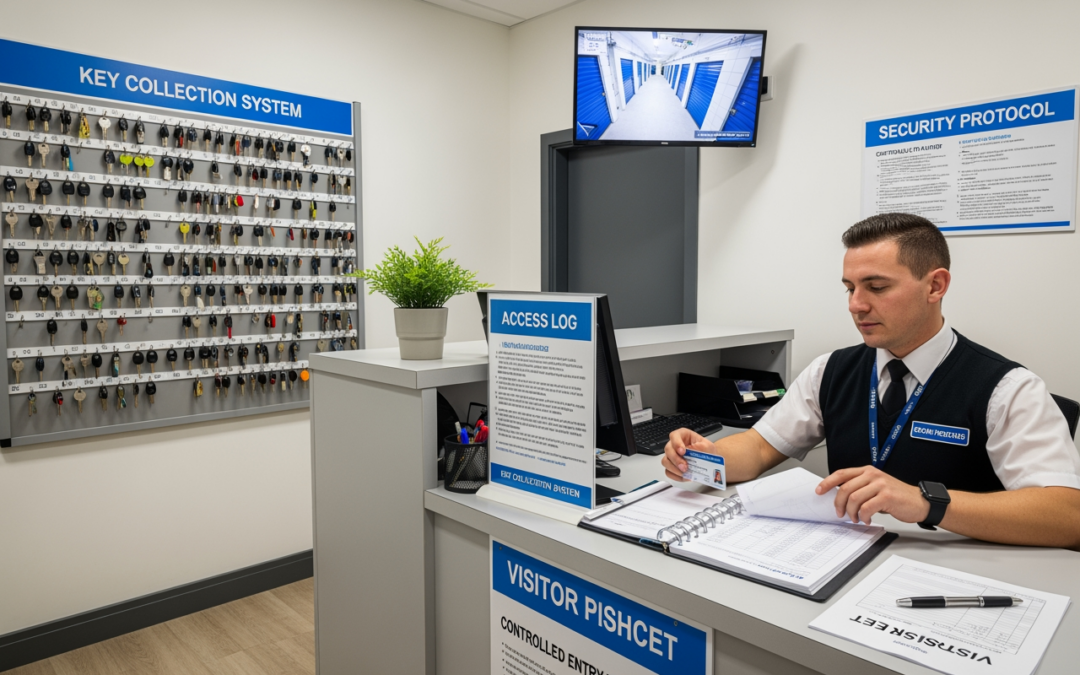
There is a unique kind of comfort that comes from knowing your cherished belongings, the overflow from a busy life, or those items you just can’t quite part with are tucked away safely. It’s more than just finding extra square footage; it’s about entrusting your possessions to a secure space. Here at Newbury Self Store, we understand that trust implicitly. We pride ourselves on providing a secure environment for everything you choose to store with us. You can, however, elevate that peace of mind even further. You can become the chief architect of your own storage security, adding a robust personal layer to the safeguards already in place.
This approach is not about suggesting that standard security measures are insufficient; far from it. Think of it like this: a well-built house provides shelter and safety, but you still lock your front door, maybe even set an alarm. It’s about taking that extra step of personal diligence. This article serves not merely as a checklist; it is your comprehensive guide, your personal security blueprint, for creating and implementing a formidable security protocol for your personal storage access. It’s about empowering you to manage who, when, and how your unit is accessed, ensuring your items are as secure as humanly possible.
I recall a conversation with a lovely lady, let’s call her Sarah, who was storing her late mother’s extensive collection of antique books and family heirlooms. The facility had top-notch security, no doubt. But Sarah had created her own meticulous system: a specific high-security lock only she (and her very trusted brother, noted in her ‘protocol’) had the key to, a detailed photographic inventory, and a schedule for visiting the unit. She said, “It’s not that I don’t trust the storage place, they’re wonderful! It’s just… these aren’t just things. They’re memories. My own little system gives me that extra bit of calm.” And that extra bit of calm is precisely what we’re aiming for.
Why Should You Even Think About a Personal Security Protocol for Your Storage Unit?
You might be thinking, “Doesn’t the storage facility handle all the security?” And yes, reputable places, much like Newbury Self Store, invest significantly in robust security measures – CCTV cameras, secure gated access, well-lit corridors, and strong, individual units. These form the essential, foundational layers of security. But a personal security protocol is the critical top layer, the one you customise and control entirely. It’s the difference between relying solely on the castle walls and also having your own vigilant guard at your personal chamber door.
It truly boils down to this: it’s your stuff, after all. Whether it’s valuable equipment, sentimental items, important documents, or simply belongings you need to keep safe during a transition, taking proactive steps to manage access provides an unparalleled level of peace of mind. You’re not just a passive user of a service; you’re an active participant in the safeguarding of your possessions. This is particularly true if you’re storing items of significant monetary or irreplaceable sentimental worth. The emotional comfort derived from knowing you’ve done everything in your power to protect them is immeasurable.
Consider, too, the practicalities of personal storage access. Life isn’t always straightforward. What happens if you’re going to be travelling for an extended period and a close friend or family member might need to retrieve something essential for you? Or imagine you’ve temporarily given a key to a removals company or a helper during a hectic move. How do you manage that access securely and ensure the key is returned, or access revoked, in a timely manner? A pre-defined protocol makes these potentially stressful situations smoother, more controlled, and significantly more secure. It replaces panicked, last-minute decisions with calm, predetermined actions.
Ultimately, a personal security protocol is about preparing for the “just in case” scenarios. We all hope for the best, but life occasionally throws us a curveball. Having a clear, well-thought-out system means you’re not caught off guard. It means you’ve minimised risks and maximised your control, allowing you to feel confident and prepared, no matter what unfolds. For a comprehensive look at the various storage solutions where you can implement these protocols, you can explore the options on the Newbury Self Store.
Crafting Your Fortress: Essential Pillars of Your personal storage access security protocol
Creating your own security protocol doesn’t need to be an overly complicated affair. It’s about applying common sense, a bit of planning, and consistent habits. Let’s break down the essential pillars that will form the bedrock of your personal storage fortress.
Your First Line of Defence: Choosing and Managing Your Lock
The lock on your storage unit door is more than just a deterrent; it’s a statement. It’s your primary physical barrier, and its quality can significantly impact the security of your unit.
- Not All Locks Are Created Equal: You’ll find a variety of padlocks on the market, but for a storage unit, you want something robust.
- Closed-Shackle Padlocks: These are a fantastic choice. The design means very little of the shackle (the U-shaped bar) is exposed, making it incredibly difficult for bolt cutters to get a grip.
- Disc Locks: Often recommended by storage facilities, these locks are also highly resistant to bolt cutters and picking due to their shape and how the shackle is protected.
- Tumbler Locks (High Quality): Good quality cylinder or tumbler locks with features like anti-pick pins and hardened steel bodies can also be very effective.
- Avoid the Cheap Options: That flimsy little padlock you found in the back of a drawer? It’s simply not up to the task. Investing an extra ten or twenty pounds in a high-quality lock from a reputable brand is one of the smartest security decisions you can make.
- The “Why” Behind a Quality Lock: Think of it this way: a thief is often looking for the easiest target. A cheap, easily compromised lock screams “easy target.” A visibly robust, high-security lock, on the other hand, can act as a powerful deterrent, encouraging them to simply move on.
- Key Control is King: A top-tier lock is only as good as the control you maintain over its keys.
- Minimise Keys: The fewer keys in existence, the lower the risk of one falling into the wrong hands. Have only as many keys cut as are absolutely necessary.
- Who Gets a Key? Why? Document This: If you must give a key to someone else (e.g., a partner, a very trusted family member for emergencies), make a conscious decision and record it in your personal protocol notes. Why do they have it? Under what circumstances should they use it?
- The “What If” a Key is Lost or Stolen: This is critical. If a key goes missing, or you even suspect it might be compromised, you must act immediately. The safest course of action is to replace the lock entirely. Yes, it’s an inconvenience and a small expense, but it pales in comparison to the potential loss if an unauthorised person gains access. Re-keying is an option for some locks, but often replacement is simpler and more secure.
- Consider a Key Log (Especially for Shared Access): If, for example, you’re part of a small community group sharing a storage unit, a simple sign-out/sign-in log for the key can add a layer of accountability.
A few years ago, a friend, let’s call him Tom, was moving house and put a lot of his tools and equipment into storage. He opted for a very basic, cheap padlock, thinking the facility’s main gate security was enough. Unfortunately, there was a spate of break-ins targeting units with weaker locks. Tom’s unit was among those hit. He was devastated, not just by the loss, but by the knowledge that a better lock might have made all the difference. It’s a stark reminder: don’t skimp on your first line of defence. And while you’re investing in security, remember that protecting your items inside the unit is also key. To further protect your inventoried items from damage and make it easier to spot any disturbance within your unit, consider using appropriate, sturdy materials. You can explore a range of quality packaging supplies on the Newbury Self Store packaging section, which offers everything from boxes to protective wrap, ensuring your belongings are well-kept inside your secure unit.
The Gatekeepers: Establishing an Authorised Access List for your personal storage access
Knowing exactly who has permission to access your storage unit is a fundamental part of your security protocol. This might sound formal for a personal unit, but it brings clarity and control.
- More Than a Mental Note: Don’t just keep a vague idea in your head. Create a written list – it can be a simple note on your phone, a document on your computer, or a page in a notebook stored securely at home. This list should clearly state the names of anyone you authorise for personal storage access.
- Sharing with the Facility (If Policy Allows): It’s always a good idea to have a chat with our team at Newbury Self Store. Enquire if we have a policy for noting authorised individuals on your account. Some facilities may allow you to list named individuals who can access the unit in your absence (often requiring them to show ID). Our team will be happy to advise on our specific procedures.
- Temporary Access with Control: Life happens. You might need a friend to pick up your camping gear, or a family member to fetch some seasonal decorations. If you grant temporary access:
- Escort Them if Possible: The most secure way is to go with them.
- Clear Instructions: If you can’t be there, give them precise instructions about what they are retrieving and where it is located.
- Key Retrieval: Ensure the key is returned to you immediately after their visit. Don’t let it “float” around.
- Inform the Facility (If Necessary): Depending on our policy, you might need to inform us that a specific person will be accessing your unit on a particular day.
- The “Emergency Contact” Consideration: This is an important one. If you were to become ill or incapacitated, who would you trust to access your unit, perhaps to retrieve important documents or essential items? Designate this person (or persons) in your protocol. Consider how they would securely obtain the key in such a scenario – perhaps a sealed envelope with instructions is left with a solicitor or another trusted, independent party.
Eyes on Your Prize: The Importance of Regular Visits and Inspections
The old adage “out of sight, out of mind” can be a security risk when it comes to self-storage. Regular visits and inspections are a vital part of your ongoing security protocol.
- “Out of Sight” Shouldn’t Mean “Out of Mind”: Even if you don’t need to retrieve anything, periodic checks on your unit are crucial. They allow you to spot any potential issues early, whether that’s a problem with your lock, the unit itself, or even the condition of your belongings.
- Your Inspection Checklist: When you make a check, don’t just glance in. Have a mental (or even physical) checklist:
- Lock Integrity: Examine your padlock. Does it show any signs of tampering, rust, or unusual wear? Is it still locking and unlocking smoothly?
- Door and Unit Condition: Check the unit door. Are there any new dents, scratches, or pry marks? Look around the unit itself – any signs of leaks from the ceiling, dampness on the walls, or evidence of pests? (Good facilities have pest control, but it’s always wise to be vigilant).
- General State of Your Belongings: Are your boxes and items as you left them? Does anything look disturbed, shifted, or damaged? This is where good organisation and quality packaging really pay off – it makes it easier to spot if something is out of place or has been compromised.
- How Often is “Regular”? There’s no one-size-fits-all answer. If you’re storing high-value items or things you access frequently, you might arrange a check weekly or fortnightly. For long-term storage of less critical items, monthly or quarterly checks might suffice. The key is to establish a rhythm that works for you and stick to it. Set a reminder on your phone if it helps!
Know Your Inventory: The Cornerstone of Your Security Protocol
This is, without a doubt, one of the most essential elements of any robust security protocol for personal storage access. If you don’t know exactly what’s in your unit, it’s incredibly difficult to ascertain if anything is missing or has been tampered with.
- Why an Inventory is Non-Negotiable:
- Your Own Reference: Months or even years down the line, will you remember every single item you placed in storage? A detailed inventory is an invaluable memory aid.
- Crucial for Insurance Purposes: Should the worst happen – a fire, flood, or (very rarely in secure facilities) a theft – your insurance company will require proof of ownership and value. A detailed inventory, ideally with photos and receipts, is your best evidence.
- Quick Identification of Issues: During your regular inspections, a quick scan of your inventory against what you see can help you immediately identify if something is amiss.
- Creating a Master Inventory List: This might seem like a chore upfront, but its value is immense.
- Detailed Descriptions: Don’t just write “box of books.” Note “Box #1: 25 mixed paperback novels, 5 hardback biographies.” The more detail, the better.
- Photographs and Videos: For valuable items (antiques, electronics, collectibles, artwork), take clear photographs from multiple angles. A short video panning across the contents of the unit before you lock up can also be useful.
- Serial Numbers: For electronics, tools, or any items with serial numbers, record these meticulously. This is vital for police reports and insurance claims if items are stolen.
- Estimated Replacement Values: Note down what it would cost to replace the items today. This helps ensure you have adequate insurance coverage.
- Date of Storage: When did each item or box go into storage?
- Keeping it Updated: Your inventory is not a static document; it’s a living one. Every single time you add items to your unit or remove something, update your inventory list immediately. It’s easy to forget if you leave it until later. Keep a copy of your inventory in a safe place at home (and perhaps a digital backup in the cloud).
Imagine the scenario: you need to find a specific document you stored “somewhere in one of those boxes.” Without an inventory, you could spend hours rummaging. With an inventory, you know it’s in “Box #7, labelled ‘Financial Records 2018-2020’.” Or, more seriously, if there was a suspected breach, you could quickly determine if the valuable stamp collection you know was in the blue plastic tub is still there, rather than just having a vague feeling something is wrong. This level of organisation is key to effective personal storage access management.
Digital Vigilance: Securing Online Aspects (If Applicable) of your security protocol
In our increasingly connected world, your security protocol might need to extend into the digital realm, especially if you utilise any tech-related storage solutions.
- Smart Locks & Apps: If you’ve opted for a storage unit with smart lock access or if you use a personal smart padlock controlled via an app, password security is paramount. Use strong, unique passwords (a mix of upper/lower case letters, numbers, and symbols). Enable two-factor authentication (2FA) whenever it’s offered – this adds a vital extra layer of security. Be cautious about the permissions the app requires.
- Cloud-Based Inventories: If you keep your detailed inventory list stored in the cloud (which is a great idea for backup purposes), ensure that cloud account itself is secure. Again, strong passwords and 2FA are your friends.
- Communication Security: Be extremely wary of any unsolicited emails or text messages claiming to be from your storage facility asking for login details, payment information, or personal data. These could be phishing scams. If you receive such a communication, do not click on any links or provide any information. Instead, you can make contact with us directly through the secure Newbury Self Store contact section to verify its legitimacy.
What If the Unthinkable Happens? Responding to a Suspected Security Breach
No matter how good the facility’s security or your personal security protocol, there’s always a minuscule chance of an issue. Knowing how to respond calmly and correctly is crucial.
- Step 1: Pause and Assess (Safely): If you arrive at your unit and see clear signs of forced entry (e.g., a broken lock, a damaged door), do not enter the unit. Your personal safety is the priority. There’s a remote possibility that someone could still be inside, or you could disturb potential evidence.
- Step 2: Immediate Notification:
- Your very first call should be to the storage facility management. For Newbury Self Store, you can find our details and ways to get in touch quickly on our contact us section. Explain clearly and calmly what you have observed. We have procedures for this type of event and will guide you on the next steps.
- Listen to our instructions carefully. We may want to inspect the unit ourselves before you enter.
- Step 3: Document Everything (When Safe and Advised):
- If advised by facility management and it’s safe to do so, take photographs or videos of any suspected tampering before anything is touched or moved. Capture images of the lock, the door, the unit interior (from the outside, if you haven’t entered), and anything that looks out of place.
- Make detailed notes of dates, times, what you observed, and any conversations you have with facility staff or authorities. This documentation will be invaluable for any subsequent reports or claims.
- Step 4: Involve the Authorities (If Necessary): Based on our advice and the nature of the suspected breach, it may be necessary to file a police report. The facility will likely liaise with the police too. Your detailed inventory and photographs will be extremely helpful here.
- Step 5: Review and Reinforce Your Security Protocol: Once the immediate situation is handled, take the time to review your personal security protocol. Were there any weaknesses? Is there anything you could have done differently? What can you learn from this experience to further strengthen your security measures for the future? This might involve upgrading your lock, reassessing who has authorised access, or changing your inspection frequency.
How Newbury Self Store Supports Your Secure Storage Experience
At Newbury Self Store, we view security as a partnership. Whilst we provide a robust and secure environment, we wholeheartedly support and encourage our customers to implement their own personal security protocols.
- Our Commitment to a Secure Environment: We invest in comprehensive security measures to protect your belongings. This typically includes features such as 24/7 CCTV surveillance covering key areas of the facility, controlled gated access that restricts entry to authorised individuals, good lighting throughout the premises, and sturdy, individual storage units. For specific details on all our security features, we always recommend having a chat with our friendly team or finding information on the Newbury Self Store.
- A Partner in Your Security Efforts: Your personal security protocol works in perfect harmony with the measures we have in place. Our facility security aims to prevent unauthorised access to the site and unit areas, while your personal protocol fine-tunes the security of your specific unit and manages exactly who has access to your belongings. It’s a collaborative approach to achieving maximum peace of mind.
- Options for Every Need, All Within Our Secure Compound:
- Our Personal Storage units are ideal for a vast range of needs, from decluttering your home and storing seasonal items to keeping furniture safe during a move. These units provide a secure foundation where you can confidently apply your personal access protocol.
- It’s worth noting that businesses, too, benefit immensely from these principles. Clients using our Business Storage for stock, archives, or equipment often have even more stringent internal access protocols due to the high value or sensitive nature of their stored items; these strategies are just as applicable and provide an excellent framework for safeguarding business assets.
- Even for our larger, highly robust Container Storage options, which offer fantastic security for bigger items or bulk storage, implementing a personal plan for who can access it and when is always a prudent measure, adding an extra layer of control over valuable contents.
Taking It Up a Notch: Advanced Strategies for the Extra Vigilant Storer
For those who want to go the extra mile, or if you’re storing particularly valuable or sensitive items, here are a few advanced strategies to consider incorporating into your security protocol:
- Tamper-Evident Measures:
- Security Tape: You can purchase tamper-evident tape which, once applied to a box or even across the door seam of your unit (check facility policy first), will show void messages or break in a way that clearly indicates if it has been opened or disturbed.
- Specialised Seals: Numbered security seals can also be used. You record the seal number when you lock up; if the seal is broken or the number doesn’t match on your return, you know someone has attempted access.
- Strategic Obscurity (Within Your Unit):
- Discreet Labelling: Avoid labelling boxes with overly descriptive titles like “Granny’s Jewellery Collection” or “Expensive Camera Gear.” Opt for more innocuous labels like “Misc. Household – Shelf A,” “Hobby Supplies – Box 3,” or a simple coding system that only you understand.
- Placement Strategy: If possible, place less valuable or less sensitive items towards the front or most visible part of your unit. More valuable items can be stored further back, perhaps covered or in less obvious containers.
- Insurance Deep Dive – A Critical Component of “Security & Insurance Advanced”:
- Understand Facility Requirements/Offerings: Most storage facilities require you to have insurance for your stored goods. They may offer their own insurance policies, or you may be able to use your existing home contents insurance (though you MUST verify this with your insurer).
- Check Your Home Insurance Carefully: Don’t assume your home policy automatically covers items in storage. There are often limits and exclusions. Contact your insurer, explain you’re using a self-storage unit, and get written confirmation of what is and isn’t covered. Pay attention to single item limits and total coverage amounts.
- Consider Specialist Self-Storage Insurance: If your home insurance doesn’t provide adequate cover, or if you want more comprehensive protection specifically tailored to stored goods, look into specialist self-storage insurance policies. These are often very reasonably priced and can offer broader coverage. This is a key aspect of the “Security & Insurance Advanced” pillar; your physical security protocol is one part, and ensuring you’re financially protected is the other.
- Match Coverage to Your Inventory: Your detailed inventory (with values) is essential here. It allows you to calculate the total value of your stored goods and ensure your insurance coverage is sufficient.
- Alarmed Padlocks or Personal Unit Alarms:
- Alarmed Padlocks: Some padlocks come with built-in motion sensors and alarms that will emit a loud noise if tampered with.
- Battery-Powered Unit Alarms: You can also find small, battery-operated motion sensor alarms that can be placed inside your unit. If the door is opened and the alarm is triggered, it can create a significant deterrent. Always check with the facility management before installing any device that emits a loud noise to ensure it complies with their policies.
Empowerment Through Preparation: Your Next Steps
Implementing a personal security protocol for your personal storage access might initially seem like a bit of effort, but it’s one of the most empowering steps you can take as a storage user. It transforms you from a passive customer into an active guardian of your belongings. It’s about taking control, minimising risk, and maximising that all-important peace of mind.
Think of the time spent crafting your protocol as a small investment that yields a massive return in security and reassurance. Your valuables, whether they hold monetary worth or priceless sentimental value, truly deserve this comprehensive level of protection. You wouldn’t leave your home unlocked or your car keys with just anyone; apply that same diligence to your storage unit.
So, what’s the next step? Take a few moments today to start thinking about your own storage situation.
- What kind of lock are you currently using? Could it be better?
- Who, realistically, needs access, and how will you manage that?
- Do you have an up-to-date inventory? If not, when can you schedule time to create one?
- How often will you check your unit for a quick check-up?
These simple questions are the starting point for building a protocol that’s tailored perfectly to your needs.
And suppose you’re currently looking for a secure, friendly, and accommodating place to store your belongings, a place where you can confidently implement your new personal security protocol. In that case, we invite you to explore the fantastic range of options available right here at Newbury Self Store. Our team is always on hand and happy to discuss your storage and security requirements. Please don’t hesitate to contact us using the information on our Contact Us section. We’re here to help you find the perfect secure space for your possessions.