
 01635 581 811
Renovating a hotel whilst keeping operations running presents a logistical puzzle that would challenge even the most experienced property managers. You’re juggling guest satisfaction, contractor schedules, and the physical reality of dozens of beds, wardrobes, and side tables that need to go somewhere safe whilst work progresses. The difference between a smooth refurbishment and a chaotic one often comes down to how you handle hotel furniture storage.
Most hotel managers underestimate the space they’ll need. A single guest room contains more furniture than you’d think – a king bed frame, mattress, headboard, wardrobe, desk, chair, two side tables, luggage rack, and sometimes a sofa or armchair. Multiply that by 20, 30, or 50 rooms, and you’re looking at a storage challenge that can’t be solved by stacking everything in a back corridor.
Why hotel furniture needs proper storage solutions
Hotel furniture represents a significant capital investment. A quality bed frame costs between £300-£800, whilst a custom headboard can run £200-£500. When you’re storing furniture from multiple rooms during a phased renovation, you’re safeguarding assets worth tens of thousands of pounds. Damage from improper storage – water marks, scratches, mould, or structural warping – means replacing items that should have lasted another decade.
The timing matters too. Most hotels renovate during quieter periods, but ‘quiet’ doesn’t mean ’empty’. You’ll still have guests in unrenovated rooms, which means your storage solution can’t block fire exits, service corridors, or deliveries. Contractors need clear access to work areas without navigating an obstacle course of stacked furniture.
Here’s a scenario we’ve seen play out: A boutique hotel in Berkshire planned to renovate 15 rooms over eight weeks. The manager initially stored furniture in three vacant rooms, thinking it would save money. Within a week, they realised those rooms could have generated £6,000 in revenue during an unexpected corporate booking. The ‘free’ storage actually cost them significantly more than personal storage would have.
Calculating your storage requirements
Think of guest furniture storage like packing for a long trip – you always need more space than you initially estimate. A standard double guest room contains roughly 40-50 cubic metres of furniture when properly stacked. That’s the equivalent of a small bedroom’s worth of space per room you’re renovating.
Calculate your needs:
- Count total rooms in your renovation phase
- Multiply by 45 cubic metres (average per room)
- Add 20% for safe stacking and access space
- This gives you your minimum storage requirement
For a 20-room renovation, you’re looking at approximately 1,080 cubic metres – that’s roughly four 20-foot shipping containers. Don’t try to compress this too much. Furniture needs breathing room to prevent damage, and you’ll need access to retrieve specific items if plans change.
Phased renovations and rolling storage needs
Most hotels renovate in phases rather than shutting down entirely. This means your hotel furniture storage needs fluctuate week by week. You might start with 10 rooms’ worth of furniture in week one, add another 10 in week three, then begin returning the first batch in week five whilst the second phase continues.
This rolling approach requires flexibility. Fixed storage solutions like keeping furniture on-site become problematic because you can’t easily scale up or down. Business storage facilities offer the advantage of adjusting your space as renovation phases progress. You’re not paying for empty space, and you’re not scrambling when you need more room than anticipated.
Consider labelling everything by room number and phase. When contractors finish Room 201, you need to retrieve exactly those items quickly. We’ve worked with hotels that created detailed inventories with photographs before storage – it sounds tedious, but it prevents the nightmare of mismatched furniture returning to wrong rooms.
Protection methods that actually work
Wrapping furniture properly isn’t optional. The environment inside storage units differs from climate-controlled guest rooms, and items can spend weeks or months in storage during extended renovations. Moisture is your primary enemy, followed by dust and physical damage from stacking.
Essential protection materials:
- Furniture covers – breathable fabric covers for upholstered items (never use plastic directly on fabric)
- Bubble wrap – for headboards, mirrors, and decorative elements
- Furniture blankets – thick moving blankets for wood surfaces
- Mattress bags – individual sealed bags for each mattress
- Corner protectors – foam or cardboard guards for table and desk edges
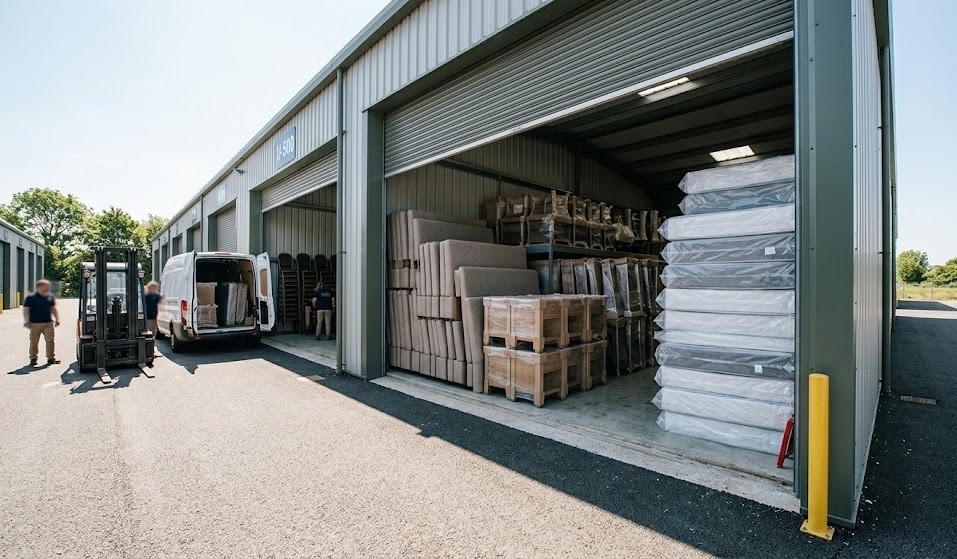
Mattresses deserve special attention. Hotel mattresses cost £400-£1,200 each, and they’re vulnerable to moisture damage. Seal each mattress in a proper mattress bag before storing it flat or on its side. Never store mattresses directly on concrete floors – use pallets or raised platforms to allow air circulation underneath.
The packaging you choose makes a tangible difference to whether furniture emerges from storage in usable condition or requires replacement. Think of it as insurance – spending £200 on proper wrapping materials protects £20,000 worth of furniture.
Climate control considerations
Not all furniture requires climate-controlled storage, but certain items absolutely do. Upholstered headboards, fabric chairs, and any wooden furniture with veneer finishes need stable temperature and humidity. British weather means humidity fluctuates dramatically between seasons – summer dampness followed by winter cold creates the perfect conditions for mould growth and wood warping.
Metal bed frames and basic side tables can typically handle standard storage conditions. But if you’re storing higher-end pieces – leather chairs, solid wood desks, custom-made wardrobes – climate control isn’t an optional luxury. It’s the difference between furniture that returns to service immediately and furniture that needs refinishing or replacement.
A hotel in Reading learned this the hard way. They stored 25 upholstered headboards in a non-climate-controlled unit during a damp autumn. Twelve developed mould spots that required professional cleaning, and three needed complete reupholstering. The £2,400 they saved on climate control cost them £8,500 in restoration work.
Access and retrieval planning
Renovations rarely go exactly to schedule. Contractors finish early, discover unexpected issues, or need to adjust the work sequence. This means you need access to stored furniture on short notice, potentially multiple times per week during active renovation periods.
When selecting storage, prioritise facilities with extended access hours or 24/7 availability. A contractor finishing Room 205 at 4pm on Friday doesn’t want to wait until Monday morning to retrieve furniture. Container storage with drive-up access lets you load and unload quickly using the hotel’s own vehicles or hired vans.
Organise your storage unit strategically. Place items you’ll need first near the front. Group furniture by room or by renovation phase. Create clear aisles so you can reach items at the back without unstacking everything. Yes, this requires more space than cramming everything in tightly, but the time and labour savings during retrieval justify the extra square footage.
Insurance and liability considerations
Your hotel’s standard property insurance might not fully cover furniture whilst it’s off-site in storage. Check your policy carefully and speak to your insurer about temporary coverage during renovations. Most storage facilities offer their own insurance options, typically costing 1-3% of your declared value per month.
Document everything before storage. Photograph each item from multiple angles, noting any existing damage or wear. Create an inventory spreadsheet with item descriptions, conditions, and values. This isn’t just for insurance claims – it’s your reference when furniture returns to verify nothing went missing or got damaged during storage.
Consider who’s responsible for moving furniture in and out of storage. If hotel staff handle it, ensure they’re trained in proper lifting techniques and furniture handling. If you’re hiring movers, verify they carry adequate liability insurance. A damaged £600 headboard becomes your problem if the moving company isn’t properly insured.
Cost analysis: on-site vs off-site storage
The temptation to store furniture on-site stems from an apparent cost saving. You’re not paying monthly storage fees, and you don’t need to transport items twice. But this calculation ignores several hidden costs that quickly erode those savings.
Hidden costs of on-site storage:
- Lost revenue from rooms used for storage (£80-£150 per night per room)
- Increased renovation timeline due to cluttered work areas
- Higher risk of damage from construction dust and activity
- Fire safety and insurance complications
- Staff time managing and moving furniture around contractors
A 30-room hotel storing furniture in five vacant rooms during a six-week renovation loses approximately £16,800-£31,500 in potential room revenue (assuming 70% occupancy). Professional guest furniture storage costs roughly £2,000-£3,500 for the same period. The maths isn’t even close.
Off-site storage also protects furniture from the construction environment. Dust from sanding, paint fumes, and the general chaos of renovation work can damage items even when they’re supposedly ‘out of the way’. Contractors work faster when they’re not navigating around stored furniture or worrying about damaging expensive pieces.
Coordinating with contractors and designers
Your renovation team needs to understand the storage logistics from day one. Include storage timelines in your project planning discussions. When will furniture leave? When does it need to return? Who’s responsible for coordinating pickups and deliveries?
Interior designers often want to see existing furniture before finalising new pieces. If you’re keeping some items and replacing others, designers need access to stored furniture for measurements, colour matching, or style coordination. Choose storage that allows your designer to visit and inspect items without requiring you to be present every time.
Some hotels discover mid-renovation that they want to repurpose furniture differently. Perhaps those side tables from standard rooms would work perfectly in the upgraded suites, or the desk from Room 301 would suit the new business centre. Flexible hotel furniture storage with good access makes these last-minute adjustments possible without derailing your schedule.
Sustainable renovation practices
Hotel renovations generate significant waste, but furniture storage offers an opportunity to reduce environmental impact. Instead of disposing of perfectly functional furniture simply because it doesn’t match the new design scheme, proper storage lets you donate, sell, or repurpose items after carefully considering all options.
We’ve seen hotels store furniture during renovations, then donate it to local charities, sell it to budget accommodation providers, or use it to furnish staff areas. This approach requires thinking beyond the immediate renovation – you need storage that can hold items for a few extra weeks whilst you arrange donations or sales.
Some furniture might need minor repairs or refinishing rather than replacement. Storing items properly preserves them in good enough condition that restoration becomes viable. A solid wood desk with surface scratches can be refinished for £150 rather than replaced for £600, but only if it hasn’t spent three months getting knocked about in a damp corridor.
Managing multiple properties
Hotel groups renovating several properties simultaneously face compounded storage challenges. You’re coordinating furniture from different locations, potentially on different renovation schedules, all needing secure storage and accessible retrieval.
Centralised guest furniture storage near multiple properties makes sense for groups. A storage facility positioned between three hotels reduces transport costs and coordination complexity. You can also potentially share space more efficiently – as one property completes its renovation and retrieves furniture, another property’s items can occupy that space.
Clear labelling becomes even more critical with multiple properties. Every item needs property identification, room numbers, and phase information. Colour-coded tags work well – blue for Property A, red for Property B, green for Property C. This prevents the expensive mistake of returning Property A’s furniture to Property B.
Planning your hotel furniture storage
Start planning storage at least six weeks before renovation begins. This gives you time to research facilities, compare costs, arrange transport, and purchase proper packing materials. Rushing this process leads to poor decisions – choosing inadequate storage, skipping proper furniture protection, or failing to create detailed inventories.
Create a comprehensive timeline including:
- Furniture removal dates for each phase
- Expected storage duration
- Retrieval dates (with buffer time for delays)
- Who’s responsible for each step
- Budget allocations for storage, transport, and materials
Successful hotel renovations happen when every element receives proper attention. Guest furniture storage might seem like a minor detail compared to design choices and construction work, but it’s the foundation that lets everything else proceed smoothly. Get it right, and your renovation stays on schedule with furniture returning in perfect condition. Get it wrong, and you’re dealing with delays, damage claims, and unexpected costs that erode your renovation budget.
Conclusion
The hotels that emerge from renovations on time and on budget aren’t lucky – they’re the ones that planned every logistical detail, including where every bed frame, wardrobe, and side table would safely wait whilst work progressed. Your guests will never know about the storage facility that protected their furniture, but they’ll certainly notice if their newly renovated room contains damaged or mismatched pieces because storage was an afterthought.
If you’re planning a hotel renovation, contact us to discuss your specific hotel furniture storage requirements. We’ll help you calculate the space you need, recommend protection methods, and create a flexible storage plan that adapts as your renovation progresses.